

By: Eunice Jean C. Patron
Biologists from the University of the Philippines Diliman – College of Science, Institute of Biology (UPD-CS IB) call for further and more in-depth surveillance of foodborne pathogens like the bacterium Salmonella in poultry products. Infections caused by Salmonella typically result in symptoms such as fever, abdominal pain, diarrhea, nausea, and sometimes vomiting, which usually appear 6 to 72 hours after ingestion of Salmonella, and can last 2-7 days.
The rapid rise of multidrug-resistant (MDR) bacteria makes treating bacterial infections increasingly difficult, and the widespread use of antibiotics in agricultural, clinical, and residential environments leave few immediate solutions. MDR Salmonella is widely acknowledged as a major global public health issue, with scientists reporting the bacteria as one of the leading causes of diarrhea and outbreaks worldwide annually, including in the Philippines. As a large producer and consumer of meat, the Philippines faces a pressing need to monitor these potential threats, and explore the genome of MDR Salmonella to identify the most common types of Salmonella, assess their disease-causing abilities, and uncover circulating antimicrobial resistance genes (ARGs) that pose risks to food safety and public health.
Using whole genome sequencing (WGS) and phenotypic antimicrobial resistance (AMR) testing, Michael Joseph Nagpala, Jonah Feliza Mora, Rance Derrick Pavon, and Dr. Windell Rivera from the Pathogen-Host-Environment Interactions Research Laboratory (PHEIRL) of the UPD-CS IB examined the genetic makeup and AMR of Salmonella collected from chicken meat, the second most consumed meat in the country, sold in retail wet markets across Metro Manila.
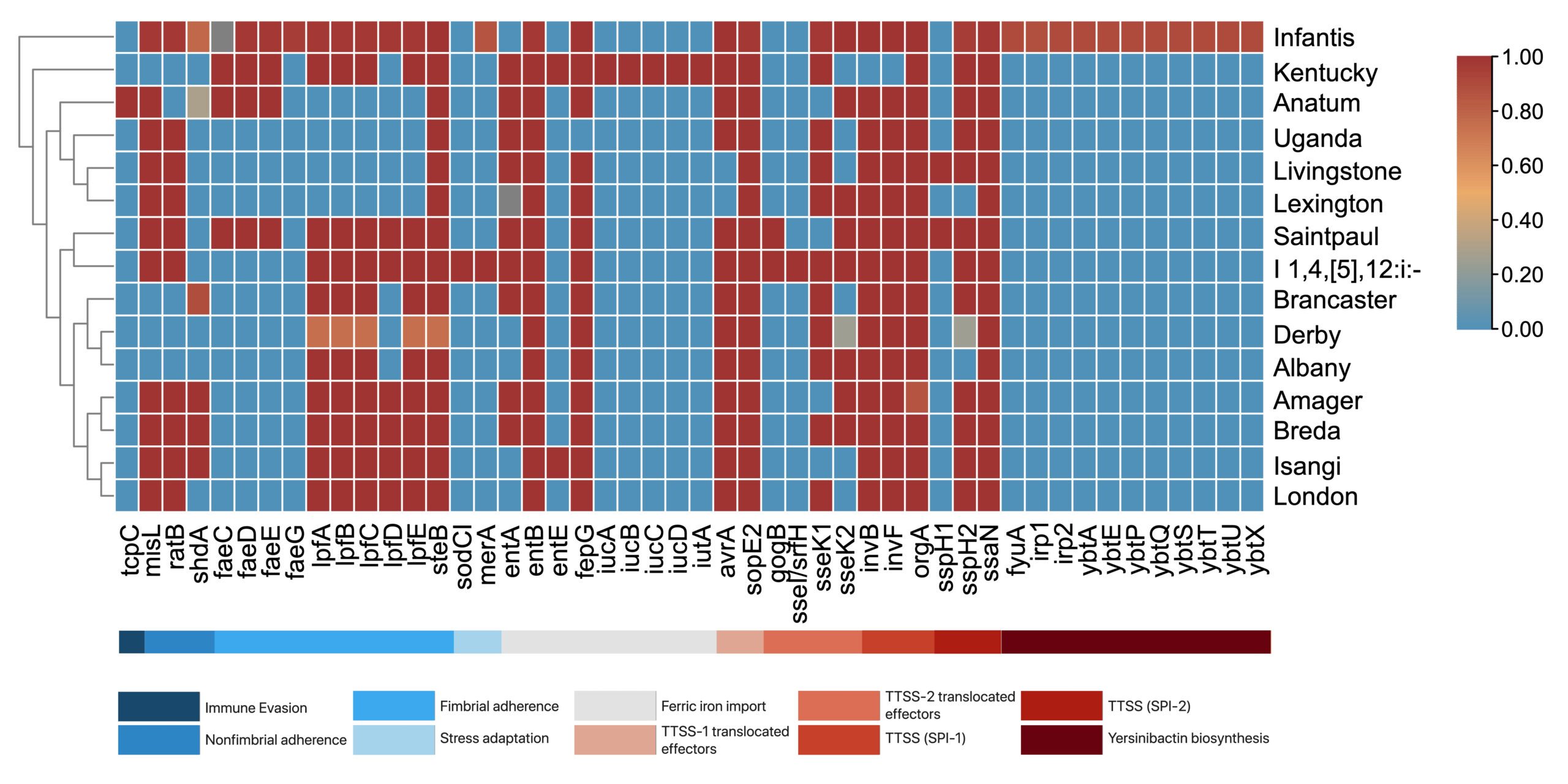
The most predominant type of Salmonella was Infantis, followed by Brancaster, Anatum, London, Uganda, and Derby, all of which possessed diverse virulence and resistance genes. High levels (>45%) of multidrug resistance were observed when tested against antimicrobial panels, with a total of 50 ARGs detected, conferring resistance to 12 different drug classes. Numerous plasmids — small, circular DNA pieces that play a vital role in spreading resistance — were also identified in some types of Salmonella.
“Our study suggests a need for proper surveillance of contaminating bacteria as well as regulations on antimicrobial use at the farm level, as infections from MDR Salmonella, especially among vulnerable populations and from highly virulent serovars (types of Salmonella), can lead to life-threatening, systemic, and untreatable manifestations,” the team said.
The biologists further emphasized that there is a clear and significant risk of MDR Salmonella variants spreading within wet markets and food animal value chains, as well as the potential for cross-contamination and undetected transmission in kitchens and homes.
“Mitigating this concern requires multi-sectoral policies, regulations, and standards—especially regarding proper antibiotic use, increased awareness of AMR and MDR at the farm, clinical, and community levels, and support for research and development of antimicrobial alternatives, and surveillance of foodborne pathogens and resistance,” the team concluded.
The study was supported by the Department of Agriculture-Biotechnology Program Office.
For interview requests and other concerns, please contact media@science.upd.edu.ph.
References:
Mora, J. F., Meclat, V. Y., Calayag, A. M., Campino, S., Hafalla, J. C., Hibberd, M. L., Phelan, J. E., Clark, T. G., & Rivera, W. L. (2024). Genomic analysis of Salmonella enterica from metropolitan Manila abattoirs and markets reveals insights into circulating virulence and antimicrobial resistance genotypes. Frontiers in Microbiology, 14. https://doi.org/10.3389/fmicb.2023.1304283
Nagpala, M. J., Mora, J. F., Pavon, R. D., & Rivera, W. L. (2025). Genomic characterization of antimicrobial-resistant Salmonella enterica in chicken meat from wet markets in Metro Manila, Philippines. Frontiers in Microbiology, 16. https://doi.org/10.3389/fmicb.2025.1496685

Started in 1927, the Philippines Graphic is the longest-running printed magazine of national circulation that provides relevant news and features and promotes Philippine literature.