


In a period marked by fiscal pressure, public distrust, and growing demands for government accountability, Bureau of Internal Revenue Commissioner Charlito Martin R. Mendoza is attempting one of the country’s most difficult institutional balancing acts: collecting what the state needs while rebuilding public trust in the system.
Before bargain hunters filled the narrow maze inside the 168 Mall, revenue officers from the Bureau of Internal Revenue (BIR) had early access.
Not exactly for the cheap shoes and bags inside Manila’s most popular shopping destination, but for what they call a friendly “chat” with business owners and vendors.
Stores have just opened, and delivery carts rattling across narrow aisles gave way to revenue officers moving from shop to another to check certificates of registration, books of accounts, invoices and official receipts of business establishments.
At the center of the visit was Internal Revenue Commissioner Charlito Martin R. Mendoza himself.
The “friendly” operation was part of the bureau’s “CHAT” campaign, which stands for “Counsel, Help, Assist Taxpayers”—an initiative launched during Tax Awareness Month last February to encourage voluntary compliance for business owners through education rather than intimidation.
In other parts of Metro Manila, deputy commissioners also led the initiative, which was implemented simultaneously across all 22 revenue regions.
For decades, the BIR has been one of the country’s most “feared” and complained-about government agencies, associated by the public with audits, complex procedures, delays and corruption.
The bureau is trying to change that, Mendoza said, despite the challenge extending far beyond public perception.
HERCULEAN TASK
As the country’s main tax-collecting agency, the BIR’s responsibility is to collect revenues properly and administer the tax system well, as Mendoza described.
It is easier said than done when you are tasked to fund the country’s P6.793-trillion national budget this year.
To fund these expenditures, the bureau must collect P3.579 trillion in taxes, which is more than half of the budget.
This is a Herculean task for the BIR, as this year’s revenue target is 10.73%, or P347 billion higher than last year’s P3.232-trillion target.
“If tax collections fall short, then economic managers may need to recalibrate fiscal strategy for the year,” Mendoza told the Philippines Graphic. “Some projects may have to be put on hold. And for those that cannot be deferred, the government may need to look for other sources of financing, usually through borrowing.”
Although borrowing seems easier than raising taxes, having a higher borrowing program comes with long-term consequences.
The government’s financing plan is calibrated alongside its revenue and spending assumptions.
That means, weaker tax collections could force the state to rely more heavily on debt to sustain public expenditures.
Higher borrowings, in turn, could raise interest payments—an expense that already takes up a large portion of the national budget.
As debt servicing costs increase, the government may have less fiscal space for social services, infrastructure, education, healthcare, and other priority programs.
“That is why our focus is not just on targets, but on strengthening collections, driving voluntary compliance, and plugging revenue leaks,” Mendoza said.
He put it clearly: Taxes are not merely numbers in collection reports; they keep the government running to support public services. They fund the nation’s vital necessities, such as classrooms, roads, hospitals, agriculture programs, social protection services and military modernization, among others.
For the BIR commissioner, the more important discussion should center on how collections are actually being conducted.
“Are we collecting well? Are the reforms we put in place working?
Are they helping to bring in the revenue the government needs throughout the year?” Those are the questions he posed rhetorically.
“Our job in the BIR is to strive to meet the target, and measure our performance against it.”
BUILDING TRUST
With the national issues that hugged the headlines in the past year, Filipinos became hesitant and demanded better use of taxes deducted from their hard-earned salaries.
“Where do our taxes go?” they asked, after various areas around the country were submerged in floods, along with the controversies among politicians and contractors allegedly pocketing funds supposedly for crucial infrastructure projects.
Since then, the public has been concerned that their taxes do not always end up for proper use.
The BIR, apparently, feels the exact same sentiments.
“It concerns us, because tax collection depends largely on voluntary compliance,” Mendoza shared. “That, in turn, depends greatly on public trust.”
To gain the public’s trust, the commissioner said the bureau is focusing on improving its services and systems.
“We build trust by improving [our] service, strengthening our digital systems, making compliance more predictable, and enforcing the law fairly and consistently,” he told the Graphic.
This year’s tax campaign theme: “Mahusay na Serbisyo, Katumbas ng Buwis Mo [Excellent Service, Equivalent to Your Taxes]” reflects what Mendoza describes as a recommitment to professionalism, integrity, and superior service within the BIR.
“If we want [to earn the] people’s trust, then we have to show them, in concrete ways, that we are serving them well,” the bureau chief emphasized. “That effort begins with transforming how Filipinos experience the tax system itself.”
FROM FEAR TO COMPLIANCE
Mendoza admitted that, for the longest time, filing taxes was a “tedious” task, as the system remained rooted in manual processes.
Filipinos associated filing taxes with paperwork, long lines, complicated procedures, and intimidating transactions with the BIR.
“Even in the earlier years of digitalization, many compliance requirements were still designed for a manual environment,” the commissioner admitted. “That created duplications and layers in the process.”
But now, the BIR is doing its best to tear down those layers and make the Filipino taxpayers’ tax- filing tasks easier. Most filing and payment transactions can now be done online through the BIR’s Electronic Filing and Payment System, or eFPS, alongside several online payment channels.
Still, some taxpayers are unfamiliar with digital systems and need assistance. Senior citizens and persons with disabilities, in particular, can seek help through e-Lounges situated in various Revenue District Offices or RDOs.
The BIR also coordinated with banks and digital payment providers for smoother transactions during the peak filing period.
Mendoza acknowledged that there is still a gap in taxpayer education.
As such, the bureau head disclosed that the BIR has started producing tutorial videos on basic processes, and will build a more comprehensive library of these materials that taxpayers can easily access.
“In the long term,” he added, “as we go digital, streamline procedures, and remove redundant requirements, tax compliance should become simpler, faster, and more straightforward for the ordinary taxpayer.”
B.I.R. ‘DARES’
Digital transformation is just part of a broader five-point priority reform and legacy agenda dubbed “BIR DARES,” led by Mendoza.
DARES stands for Digital and Data Transformation, Audit Reform and Accountability, Revenue Collection and Base Protection, Employee Empowerment and Welfare Promotion, Service Excellence and Stakeholder Engagement.
This year alone, the bureau will roll out six priority projects: Phase 1 of the Taxpayer Portal, Electronic Authority to Release Imported Goods or e-ATRIG, e-BIR Forms 1701-MS and 1709, Electronic Tax Residency Certificates or e-TRC, Internal Revenue Stamps Integrated System or IRSIS for excisable goods, and the Digital TIN or e-TIN within the eGOV app.
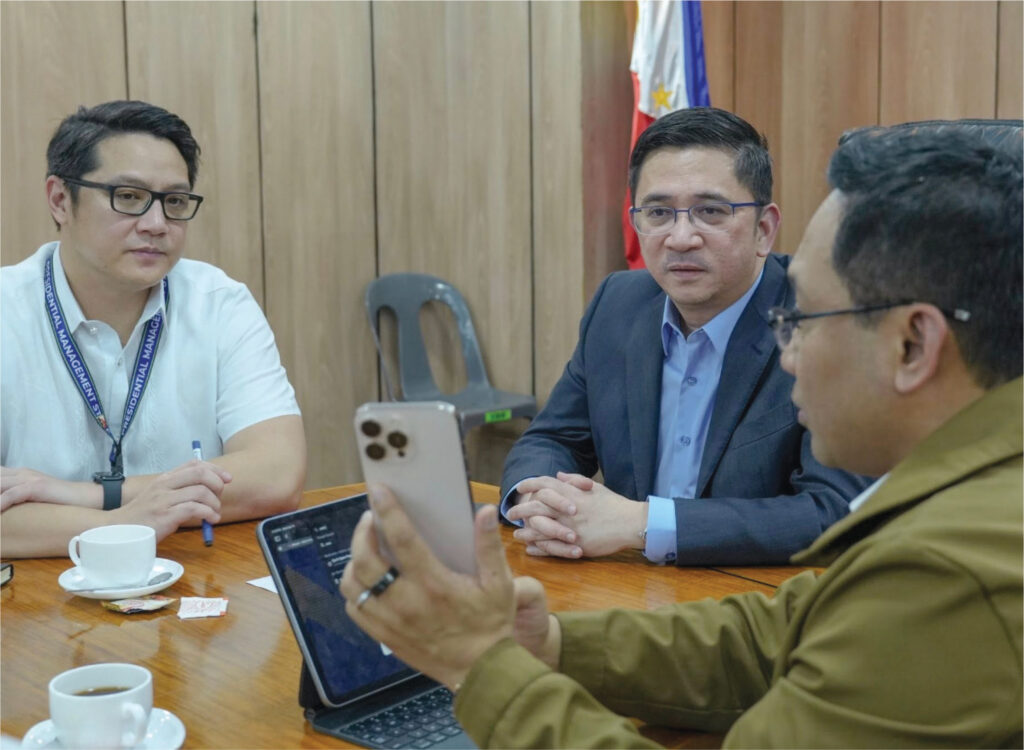
For Mendoza, digitalization is not only about convenience, but also about improving efficiency, reducing opportunities for corruption, and strengthening compliance monitoring.
As the digitalization initiatives advance, so does compliance among taxpayers, Mendoza believes, as collections and revenue base generally grow over time.
To rebuild public trust, he insisted that “long-standing complaints about abuse and corruption inside the BIR must also be confronted.”
AUDITING THE AUDITORS
Upon assuming his role as commissioner, Mendoza has immediately suspended the issuance of Letters of Authority or LOAs and Mission Orders, which are allegedly being misused by BIR personnel as a “money-making scheme” by extorting taxpayers.
He issued Revenue Memorandum Circular 107-2025 to prevent BIR employees from formally examining a taxpayer’s books of account and financial records. The suspension aims to address systemic issues, protect taxpayer rights, strengthen audit integrity and develop a transparent, standardized, and modernized audit framework.
During the two-month pause, the BIR reviewed its audit framework, consulted with stakeholders, and engaged with the private sector.
The suspension was lifted in January, as the BIR simultaneously rolled out a reformed audit program to make assessments fairer and more accountable.
The bureau is now limited to issuing one LOA per taxpayer per taxable year, covering all applicable internal revenue taxes, including value-added tax.
Revenue officers are likewise prohibited from issuing unreasonable assessments, as audit notices should only address unresolved issues and must clearly specify the factual and legal grounds, including relevant laws and jurisprudence.
During audits and assessments, the use of standardized audit checklists is mandatory, along with thorough documentation of audit activities and all interactions with taxpayers.
“With audits resuming under these improved rules, we call on taxpayers and the public to actively work with the BIR, reach out for assistance when needed, and uphold compliance so that together we can ensure fair and professional audits for all” was the prodding of the commissioner.
With all these in place, the real test of the BIR’s reforms is whether taxpayers are becoming more willing—and more able—to comply.
TAX DAY (EXTENDED)
The perfect example to test the BIR’s attempt to reinvent itself is the “Tax Day” on April 15—the deadline for the filing and payment of the annual income tax return (AITR).
After its successful tax campaign— a nationwide kickoff that united government, partners and citizens— the bureau built its momentum toward the filing season this year.
The bureau campaigned across the country, met taxpayers and encouraged compliance. Preparations were set in place, and various memoranda were issued to ensure that every revenue regional office and RDO was ready to support taxpayers nationwide.
Throughout the filing season, the BIR’s information dissemination became aggressive and multi-platform: e-mail blasts, banners and streamers, advertisements, radio broadcasts, social-media posts and reminders from well-known personalities encouraged the public to act early and avoid the rush of last-minute filing.
Webinars were also conducted to provide step-by-step instructions on filing and paying taxes properly, making the process easier to understand and follow.
Likewise, tax assistance centers were established. They brought services closer to the people, and helped taxpayers file and pay with ease and confidence.
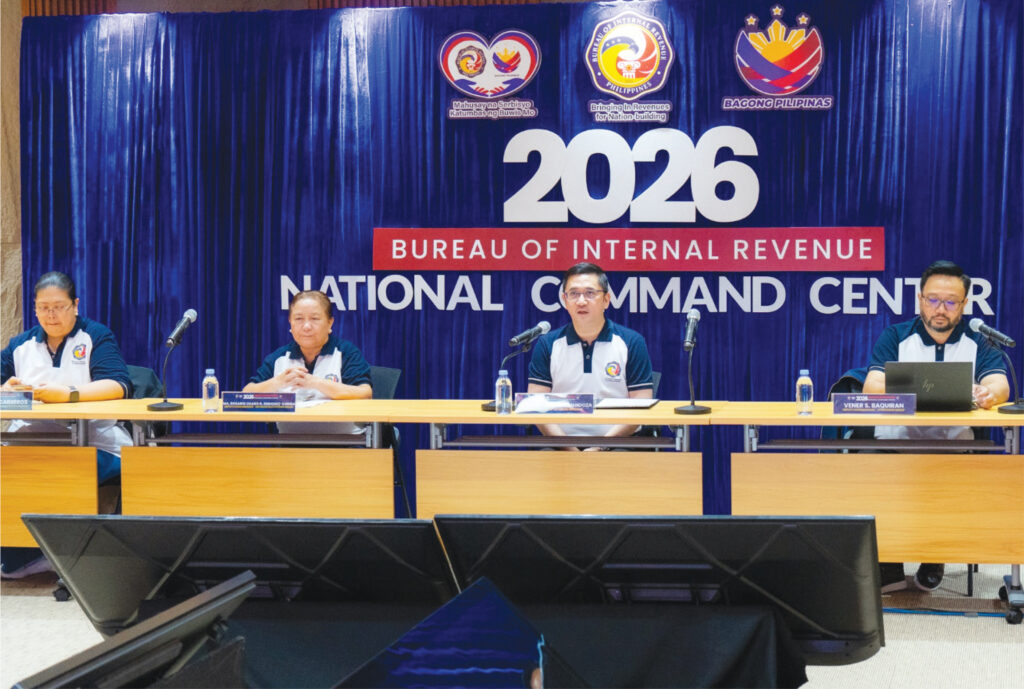
The BIR’s Nationwide Command Center—a centralized operations hub— was established to monitor nationwide filing and payment activities in mid-April.
As April 15 drew closer, President Ferdinand R. Marcos Jr. announced that the deadline was moved to May 15 to give taxpayers additional relief amid the ongoing energy crisis.
Mendoza issued Revenue Memorandum Circular 030-2026 so that taxpayers will have more time to properly file their returns, settle their obligations, and submit the required attachments without the imposition of penalties, “particularly at a time when the effects of rising oil prices are being felt.”
The extension appeared to help increase participation. As of May 15, 2.266 million taxpayers filed electronic annual income tax returns—higher by 4.86% than the 2.161 million taxpayers who submitted their AITRs during the same period last year.
But while more Filipinos filed taxes this year, the numbers also revealed a more complicated picture.
MIXED NUMBERS
Total tax payables—or the amount of taxes owed by individuals to the BIR—declined by 23.77% to P141.54 billion as of May 15, from P185.67 billion in the same period last year.
About P96.862 billion had been paid, of which P93.103 billion had already been posted, while P48 billion has yet to be collected, according to BIR data.
The decline was due to individual taxpayer payables, which dropped by 65.55% year-on-year—from P82.449 billion to P28.4 billion— despite filer counts remaining relatively stable.
Company filers, however, showed stronger results as payables went up by 9.73 percent to P113.141 billion from P103.108 billion a year ago due to an increase in filers.
The BIR also identified some 446,000 taxpayers who filed income tax returns last year but had yet to file this year, representing an estimated P16.19 billion in possible collection exposure based on prior- year data.
These figures were reported at the National Command Center, where BIR officials from various divisions gathered to monitor operations in real time—from taxpayer turnout and filing volumes to cybersecurity events, payment systems, field conditions and network stability across the country.
Beyond collection figures, taxpayer turnout across the country remained “manageable” throughout the filing period.
Connectivity across the National Office, revenue regions and RDOs remained operational throughout the filing season, with only one major field issue reported—a power interruption affecting RDO 16 in Quirino Province.
The BIR prevented congestion during peak filing periods through its coordination with telecommunications partners, which upgraded bandwidth capacities in several sites.
Meanwhile, 27 security events were detected during the filing season, although none caused operational disruptions.
Electronic filing platforms, including eBIRForms, eFPS or the electronic Filing and Payment System, and the Online Registration and Update System or ORUS, likewise remained stable and operational.
Payment operations were also stable across electronic gateways linked to Land Bank of the Philippines, UnionBank of the Philippines, Development Bank of the Philippines and fintech platforms such as Maya, alongside 3,375 authorized agent bank branches nationwide.
Moreover, the BIR’s Customer Assistance Division handled 538 calls, 348 chats and 4,354 emails from taxpayers, with the most common concerns involving filing procedures, payment channels, attachments and system access concerns.
Despite the May 15 test showing lower payables from individuals, businesses and corporations, broader compliance and participation among taxpayers were still observed.
The BIR was also able to surpass its emerging revenue target for April, even with the extension of the deadline for the filing and payment of annual income tax.
April is typically the month when the bureau’s collection target is at its highest, as it coincides with the deadline for annual income tax payments. Taxes on net income and profit alone accounted for nearly half of the target, or P228.479 billion.
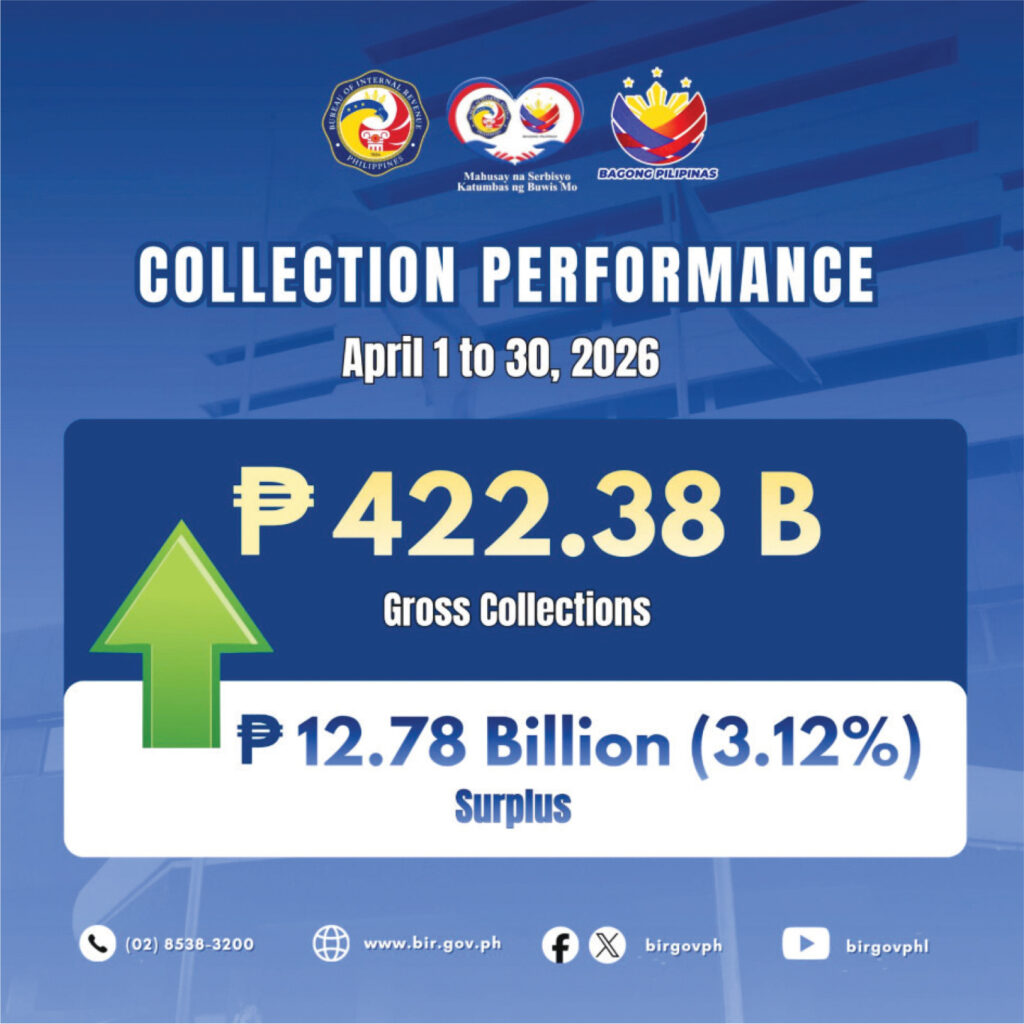
It exceeded a P409.601-billion emerging target for April by 3.22%, as its gross collection reached P422.378 billion.
“Even with the extension of the [AITR] filing deadline, the BIR sustained solid collection performance in April, reflecting the impact of higher taxpayer confidence, better digital services, and continuing reforms under the ‘BIR DARES’ reform agenda,” Mendoza confirmed.
From January to April, the BIR collected a total of P1.155 trillion— higher by 3.58% than the P1.115 trillion it collected in the same period last year.
According to the commissioner, the four-month collection indicates that the BIR remains on track to achieve its revenue goal this year, while it continues to improve taxpayer services.
Among the taxes to be collected this year, the bureau chief said corporate income tax and withholding taxes continue to hold strong promise, especially among large taxpayers.
He noted that historically, income tax collection from large taxpayers has represented roughly half of the BIR’s total income tax collection nationwide.
“[Value-added tax or] VAT on digital services is another area with potential, as it reflects the growth of digital economic activity and the need for tax administration to keep pace with that growth,” Mendoza added.
The Philippines began imposing a 12% VAT on digital services consumed in the country last June 2025 to level the playing field between traditional and digital businesses.
Although excise taxes remain one of the major revenue drivers for the BIR, those levied on tobacco and vape products are a persistent concern due to the illicit trade ecosystem that surrounds these products, Mendoza pointed out.
“Fake and smuggled cigarettes and vapes deprive the government of revenues that should otherwise be collected,” he said.
The BIR has been boosting its enforcement operations, seizing illicit cigarettes and vape products estimated to be worth billions of pesos and destroying them to prevent market entry.
As it navigates through 2026—a delicate time for the economy marked with slower economic growth, market volatility and geopolitical tensions—the BIR needs someone who will steer it toward the right path.
THE COMMISSIONER IN FOCUS
Appointed as BIR commissioner in November 2025, Mendoza is a lawyer and, surprisingly, a licensed geodetic engineer.
As the more math-oriented child in their family, he earned his degree in Geodetic Engineering from the
University of the Philippines. He passed the board exam and became a licensed geodetic engineer while he was already in law school at San Beda University.
After passing the Philippine Bar Examination—even placing third— Mendoza went straight into private legal practice.
He was an associate lawyer at the Angara Abello Concepcion Regala & Cruz Law Offices or ACCRALAW, and the Suarez and Narvasa law firm for 15 years. He also co-founded the Palafox Patriarca Romero and Mendoza law firm in 2014.
Mendoza has also taught law to students at New Era University and served as a Pre-Bar and Mandatory Continuing Legal Education lecturer.
Proficient in numbers, he admitted becoming a lawyer was not what he had seen for himself, which is why engineering felt like the “natural course” for him to study in college. It was actually his brother, who was already an attorney, who nudged him to give law school a try.
There, he realized that law and math are similar in the search for truth, an appreciation for logic, a respect for structure, and the challenge of problem-solving.
Entering the government, Mendoza honestly admitted, is not something he imagined for himself growing up. It was not even part of his plans, he said.
However, growing up with his parents both in the academe—his mother was a teacher while his father was a school principal—Mendoza witnessed how they took their responsibilities not only from the campus, but to the community as well.
He insisted that law, as a means of helping people understand their rights and obligations, is a “service profession.”
It was in 2019 when Mendoza was called to public service—an opportunity he said he could not refuse.
Being in the Executive branch of the government, he had the opportunity to serve individual clients, as well as to institutions and the public, at a much larger scale.
FAMILIARITY AND EXPERTISE
Mendoza is no stranger to the Department of Finance (DOF), where the BIR is an attached agency. He previously brought his expertise to the Bureau of Customs (BOC) as Port of Cebu’s district collector.

During his tenure at the BOC, Mendoza led the port to record-breaking revenue collections and significant border protection milestones.
But behind those successes, he admitted that it was a “difficult” time, as he spent the three years of the pandemic in Cebu.
Still, the port became the first customs collection district to have its main port and all subports ISO 9001:2015 certified under his leadership.
Mendoza was then assigned to the DOF as undersecretary for the Revenue Operations Group in April 2024 to oversee operations of the BIR and BOC. The ROG oversees and supervises both bureaus’ operations to ensure effective revenue administration for the government to meet its annual revenue collection targets.
In his stint at the DOF, Mendoza spearheaded the “BRAVE” campaign (Border Security Enhancement, Revenue Collection and Revenue-Base Protection, Adaptive Regulations and Compliance Monitoring, Vigilant Enforcement Operations and Vigorous Intelligence Gathering Activities, and Effective Engagement with Stakeholders and Inter-Agency Cooperation) to curb smuggling and illicit trade, with digitalization playing a central role.
With BRAVE in place, the DOF was able to surpass its revenue target in 2024, as collections reached P4.42 trillion, or equivalent to 16.7% of GDP—the highest in 27 years.
FINDING THE BALANCE
Five months into the job as commissioner of the BIR, Mendoza said the most challenging part of leading the bureau is striking the right balance.
The BIR chief wants to address immediate concerns and deliver quick wins with immediately felt results, while also building longer-lasting solutions that take time to develop, roll out and integrate.
“[We have to respond to what needs fixing now, but we] also have to stay focused on reforms that will hold and outlast our time in office,” Mendoza said. “I am aware that as an appointee, my time in office is limited, so I remind myself often to focus on doing the most I can in whatever time I am given, and to leave the agency in a better position to serve and reform.”
Apart from these, something that is “very close” to Mendoza’s heart is strengthening the BIR from within through employee empowerment and welfare promotion. For him, organizational success depends entirely on its people. Public service, he said, will take a hit if the BIR does not build up its people, support them and take care of them.
But behind the reforms and revenue targets is the demanding daily rhythm of running one of the government’s most important agencies. For Mendoza, life as a commissioner rarely slows down.
The commissioner’s day starts at 5:30 in the morning, often with nothing more than a cup of coffee beside him as he scrolls through messages and e-mails already waiting on his phone.
Most of his day is consumed by meetings, leaving him little time to review and sign documents until late in the afternoon.
The workday rarely ends early.
The BIR chief typically leaves the office at around 8:30 p.m.—sometimes later when stacks of documents still require his signature. Even before going to sleep at around 11 p.m., work continues in smaller ways.
Before turning in for the night, the commissioner checks a group chat with the BIR’s regional directors, where officials from across the country send updates—often accompanied by photographs—detailing the day’s operations, enforcement activities, and accomplishments within the bureau.
The weekends, thankfully, are deliberately quieter. By his own admission, the commissioner is a homebody, preferring to stay home to catch up on sleep, rest and family time.
Mendoza spends most of his weekends with his two children: a 13-year-old son and a five-year- old daughter—a routine that offers a brief pause from the pressures of overseeing one of the country’s most demanding institutions.
The following is a detailed account of an exclusive with the BIR chief:
GRAPHIC: The BIR is tasked with raising P3.579 trillion this year. Among the taxes to be collected, what holds promise that would enable the bureau to meet this target, and what are the most challenging to collect?
MENDOZA: The collection target is set based on the projections of the Development Budget Coordination Committee or the DBCC, and broader macroeconomic assumptions.
For us in the BIR, the task is clear: to collect what is due under the law, and work steadily toward that target.
In terms of tax types, corporate income taxes and withholding taxes remain very important and continue to hold strong promise, especially among large taxpayers. Historically, income tax collection from large taxpayers has represented roughly half of the BIR’s total income tax collection nationwide.
VAT and excise taxes also remain major revenue drivers. VAT on digital services is another area with potential, as it reflects the growth of digital economic activity and the need for tax administration to keep pace with that growth.
Excise taxes on tobacco and vapes remain a persistent concern because of the illicit trade ecosystem that surrounds these products.
Fake and smuggled cigarettes and vapes deprive the government of revenues that should otherwise be collected. That is why the BIR has been ramping up enforcement operations against illicit cigarettes, vapes, and other excisable articles.
More broadly, the difficult areas are those affected by leakages, illicit trade, and underreporting.
We always talk about the BIR’s collection target. Do you think it’s important to discuss this? What is at stake for the country if tax collection targets are not met this year?
Discussion of collection targets has its place in the fiscal year. You discuss targets when they are being set at the start of the year, and again if macroeconomic assumptions change during the year and targets need to be adjusted.
For the rest of the year, the target should serve mainly as a goalpost for measuring collection performance. The more important discussion is how collections are actually performing. Are we collecting well? Are the reforms we put in place working? Are they helping to bring in the revenue the government needs throughout the year?
The target assigned to the BIR is based on DBCC projections, and our job is to strive to meet that target and measure our performance against it. If tax collections fall short, then economic managers may need to recalibrate fiscal strategy for the year.
From the BIR’s side, our focus really is not just on targets, but on strengthening collections, driving voluntary compliance, and plugging revenue leaks.
What steps is the BIR taking to simplify the filing process? Please cite the major improvements that were recently implemented.
For this filing season and moving forward, we focused on digital reforms that streamlined filing and payment, reduced the need for physical transactions, and eliminated redundant requirements carried over from a manual system. Most filing and payment processes can now be completed online through eFPS and other electronic payment channels.
In 2025, about 93% of all filings were done electronically, while about 85% of tax payments were made electronically. For taxpayers who still needed assistance, our e-Lounges in the RDOs remain available, especially for senior citizens, persons with disabilities, employees with more complex filing situations, and taxpayers without Internet access.
We also coordinated with banks and digital payment providers for smoother transactions during the peak filing period. To address the existing gap in taxpayer education, we have instituted year-round training, tax education activities, and clearer step-by-step guidance, especially for younger taxpayers and first-time filers.
We have already started producing tutorial videos on basic processes, and we intend to build a more comprehensive library of these materials that taxpayers can easily access. In the long term, as we continue to go digital, streamline procedures, and remove redundant requirements carried over from a manual system, tax compliance should become simpler, faster, and more straightforward for the ordinary taxpayer.
The BIR has been pushing for digital transformation. How close is it to going fully digital? What changes have you noticed in the state of tax compliance in the country after taking that route? What are the new reforms that you will push for?
We are advancing our digital transformation projects, with several initiatives lined up this year for both internal monitoring and taxpayer-facing systems. The direction is toward more integrated electronic systems that make tax administration more efficient for the bureau, and more accessible for taxpayers.
One clear change is convenience. With digital systems, there is less need for in-office visits, and many payments are already made through authorized agent banks and other electronic channels.
More broadly, our collections and revenue base have generally grown over time, and that tells you compliance is improving alongside digitalization. Digital systems make filing, payment, and compliance monitoring more manageable.
Those help both taxpayers and the bureau.
Some quarters have proposed merging the BIR and Bureau of Customs. Do you think that’s a good idea?
While the BIR and the Bureau of Customs are both revenue agencies, they serve different functions, and operate in very different environments. The BIR focuses on domestic taxation and taxpayer compliance; the BOC, on the other hand, operates at the border, where trade facilitation, import and export regulation, and interdiction all come into play.
But I understand the concern behind the proposal to merge the two agencies. It reflects longstanding concerns about fragmented functions and lapses in coordination in revenue administration.
For me, though, the bigger issue is governance. Revenue performance depends less on whether agencies are merged and more on how well they are run: whether mandates are clear, whether audit and enforcement are carried out with integrity, whether personnel are professional and protected from undue influence, and whether digital and data systems are used effectively.
For now, stronger coordination and better data sharing between the two agencies are the more practical and immediate priorities.
Digital solutions are already advanced enough to support integrated data systems for intelligence sharing, procedural efficiency, and better coordination between the agencies.
We are working toward stronger information sharing, and more effective joint action where needed.
The idea of a National Revenue Authority can remain part of the longer-term policy conversation. A merger of that scale is not a simple reform: It requires legal clarity, transition capacity, and enough safeguards to make sure collection and enforcement are not disrupted in the process.
The more practical path at this stage is to improve governance where it matters most: streamline processes, tighten audit integrity and accountability, improve coordination between agencies, and continue modernizing the workforce and digital systems of both agencies. When we do that well, we already address many of the concerns raised by proponents of that idea.
Perceptions persist that taxes are not always used efficiently. If you had to explain to an ordinary Filipino where their taxes go, what would you tell them? How will the BIR build trust among the public?
It concerns us because tax collection depends largely on voluntary compliance. That, in turn, depends greatly on public trust.
Put simply, taxes are what the government uses to keep running and to support public services. From the BIR’s side, our responsibility is to properly collect taxes and administer the tax system well. That is why, in the bureau, we focus on improving our services and systems to strengthen public trust and increase compliance.
Our tax campaign theme this year, “Mahusay na Serbisyo, Katumbas ng Buwis Mo,” is a recommitment to the public and to ourselves in the BIR that we bring our guiding principle of service excellence, with integrity and professionalism, into our daily operations.
If we want people’s trust, then we have to show them, in concrete ways, that we are serving them well.
Published in the May 2026 special issue of the Philippines Graphic.

Reine Juvierre S. Alberto
Reine Juvierre S. Alberto is a reporter at BusinessMirror covering the Department of Finance and the Department of Budget and Management. She earned her bachelor’s degree in journalism from the University of Santo Tomas in 2023 and began her career as a proofreader before joining the newsroom as a reporter.

 had early access.)