

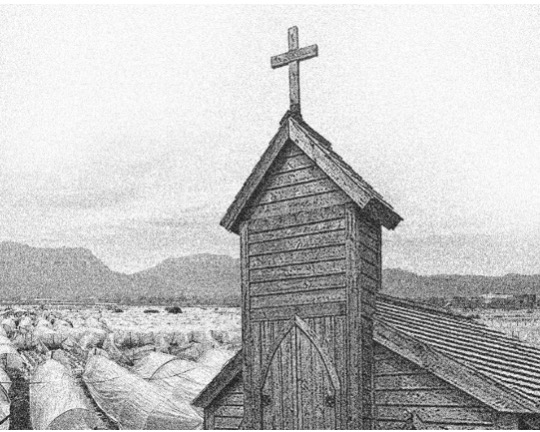
Lander left our community church on the first Sunday of the year. Three years ago, I did the same thing. After college, I wanted to work in the city and felt the smallness of our community. That time, Lander asked me, “Seleny, why are you leaving our church? We have grown up and built relationships here. This has become our heavenly inheritance, and we are here to sustain each other.” He was thinking about the abundance of his inherited vegetable land at La Trinidad. I could see it in his eyes, the worry, the pain, and the disbelief that had fallen upon him; he could not fathom how people, after being rooted in a place, become like his pine trees, which would sever ties from their source, the earth.
I was filled with anxiety and became speechless, and in the years to come, I would regret this. I felt like I had left a younger brother, unable to give him a proper explanation. This would become a moment of severing the ties of our friendship forever. Yet there was a silent agreement between him and me to leave the church. Although I could only assure him that I would return once the atmosphere became clear, there was no assurance of continuing our bond. I was not prepared for the consequences of all of this because after three years of my return to the church, he would also leave. I already knew that this time, I would spare him from questioning because I understood that it was our fate. When we started all together, it was beautiful, but suddenly I left, he stayed because he held on to his belief. When I finally returned, it was also a time for him to leave. Life was a terrible storm stirring chaos beneath the unforgiving Igorot Sky.
I met Lander when my mom brought us to visit their home worship gathering at La Trinidad. Their town loomed big to me that time with its wide cradle of vegetable gardens, surrounded by tall mountains and pine forests. A small road led to their home on top of the hill near the border of Sablan. The road going there was worn out and dusty as heavy trucks transported vegetables from their farms to the city. The winds would blow strong where abundant sunflowers along the way would fold up their leaves and dry out in the sun. We passed through the wide orange farm brimming with fruits, I wanted to pick those that fell on the ground and then taste its sweet water; however, mom and the adults seemed not as engrossed as I was. Later, I would learn of the reason that it’s actually a university lab used only for grafting citrus trees, and when I got the chance to taste its fruits, they had a bitter taste.
There were only a few bungalow houses in the place, and the wide tunnel farms of cabbages, carrots, and lettuces crisscrossed the slopes of their mountains. Lander’s house sat above those farms near the pine forests where coffee trees and sweet pineapples were planted. It seemed to be the only house that supplied electricity to its surrounding farms. On the other side, there were other farms, too, including a sayote farm covering the other side of the mountain. There were other plants, too; their house was surrounded by potted anthuriums, flowers, and cactuses laced with thin green nylon covers catching the pine needles in the air. The small path was paved by yellow bushes and tall bottle brush trees; the purple green prayer plants were scattered in the area.
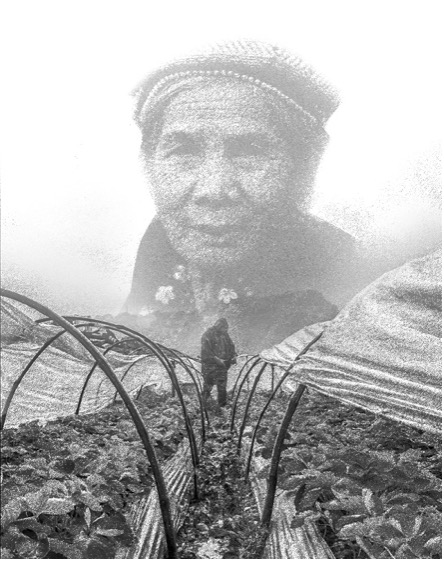
During that visit, locals, mostly farmers from far areas, gathered with us that afternoon at Evander’s house. They wore farm boots to match their best clothes – faded jeans and coloredtT-shirts that seemed to pop out against their leather complexion. What warmed me most is how they smiled genuinely to welcome us, their passion overflowed when they talked about their farm produce as they offered it to our church that day. Their voice would sing-song whenever they talked about how thankful they were for the abundance of rain and good sun. I saw Lander seated in front of a small fire in their outside kitchen. He was roasting coffee beans, and the smell of a rusty, fruity, and woody smoke made me remember that moment as special. I sat quietly beside him and watched him push sticks to the fire and expertly mix the beans; there was an unexplainable hominess I felt. Later we would recreate the times we came and visited their place.
Soon, I was busy teaching in a small public school. Lander’s younger brother would come and bring me carrots, potatoes, and cabbage at my office. He wore his farm boots caked with mud and gave a shy smile, saying, “This comes from Lander. He is asking if you could come this Sunday to our church.” I was almost embarrassed by their persistence with me, yet I was blinded by my wanting to be in the city. I could only thank them and give my regards to their family. At home, Mom would cook those vegetables, and I would hold back my tears because those vegetables were so tasty and sweet, I felt the warmth of the sky rain and the sun.
I would finally visit again when I heard that Lander’s Lola Nimi passed away. I was having my afternoon class when there was a sudden stillness in the room. I looked out of the window, in between those cut flower designs made by my students and those still leaves of the trees outside, I saw birds flying from the direction of the forest mountains of La Trinidad, and I knew behind them were the wide farms and bungalow houses surrounded by coffee trees. I remembered Lola Nimi on an afternoon visit, she was depulping coffee cherries in a small basket, her feeble hands removed the skin and the small flesh, then dried them out in the sun. She was small and weak, yet despite her age, she would eagerly welcome us with a smile. I would greet her back and hug her; it felt like holding a small bird – delicate and dreamlike. At that moment, I received a call from Lander. He was sobbing, “Seleny, our Lola passed away this morning. We found her lifeless lying beneath the trees, after she had finished watering the plants.” I didn’t attend my last class and asked my co-teacher to look after them instead. I rushed from school and traveled to La Trinidad, I was holding back my tears and learned how three years had passed since I returned to the place, I had almost forgotten that I had a promise to carry.
I reached their house at sunset when the sky was painted with deep colors of blue, orange, and red. The pine trees were shadowed by the moving clouds. I saw Lander coming from the forest carrying cut pine woods, and when he saw me, he stopped in his tracks and looked at me for a long time, his eyes mirrored the Igorot sky there in the middle of the wide expanse of mountains. I stood there waiting and wanting him to smile. When he did, his smile was painted with pain and longing. It was only that moment that I felt somehow that I was wrong in those past years and had considered that it was probably worth trying again. I decided to attend the vigil nights and the burial until Sunday.
That was the first month of the year, and I returned to our home church and reconnected with the community. The land where the church stood was donated land by one of its members, and its building construction started with the small offerings and bayanihan labor of the community, including Lander and his brother. It was finished at the same time I returned. However, Lander had left the church and worked full time on his farm. There were times that I would visit their home, but he would not be there. We would meet accidentally in the jeepney station or bump into each other in the public market, he, coming from delivering his crops, and me from school, but we didn’t talk about our home church.
Lander would still send his vegetables through his younger brother, and Mom would eagerly cook, and them. I would wait patiently for the next three years, standing at the gates of the church, looking for signs left by the path of the flying birds in the mountains, and searching for the right time, like plants, flowers, and trees in their fullest growth from the earth.

Richard A. Giye is a Cordilleran writer. He is a fellow of the BIYAG Benguet Creative Writing Workshop and of Linangan sa Imahen, Retorika at Anyo (LIRA). The Province of Benguet awarded him the Essayist of the Year in 2022 and Promising Artist for Literature in 2023. He teaches language and literature at Benguet State University.