

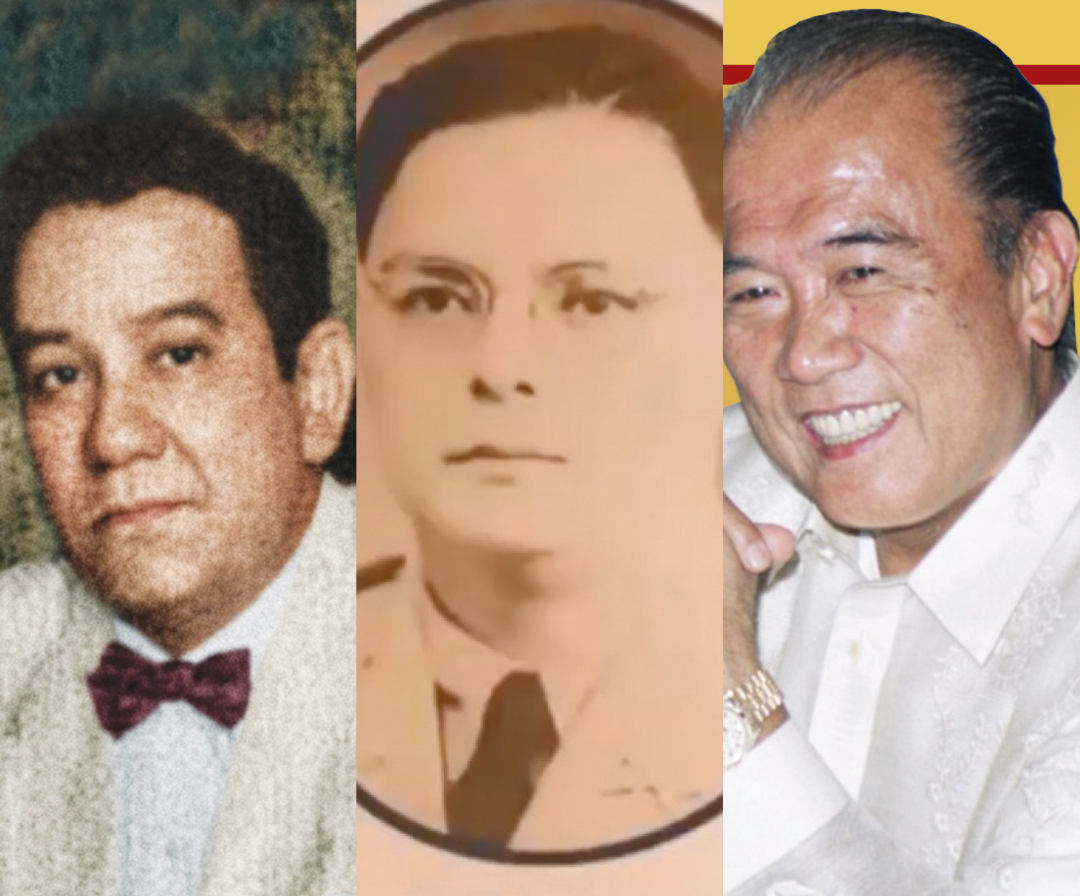
DON RAMON PARDO ROCES
Publisher, Graphic & Graphic Weekly
1927-1941; 1948-1965
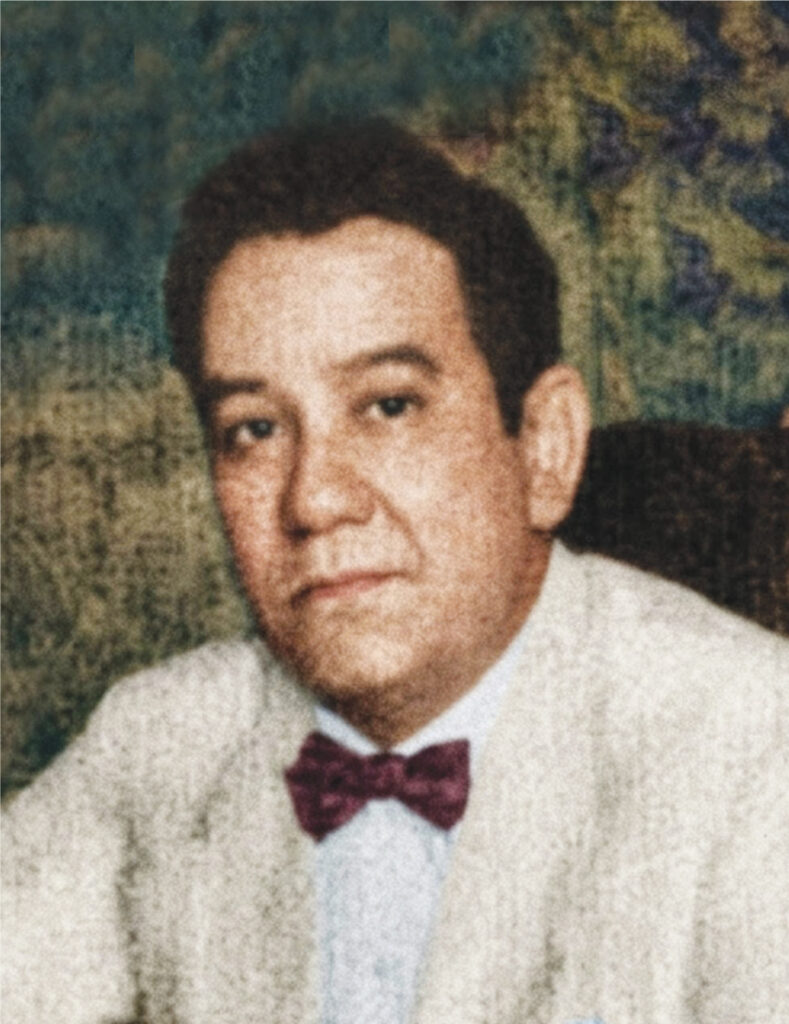
In the early decades of American colonial rule in the Philippines, there were rich and influential Hispanic-Filipino families who invested in publishing. One of them was the Roces clan.
The family pioneered the establishment of newspaper chains, a venture begun in 1916 by its patriarch Don Alejandro Roces Sr., who was later known as the “Father of Modern Philippine Journalism.” Focusing on accessible language to appeal to Filipinos across the economic spectrum, the Roces- owned broadsheets included a Tagalog daily (Taliba), a Spanish newspaper (La Vanguardia), and an English-language daily (Tribune).
Through his eldest son, Don Ramon Pardo Roces, the family expanded its publishing empire by branching out to the regions via vernacular magazines, such as the Tagalog Liwayway (1922), the Cebuano-Visayan Bisaya (1930), the Ilonggo-Hiligaynon Hiligaynon (1934), and the Ilocano Bannawag (1934).
Don Ramon concentrated on mass marketing by appealing to the wide-ranging segments of Philippine society in the regions, particularly the Filipino working class. He supplied the printing presses that enabled the national distribution of the highly entertaining and immensely popular komiks magazines. This success earned him the titles of Komiks King and the Grand Old Man of Popular Publishing.
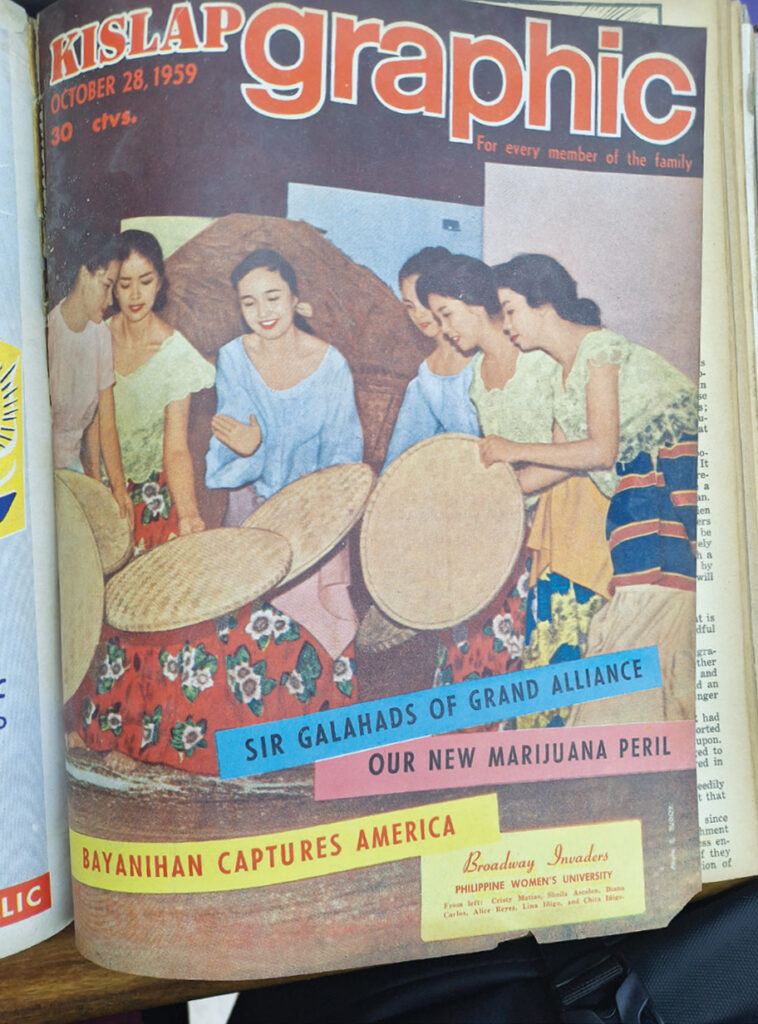
The American educational system successfully cultivated a generation of Filipinos with high English literacy. In 1927, Don Ramon Roces founded the Graphic, a magazine featuring both English and Tagalog articles and fiction works. The publication served as a bridge, merging the tastes and perspectives of the Filipino elite with those of the working-class, Tagalog-speaking population.
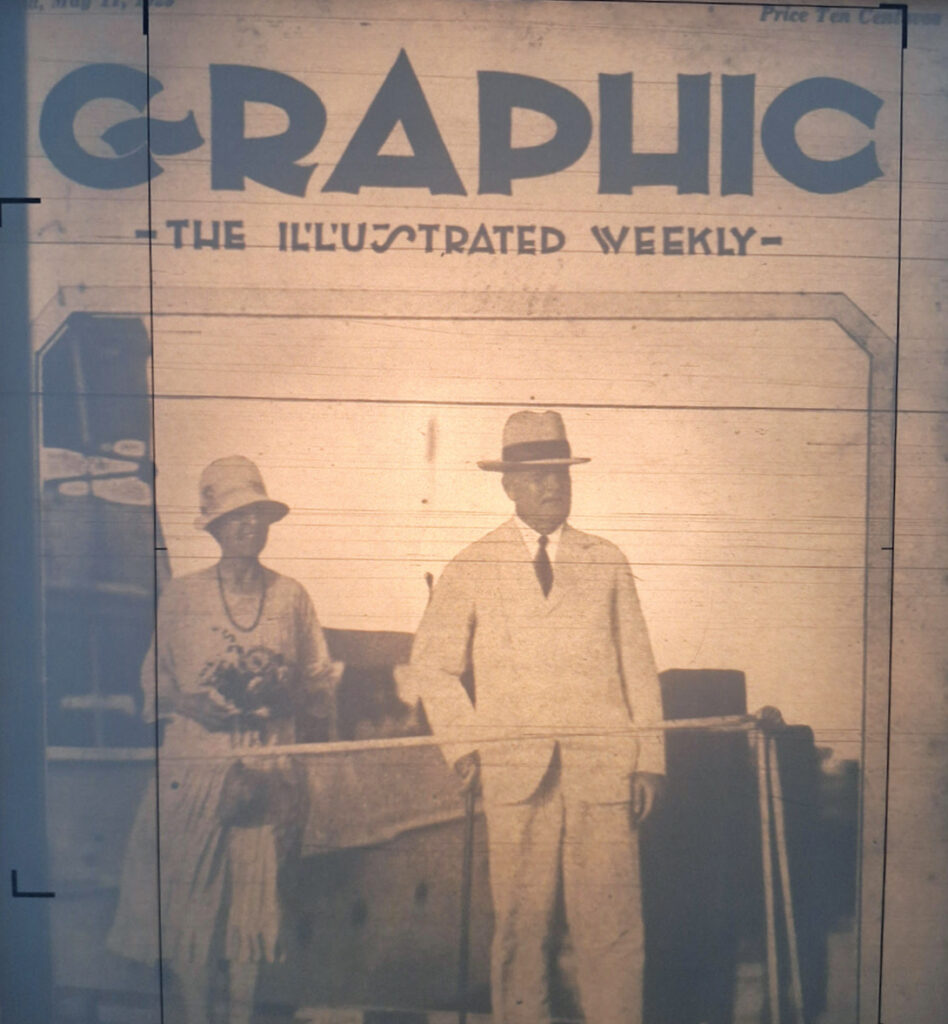
Don Ramon designed the Graphic as an illustrated weekly devoted to pictorial news. More importantly, the publication became a vital portal for English and Tagalog literature. Many giants of Philippine literature—such as N.V.M. Gonzalez, Manuel Arguilla, Jose Garcia Villa, Agustin Fabian, Estrella Alfon, Paz Latorena, Loreto Paras-Sulit, and Paz Marquez Benitez—published their poems, short stories, and essays within its pages.
The Graphic was one of the first publications to institutionalize the promotion of Philippine literature. It adopted the year-round practice of paying writers for their original short stories published in the magazine. At the end of each year, its editors reviewed all published submissions, with the best works chosen for the annual Graphic Short Story Prizes. Writers for the winning pieces were given substantial cash awards.
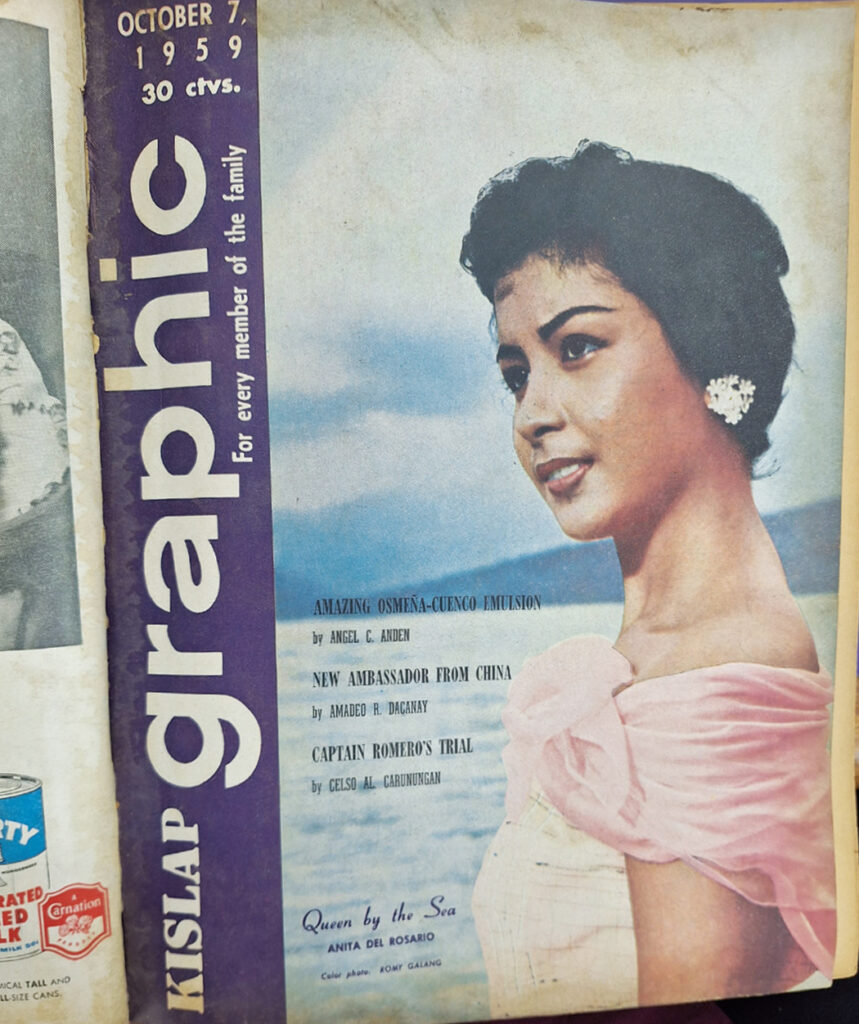
The groundswell of literary writers that saw their works published in the Graphic and similar publications helped usher the Golden Age of Filipino Writing in English during the pre-war era (1925-1941).
The Graphic, owned by Ramon Roces, was published from 1927 until it temporarily ceased operations in 1941 due to the onset of the Japanese Occupation. It resumed publication as Kislap-Graphic in 1948, and shortly thereafter, it was renamed the Weekly Graphic.
The magazine continued its run until 1965, when it was acquired by Hispano-Filipino businessman J. Antonio Araneta. —Graphic Research
J. ANTONIO ZARAGOZA ARANETA
President, Graphic Weekly, 1965-1972
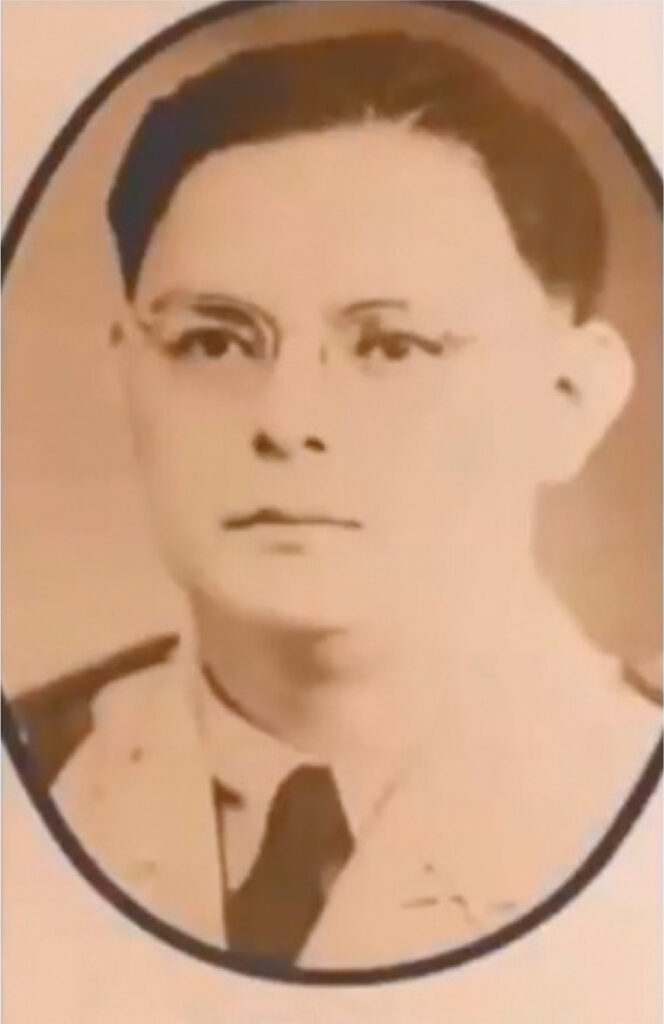
Prominent industrialist, lawyer, and art collector J. Antonio Zaragoza Araneta assumed ownership of the Weekly Graphic from 1965 until 1972, when the magazine—together with other prominent, government-critical publications—was shut down with the declaration of Martial Law.
As reported by late Graphic Weekly writer Amadis Ma. Guerrero, the magazine adopted a highly critical, progressive stance that exposed corruption, social disparities, agrarian unrest, and the rising authoritarianism of then President Ferdinand E. Marcos.
It was also during this period that the magazine espoused social realism in literature, diametrically opposed to the “art for art’s sake” mindset evident during the time of the Roces-owned Graphic.
The Weekly Graphic during the time of Araneta published the literature of dissent—fiction and poetry that exposed the harsh economic disparities between the rich and the poor in Philippine society.
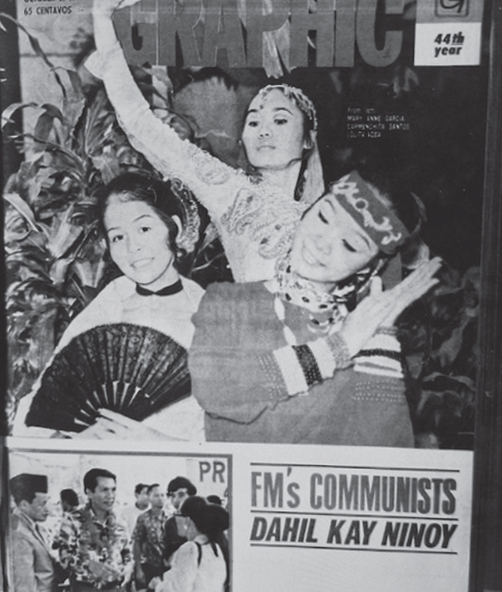
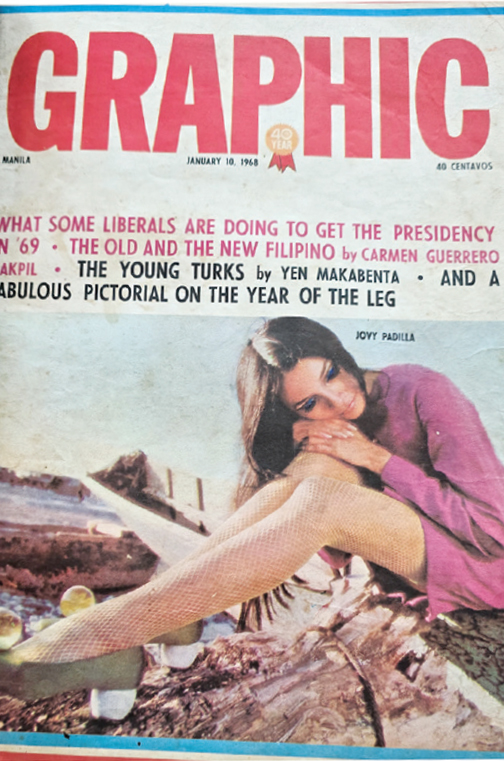
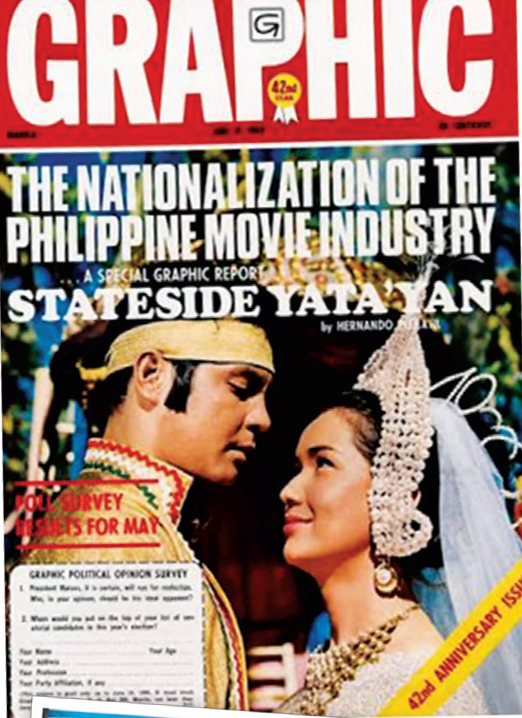
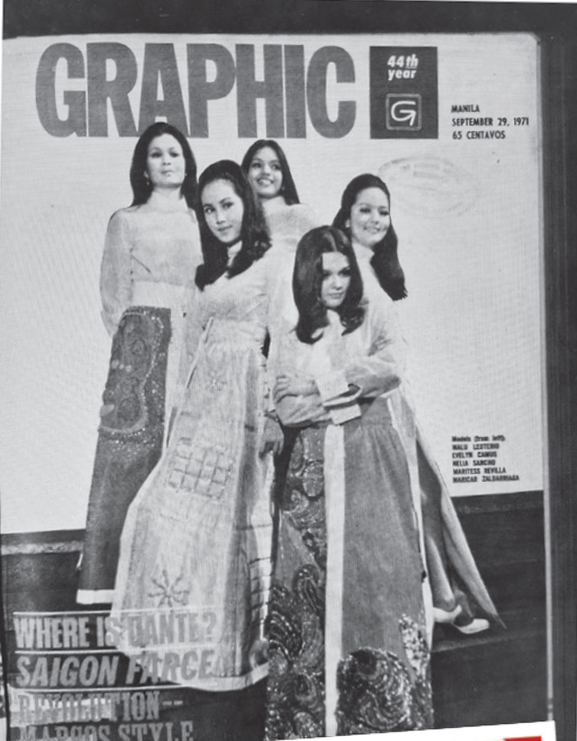
It discovered and awarded emerging student and professional writers. Examples of outstanding short fiction published in the Graphic during this period include: “The Distant City” by Luis V. Teodoro (First Prize, 1970 Weekly Graphic Short Story Awards); and “The Greener Grass” by Resil B. Mojares (First Prize, 1971 Weekly Graphic Short Story Awards).
Later to become a prominent editor, political essayist, and academician, the then 29-year-old Teodoro tackled the sharp, alienating socioeconomic divides in Manila in his winning piece, “The Distant City.” Resil B. Mojares was only 28 years old when he wrote “The Greener Grass,” a story about provincial stagnation, class disparity, and the exhausting cycle of rural-urban migration and the pursuit of the American dream. Winning awards will follow his literary career that will culminate in his being proclaimed a National Artist for Literature in 2018 at the age of 75.
The Weekly Graphic published, reviewed, and amplified the radical essays of nationalist historians and thinkers like Renato Constantino.
In 1972, a day after the declaration of Martial Law, armed soldiers raided the editorial offices of the Weekly Graphic. Its printing plant in Port Area, Manila was physically stopped and the entire editorial office was padlocked.
As reported in the New York Times, the Weekly Graphic was denied permission to reopen for 18 years (1972-1990). It will be revived on June 12, 1990 under the stewardship of the late media-mogul philanthropist Ambassador Antonio L. Cabangon Chua. —Graphic Research
AMBASSADOR ANTONIO L. CABANGON CHUA
Chairman, Philippines Graphic (1990-2016) & the CABANGON FAMILY (2016-present)
by Psyche Roxas-Mendoza
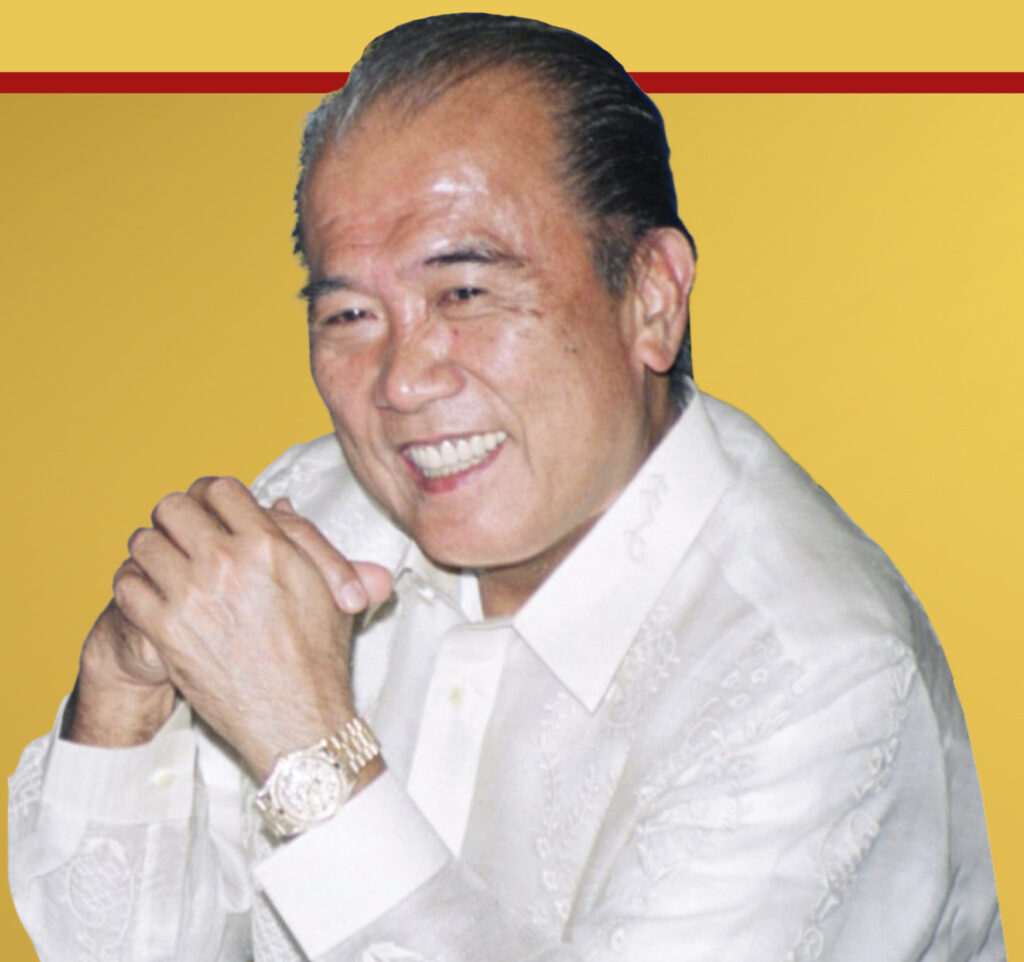
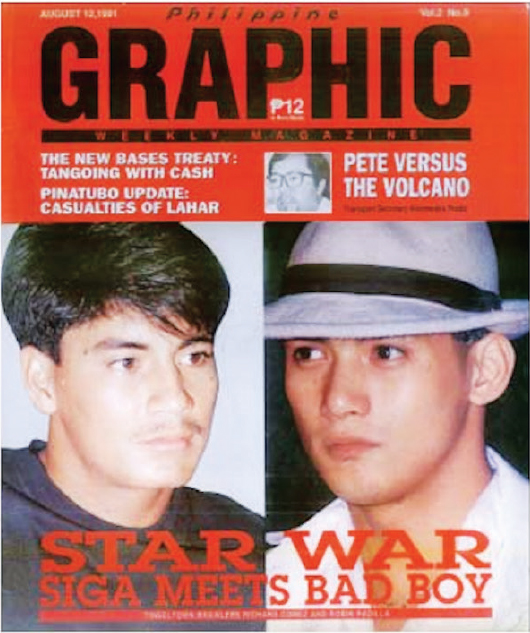
In June 1990, the Weekly Graphic arose from almost two decades of hibernation under a new name: Philippine Graphic.
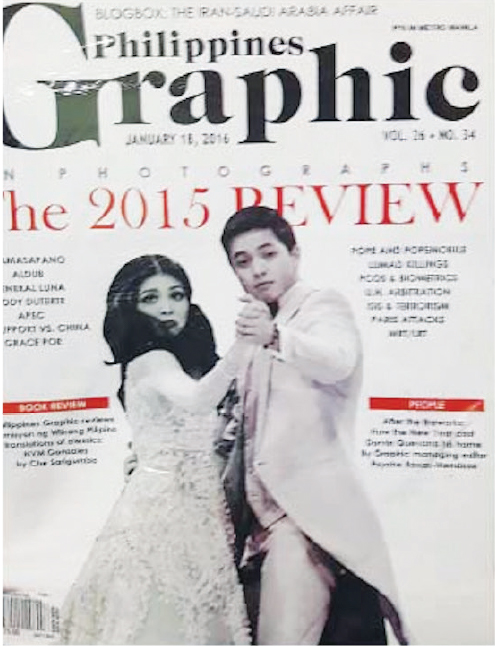
Four years after the 1986 EDSA Revolution, the Philippine Graphic— renamed the Philippines Graphic in 2007—joined several prominent newspapers and magazines, including The Manila Times, The Manila Chronicle, and the Philippines Free Press, which had resumed publication after being shut down during the martial law era.
Under the leadership of the late ambassador, media mogul, and philanthropist Antonio L. Cabangon Chua, the revived Graphic maintained the magazine’s pre-Martial Law tradition of publishing Filipino short stories and poems while reporting on national issues.
The late ambassador’s multi-industry conglomerate—the ALC Group of Companies—provided the financial infrastructure and management support required to sustain his other media ventures, such as the news tabloid Headline (1980s), radio station DWIZ (1991), business broadsheet BusinessMirror (2005), Nine Media Corp. (2010), business tabloid Pilipino Mirror (2012), and CNN Philippines (2015)—continuing even after his death on March 11, 2016—the digital, free-to-air television station Aliw23 (2023).
LEGACY TO LITERATURE
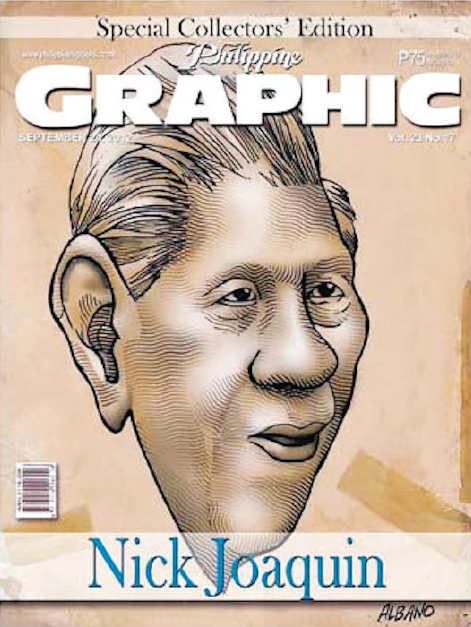
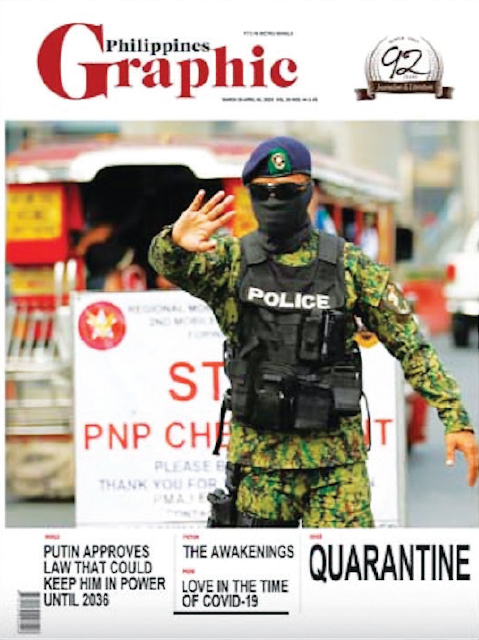
Across these media platforms, Cabangon Chua never wavered in his commitment to promote Philippine literature—a dedication forged in his friendship with National Artist Nick Joaquin, who became the first editor-in-chief of the revived Philippines Graphic.
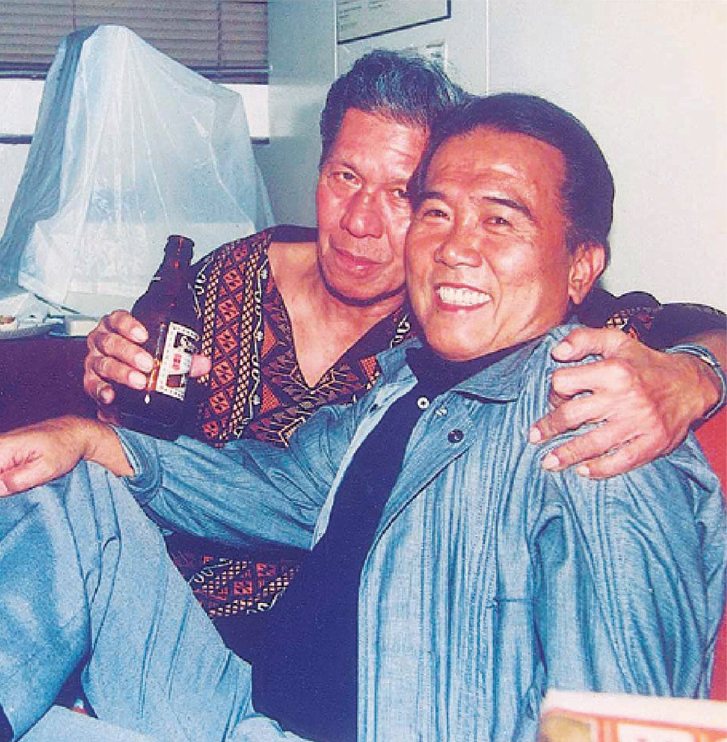
It is a friendship that earned the admiration and respect of his late son, D. Edgard A. Cabangon, the former chair of the ALC Group of Companies.
Like his father, Cabangon committed to continue the literary legacy of the Graphic: “We continue the story started by my father. It is the story of how a small magazine got built on the strength of an incomparable friendship between a man of business and a man of words. This is the story of how they both cherished literature and vowed to nurture excellent literary works in the pages of the magazine. We continue the story. This is the story of the Philippines Graphic.”
Before joining the Graphic, Joaquin spent 20 years writing for the Philippines Free Press (1950–1970). He published his fiction and poetry as Nick Joaquin, while using the pen name Quijano de Manila for his journalism articles and historical essays.
The man described as “the most distinguished Filipino writer in English,” championed literary journalism, a form of reportage where factual information is presented using the narrative techniques of literary storytelling.
In the revived Graphic, Joaquin was joined by a stellar cast of editors that on their own already lit the literary and media landscape of the Philippines—Jose F. Lacaba, executive editor; Gregorio Brillantes, senior editor; Cesar M. Carpio, managing editor; Associate Editors Manuel F. Almario and Emmie G. Velarde; and columnists Adrian Cristobal, Luis Beltran, Blas F. Ople, Julie Yap Daza, and Gilbert Perez.
Young blood breathed fire and daring to the revived Graphic: Dana Batnag, J.R. Alibutud, Jhomar Kho Indanan, Carlos Conde, and the late Bayani Sandiego.
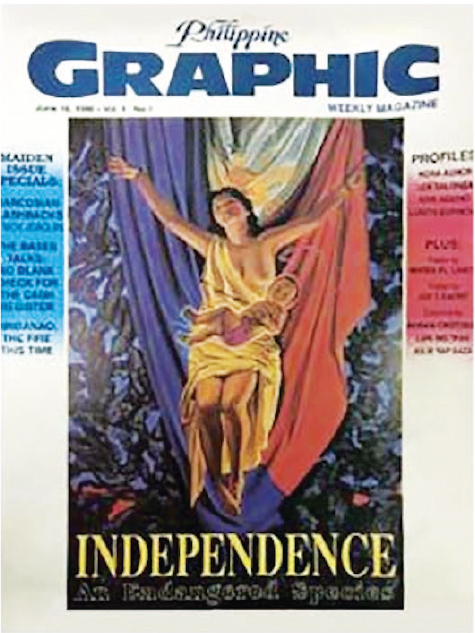
On June 18, 1990, the revived Graphic came out with its first issue. Its cover: Egai Fernandez’s painting Kahapon, Ngayon at Pangarap [Yesterday, Today, and Dreams].
The cover, as described by its editors, “illustrates the past and present threats to national sovereignty, and the people’s hopes for tomorrow. Kahapon, Ngayon, at Pangarap also epitomizes our hopes for this magazine whose maiden issue you hold in your hands; we are born in a time of turmoil, but the future gives us no cause for despair.”
AWARDS
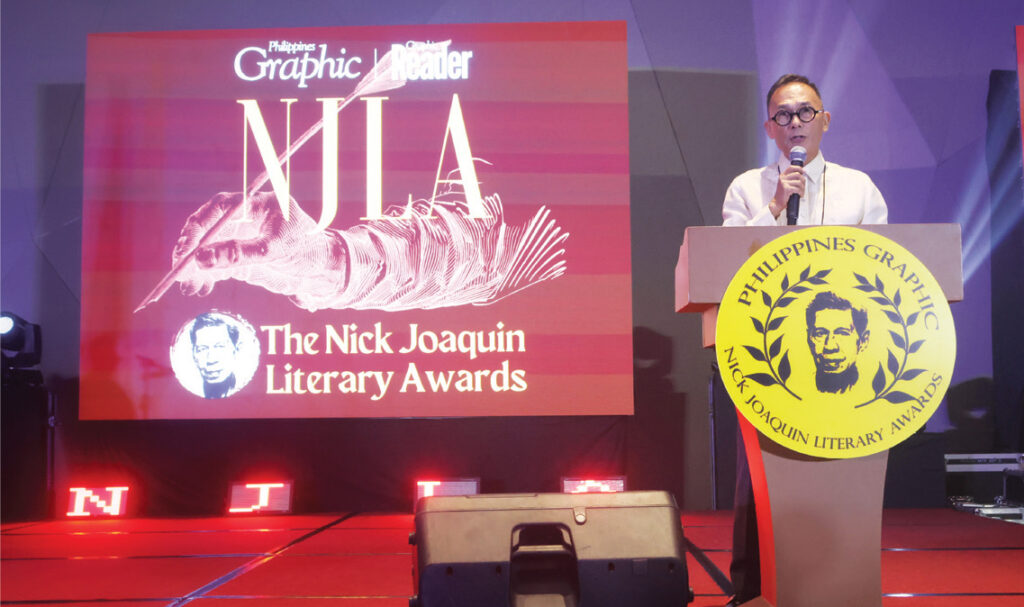
Giving recognition and media promotion to Filipino fictionists and poets was started by Ramon Roces in 1927 through the Graphic Short Story Prizes, and by J. Antonio Araneta from 1965 to 1972 by way of the Graphic Weekly Literary Awards.
And like a torch lit to flame across the years, this time-honored practice came alive once again in the revived Graphic. For 13 years, beginning in 1991 until Joaquin’s passing in 2004, the Philippines Graphic Literary Awards recognized and gave cash prizes to the top three short stories that graced its pages.
Its earliest winner was noted fictionist Charlson Ong whose short story, A Tropical Winter’s Tale took the first prize in 1990.
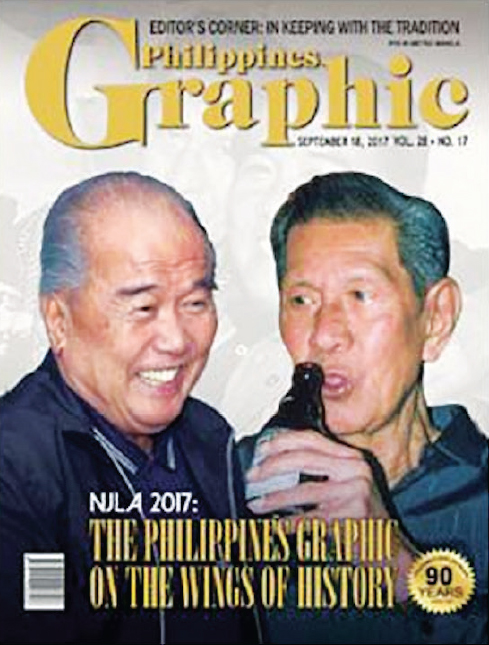
With the death of National Artist Nick Joaquin on April 29, 2004, the Philippines Graphic Literary Awards was renamed the Nick Joaquin Literary Awards (NJLA) in honor of the late National Artist and first editor-in-chief of the revived Graphic.
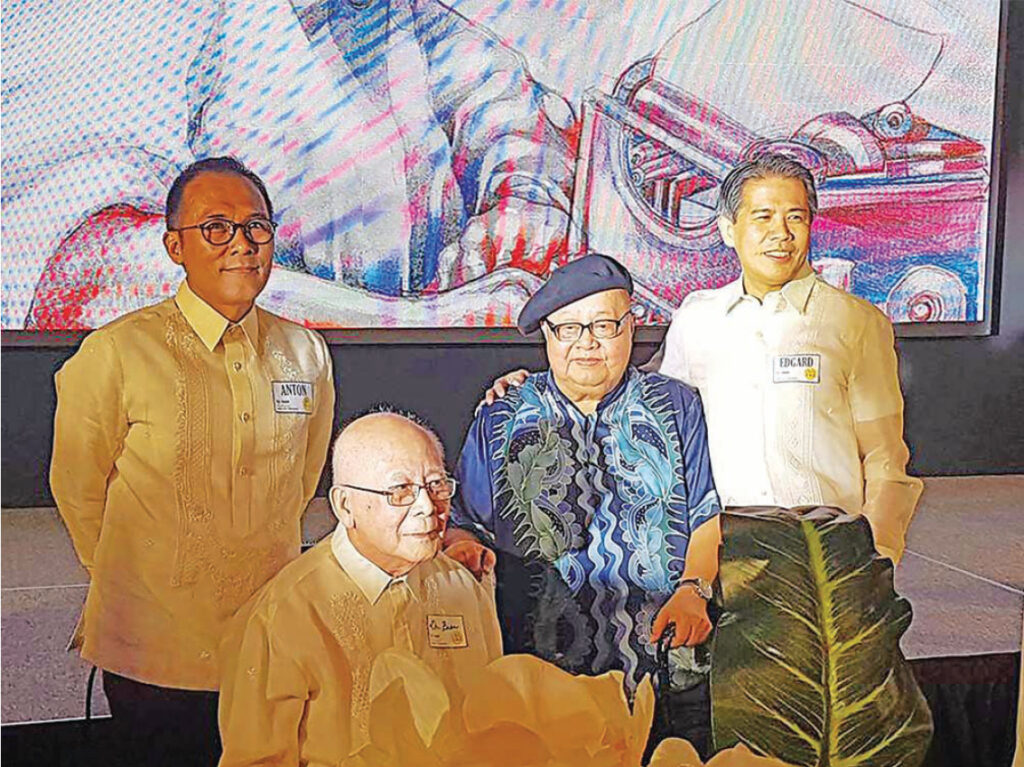
In 2018, the Graphic expanded its literary footprint by launching the NJLA Asia-Pacific literary contest. Filipino short fictionists and poets residing or working in the Association of Southeast Asian Nations (ASEAN) member states, Taiwan, Hong Kong, Australia, and New Zealand were invited to participate, their short stories and poems published in the Tony&Nick section of the BusinessMirror, sister publication of the Graphic.
COVID YEARS
The 2020 COVID-19 pandemic cast a deadly shadow of shutdowns and closures for media publications in the Philippines and all over the globe. But it did not break the publishing spirit of the Philippines Graphic.
As narrated by Graphic publisher T. Anthony C. Cabangon in 2020: “We know, the publishing landscape is bleak everywhere in the world. In America, Europe, and Asia, there are magazines that laid-off nearly its entire staff and folded after decades of existence. We will not fold. True, the Graphic’s continuity has come at a steep price—losing some of our best people. We thank them and bid them goodbye, confident in the thought that they understand and affirm the primordial need to keep the magazine alive.”
Following the fate of other local literary events and contests, COVID-19 led to a two-year suspension of the NJLA until its return in 2023.
The pandemic likewise cut short the existence of the Asia-Pacific Nick Joaquin Literary Awards (NJLA).
With the pandemic still raging, the Philippines Graphic turned to social media. It made history for being the first magazine to launch a webinar on Philippine literature during the pandemic.
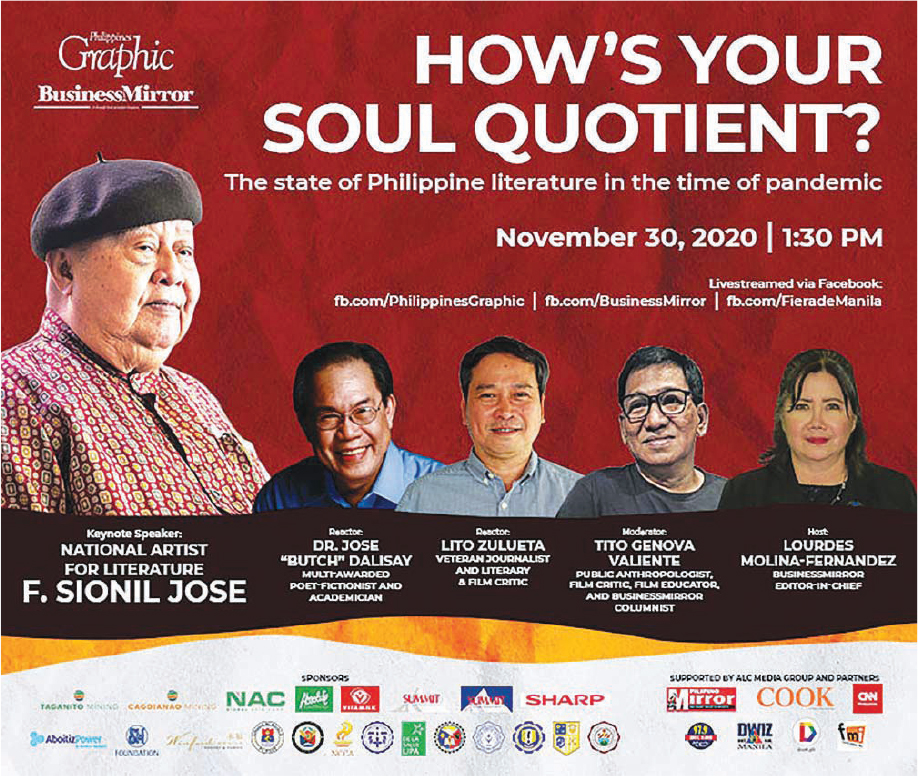

Two highly successful Graphic webinars on Literature
On Nov. 30, 2020, “How’s your soul quotient? The state of Philippine Literature in the time of the pandemic” webinar was aired with the full support of the late National Artist for Literature F. Sionil Jose as main speaker.
Jose gathered two panel reactors for the webinar: multi-awarded poet, fictionist, and academician Jose “Butch” Dalisay and veteran journalist and literary & film critic Lito Zulueta.
The webinar attracted 8,500 views, 437 likes and 247 comments. According to Facebook, it generated an exceptional 8.05% engagement rate, outperforming digital benchmarks at that time. The results highlight deep audience participation, as evidenced by the high comment-to-like ratio.
Toward the end of the COVID-19 pandemic, the Graphic held a two-hour masterclass webinar on April 30, 2022. “Aba, gusto mo pala magsulat: Tips & Trade Secrets on Writing the Short Story” had as speakers celebrated novelist, short story writer, editor, columnist, and academician Dr. Jose ‘Butch’ Dalisay and acclaimed fictionist, scriptwriter, and professor Charlson Ong.
Facebook analytics showed that the webinar reached 30,000 people and generated 6,000 comments and shares.
This active community dialogue yielded an extraordinary 20% engagement rate, easily outperforming 2022 digital marketing benchmarks.
THE GRAPHIC READER
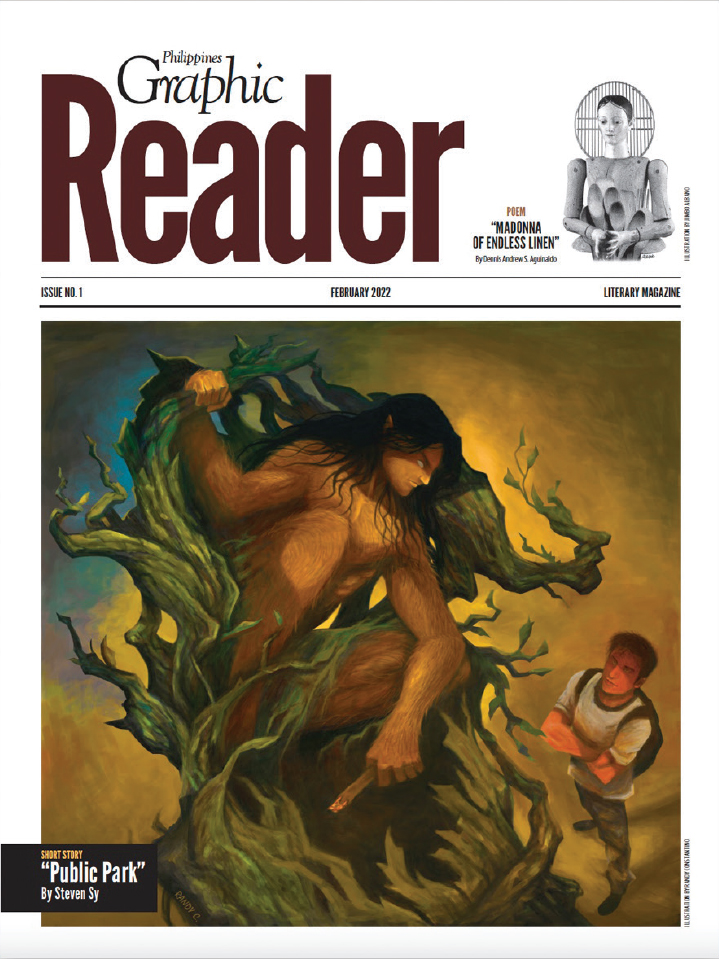
In February 2022, the Philippines Graphic opened its doors once again to Filipino writers of short fiction and poetry in English.
It did one better. Before, the 48-page magazine accommodated literary work in its inside pages. By 2022, the Graphic spawned a companion magazine, the Philippines Graphic Reader. It is the first, nationally-circulated, monthly literary magazine in the country that devotes all its pages to Philippine literature in English.
Every month, the Graphic Reader features four of the submitted original, unpublished short stories and poems curated by its Literary Editor—multi-awarded, trilingual poet and essayist Marra PL. Lanot.
Literary works published in the Graphic Reader qualify as entries to the annual Nick Joaquin Literary Awards (NJLA).
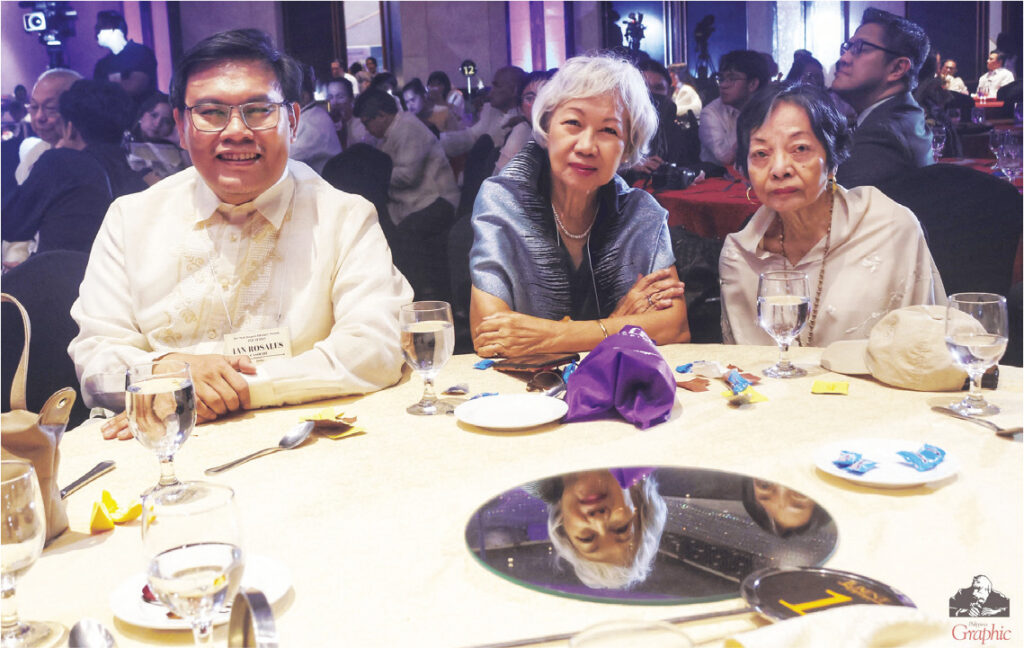
A cherished part of the NJLA program is the Graphic Salute Awards, which recognize the short stories and poetry that appeared in the Philippines Graphic Reader. It is the Graphic’s humble effort to preserve the growing roster of Filipino short fictionists and poets in the Philippine literary landscape.
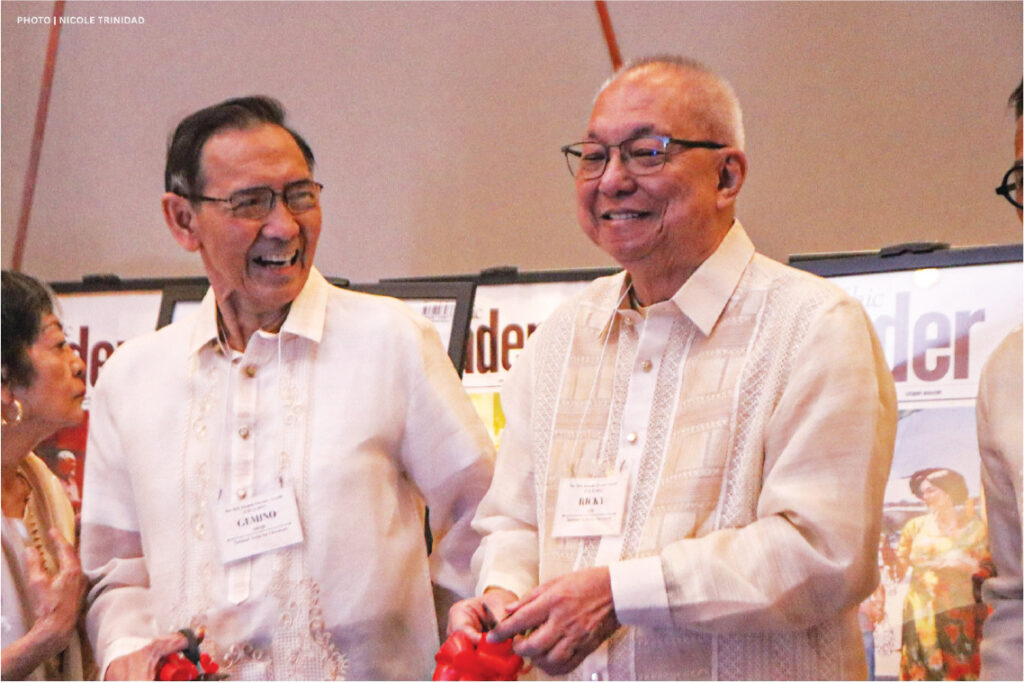
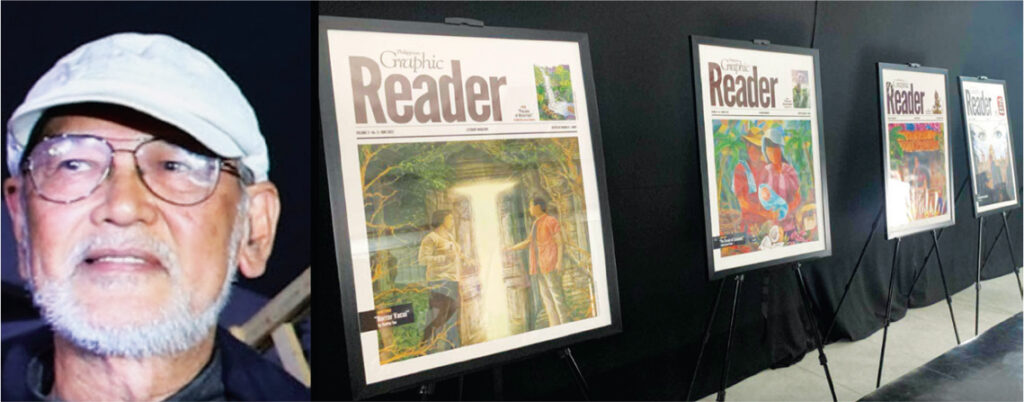
Published in affordable newsprint, the Graphic Reader is distributed in 7-Eleven outlets, as well as on e-commerce platforms like Lazada and Shopee.
Literary submissions to the Graphic Reader are coursed through its email addresses: GraphicLitRevival2022@gmail.com and/or marrareader@duck.com
TARGETING A YOUNGER AUDIENCE
In 2024, the Philippines Graphic launched its Nick Joaquin Literary Awards-Local Government Unit (NJLA-LGU) English Proficiency through Literature project.
The NJLA-LGU project is the brainchild of Philippines Graphic, initiator of the NJLA and the Philippines Graphic Reader. It enhances the English proficiency and Literature appreciation of Grades 9 and 10 pupils in public high schools.
Since 2024, the Graphic Reader has included a four-page Student’s Corner. This section contains vocabulary lessons derived from the monthly short fiction featured in the magazine, alongside relevant questions designed to deepen comprehension. With local government officials and public high schools as conduits, the NJLA-LGU project aims to popularize the works of Filipino poets and writers in the hearts and minds of young readers between the ages of 14 to 16 years old.
THE NEXT 100 YEARS
In the age of the internet, old newspapers and magazines make a beeline to oblivion. Unless people choose to remember, take the time to unearth the past, and be awed in the truth that the past can turn up again in the present and the future.
The Philippines Graphic puts a premium on its history and its power to define the present and the future. The Graphic is living proof that the social problems we have at present is rooted in the past.
With only one more year before the Graphic marks a century of existence, there is more work to be done.
Positivity remains the revived Graphic’s best feature. The stories continue to highlight the best in the Filipino at every difficult juncture of the nation’s history. Through stories of the human condition, the Graphic strives to speak the truth.
The Graphic’s present staff include: (EDITORIAL) Psyche Roxas-Mendoza, Editor-in-Chief; Marra PL. Lanot, Literary Editor; Mike Policarpio, Associate Editor; Von Zyron Alimorong and Hjadoeya Calica, writers; Carlos Miguel, Researcher/ Archivist; Eduardo A. Davad, Creative Director; Ces Cabangon, Creative Design Consultant; and Dexter Tiratira, Graphic Artist
(ADVERTISING) Dennis Cruz Guevarra, Advertising Sales Manager; Queenie S. Ostulano and Shakira Dennise Tamana, Account Managers; Leah Caling-Bonotan, Special Projects Manager; Carlos Abalos, Events Manager
(CIRCULATION) Rolando M. Manangan, Circulation Manager; Lerlyn V. Lafradez, Circulation Assistant; Ronnel Nin̈ o Medel, Distribution, Online sales; Juliet Son, Subscription Collection; Joshua Cabagong, Troubleshooter; Franklin Patricio, Nightshift Supervisor/Dispatcher; Capistrano Arnigo Jr., Bundler/Nightshift Dispatcher; Michael Villarosa, Driver/ Bundler; Gervacio Garcia Jr., Gilbert Cañete, and Arturo delos Reyes, Driver/Warehouse-in-Charge/Bundler; Delivery/ Retrieval/Collector staff: Jaypee Sandagan, Jaypee Samera, Aries Viernes, Lawrence Garcia, and John Erveen Rivera
(EXECUTIVE OFFICERS) Benjamin V. Ramos, President; T. Anthony C. Cabangon, Publisher; Loida S. Virtudazo, Executive Vice President-General Manager
In the age of the internet, the Graphic has grown by leaps and bounds in its Social Media presence, much of it is due to the creative efforts and online style of the Graphic’s SocMed point person and writer Von Zyron Alimorong.
Rounding out the magazine’s legacy endeavor is researcher and archivist Carlos Miguel, who is at the center of the Graphic’s Digitization Project. Operating on a two-year timetable, the project will convert the physical print archives of the Graphic into searchable digital formats. Its end objective is to preserve the magazine’s historical content to make it accessible online for generations to come.
One asks: How far is a hundred years to the country’s future generations? At the Philippines Graphic, a hundred years is just a click away. Soon.
This article came out in the June 2026 Special Issue of the Philippines Graphic.
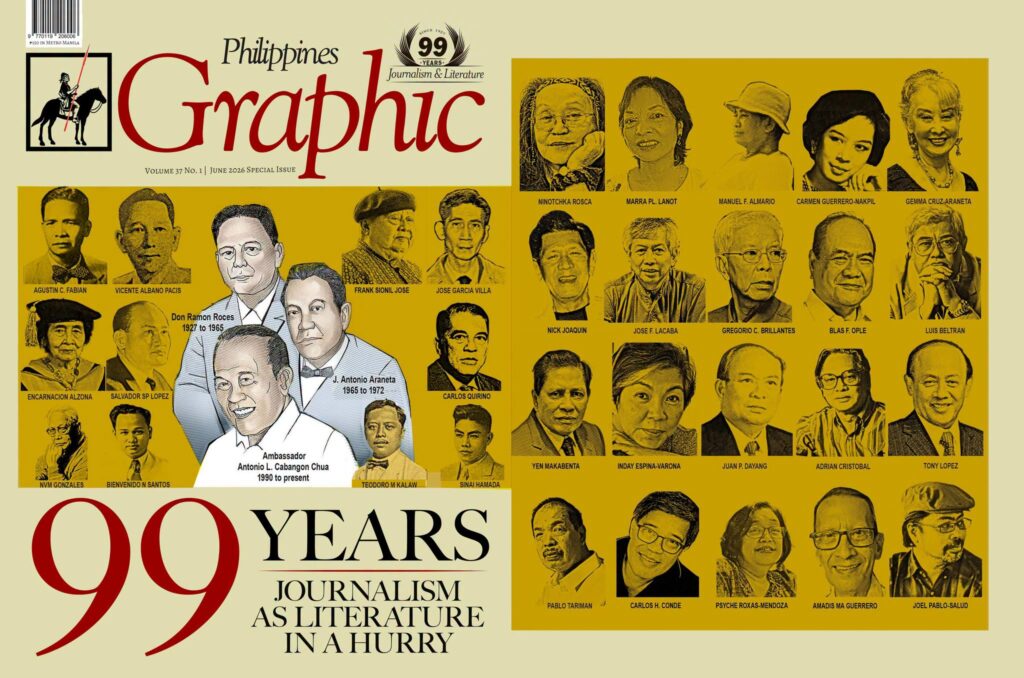

Started in 1927, the Philippines Graphic is the longest-running printed magazine of national circulation that provides relevant news and features and promotes Philippine literature.