

By: Rio Constantino
Mindoro is home to a unique bounty of endemic mammalian wildlife found nowhere else on Earth. This includes the famous tamaraw, the Mindoro warty pig, and the humble Mindoro shrew. Now, three more species are added to the list, thanks to the recent discovery of Philippine forest mice—all belonging to the Apomys genus.
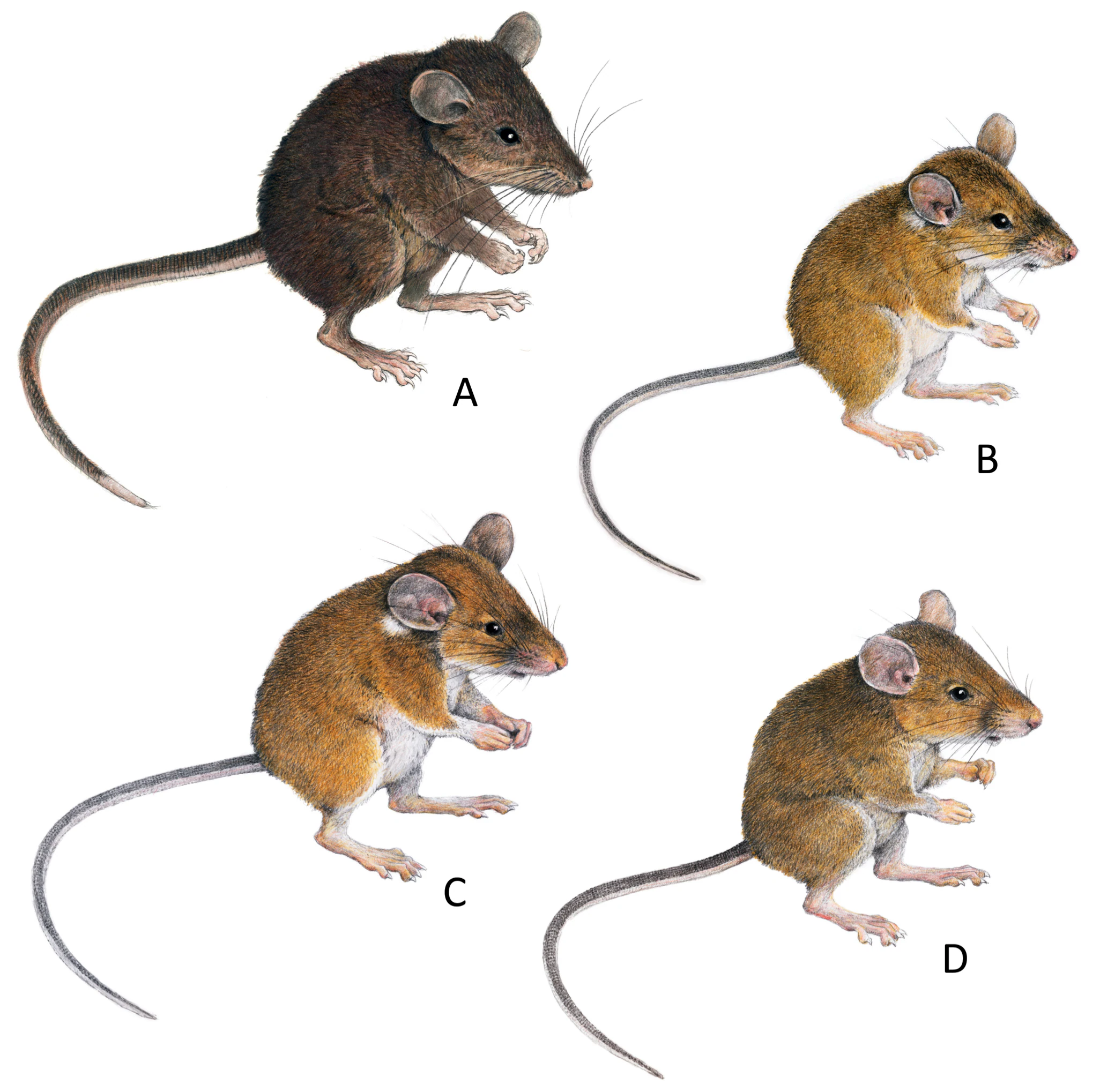
From 2013 to 2017, teams of field biologists led by renowned Filipino scientist Dr. Danilo Balete surveyed relatively understudied forests of Mindoro. During their expeditions, they noticed three distinctive forest mice that looked noticeably different from the island’s known endemic species, Apomys gracilirostris.
Dr. Balete worked with Dr. Mariano Roy Duya and Melizar Duya of the UP Diliman College of Science Institute of Biology (UPD-CS IB), along with biologists from the United States, to analyze the genes, fur, and skull structures of forest mice. After nearly a decade of laboratory work, the team confirmed that the three mice are indeed new species: the tiny Apomys minor, the hairy-eared A. crinitus, and A. veluzi, named in honor of the late Maria Josefa “Sweepea” Veluz, a distinguished mammalogist of the National Museum of Natural History of the Philippines.
The discovery raises the number of endemic mammals on Mindoro from nine to twelve. It also cements the island’s status as a unique evolutionary hotspot—now recognized as the smallest known island where mammal speciation has taken place.
However, Mindoro is not the only center of biodiversity in the Philippines. The same geographic characteristics that shaped its unique wildlife can be found in many other parts of the country. Luzon, for instance, has a similarly complex geological history and is also profoundly biodiverse. This is also true in some parts of Mindanao. This is the reason why so many biologists are drawn to the Philippines—and why many dedicate their careers to protecting its forests.
The study, titled “Three new species of Philippine forest mice (Apomys, Muridae, Mammalia), members of a clade endemic to Mindoro Island,” is now published in the journal Zootaxa.
For interview requests and other concerns, please contact media@science.upd.edu.ph.
References:
Heaney, L.R., Balete, D.S., Duya, M.R.M., Duya, M.V., Kyriazis, C.C., Rickart, E.A., Steppan, S.J. & Rowsey, D.M. (2025) Three new species of Philippine forest mice (Apomys, Muridae, Mammalia), members of a clade endemic to Mindoro Island. Zootaxa, 5647 (1), 1–26. https://doi.org/10.11646/zootaxa.5647.1.1

Started in 1927, the Philippines Graphic is the longest-running printed magazine of national circulation that provides relevant news and features and promotes Philippine literature.