

Since ancient times, it was thought that painful stomach ulcers were caused by eating spicy foods or having an unhealthy diet. But since then, researchers have found that Helicobacter pylori—a common bacterium found in over 60% of the world’s population—was the real culprit behind most stomach ulcers and a high risk for stomach cancer.
Now scientists from the Ateneo de Manila University School of Science and Engineering’s Department of Biology are on the way to finding a vaccine to fight off the bacterium, possibly preventing stomach ulcers and lowering the risk for stomach cancer.
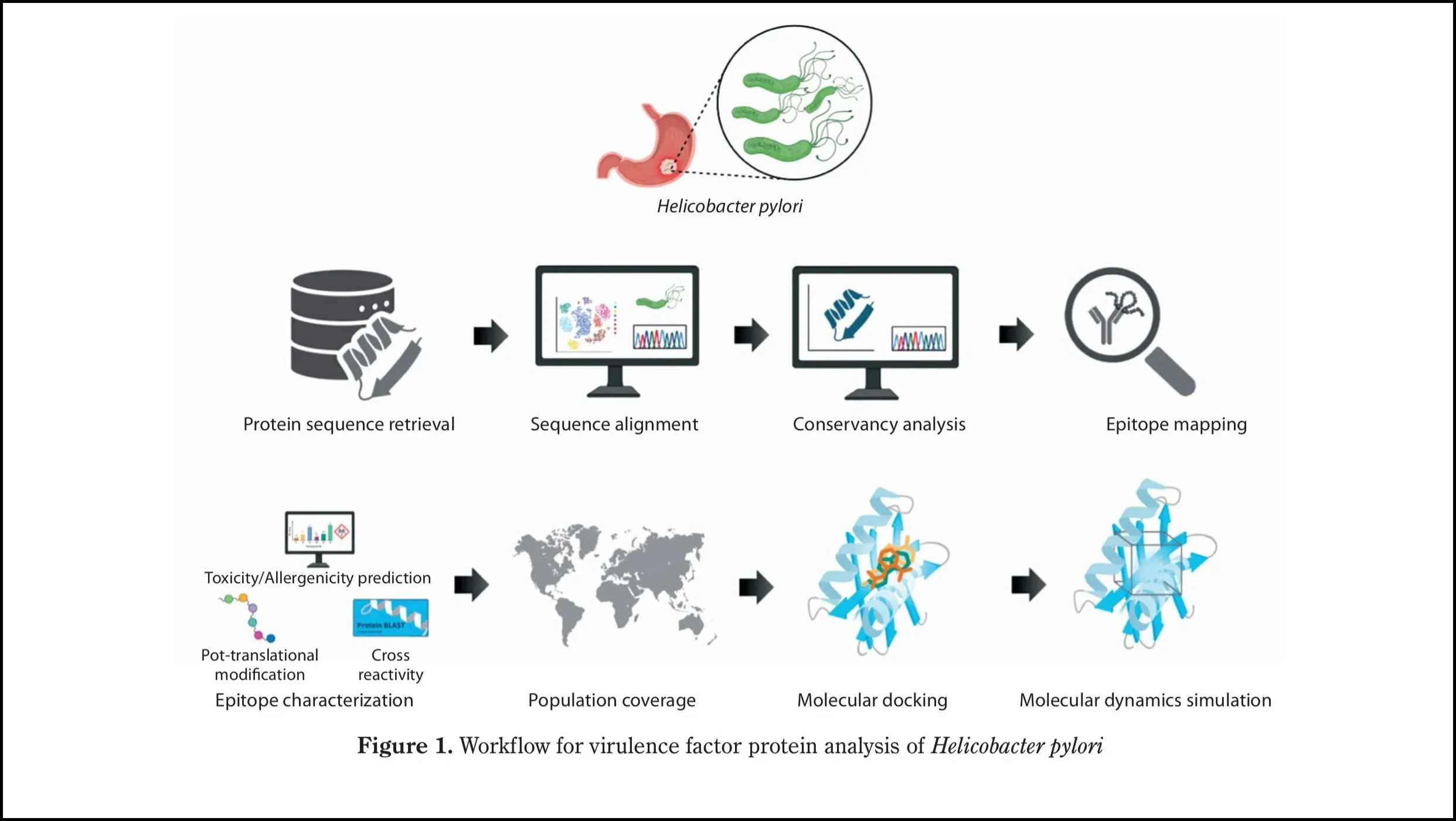
Ateneo biologists Demy Valerie Chacon, Kiana Alika Co, Daphne Noreen Enriquez, Aubrey Love Labarda, Reanne Eden Manongsong, and Edward Kevin Bragais used a cutting-edge approach called “immunoinformatics” that combines computer science with immunology to scan the genetic makeup of pathogens and predict which parts of them can trigger a strong immune response. By running thousands of gene sequences through these computational tools, researchers can narrow down the most promising vaccine targets much faster and at lower cost than through trial-and-error lab work alone.
The Ateneo biologists have identified key proteins produced by H. pylori that help it survive stomach acid, stick to the stomach lining, and evade the body’s natural immune system. Their analysis also identified parts of these proteins that are most likely to be safe, non-allergenic, and capable of activating protective immune cells.
While their research findings are still preliminary and based on computer simulations, the next steps include laboratory testing to validate these predictions. To date, there are no approved vaccines against H. pylori despite ongoing tentative research in other laboratories around the world. However, if successful, the Ateneo research could pave the way for the first-ever H. pylori vaccine that could help guard against stomach ulcers and cancer.
SOURCE: https://archium.ateneo.edu/biology-faculty-pubs/189
For interview requests and other inquiries, please email media.research@ateneo.edu. Visit archium.ateneo.edu for more information about our latest research and innovations.

Started in 1927, the Philippines Graphic is the longest-running printed magazine of national circulation that provides relevant news and features and promotes Philippine literature.