

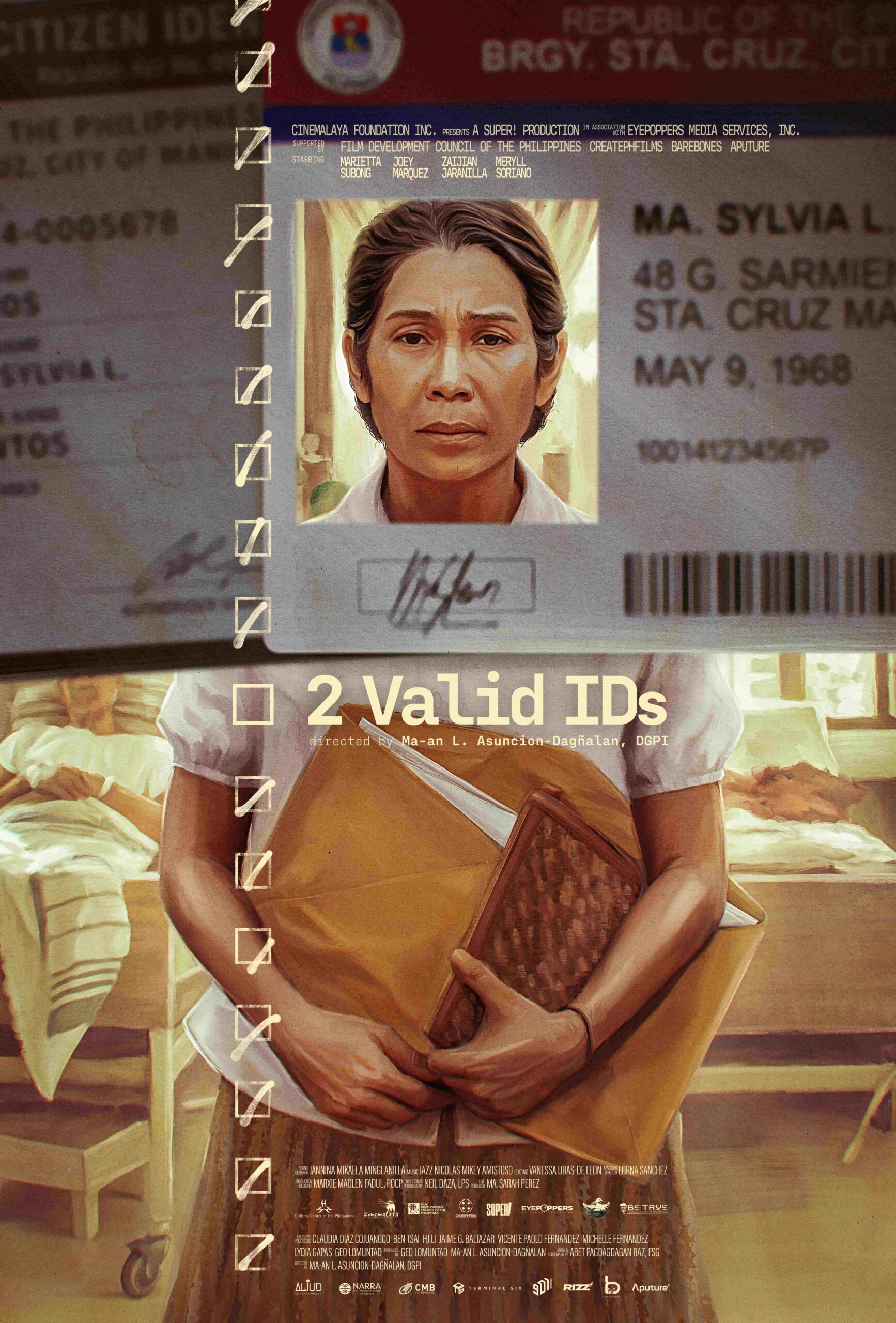
A mundane errand reveals the cost of bureaucracy
Directed by Ma-an L. Asuncion-Dagñalan and Abet Pagdagdagan Raz, 2 Valid IDs follows Sylvia as she attempts to obtain two valid government-issued IDs so she can claim money sent to her from abroad. What should be a straightforward financial transaction instead becomes a frustrating maze of requirements, government offices, long queues, and bureaucratic procedures.
Winner of the Audience Choice Award (Full-length Film Category) and the Best Actress Award for Marietta Subong or Pokwang, 2 Valid IDs premise is simple, painfully familiar and, perhaps, precisely because of that familiarity, immediately resonant.
The film’s reception from the audience reflects this recognition. Even before its release, tickets were reportedly difficult to secure, with audiences competing for seats to see a story that, on paper, seems almost too mundane to warrant the cinematic treatment: a woman trying to obtain two valid IDs.
Yet for many Filipinos, particularly those entering the workforce or navigating government institutions for the first time, obtaining a government-issued ID is rarely as simple as filling out a form and waiting for a document to be printed.
It can mean spending an entire day in an office, preparing several supporting documents, being redirected to another agency, waiting in an overcrowded room and, sometimes, being instructed to return another day.
There is something inherently compelling about making a seemingly mundane bureaucratic requirement the central conflict of a film. Beneath the requirement for “two valid IDs” are larger questions about citizenship, access, and institutional power.

SOCIAL RELEVANCE
The experience depicted in the film is already familiar to its intended audience. Filipinos have lined up at government offices, hospitals and other public institutions. Filipinos know the anxiety of waiting for a number to be called, the frustration of discovering that another document is required, the exhaustion of dealing with a process that appears to demand more time and labor than the transaction itself should require.
For viewers who have lived through these experiences, the film does not necessarily introduce a new reality.
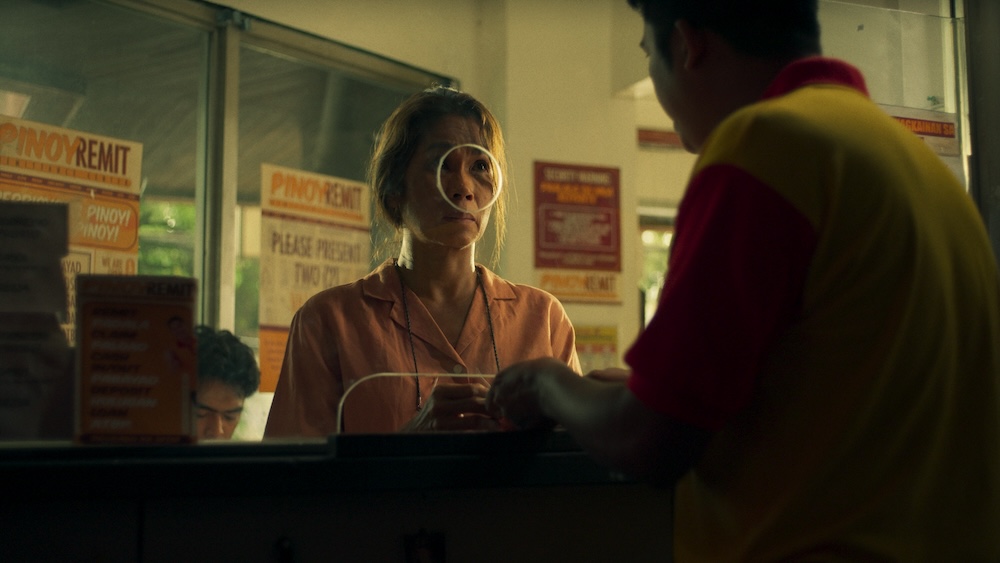
Its greater challenge, therefore, should have been to make a familiar reality appear unfamiliar again, to compel audiences not merely to recognize the system, but to question why it functions this way.
Despite the emotionally difficult reality at the center of 2 Valid IDs, the film could have made its critique more visceral through its cinematic language.
The issue is not that the film needed to intensify Sylvia’s suffering for the sake of spectacle. Nor does portraying poverty or hardship automatically make a film more truthful. Rather, the material conditions surrounding Sylvia’s experience could have been rendered with greater sensory and dramatic precision.
Cramped waiting areas. The stale, humid atmosphere of an office filled with people waiting for their names to be called. These details may appear insignificant, but in a film about the everyday, the insignificant can become meaningful.
Such objects and sensory details could have transformed Sylvia’s experience from something viewers merely observe into something they physically understand. The film’s environment could have functioned as more than a setting.
The mundane objects surrounding Sylvia could have carried symbolic weight. A broken electric fan, for example, could represent an institution that technically functions but fails to provide comfort. The endless queue could become a visual representation of how ordinary citizens are reduced to numbers within bureaucratic systems. The worn-out chairs could embody the accumulated fatigue of generations of people who have had to wait for the state to recognize their needs.

The same limitation in the visuals becomes apparent in its treatment of fixers.
When a government process becomes sufficiently complicated, slow, or inaccessible, an informal economy inevitably develops around it. Knowledge of the system becomes a commodity.
Those who know which forms to obtain, which offices to approach, or which people to contact can sell that knowledge to those who cannot afford to spend another day navigating the process themselves.
The existence of such an informal market exposes the unequal distribution of time and access. For someone with money, paying for convenience may be possible. For someone without it, the same system demands hours of unpaid labor.
A requirement to visit another government office may be manageable for someone with private transportation, but costly for someone who must pay for additional commuting between agencies. For the economically vulnerable, time is labor.
The film contains the foundations for this critique but resulted in a relatable story, but not always revelatory.
PROVING ONE’S IDENTITY
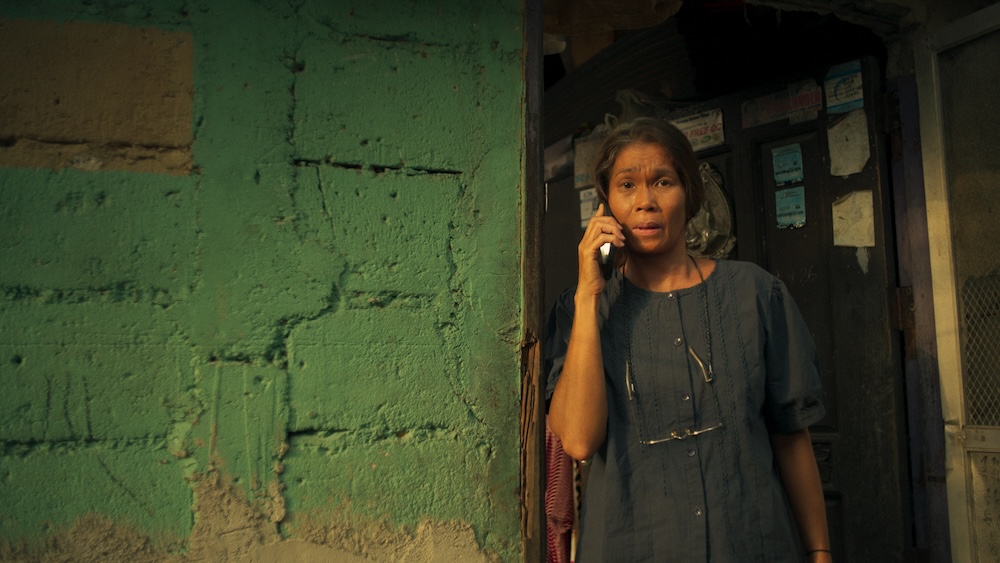
Perhaps the strongest justification for Subong’s Best Actress win is how she transforms Sylvia’s seemingly mundane struggle into something emotionally palpable. There are no grand monologues or overtly dramatic confrontations in her performance.
Instead, Subong allows Sylvia’s exhaustion to accumulate through her restrained expressions, body language, pauses, and quiet persistence. Every queue, rejection, and additional requirement gradually wears Sylvia down, and Subong makes that erosion visible without overplaying it.
This restraint becomes especially effective in Sylvia’s most emotionally revealing moments. At the billing station, when she discovers that her name has been recorded incorrectly and that she may need yet another ID to correct the mistake.
Subong’s contained rage could arguably have been more explosive for greater cinematic impact. Yet her restraint also feels true to Sylvia’s character.
This culminates in the ending, when Sylvia silently cries at the back of the truck, with no grand breakdown or explanatory dialogue. Subong captures that quiet resilience with remarkable restraint, making the ordinary act of obtaining two IDs feel like what it truly represents.
For a film built around such a familiar experience, the challenge was never simply to show that getting an ID is difficult. That is where 2 Valid IDs differs: the most effective social commentary does not need to shout. Sometimes, it only needs to make us look again at the things we have learned to consider normal.

Started in 1927, the Philippines Graphic is the longest-running printed magazine of national circulation that provides relevant news and features and promotes Philippine literature.