

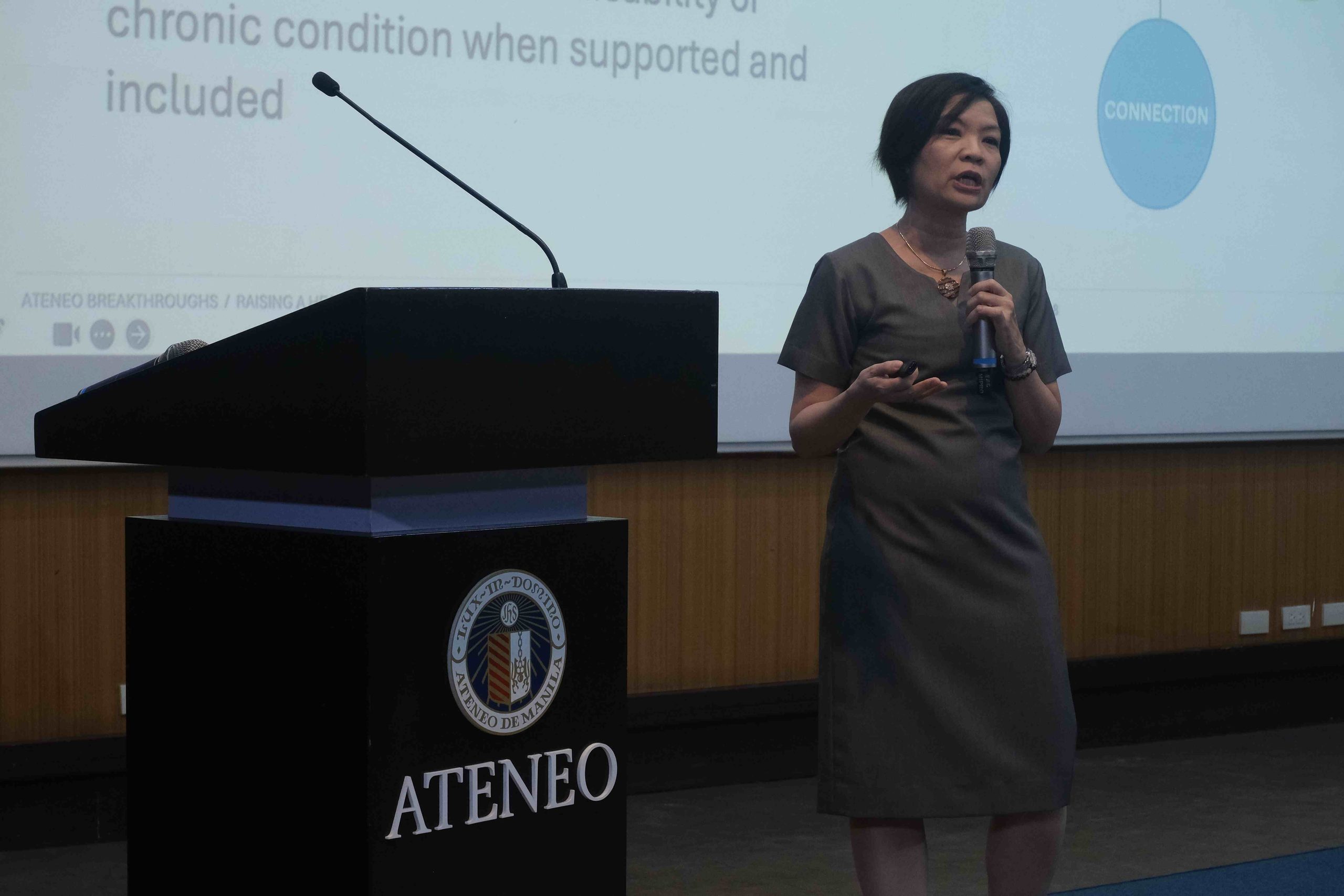
A child’s health is shaped by more than inherited genes or the food on the table. Family routines, relationships, cultural practices, and everyday conditions—from early school schedules to long commutes—also influence how children grow and thrive, according to an Ateneo de Manila University medical professor and clinician.
Dr. Lourdes Sumpaico-Tanchanco urged families, schools, and communities to consider these interconnected influences during her Ateneo Breakthroughs lecture, “Raising a Healthy Child: A Functional Medicine Lens on the Family as an Ecosystem of Health,” on October 21, 2026.
Sumpaico-Tanchanco is a professor at the Ateneo School of Medicine and Public Health and director of its Center for Research and Innovation. She is a developmental-behavioral pediatrician by training and holds a master’s degree in clinical epidemiology. She is certified in functional medicine by the Institute of Functional Medicine.
“Our genes do not determine everything about our health,” she said. But the conditions and experiences at the very earliest stages of life can influence gene activity without changing the underlying DNA sequence. Nutrition, stress, and other circumstances during pregnancy and childhood may help shape health risks later in life, but these early influences do not dictate a child’s future.
As children grow up, they acquire habits around food, sleep, physical activity, coping, and seeking help. Cultural expectations and upbringing shape these patterns, while household resources affect what caregivers can realistically provide.
Children learn from what adults do, she noted. Encouraging kids to eat their vegetables is harder when parents avoid them too; setting screen limits becomes more complicated when adults remain absorbed in their own devices. In Filipino households, grandparents, relatives, and other caregivers also help shape these routines—including those supporting children of overseas workers.
The wider environment matters just as much. Sumpaico-Tanchanco questioned school schedules that require children to wake up at 4 or 5 a.m. and noted that bedrooms are not dark enough for good sleep. Screen use can further crowd out rest, active play, and family interaction.
The interconnections of multiple factors matter when assessing a child’s attention or behavior difficulties. Clinicians should consider sleep, nutrition, physical discomfort, development, and stress alongside the child’s family and school experiences.
“The benefit of seeing the whole child is that a valid diagnosis becomes the beginning of an individualized plan and not just the end of our curiosity,” she said.
She described functional medicine as a framework for organizing these influences, emphasizing that it complements appropriate diagnosis and treatment. Suspected connections require assessment and do not justify broad testing or restrictive diets without a clinical basis.
Her practical advice is to begin with one or two achievable changes, such as a consistent bedtime, gradual introduction of unfamiliar foods, or intentional activities to foster play with other children in a condominium setting.
Families cannot carry the responsibility alone. Affordable food, accessible healthcare, safe neighborhoods, and supportive school and work arrangements help make healthier routines possible.
“A healthier future begins in the everyday life of a child nurtured by a family and supported by a community,” she said.
View Dr. Sumpaico-Tanchanco’s full Ateneo Breakthroughs Lecture on YouTube here.

Started in 1927, the Philippines Graphic is the longest-running printed magazine of national circulation that provides relevant news and features and promotes Philippine literature.