
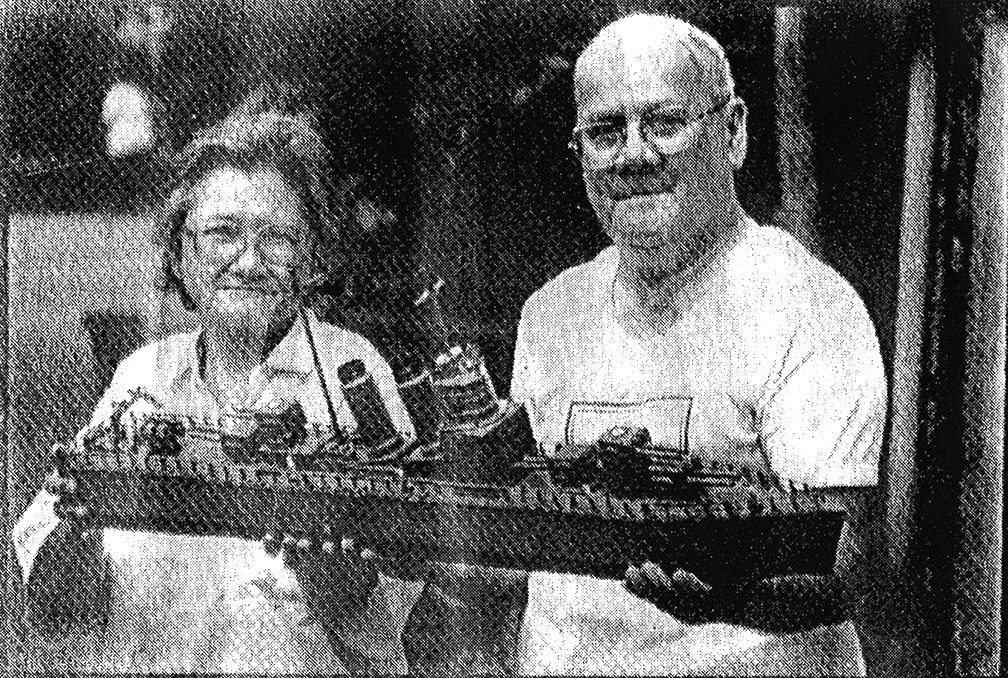
A box of 1990s-era dishwashing paste and two empty spice jars were among the oddest of odds and ends—junk of the greatest variety—that her late Daddy Tirso had collected over the years.
Editor-in-chief Lourdes “Chuchay” Fernandez of the BusinessMirror recalls how a box of “basura” (trash) turned into a turret stand, and the spice jars became twin smokestacks as her old man completed a scale model of a World War II-era warship: the USS Phoenix. Chuchay and her siblings enjoyed watching their father create such toys for their children and grandchildren.
Unknowingly, but delightfully, he was also showing some of the more creative ways to repurpose solid waste for over four decades before the passage of the Ecological Solid Waste Management (ESWM) Act of 2000.
The ESWM law focused, among other things, on the role of local government units (LGUs) in managing waste, particularly the segregation and disposal phases. This came in light of the scale of the problem, and the Philippines’ dubious honor of being identified as one of the main contributors to marine pollution, particularly from plastic waste.
In tackling such a gargantuan problem, LGUs welcomed partnerships with civil society: foundations and philanthropic organizations.
One example of these effective partnerships is ongoing in the country’s capital, where the International Container Terminal Services Inc. Foundation Inc. develops, expands, and continues to support a solid waste management project in Manila’s Parola area, strategically located near Manila Bay. Collaborating with select barangays and supported by Philippine Business for Social Progress, ICTSI Foundation aims to address persistent garbage problems in partner communities through the Parola Eco-Patrol Project.
The Eco-Patrols project is one example of tackling a broad problem through an equally broad network of cooperation.
That kind of multi-stakeholder approach is further amplified by newer legislation that complements Republic Act 11898 (an amendment of RA 9003), or the Extended Producer Responsibility Act of 2022.
PARADIGM SHIFT
In a sense, the EPR Act shifts the focus from consumers and LGUs and general solid waste disposal to producers and their extended responsibility for plastic packaging waste.
Whereas RA 9003 emphasized public participation, integration across agencies, and comprehensive ecological waste management, the act reinforces producer responsibility throughout the plastic packaging product life cycle, emphasizing circular economy principles.
Hjadoeya Calica posed a very interesting point in the August 2026 special report of the Philippines Graphic: “It is easy to forget about something once it is thrown away: A plastic bottle is emptied, a food container is scraped clean, and a sachet is torn open before each is placed inside a trash bin. Once the garbage truck arrives and takes them away, the problem seems to have ended. But where does ‘away’ actually go?”
At the end of the report, Calica delivers the sober reminder: Nothing really goes “away.”
“When a product leaves a consumer’s hands, it does not disappear. The environmental consequences also remain…EPR provides one way of moving responsibility further upstream by involving producers in the post-consumer life of their products…There is no real place called ‘away’; it is but another space dedicated to discards. If nothing really goes ‘away,’ perhaps responsibility should not either.”
And that is at the heart of what makes EPR a landmark piece of legislation: the circular economy. (Or, what New-Wave-raised GenXers might sample from the Spandau Ballet classic: the principle of “Round and Round” (It Goes…))
Under the EPR Act, the extended producer responsibility mechanism is adopted and institutionalized “as a practical approach to efficient waste management, focusing on waste reduction, recovery and recycling, and the development of environment-friendly products that advocate the internationally accepted principles on sustainable consumption and production, circular economy, and producers’ full responsibility throughout the life cycle of their [plastic packaging] product.”
Among the earlier and more comprehensive discussions of the circular economy concept are those contained in the strategic report released by Ellen MacArthur Foundation, Growth within: A circular economy vision for a competitive Europe (2015).
“For this economic analysis, the circular economy is defined as an economy that provides multiple value-creation mechanisms which are decoupled from the consumption of finite resources…”
The report further notes the importance of “creating an economy that is restorative and regenerative, that preserves ecosystems and increases their return over time, that creates prosperity, and that fuels growth by capturing more value from existing infrastructure and products.”
The report underscores that the aim is to maximize total utility from the products and materials in use.
But whose job is that?
‘WITH GREAT POWER, GREAT RESPONSIBILITY’
“Businesses have an incredible opportunity to take leadership on this urgent issue: First, by reducing their upstream consumption of virgin plastic, where they can; secondly, by helping fund the cleanup of the equivalent of their remaining footprint to help tackle the legacy waste that’s choking our planet.”
Nanette Medved-Po, founder and executive chair of PCX Markets and PCX Solutions, noted that these are two vital roles that the private sector can play as a major stakeholder in the plastic waste problem.

PCX Markets operates as a plastic responsibility platform, providing upstream and downstream solutions to help companies achieve their sustainability goals. Its affiliated organization, PCX Solutions, a nonprofit headquartered in Manila, works with governments worldwide on EPR schemes.
And regarding that question of who exactly is responsible?
The EPR Law applies to businesses that generate plastic packaging waste.
Another qualifier in the EPR Act is enterprise size. The law applies only to large enterprises—business entities with assets exceeding P100 million, excluding land —and MSMEs operating under the same brand name with combined assets of over P100 million, excluding land.
For non-lawyer readers (like this author), the Department of Environment and Natural Resources (DENR), through its Environmental Management Bureau (EMB), provides helpful, non-intimidating, non-legalese explainers.
According to the EMB’s frequently asked questions (FAQs), “plastic packaging” covered by the EPR Law refers to “polymer material designed to protect a product from environmental factors, or carry goods for transportation, distribution, and sale, including service necessities and promotional materials.”
That includes “flexibles”: sachets, labels, laminates, and other flexible plastic packaging products, whether single-layer or multi-layered with plastics or other materials.
Also covered are rigid plastic packaging products (whether layered with any other materials): think containers for beverages, food, home, personal care and cosmetic products, including their coverings, caps, or lids and other necessities or promotional items, such as cutlery, plates, drinking straws, or sticks, tarpaulins, signage, or labels.
As third and fourth categories: plastic bags, including single-use plastic bags for carrying or transporting goods and used at the point of sale; and polystyrene.
In real-life household contexts, we see these flexibles and rigids all around—on supermarket shelves, digital and TV ads, in convenience/sari-sari stores. Think plastic packaging for snacks we binge on while chasing deadlines, your lola’s condiments in her “pasok-sa-budget” pouches, and your sister’s shampoo sachet. Less top-of-mind examples—but just as important contributors—include manufacturers whose products include plastic labels and packaging.
The DENR EMB further explains the “product producer” nuance: “Product producers that are obliged enterprises (OE) under the EPR Act of 2022 shall refer to the:
Brand Owner who sells or supplies any commodity under a brand, label or identity using a product it produced, or a material supplied to it by another manufacturer, or supplier;
Product Manufacturer or Importer that supplies its commodities for the use of the general consumer, or distributes the same as a material product of a brand owner: Provided, that for purposes of Article 2 of Chapter III-A, RA 9003, as amended by the EPR Act of 2022, in case the commodities are manufactured, assembled, or processed by a product manufacturer for another Obliged Enterprise which affixes its own brand name, the latter shall be deemed as the manufacturer.”
Exactly what are these OEs obliged to do, in the spirit and letter of the EPR Act?
BREAKING THE PLASTIC TSUNAMI
In the 25 years since the passage of the ESWM Act of 2000, Filipinos, young and old alike, have become increasingly familiar with core concepts such as waste reduction, segregation, reuse, and recycling.
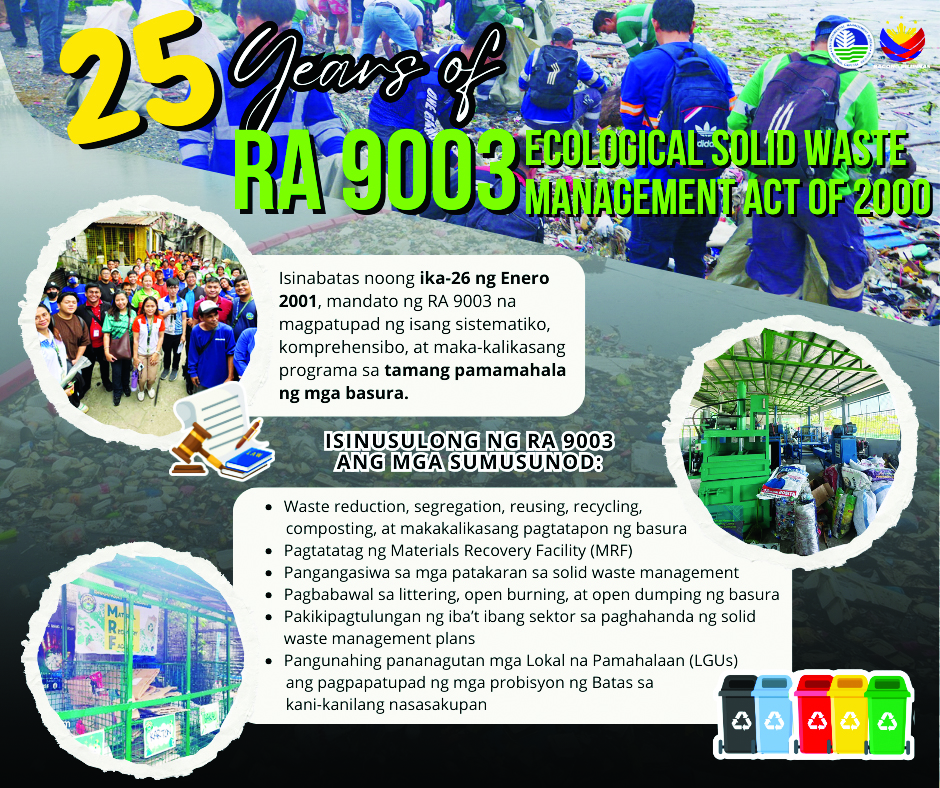
The EPR Act hopefully brings us all a few more key concepts to learn, become familiar with, and live out: officially, and as mandated, at the level and capacity of OEs; and yet perhaps unofficially but no less importantly, supported by communities, families, and individuals in whatever ways are feasible.
Here are two core concepts to begin with: “product footprint” and “plastic product footprint.”
While product footprint refers to “a measure of the amount of goods produced, imported, distributed, or supplied by a product producer, and deemed to cause damage to the environment,” EMB explains that “plastic packaging footprint” is “the verifiable weight, expressed in kilograms, of the plastic packaging per type, material form, or general form, that an OE brings into the domestic market within a specified period.”
Given the sheer size and severity of the plastic pollution problem—the so-called plastic tsunami—the EPR Act requires OEs, individually or collectively, with or without a Producer Responsibility Organization (PRO), to prepare and register their EPR Programs with the National Solid Waste Management Commission.
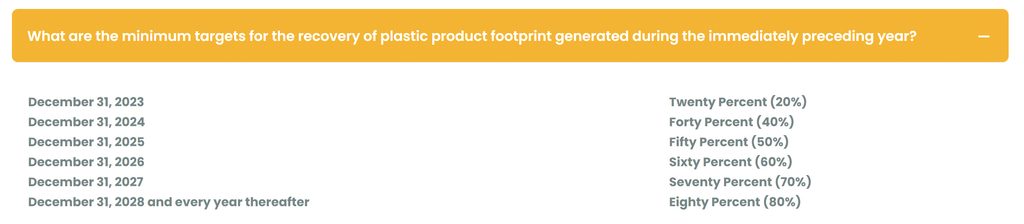
Through these EPR Programs, OEs will reduce and/or recover, for reuse, recycling, treatment, or proper ecological disposal, the plastic packaging waste they release or have released to the domestic market.
As laid out in the EMB FAQs, among the objectives of the EPR Act of 2022 is to achieve plastic neutrality, defined as “a system or its desired outcome where, for every amount of plastic product footprint created, an equivalent amount thereof is recovered or removed from the environment by the product producers through an efficient waste management system.”
In a sense, breaking the plastic tsunami requires OEs to attack the problem “wave-by-wave.” They may formulate, register, and implement their EPR Program individually or collectively, with or without a PRO. And there is actually a broad range of activities and strategies that an OE may include in the EPR program.
A key category—the reduction of non-environment-friendly products—may include activities and strategies such as the adoption of reusable products; the redesign of the products to improve their reusability, recyclability, or retrievability; inclusion of recycled content or recycled materials in a product; adoption of appropriate product refilling systems for retailers; a viable reduction rates plan; information and education campaign schemes; and the appropriate labeling of products, including the information thereon for the waste product’s proper disposal.
A second, equally important category of EPR activities and programs is product waste recovery, aimed at effectively preventing waste from leaking into the environment. Examples include waste recovery schemes through redemption, buy-back, offsetting, or any method or strategy that efficiently results in high retrievability, high recyclability, and resource recovery of waste products; and the diversion of recovered waste into value chains and value-adding products through recycling and other sustainable methods.
Also included in the product waste recovery category: transportation of recovered waste to the appropriate composting, recycling, or other diversion or disposal site in the country; establishment of commercial or industrial-scale recycling, composting, thermal treatment, and other waste diversion or disposal facilities for waste products, when investment therein is viable; and partnership with LGUs, communities, and the informal waste sectors.
MIDDLE OF THE JOURNEY
In the June 2026 updated explainer on EPR: A comprehensive guide to the Philippine EPR Law, PCX Markets reminds us that OEs’ obligations fall under three broad categories.
First is the creation, registration, and phase-in of EPR programs; second, footprint reduction, recovery, and diversion; and third—and just as vital: submitting these to audit and report.
And how are we doing? Medved-Po offers an encouraging note in the PCX Real Impact Report for 2025: “In the Philippines, where PCX was born, companies were required to recover 50% of their plastic packaging footprint by the end of 2025. Sixteen of these companies—our partners—went to 100%. That is not compliance. That is leadership.”
As an ordinary consumer, I tried to reflect on what these EPR and even their allied ESWM advances look like in real life, across the range of OEs and those that are voluntarily adopting EPR practices.
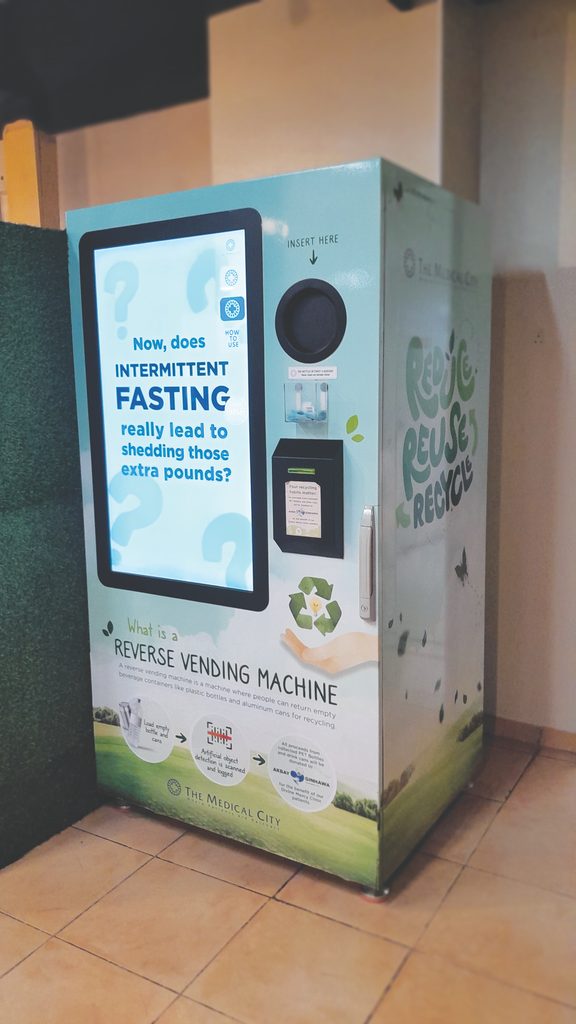
On plastic recovery, this author is reminded of SM Supermalls and Robinsons Malls (two of our family’s retail “suki”). Both offer options for electronic waste collection; we’ve also spotted reverse vending machines in selected branches of the latter.
Other companies are pitching in by addressing the “upstream” side, revisiting plastic packaging redesign. Human Nature, for instance, has been offering lighter, 100% recyclable 1-liter refill bottles and shampoo bars designed to reduce the plastic used for shampoo bottles drastically.
We are, in a sense, in the (often messy) middle of the journey toward the 2028 targets.
It’s encouraging to remind ourselves that, as we support EPR as part of enterprises, and as members of communities and families go corporate, the goal of that circular, “round-and-round-it-goes” economy is well worth the effort of every step.

 in managing waste, particularly the segregation and disposal phases.)