

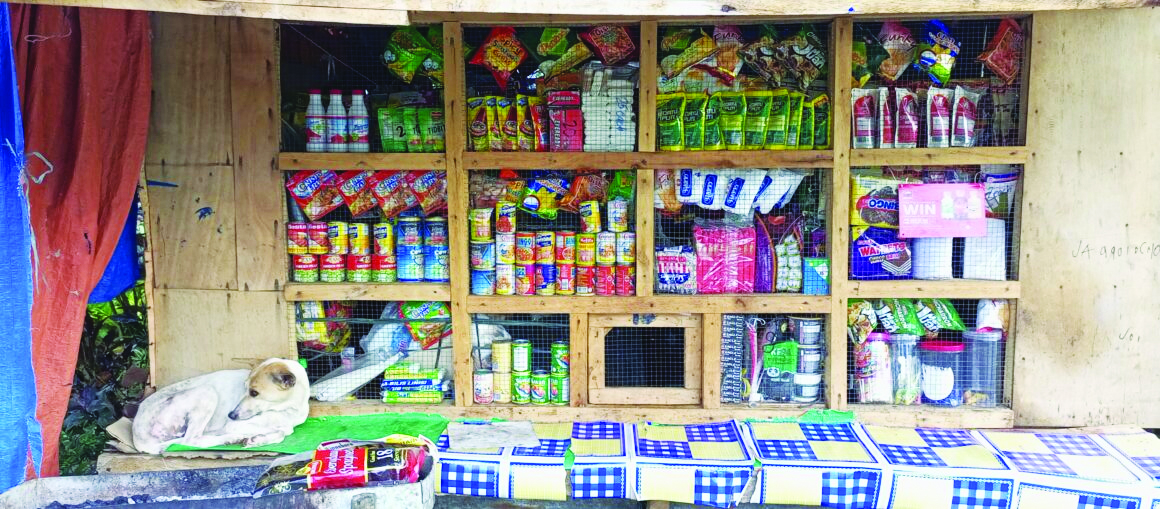
On a payday morning somewhere in Bulacan, a mother walks into a sari-sari store clutching a handful of coins. She asks for a sachet of shampoo, P10-worth of cooking oil, and a packet of instant coffee…
Behind her, a tricycle driver quietly adds another loaf of bread and canned sardines to his running tab, promising to settle his account when his next fare comes in.
Several kilometers away, a young office worker scrolls through her phone during lunch break. A flash sale is about to end. A pair of sneakers she has been eyeing for weeks is suddenly 30% cheaper—but only for the next 3 hours. Before midnight, she will likely use the same device to pay bills, transfer money, order dinner, reserve concert tickets, and perhaps even take out a small loan.
These Filipinos live different lives and occupy different points on the economic ladder. However, they share something fundamental: each must make financial decisions in an economy that has become more connected, more digitized, and more financially sophisticated than at any other point in Philippine history.
For much of the past decade, policymakers have celebrated the democratization of financial services. Digital wallets have spread from urban centers to remote barangays. QR-code payments have become commonplace. Opening an account no longer requires an intimidating trip to a bank branch and a mountain of paperwork. Millions who once operated entirely through cash now participate in the formal financial system through nothing more than a smartphone. By almost any measure, it is a remarkable achievement.
And yet, beneath the success story lies an uncomfortable contradiction.
The country’s financial infrastructure has expanded dramatically, but financial security has not necessarily kept pace. More Filipinos know the language of personal finance. More have access to financial products. More participate in the digital economy.
Nonetheless, many remain one medical emergency, one missed paycheck, or one impulsive purchase away from financial distress.
The contradiction is evident in the latest data from the Bangko Sentral ng Pilipinas (BSP): Its 2025 Consumer Finance and Inclusion Survey found that 74% of adult Filipinos answered at least half of a standard set of financial literacy questions correctly—up from 69% in 2021.
Filipinos also appear to be more vigilant online: 78% reported avoiding sharing personal information online. In comparison, 64% said they check whether a financial institution is regulated before transacting with it.
The country’s financial infrastructure has expanded dramatically, but financial security has not necessarily kept pace.
Taken alone, those figures suggest a country becoming smarter about money.
But the same survey tells another story: Formal account ownership fell to 50% in 2025 from 56% 4 years earlier, even as digital transactions continued to expand throughout the economy. The decline was partly attributed to fewer loan-linked accounts, as borrowing from cooperatives and microfinance institutions decreased.
Meanwhile, cashless transactions accounted for 57.4% of total retail payments in 2024, surpassing the Philippine government’s own targets.
In other words, more Filipinos can explain what an emergency fund is. Fewer, at least according to the survey, have a formal financial account to keep one in.
That paradox sits at the heart of a broader conversation about what financial literacy actually means in the Philippines.

FIRST, A DIFFERENCE:
For Efren Ll. Cruz—one of the country’s most recognizable financial planners and chair/CEO of Personal Finance Advisers Philippines—the problem begins with a distinction policymakers often overlook.
“It is crucial to distinguish between financial inclusion and financial literacy,” Cruz told Philippines Graphic. “Financial inclusion is based on how many people have access to bank accounts, lending institutions, and financial products, whereas financial literacy is a broader topic involving the understanding of how to [manage] finances as a whole.”
Right now, he said, financial literacy is often overstated, and current approaches are more product-driven than knowledge-based: “Simply having access to financial accounts or tools does not inherently mean someone possesses financial literacy.”
The difference may sound academic, but it helps explain why financial inclusion campaigns frequently produce results that look impressive on paper yet leave households vulnerable in practice. Opening a bank account does not automatically create savings. Downloading an e-wallet does not produce financial discipline. Having access to credit does not necessarily lead to wealth.
Access creates opportunity. What people do with that opportunity is an entirely different matter.
To understand why, one can look beyond bank accounts and balance sheets, then examine the daily realities that shape Filipino financial behavior.
SACHET ECONOMY
Economists often describe the Philippines as a consumption-driven economy. Household consumption accounts for more than 70% of the country’s gross domestic product, making personal spending one of the most important engines of national growth. Yet, beneath aggregate spending figures lies a reality far more complicated than traditional financial literacy surveys can capture.
The Philippines remains, in many ways, a “sachet economy.”
Walk into virtually any neighborhood sari-sari store and one encounters products divided into tiny, affordable portions: individual packets of coffee, small pouches of detergent, single-use shampoo sachets, and cooking oil sold by the spoonful.
From a purely economic perspective, buying in such small quantities is inefficient. Consumers often pay significantly more per unit than those who can afford to purchase in bulk.
Yet, Filipinos do not buy sachets because they are poor at mathematics. They buy such products because they manage constrained cash flows. A family may fully understand that a large bottle of shampoo offers better value than a P6 sachet. But if that’s all they have at that moment, value ceases to be the primary consideration. Liquidity becomes everything.
The result is a poverty trap that rarely appears in official statistics. People with limited resources often end up paying more for the same essentials because they cannot afford the upfront cost of buying larger quantities. The cycle reinforces itself, making it harder to save and harder to accumulate the financial cushion required to escape daily vulnerability.
Such realities challenge simplistic assumptions about financial literacy. A mother stretching a minimum wage across a household of five may possess extraordinary financial instincts. She knows precisely where to find the cheapest vegetables. She understands how far the household budget can be extended. She knows which expenses can be delayed and which cannot.
What she may lack is not financial knowledge, but the financial breathing room needed to put that knowledge into practice.
CULTURAL, SOCIAL DIMENSIONS
The challenge becomes even more complicated when culture enters the equation.
In the Philippines, money rarely belongs solely to an individual. It is often intertwined with obligations to parents, siblings, cousins, nieces, nephews, and an extended network of relatives.
The concept of utang na loob remains one of the most powerful forces shaping financial behavior. Many successful professionals find that income growth does not necessarily translate into wealth accumulation because financial success frequently expands the number of people depending on them.
At the same time, the traditional bahala na mindset continues to exert influence. While often celebrated as a symbol of resilience, it can also encourage financial fatalism. Long-term planning becomes difficult when daily survival dominates attention. Saving for retirement can feel abstract when immediate household expenses demand attention.
Social expectations add yet another layer. Whether birthdays, fiestas, weddings, baptisms, or family reunions, Filipinos often feel pressure to demonstrate generosity and hospitality regardless of financial circumstances. Many households spend beyond their means not because they misunderstand money, but because social norms place a premium on maintaining appearances and fulfilling family obligations.
The result is a financial environment where culture and psychology shape decisions as much as arithmetic.
Those forces become particularly visible during what Filipinos call petsa de peligro (dates of danger or peril). Almost every working Filipino understands the phrase. It refers to the difficult days before payday when money is scarce, and households enter survival mode. Fresh meat is replaced by canned goods. Transportation plans are adjusted. Entertainment spending disappears. Every peso is scrutinized.
The persistence of “petsa de peligro” speaks to a deeper reality about financial fragility in the country. For millions of households, even modest disruptions can create significant stress. In such circumstances, long-term financial goals inevitably take a back seat to short-term necessities.
Behavioral economists call this “present bias”—the tendency to prioritize immediate needs and rewards over future benefits. People often portray it as irrational behavior. Yet for many Filipinos, it is entirely normal: The farther people live from financial security, the more powerful the present becomes.
The digital revolution has amplified these pressures in unexpected ways.
Behavioral economists cite ‘present bias’: The farther people live from financial security, the more powerful the present becomes.
INCLUSION BECOMES ELECTRONIC
Few innovations have transformed Philippine finance more dramatically than e-wallets.
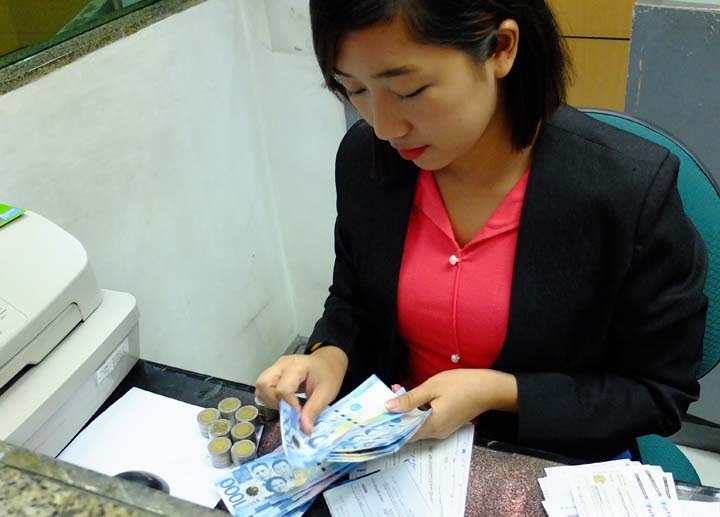
Platforms such as GCash and Maya have brought banking-like services to millions who once had little interaction with traditional financial institutions. Money transfers are instantaneous. People can pay bills virtually anywhere. Vendors in local markets can now accept digital payments with little more than a printed QR code.
Financial inclusion has unquestionably expanded. Yet, digital convenience comes with unintended consequences. Behavioral researchers have long observed that people spend differently when they do not physically hand over cash. The psychological discomfort associated with parting with a P1,000 bill is less pronounced when payment requires only a screen tap.
Digital transactions reduce what economists call the “pain of paying.” The effect may seem subtle, but it can be profound. Spending becomes easier. Purchases feel smaller. Financial decisions become less visible.
Meanwhile, the same platforms that facilitate transactions are increasingly integrated with shopping, entertainment, credit, and investment products. The app through which someone gets their salary may also suggest a loan, advertise a flash sale, or promote a new financial product.
The lines between convenience and temptation become increasingly blurred.
PSYCHOLOGICAL DIMENSION
According to Cruz, that environment helps explain why people frequently make financial decisions they know are not in their best interests.
“Gambling and buying-now mentalities flood the brain with dopamine and exploit present bias,” he said. “Furthermore, algorithms are specifically designed to encourage attempts to recover lost money. Recurring shopping events like November 11 and monthly sales such as “9.9,” “11.11,” or “2.2” tap directly into this inner psychology and anticipation.”
The insight shifts the discussion from financial literacy toward behavioral economics. People do not make financial decisions based on information alone. They make them based on emotion, habit, social pressure, and cognitive biases that financial technology increasingly understands and exploits.
Few examples illustrate that reality more clearly than online gambling. For Cruz, the expansion of digital payment systems has inadvertently made betting easier than ever.
“Unfortunately, the advent of social media, online apps, and legal online gambling apps—where the smallest bet on a legal app can be 50 cents—has caused a backward step, making Filipinos more financially burdened rather than financially excluded or illiterate,” he said. “To attempt to curb illegal gambling, the central bank attached e-wallets directly to licensed online gaming operators.”
The numbers quickly became staggering: Regulated online gaming by the Philippine Amusement and Gaming Corp. or PAGCOR generated more than P154 billion in government revenue in 2024, while major e-wallet platforms accumulated tens of millions of users. What once required a trip to a gaming establishment could suddenly be done from a smartphone at any hour.
By 2025, concerns over the social and financial consequences of online gambling had intensified sufficiently for regulators to intervene. The BSP ordered supervised entities to remove in-app features that linked directly to gambling platforms and later explored tighter restrictions, including dedicated gambling accounts with spending limits and mandatory cooling-off periods.
For Cruz, the regulatory response reinforced a broader lesson. For him, “it is not a cultural issue; it is psychological and rooted in human nature.”
He argues the same psychology drives impulsive spending, excessive borrowing, and many of the financial mistakes people commonly make. Solving those problems requires more than information—it requires changing behavior.
BECOMING PERSONAL
That conviction underlies the personal finance framework Cruz advocates.
At its core is a practice he calls “microbudgeting”: the disciplined tracking of every peso spent over 30 to 90 days.
Unlike traditional monthly budgets, which can conceal recurring patterns, daily tracking forces individuals to confront spending habits in real time.
“Microbudgeting is an effective personal finance tool that is not traditionally taught in school,” Cruz said, citing examples of individuals who improved their financial positions through disciplined tracking of
daily expenses.
Microbudgeting forms the foundation of what he calls the “CDRW” framework: Cash Management, Debt Management, Risk Protection, and Wealth Accumulation.
The sequence is intentional.
Cash management establishes discipline. Debt management eliminates destructive liabilities while allowing productive leverage. Risk protection shields households against unforeseen shocks. Only after those foundations are in place should wealth accumulation become the primary objective. This framework is designed less around financial products than around
financial resilience.
Cruz also argues that language matters: “An example of framing questions based on loss aversion is saving: when asked if they can save 30% of their income, people’s brains interpret it as a loss. However, when asked if they can live on 70%, they are much more receptive.”
The mathematics are identical. The psychology is not.
‘SANDWICH GENERATION’
Nowhere does the importance of risk protection become clearer than among the country’s “sandwich generation”: those simultaneously supporting aging parents and dependent children.
This group occupies one of the most financially precarious positions in Philippine society. Their incomes are stretched between two generations. Retirement savings compete with educational expenses. Healthcare costs rise even as family responsibilities multiply.
“The sandwich generation spans baby boomers and Generation X, who face unique modern challenges compared to previous generations,” Cruz explained.
His concern about financial protection carries personal weight. A kidney transplant recipient himself, Cruz understands firsthand how quickly medical expenses can overwhelm a household.
“Speaking from personal experience spending over P300,000 on anti-rejection drugs as a kidney-transplant patient, PhilHealth’s new ‘Z Package’ reduced my monthly medication cost to P250,” he shared. “However, covering approximately 7,500 kidney transplant patients could strain PhilHealth’s funds, potentially leading to higher contributions or reduced benefits.”
EXTERNAL FORCES
His experience reflects a larger reality. Financial vulnerability is not always the result of poor decisions. Sometimes it stems from circumstances beyond anyone’s control. Illness, accidents, and unexpected emergencies can erase years of savings in a matter of months.
That reality partly explains another persistent paradox in Philippine finance: extreme caution toward legitimate investments coupled with surprising vulnerability to scams.
Many Filipinos remain hesitant about the stock market. Participation rates are low. Formal investment products often appear intimidating, overly complex, or disconnected from everyday experience.
At the same time, investment scams continue to attract victims. Pyramid schemes, fraudulent cooperatives, dubious cryptocurrency ventures, and numerous variations of “double your money” schemes regularly make headlines.
To Cruz, the attraction is understandable: “People fall for scams to alleviate financial pain and solve problems.”
The desire for quick financial relief often overwhelms caution, particularly when traditional pathways to wealth appear inaccessible or slow.
NEW APPROACHES
Younger Filipinos face a different challenge.
According to Cruz, social media has significantly expanded awareness of financial concepts, but not necessarily understanding.
“Younger generations are more knowledgeable about financial terms and mutual funds due to TikTok influencers, but their depth of knowledge remains shallow and driven by ‘motherhood’ statements,” he said. “Youth face greater temptation to enjoy life now and delay marriage, treating it as a trend toward a first-world country. Regarding cryptocurrency and artificial intelligence, people jump on these fads without understanding their practical application, treating AI as a magic tool without realizing it makes mistakes.”
His advice is measured rather than dismissive: “To enhance financial literacy, use social media and AI only as starting points for deeper research and rely on professionals instead of influencers.”
Social media has significantly expanded awareness of financial concepts, but not necessarily understanding.—Cruz
When discussing wealth-building opportunities, Cruz favors a relatively conservative menu of options, including fundamentally sound Philippine stocks, the Personal Equity and Retirement Account, the SSS Pension Booster, and Pag-IBIG’s MP2 savings program. These recommendations reflect a broader philosophy that emphasizes disciplined accumulation over speculative returns.
The contrast is especially striking as buy-now-pay-later services and digital lending platforms continue to expand.
Such products serve legitimate needs, but they also normalize borrowing for consumption and increase the risk of debt accumulation.
FROM ACCESS TO RESILIENCE
Debt itself remains one of the most complicated aspects of Filipino financial life.
Whether through traditional informal lending, neighborhood credit arrangements, online lending applications, or buy-now-pay-later services, borrowing frequently functions as both a lifeline and a trap.
For those who become overwhelmed, Cruz emphasizes that legal remedies exist: “To get out of debt legally, the Financial Rehabilitation and Insolvency Act [or FRIA] provides options such as suspension of payments with creditor agreement, voluntary insolvency by surrendering assets, or involuntary insolvency filed by creditors.”
He also points to the successes of his ENRICH-GOOD program, which focuses on negotiated settlements between debtors and creditors.
“Our ENRICH-GOOD program counsels individuals on out-of-court settlements and negotiations, achieving significant debt discounts ranging from 50% to over 83% for clients—such as reducing a P72,000 credit card debt to P9,500, and a P1.5 million debt by 50%—by providing structured advice while clients handle direct negotiations,” Cruz shared.
Ultimately, however, the country’s financial challenge extends beyond individual behavior. The Philippines has spent years solving the problem of access. Digital inclusion has advanced. Financial infrastructure has improved.
Regulators have expanded consumer-protection efforts and are preparing a new national financial literacy strategy to ground education in everyday realities such as inflation, debt, fraud, and financial decision-making.
The next stage may be harder. The challenge is no longer merely bringing Filipinos into the financial system; it is helping them thrive within it.
That requires recognizing that financial literacy is not simply about knowing definitions or passing survey questions. It means understanding risk, navigating family obligations, resisting manipulation, planning for uncertainty, and building habits strong enough to withstand an increasingly sophisticated marketplace competing for every peso.
The BSP’s latest figures suggest genuine progress. More Filipinos understand financial concepts than ever. Digital finance continues to expand. Women and young people are gaining greater access to formal financial services.
Yet the country’s financial future will ultimately depend on whether knowledge translates into behavior. For Cruz, that transformation is neither glamorous nor complicated.
It begins with tracking expenses. Managing debt. Protecting against risk. Investing consistently. Repeating those actions long enough that discipline replaces willpower.
Financial freedom, in his telling, is not a viral investment strategy, a lucky stock pick, or a speculative bet that pays off at the right moment. It is something quieter and less dramatic: a habit that survives a bad month, an emergency, or a setback because it has become part of everyday life.
The Philippines has largely solved the problem of access. The harder task lies ahead.
The question now is whether Filipinos can move beyond access and toward genuine financial resilience, turning literacy into behavior and financial tools into lasting security—one carefully managed peso at a time.
Malou Talosig-Bartolome
Malou Talosig-Bartolome is a veteran journalist with over 25 years of experience in both print and broadcast industries, specializing in diplomatic reporting. She started as a police and defense reporter in 1994, then became the foreign affairs reporter for Today newspaper until 2002. As a diplomatic beat reporter, she was assigned to cover summits of the Association of Southeast Asian Nations (ASEAN), Asia Pacific Economic Conference (APEC), and Asean-Europe Meeting (Asem) in major capitals. She was also invited to interview heads of states and attend short fellowship journalism and diplomacy programs in the US, Europe, and Asia. She has spent 15 years in the broadcast industry as senior news editor of GMA Network Inc.