

By: Eunice Jean C. Patron
The massive floods that tropical cyclones bring now demand urgent and science-based decision-making.
Considered one of the most devastating natural hazards globally, floods pose critical threats to both human life and economic stability. The Philippines is no stranger to flooding, as approximately 20 tropical cyclones enter the Philippine Area of Responsibility (PAR) each year. According to the 2023 World Risk Index Report, the country also ranks first among those most affected by extreme weather events.
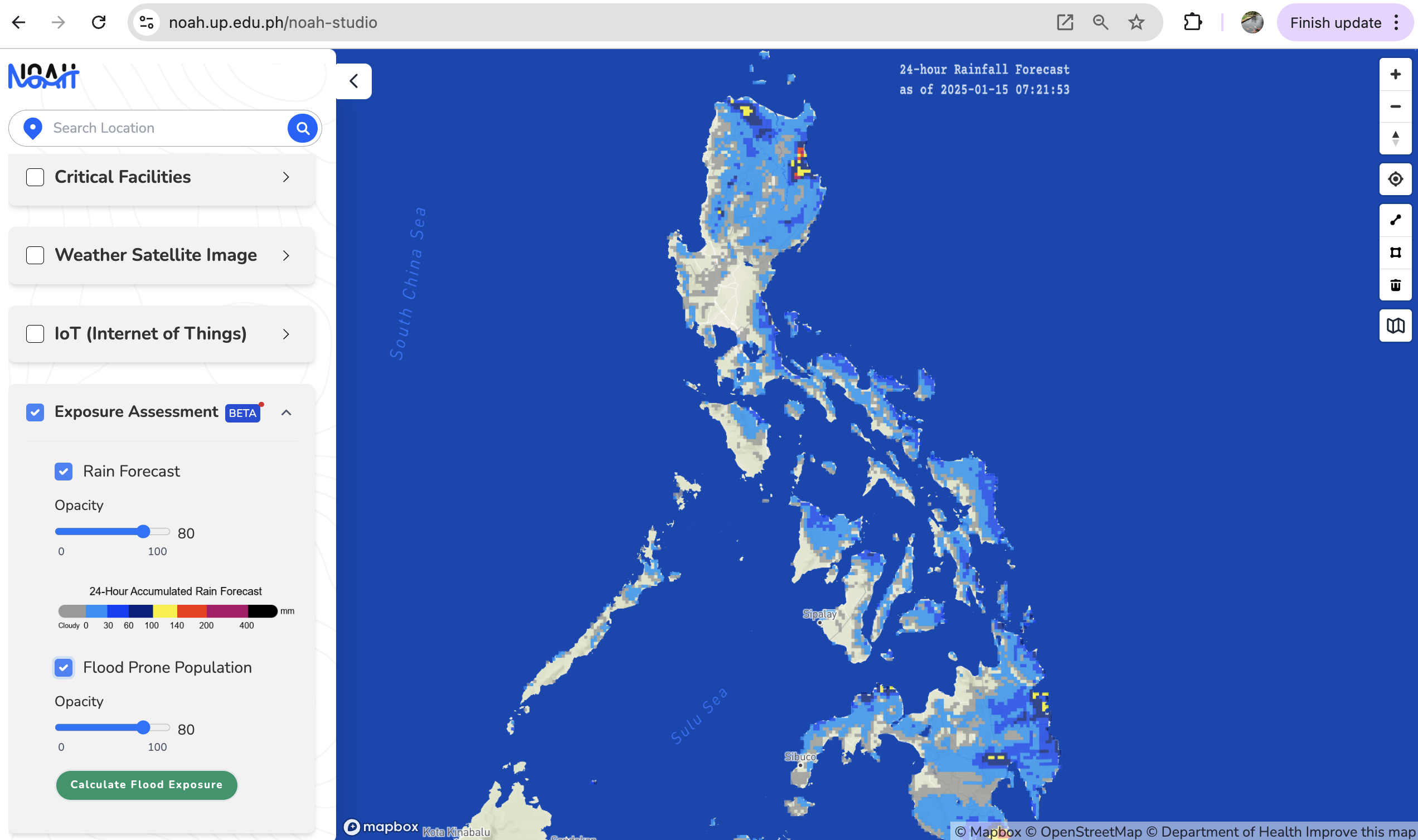
Dr. Alfredo Mahar Lagmay, a professor at the University of the Philippines – Diliman College of Science’s National Institute of Geological Sciences (UPD-CS NIGS) and executive director of the UP Resilience Institute (UPRI), together with scientists from the UPRI Nationwide Operational Assessment of Hazards (NOAH) Center and Dr. Gerry Bagtasa of the UPD-CS Institute of Environmental Science and Meteorology (IESM), with assistance from Dr. Bernard Alan Racoma of IESM and in partnership with the Academic Alliance for Anticipatory Action (4As), developed an impact-based flood forecasting system capable of predicting flooding in the entire Philippines. The system was funded by the United States Agency for International Development’s Bureau for Humanitarian Assistance (USAID-BHA).
“This system can determine whether a neighborhood is likely to be affected by a major flood event 24 hours in advance,” Dr. Lagmay explained, noting that the system was able to forecast the flooding in Davao, Palawan, and Borongan this year. “When accessed on the NOAH website, areas prone to flooding due to severe weather are shown in map view or tabular format, with the number of potentially affected people listed down to barangay level.”
The tool can forecast flooding in specific areas based on accumulated rainfall forecasts (predicted total rainfall) and 100-year rain return flood hazard maps, which are maps showing areas prone to severe flooding based on historical data. By adjusting global weather models to match the country’s specific geography and weather patterns, the system releases predictions that are more accurate.
The Impact-Based Flood Forecasting System was released in 2024 and has been available for public use since then. The system empowers Filipino citizens by enabling them to validate the data it provides. “The public can contribute information through the LyfSaver app, allowing FIlipinos to report floods in their area.” Dr. Lagmay added.
Dr. Lagmay and his team also collaborated with other organizations, such as the FYT PH Media’s crowdsourcing platform, YesPinoy’s disaster response training program, and the Quezon City Disaster Risk Reduction and Management Office, as well as the Public Affairs and Information Services Department, to integrate the automated system’s features into other components of disaster risk reduction and management.
In the paper where they talked about the system, published in the Asian Journal of Agriculture and Development (AJAD), the scientists acknowledged that the system has achieved some level of success, it is just the beginning of a larger process. They emphasized that further development of the tool’s functions, collaborations among citizens and stakeholders, and good governance are essential for improving disaster risk reduction and management in the country.
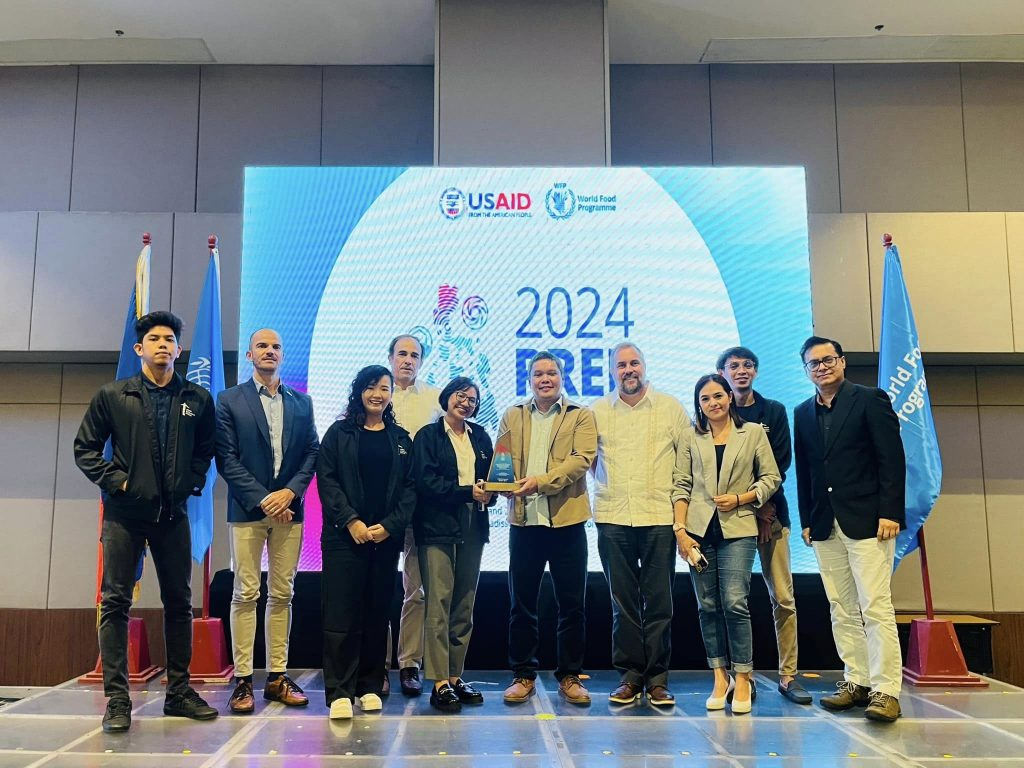
“After winning the best innovation pitch among 64 entries nationwide in the Preparedness and Response Excellence in the Philippines (PREP) Innovation Challenge, we will add more hazards such as rain-triggered landslides and possibly storm surge hazards to the forecasting system,” Dr. Lagmay shared. The PREP challenge was organized by the United Nations World Food Programme (WFP) and the USAID, which seeks to identify and scale innovative and cost-effective solutions to enhance disaster preparedness and food security for vulnerable populations in the Philippines.
Citizens can donate to support this effort through this link.
For interview requests and other concerns, please contact media@science.upd.edu.ph.
References:
Lagmay, A. , Bagtasa, G. , Andal, D. , Andal, F. , Aldea, J. , Bencito, D. , and K. Liporada. 2024. An Impact-Based Flood Forecasting System for Citizen Empowerment. Asian Journal of Agriculture and Development (AJAD) 21(20th Anniversary Issue):p. 129–148.

Started in 1927, the Philippines Graphic is the longest-running printed magazine of national circulation that provides relevant news and features and promotes Philippine literature.