
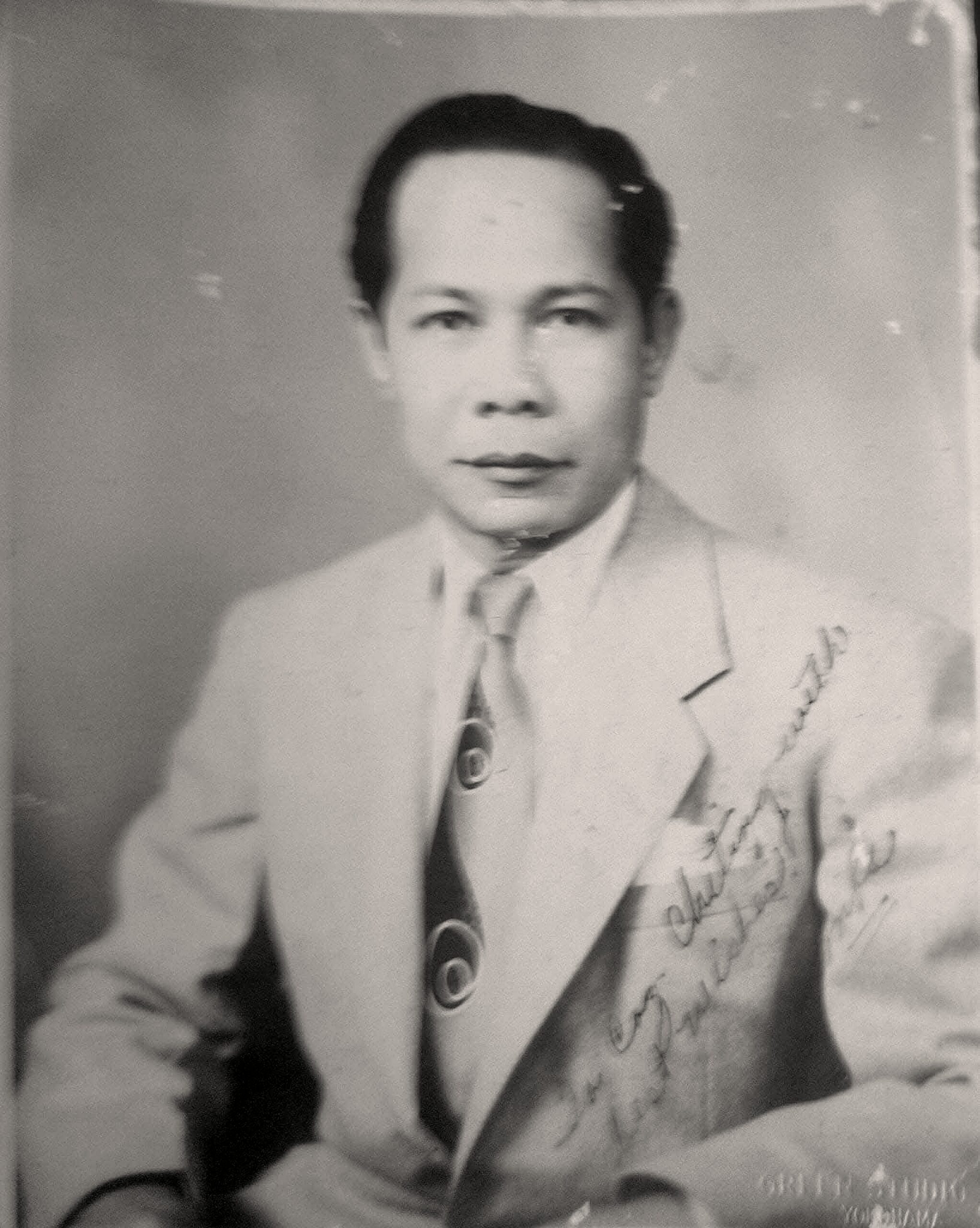
My grandfather was shipped out of the Philippines in the 1920s, and landed in Stockton, California—less as a starry-eyed immigrant, and more as imperial cargo.
The Americans needed hands, and the Philippines—trophy from the Spanish-American War—had plenty to spare. Men like him crossed the Pacific not on a dream, but on a labor contract, which is a form of migration stripped of romanticism. They were called the “manong generation:” older brothers, uncles, the ones who arrived first and as pioneers, absorbed the damage before anyone else had to.
His name was Delfin—technically my grandfather’s brother, though in Filipino families that distinction barely exists. A grandfather’s brother is still your lolo, for all practical purposes.
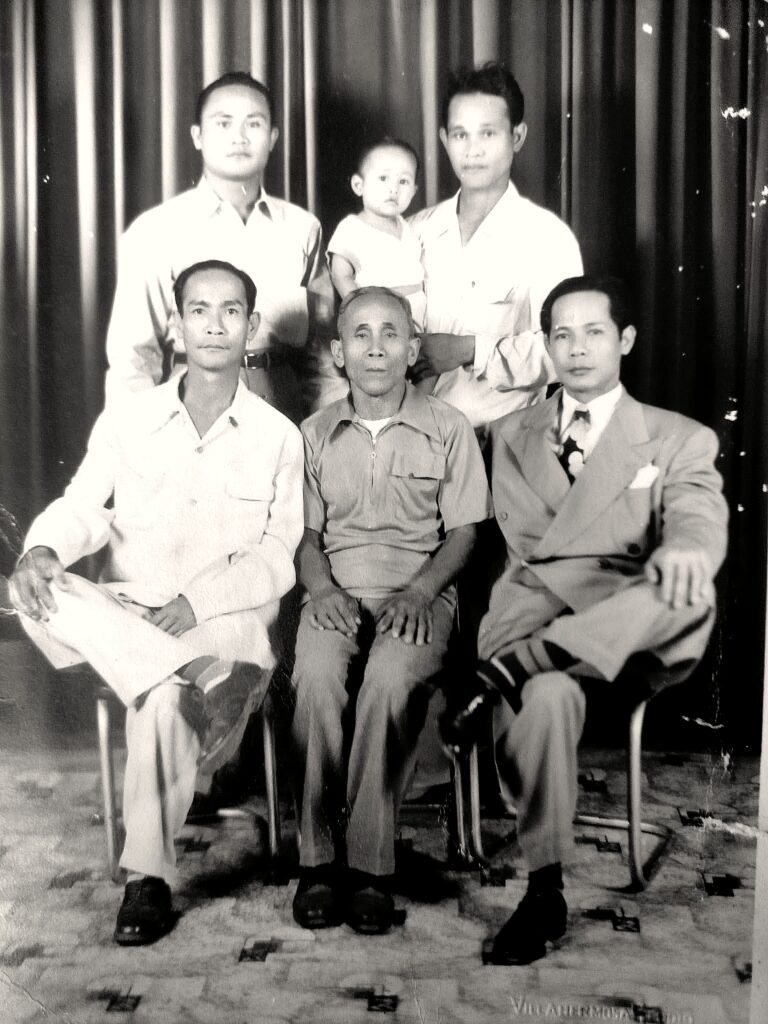
By day, he bent his back into someone else’s generational wealth in the asparagus fields of the San Joaquin Valley—10 hours in the sun for a few cents an hour. It was a kind of work so repetitive and punishing that labor reports described it as “stoop labor:” a phrase meant to be merely descriptive that managed, with great efficiency, to say exactly what its users thought of the people doing it. By night, in the packed boarding houses of Little Manila on El Dorado Street, a spectacular metamorphosis took place.
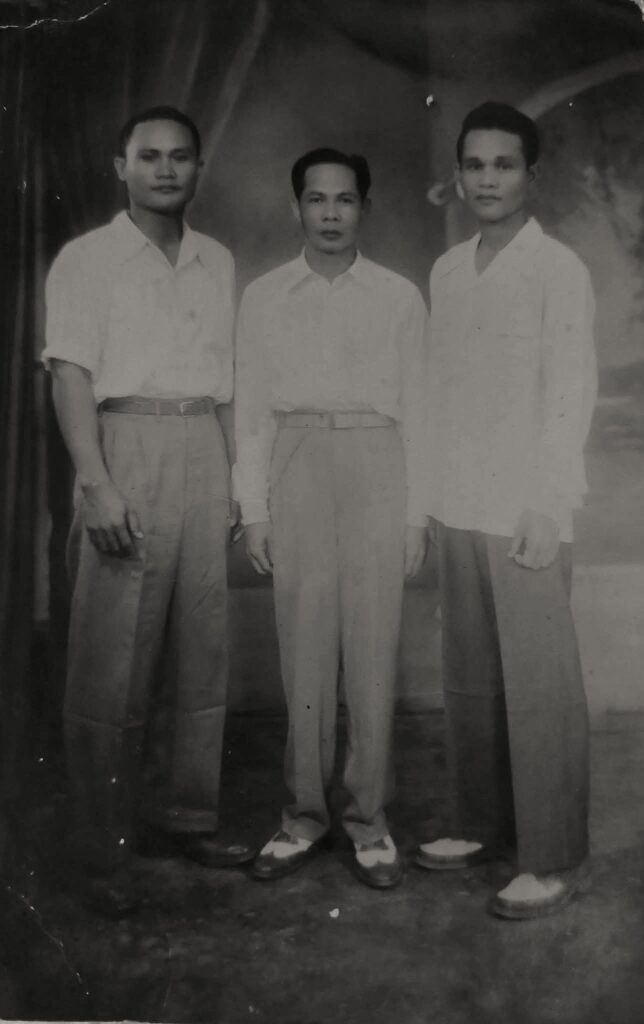
They called it the “Americana;” specifically, the McIntosh suit, named for a San Francisco tailoring studio that dressed Hollywood royalty. Occasionally, Filipino farmworkers who had saved enough wanted a piece of that polished sophistication. Suits were cut for their more petite builds, nipped and sharp: the kind that required a man to move with a certain braggadocio once he had it on. In the fields, they were invisible, only their hats bobbing in the sea of green. In the suits, they became something else: men with lift on their steps, and lilt in their voices. They slicked their hair back, polished their shoes to a mirror shine, and pranced around El Dorado like Fred Astaire.
The dance halls, specifically the taxi dance halls, were where that entire generation conducted the business of being alive outside of work. A ticket sold for 10 cents and bought one dance with a woman, usually white. Bands played, the floor filled, and for a few hours a man who had spent the day bent double in a field got to be someone who knew how to move. Filipinos showed up dressed immaculately and danced exceptionally well, which became a double offense. White America had no objection to its Filipino labor in the fields. It harbored deep and violent objections to those same men appearing in a dance hall in a dapper suit, moving across the floor with ease.
In January 1930, the objection became organized. White mobs in Watsonville gathered in groups of 500, ran hunting parties through Filipino neighborhoods, dragged men out of their homes, beat them, and threw them off bridges. One man, Fermin Tobera, then-22 years old, was shot through the heart in a bunkhouse while he slept.
The riots spread to Stockton. On January 29th, a mob bombed the Filipino Federation of America building. As a footnote to what the community did in response: they took a photograph in front of the smoking wreckage, dressed in their best suits. They had decided, collectively, that they would not be seen as anything less than what they were. Dressing well was the only retaliation available to them, and they choreographed it with irony. This is the generation and brotherhood my grandfather belonged to.
What that same community did next was organize. Stockton became the seedbed of the Filipino agricultural labor movement. Larry Itliong learned the logic of collective action in the same asparagus fields where men, like my grandfather, had bent their backs, then took it south to Delano. Itliong and his Filipino workers walked off the grape fields demanding the federal minimum wage.
When Cesar Chavez and the Mexican farmworkers joined them, something shifted in American labor history. The men who built that movement were the same men who had been dragged off bridges for dancing well in a good suit, making the same argument in two different registers: We are here, we will not be invisible, and we will not be paid as if we are worth less than what we are.
(Decades later, I would be at Harvard, there because of Delfin, because of exactly the credential he believed was armor, listening to Marshall Ganz, who had been in Delano, talking about the Filipinos the way people talk about something the official record keeps trying to lose. Ganz was my teacher; I never told him that one of those men was my grandfather.)
THE SAN FRANCISCO PROVOCATION
Delfin was becoming a mariner by then—a man who had stopped bending his back and started money lending, which is the old immigrant arithmetic for having crossed over. He wore the suit; he knew how to dance; and somewhere in the economy of 10-cent tickets and live music, an American woman fell in love with him. He met Wendy in a dance hall.
Anti-miscegenation laws in California were legal architecture. In 1933, following Roldan v. Los Angeles County, the state explicitly outlawed Filipino-white intermarriage. Delfin was hounded, the kind that follows you down the street and into the specific silence that descends when a room has decided you’ve violated a rule they’ve now actually written down.
Wendy married him anyway, as she looked at the entire arrangement of the world and gave everyone the finger in her considerable composure. They moved into a narrow clapboard house in San Francisco, and were happy there. That is the part of the story that gets rushed past, so I’m saying it plainly: They were happy. He came home from ships, she was there, and they walked with clasped hands staring at the fog and Golden Gate Bridge.
What came later was the old problem: He had learned how to leave, but staying was the harder skill. The ships kept calling, and he kept answering. They had no children to force the conversation, or give them a shared project when their connection ran thin. He had accumulated a particular kind of damage: the kind men of his generation carried without language for it. He survived by building distance until they could no longer locate the off switch. But always from the perimeter, always at the edge, like a man who has decided his job is to stand between his family and the evils of the world, which he understood intimately and at close range, and the only way he knew how to do it was to keep his back to them and his eyes on the dark.
What came later was the old problem: He had learned how to leave, but staying was the harder skill
The silences between voyages got longer and less forgiving. Now, we would call it unprocessed trauma. They divorced. Delfin emerged from it largely unchanged, suit still pressed.
WHAT HE SENT INSTEAD
Since Delfin could not manage presence, he expressed love through logistics. Gifts arrived at irregular intervals: suddenly, from nowhere, bearing objects that had traveled farther than we had any way to understand. Our house became the village’s private museum in the 1970s—a place where people came to examine the exotic objets d’art from foreign lands.
We had edible artifacts too. Quesos de bola—large rounds sealed in red wax and heavy enough to communicate expense before you know what it was. We did not know what it was. The gap between what he was sending and what we were equipped to receive was, at some points, quite wide. We fed the cheese to the pigs. These were the tastes of a man who had spent decades acquiring sophistication, landing in a household that had not yet caught up.
There were Japanese dolls in transparent display boxes: exquisite, obviously precious, designed to be looked at rather than touched. My sister had “Monica,” a walking doll, nearly as tall as a small child, with golden hair and a velvet red dress. Her hair smelled of Cartier Baiser Volé, Stolen Kiss. I did not know that name then; only the scent: fresh, powdery, expensively sweet, chosen by someone who knew exactly what they were choosing. I encountered it again years later in a duty-free shop, recognized it before I understood what I was recognizing, and bought it. I still buy it. This is the specific, slightly embarrassing way grief attaches to objects: not because the person was present, but because the thing they chose carries some trace of their taste, the moment they stood somewhere deciding what to send.
My brothers had aircraft carrier models. Full, detailed, the kind of gifts that require knowing what a boy wants before the boy has worked it out for himself. People came to look. The neighborhood had considerably warmer opinions about us than America had ever had about him.
He also sent his name, Delfin, to my eldest brother. And he sent education. He said he had broken his back so we wouldn’t have to. My mother was raised in his absence, and earned her PhD on his money, with no elaboration beyond the obvious: This is what I am paying for, and you will not do what I did with my back.
THE SPECTACLE RETURNS
When he finally retired to the Philippines, he did not return as one of us. He walked through the wet markets of Angeles City, past the fishmongers and vendors of dubious herbs, past live chickens and the gorgeous, indifferent chaos of a Philippine morning—in a pressed white suit, moving the way a man moves when he has spent decades cutting across the ballrooms and dance halls of San Francisco, and cannot quite remember how to turn it off. Slow. Deliberate.
The cane tapped against uneven pavement. People stopped. He nodded. There was not a molecule of him that found this unusual.
He had gray eyes. Nobody expected this. Everybody noticed.
When I was young and summoned to talk to him, I approached with the particular terror reserved for beautiful frightening things: the awareness that you are in the presence of someone around whom the normal rules are suspended; someone whose approval costs something you can’t name yet. He was stern in the way of people who have spent a long time being entirely certain of themselves. He would curse at me in rapid English, not at me exactly, but in my direction, words tumbling out in a register I couldn’t follow, sharp-edged and unfamiliar, words that sounded faintly rude even when I had no idea what they meant. Which made me giggle, and would make him spew out a rattle of words that sounded like they came from a war movie produced by MGM.
He died the way myths usually do: abruptly, with no last words worth keeping. A heart attack; age arriving without ceremony.
His wake was held in one of those funeral parlors that line Philippine streets like any other business. The parlors open directly onto the road; you walk past a man on display the way you walk past a fruit stall. The industry runs on packages: three days, two nights, priced like a resort deal—because grief runs on logistics, and relatives paying their respects. We were playing Red Dog next to the casket, because that is what you do at a Filipino wake: Cry, drink coffee from sachets, and play cards.
The parlor next door held another wake. Their dead was a drug lord—a serious narco whose death had created a vacancy others had strong ambitions about filling. His people were keeping watch over their departed the same way we were keeping vigil with Delfin: low light, cards on the table, doing what the living do when they don’t know what else to do with their hands. We were all just families at a table, in hushed tones and muffled laughter, waiting for morning.
BLURB 2:
He died the way myths usually do: abruptly, with no last words worth keeping
A vendor had set up his basket outside. Balut, hot boiled fertilized duck egg, sold from an insulated basket, is a midnight food—a wake food designed precisely for all-nighters and people who need to stay awake and feel briefly, warmly alive. He knew his market. We bought from him, cracked the eggs at the wide end, and drank the warm broth first.
Then the rival gang arrived. A pickup truck rattling with armed men. A homemade bomb was thrown at the parlor next door, at the men playing cards over the body of a man whose business they had come to settle.
It rolled. Bombs don’t check addresses; this one went sideways, found us, and detonated. I saw the balut vendor go up. That is the only word for it: he went up. The basket went with him, the eggs scattering and raining back down, some still intact, still warm, the broth still inside. He was one of the fatalities in the next morning’s tabloid.
I stood up, the prairie dog reflex, half-upright, trying to locate the shape of what had just happened until my cousin grabbed me by the hair and pulled me back down.
Delfin’s coffin tipped. It rolled. And I ended up on the floor beside him, sprawled on the floor of a Philippine funeral parlor with duck eggs raining down, and my grandfather half outside his casket, the white suit almost certainly still pressed.
My eldest brother carries his name. My mother carries her degree. I carry the image of a man walking through a wet market in pressed white linen like a man who is still crossing a San Francisco dance floor. He crossed an ocean as an inventory, and made himself into mythology. He funded the escape, and never took it himself. He stood at the perimeter with his back to us, and his eyes on the dark, which was the only way he knew how to love. And it was enough.

Daisy Diamante
Daisy Diamante is based in Johannesburg, South Africa. She started out in Today newspaper in Manila and has spent two decades working for an international organization across New York, Europe, Africa, and Asia. While in a public narrative class at Harvard University with Marshall Ganz, she encountered the history of the men who made her. She writes about memory, migration, and what the first generation builds.