

There is a certain rhythm to Batangas City—one that reveals itself in the steady movement of people, services, and systems that increasingly seem to work in sync.
From its role as a key industrial and port hub in Southern Luzon, the city has long been defined by commerce and connectivity. But beneath that economic identity, a quieter transformation appears to be taking shape—one focused on expansion and organization. Processes are being tightened. Services are being streamlined. And governance, often perceived as reactive, is beginning to feel better structured.
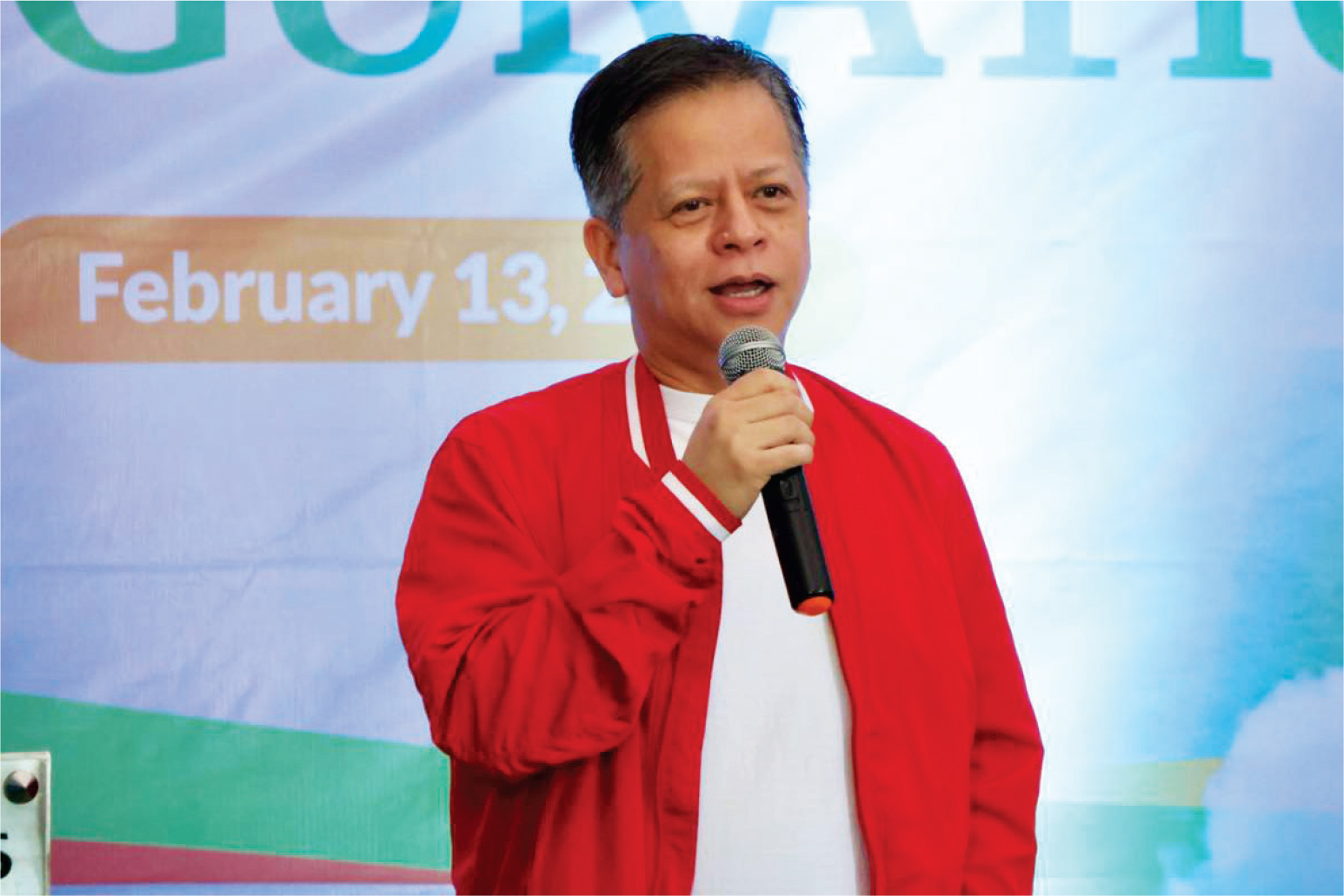
At the center of this shift is Mayor Mario Vittorio A. “Marvey” Mariño, whose leadership is grounded in systems and measured by tangible outcomes across the city’s daily operations.

The result is something more deliberate: A city gradually realigning its services, priorities, and institutions into a more coherent whole.
LEADING WITH STRUCTURE
Mayor Mariño’s path to the mayoralty reflects a steady progression through different layers of governance, each adding to a leadership approach grounded in structure and execution.
His early years in public service as a city councilor saw him author measures, including the Environmental Code, positioning Batangas City at the forefront of local environmental governance. He would later help advance public-private partnership initiatives, including developments that contributed to the growth of key transport and commercial hubs in the city, such as the Batangas City Grand Terminal.
From there, his career moved through the provincial board (2013 to 2019) and into Congress as a three-term representative of the Fifth District of Batangas. There, he took on roles in the Commission on Appointments and other important committees dealing with government reorganization and civil service— areas that require an understanding of institutional design.
By the time he assumed the city’s mayoralty, Mariño had already embodied a perspective shaped by diverse vantage points: legislative, administrative, and strategic. That background is evident in how his administration has approached City management through interconnected systems designed to deliver results more efficiently.
THE FIRST 100 DAYS
Early in his term, Mayor Mariño moved to operationalize his platform by implementing a series of programs during his first 100 days, covering health, education, agriculture, and frontline service delivery.

At the center of these was the rollout of the 24/7 Mayor’s Action Mobile Hotline—supported by expanded healthcare access under the EBD Health Program, which increased the number of partner hospitals from three to six. During the same period, 2,912 hospital endorsements were facilitated, while 7,070 individuals and families received medical assistance covering hospital bills, laboratory procedures, chemotherapy, and anti-rabies treatment. In addition, 967 benef iciaries received burial assistance.
In education, the City addressed capacity constraints at the Colegio ng Lungsod ng Batangas by constructing a temporary five-classroom building that accommodates an additional 1,000 students. This was accompanied by a 19% increase in the number of teachers and an 11% increase in the institution’s 2026 budget, reflecting expanded support for local higher education.
Agricultural support was strengthened through the Rice Sufficiency Program, aligned with the requirements of feeding initiatives such as “Mag-aral at Mananghalian,” reinforcing the link between local production and social programs.
At the community level, the Barangay Caravan Project brought government services directly to residents, reaching 5,705 beneficiaries through on- site delivery of assistance. The city also implemented a range of support and livelihood measures, including the distribution of 6,000 tilapia fingerlings and goats under a dispersal program, the issuance of new franchises to 315 tricycle operators, the provision of helmets for road safety, and the awarding of free land titles to 37 families.
Complementing these grassroots efforts was the launch of the “Trash to Bigas” Project, which promotes proper waste management, reduces the volume of waste sent to sanitary landfills, and provides immediate assistance to residents who actively participate in the initiative.
Alongside these, the city introduced the Libreng Mayor’s Permit at Business Tax para sa Maliliit na Negosyo sa Lungsod ng Batangas, easing the financial burden on sari-sari stores and community-based enterprises and enabling them to stand on their own feet without the immediate pressure of heavy tax payments.
Improvements were likewise made to public access and service environments. The City Hall lobby was upgraded, while the People’s Quadrangle and the area in front of Plaza Mabini were designated as parking spaces for taxpayers and residents transacting with the local government. A one-hour free parking policy was also implemented in selected areas to ease access to public services.
As part of its support for youth and public health, the city opened a Community Skatepark and rehabilitated the track oval, providing spaces for physical activity, training, and wellness for both athletes and the general public.
Internally, the administration introduced measures as part of its institutional agenda to reinforce discipline and service standards. These included implementing an earlier f lag-raising ceremony to ensure employees begin work promptly at 8 a.m. and maintain service readiness throughout the day, as well as directives to deliver faster, higher-quality service to constituents.
Taken together, these initiatives—outlined under the administration’s “Isang Daang Araw: Isang Daan Para sa Alagang Gabay sa Tagumpay”—reflect an approach focused on activating multiple service channels simultaneously, laying the groundwork for programs that extend beyond initial rollout.
The milestone activity itself was held at the city’s new public market, a setting that underscores ongoing efforts to modernize and improve local infrastructure.
BUILDING A RESPONSIVE CITY
Mariño formally launched the 24/7 Mayor’s Action Mobile Hotline in August 2025—a centralized mechanism intended to bridge the gap between citizens and city services.
The hotline 0999-222-6626 ref lects his administration’s push to make public service immediately accessible: a centralized number residents can call in times of need. Its implications go beyond accessibility: It introduces a structured way to receive, process, and respond to requests related to health emergencies, disaster response, or general public concerns.
At its core, the hotline reflects the Mayor’s push to make public service immediately accessible: a centralized number residents can call in times of need. But beyond accessibility, the system introduces a more structured way of responding to requests— one that connects citizens directly to frontline services.
Under the City Chief Executive’s direction, calls are assessed, documented, and referred to the appropriate agencies. In health- related cases, operators gather key personal and medical details to ensure proper evaluation and hospital coordination, while residents are encouraged, when possible, to first connect with their barangay officials or barangay health workers to align community- level response with city services.
The hotline also serves as a unified reporting channel for incidents requiring immediate action by agencies such as the City Disaster Risk Reduction and Management Office, the police, and the Bureau of Fire Protection—extending its role beyond medical concerns to broader emergency response.
At the same time, it serves as an information gateway for city programs. Residents may inquire about medical and burial assistance, scholarship opportunities, and other community services, with operators directing calls to the appropriate offices depending on the concern.
As Mariño said at the launch, the objective is straightforward: to ensure that the needs of Batangueños are answered and addressed with speed. The initiative is complemented by plans to expand access to healthcare services, including additional EBD Health Card-accredited hospitals and laboratories, as well as enhanced benefits for senior citizens, particularly in the purchase of medicines.
The system, in effect, functions not just as a hotline, but as a coordination layer— linking households, barangays, and city agencies into a more responsive and organized network of public service.
PERSONALIZED SERVICE
Under Mariño, Batangas City has begun shifting how social assistance is delivered: from broad, request- based aid to a more structured, data-driven system through its Voucher Program, or Know-Your- Citizen (KYC) approach.
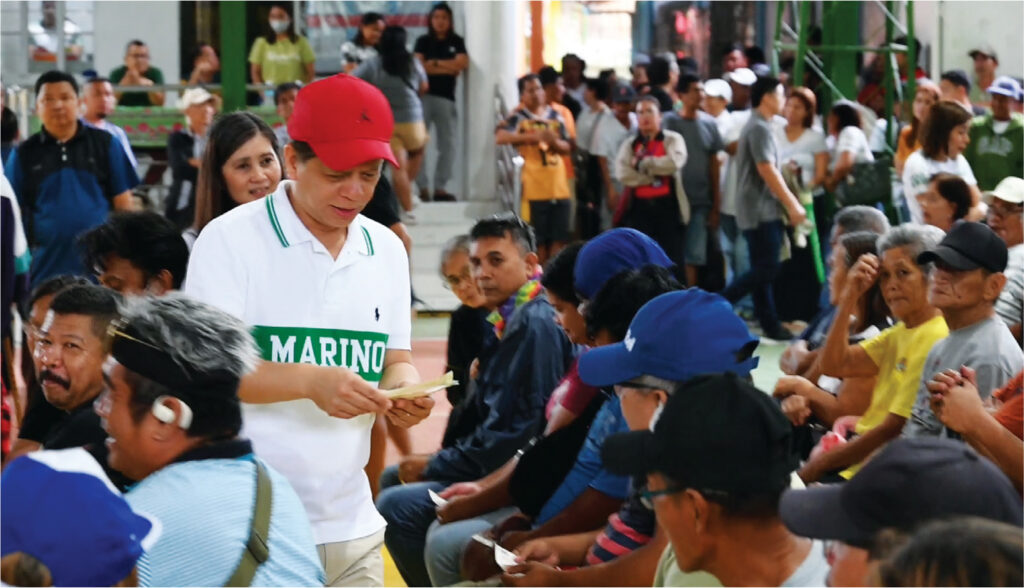
At the core of the program is the systematic collection and organization of resident information, enabling the city to establish clearer beneficiary profiles before extending assistance. Instead of relying solely on walk-in requests or manual verification, the system enables the local government to match individuals with the appropriate form of support based on recorded data and identified needs.
This structured approach is designed to address common gaps in traditional assistance systems—such as duplication of benefits, processing delays, and uneven resource distribution. By standardizing how information is gathered and used, the City can streamline validation, improve targeting, and ensure aid reaches intended recipients more efficiently.
The KYC system also functions as a coordination tool across offices. With beneficiary data organized and accessible, different departments— from social welfare to health and education—can align their programs more effectively, reducing fragmentation in service delivery. Assistance is no longer treated as a series of isolated transactions, but as part of a broader, interconnected system.
As a voucher-based mechanism, the program introduces a layer of traceability in how support is provided. Each instance of assistance can be linked to a verified profile, allowing the city to monitor distribution, track utilization, and maintain clearer records of public spending tied to social services.
In practical terms, the shift means that residents are not merely receiving aid— they are being integrated into a system that recognizes their needs in a more consistent and measurable way. For the city, it provides a more reliable foundation for planning, budgeting, and program expansion.
INVESTING IN PEOPLE
Among the Mayor’s priority initiatives is the “Mag-aral at Mananghalian” program, introduced as a pilot project aimed at addressing the nutritional needs of students while supporting their capacity to learn.
The said program is designed as a multi-sector effort, linking education with health, agriculture, and community participation. It provides daily meals to elementary and high school students, with food prepared through coordinated efforts among barangay officials, school administrators, and parent- teacher associations, who regularly partner to prepare and serve lunch.
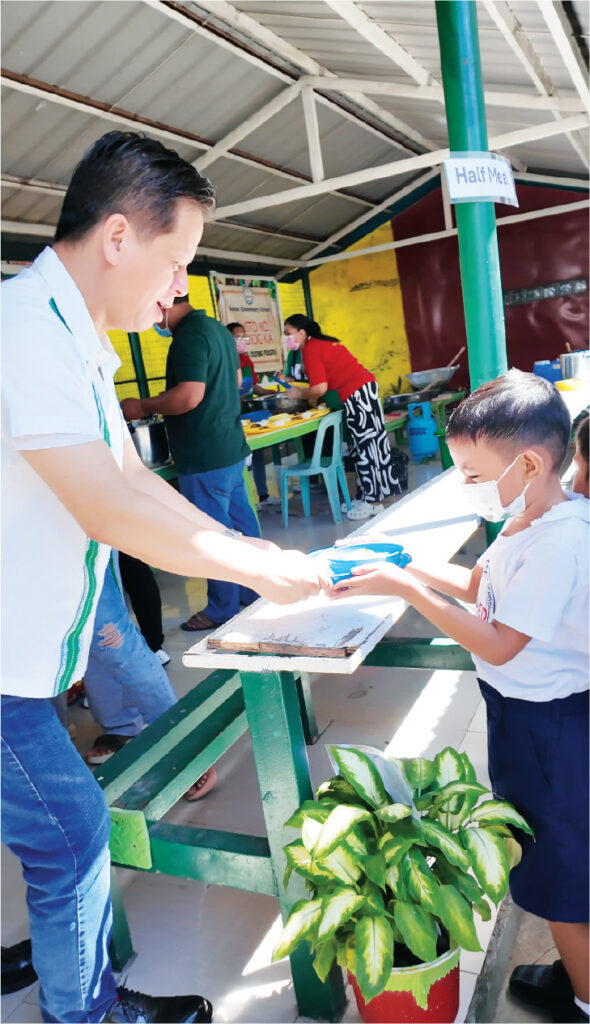
A key feature of the program is its integration with local agriculture. Ingredients, particularly vegetables, are sourced directly from legitimate farmers within the city through agri-based cooperatives, which are paid by the local government to supply participating schools. This creates a localized supply chain that not only supports student nutrition but also provides a steady market for local producers.
Implementation is coordinated across multiple city offices, including the City Planning and Development Office, City Agriculture Office, City Budget Office, General Services Department, and City Health Office, ensuring the program aligns with broader planning, funding, and health objectives.
As a pilot initiative, the program is being continuously assessed and refined before wider rollout, particularly for schools identified as having greater need. It is part of the administration’s broader “Alagang Gabay sa Tagumpay” initiative, which emphasizes integrated support across sectors affecting student welfare and development.
Beyond meal provision, the program ref lects a structured approach to linking social services— where nutrition, education, and livelihood are addressed within a single framework, rather than through separate interventions. Under the mayor’s direction, it positions student welfare as part of a coordinated system involving all sectors of society.
READY TO HOST, DELIVER
Under the leadership of the current local chief executive, Batangas City hosted the Regional Athletic Association Meet (RAAM) 2026, drawing delegations from across CALABARZON and placing the city at the center of a large-scale regional gathering.
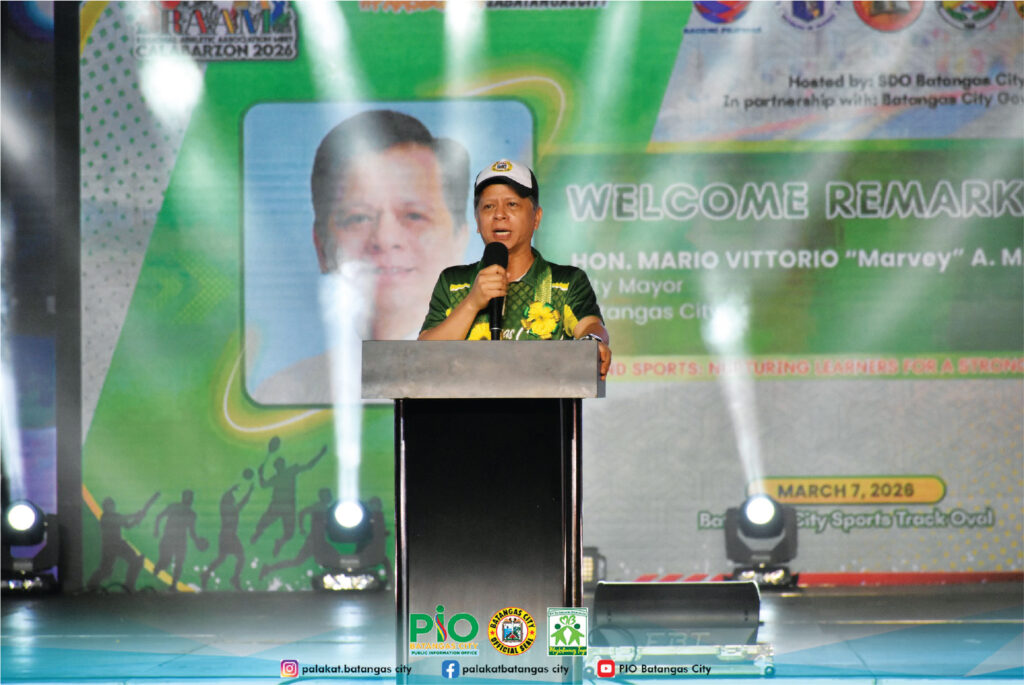
The opening ceremonies, marked by cultural presentations, a drone show, and fireworks, set the tone for what participants described as a well-prepared and highly organized event. Observers from various delegations cited the quality of the program and the evident level of preparation behind it, with athletes and coaches noting the overall execution of the opening as among the most impressive they had experienced.
Beyond the ceremony, the hosting reflected the City’s ability to coordinate multiple components required for an event of such a grand scale—accommodating participants, managing venues, and ensuring that activities proceeded smoothly across different locations. The presence of delegations from various divisions in the region underscored the logistical demands on the host city, necessitating coordination among local offices and support services.
Participants’ reactions captured both the scale and reception of the event. Players and athletes from the region praised the presentation’s quality and described the opening as one of the best they had attended. A teacher from a local high school, Randell Mendoza, expressed pride in the performances showcased during the program, highlighting the participation of local talent.
More than a ceremonial gathering, the RAAM opening served as a display of coordination, preparation, and collective effort. It brought together performers, organizers, and participants in a program that ref lected both the city’s cultural identity and its capacity to deliver a regional event at scale.
GOVERNANCE MEETING COMMERCE
As governance systems become more structured, their effects extend beyond public service and into the broader economic life of the city.
For Mariño, a city that responds quickly, allocates resources more efficiently, and operates with institutional discipline creates conditions that are often invisible but vital to business activity. Reliability in public services, predictability in processes, and clarity in governance reduce friction—not only for residents, but for enterprises that depend on a stable operating environment.
In Batangas City, these conditions are gradually taking shape. Improvements in service delivery, financial management, and interdepartmental coordination point to a local government that is active and increasingly organized. Such signals matter to the private sector, where long-term decisions are shaped as much by governance quality as by geography or market access.
Across the city business operate within this evolving environment—one where incremental improvement in governance translates into greater confidence and continuity. Even sectors not always highlighted in traditional economic narratives, such as memorial care, reflect this quiet stability, with developments like Eternal Gardens and the recent opening of its pet cremation service, Eternal Paw, forming part of the city’s broader commercial landscape.
Rather than being driven by a single transformative project, Batangas City’s economic environment is being shaped by cumulative gains— deliberate improvements that make it easier to operate, invest, and plan for the long term.
PERFORMANCE MEASURED IN RESULTS
If programs and systems indicate direction, performance indicators offer a clearer measure of consistency.
Reflecting the direction set by Mariño, Batangas City has garnered an array of recognitions reflecting performance across core areas of local governance. Among these, the city placed third nationally in the Philippine Statistics Authority’s 2024 Outstanding Local Civil Registry Office (Super Extra Large Category) ranking.
The government agency also recently accorded the Batangas City unit the 2024 CALABARZON Outstanding Local Civil Registry Offices (Super Extra Large) and Top 2 in the Birth Registration Assistance Project.
The Department of Finance’s Bureau of Local Government Finance also cited the city for its fiscal and administrative performance, securing third place in Locally Sourced Revenue Collection in Nominal Terms, and f irst place in the submission of electronic Statements of Receipts and Expenditures (eSRE) under the City Treasury category, underscoring its capacity for financial reporting and revenue generation.
In governance and overall performance, the capital city was named a Top-Performing City in the 2025 Subaybayani Awards by the Department of the Interior and Local Government (DILG). It also earned distinctions in labor and employment services, including recognition by the Department of Labor and Employment Region IV-A as a high-performing Public Employment Service Office (PESO) across multiple categories— from labor market information provision to career development support, referral and placement of jobseekers, and the breadth of programs implemented.
The city’s social and health initiatives have also drawn recognition, including the Crown of Excellence in Local Health System (Matatag na Kalusugan Award) through the Provincial Health Office, the Seal of Child-Friendly Local Governance via the DILG and Department of Social Welfare and Development, and the Green Banner Award from the Nutrition Council of Region IV-A—reflecting sustained efforts in public health, child welfare, and community well-being.
Following the recent inspection conducted by the Anti-Red Tape Authority Southern Luzon Regional Field Office (RFO), as the f irst LGU to achieve full eBOSS ARTA compliance, Batangas City demonstrates its commitment to Republic Act No. 11032, or the Ease of Doing Business and Efficient Government Service Delivery Act of 2018. This full adherence to the eBOSS system is essential in streamlining document processing— particularly the acquisition and renewal of business permits— to provide clients with greater convenience and order.
Beyond all these, Batangas City has been acknowledged for its broader institutional performance, earning distinctions such as Overall Champion in an integrated regional awarding by the Culion Foundation and a Plaque of Recognition courtesy of the Regional Disaster Risk Reduction and Management Office of Civil Defense–CALABARZON, further highlighting its capacity to respond to both developmental and emergency needs.
Taken together, these recognitions point to a pattern of performance that cuts across multiple sectors. They reflect a city government that can meet standards in finance, service delivery, health, labor, and governance simultaneously—suggesting systems functioning with consistency and discipline.
Under the incumbent Mayor’s administration, these outcomes read less as individual accomplishments and more as indicators of an approach—one in which results are produced through processes that are aligned, monitored, and sustained over time.
CITY IN TRANSITION
Taken together, these elements point to a city in transition—defined by the gradual strengthening of systems.
The shift is subtle yet significant, as it moves governance toward sustained processes that emphasize organization and continuity.
In this context, one can say that Mariño’s leadership is more about alignment— bringing together various parts of the city’s machinery so they function with greater coherence.
The foundations being laid by the City Chief Executive suggest a direction—one where Batangas City continues to build on its economic strengths while reinforcing the structures that support them.
In a landscape where local governance is often measured by projects alone, the city offers a different narrative: one that places equal weight on how things are done. And in that quiet emphasis on systems, Batangas City is not merely growing—it is organizing itself for the future under the able leadership of Mayor Marvey Mariño.

Mike Policarpio
Mike Policarpio is a communications professional who juggles his editorial duties between the Philippines Graphic and its sister publication, BusinessMirror. On some occasions, he writes verses in English and Filipino, which he hopes could be laid with pop-jazz music or find audiences in poetry-reading sessions.