
The human body betrays language in explicating unusual faculties. Our bodies are biologically designed to “tell” us if something is wrong— but not through words. It pinpoints a specific part and uses the dialects of pain, as if to say, “Right here, be alarmed of this.” Maybe this is why semiotics exist: for us to have a better comprehension of things language could not convey. That language, one of the very basic necessities for life, has its limits.
Nonetheless, this is not a rumination on the human body, as my knowledge on the medical sciences is limited. But even if I do not understand the sciences of our body, I understand one thing: pain. I understand pain profoundly, even if it is far from the logics of science, and only here is my analogy of pain:
About four years ago, Lisa (not her real name) was in a motorcycle accident with her boyfriend. I met Lisa last year when I was pursuing an article on road safety, which my editor did not run for an apparent reason. I was supposed to quote her on grief, but listening to the record again, I found something more meaningful I could use for this piece.
Coming from a friend’s birthday party, Lisa and her boyfriend found themselves at the wrong place, at the wrong time. They were at a crossroad when a truck intersected. Lisa claimed not remembering anything after that. The only thing she could remember was the truck’s loud honk, and a pair of headlights coming their way.
That was around two in the morning, when the street was supposed to be at its specter quiet. I was not there, but I could imagine the silence interrupted by a loud crash, reverberating in the nearby neighborhood. The houses would have opened their lights, for such sweet dreams would be interrupted—the residents would wake up and see a nightmare on the street.
Lisa lost two important things that night. One was her boyfriend, who instantly died after hitting his head on the pavement because he was not wearing a helmet. He gave it to Lisa. The other one was her right leg, which was mangled by the tires. She woke up grieving on the one she had her whole life, and, as I quote her, one she thought would be her “whole life.” She would stand up in the next few days, losing balance of all things.
“The pain felt normal from the start,” Lisa said. Despite the painkillers, her logic as a newly amputee explained that the pain felt normal because the stitches were still fresh. It was as if her body was still recognizing what it had lost, and that soon, would only be nothing but scar tissues.
But the pain never really left. Even if the stitches have healed and that she could already manage to stand up on crutches, she claimed to have felt a throbbing pain on her right “leg,” as if it still is a part of her body.
“My doctor said it’s ‘phantom limb pain,’” Lisa told me, while looking at the absence of what once was there. She first felt it in the middle of the night, waking up to a discomforting pain. She called her mother crying, pointing on her right leg, accusing it of giving her pain. Lisa said her mother felt confused at that time, questioning as to how her right leg could hurt if there is none to begin with.
I got fascinated with the “phantom limb pain,” and saw greater meaning behind it. There is a whole logic behind that pain physiologically and psychologically. But from what I stand, it was her body grieving what it had lost. And that’s how grieving is: that pain could emerge even after that moment in which we lost a part of us, and it haunts us—like phantom.
It was when I lost my mother last November that I fully understood pain and the existence of the ‘phantom.’ Pain from what we assume we know, I realized, is different from pain as we experience it. I had episodes of pain before. My circumcision. Migraines. Ear piercings. Tattoo. A messy break-up. A lover who decided to not be my lover anymore. Falling in love with a straight man. A writing competition I had lost three times consecutively. These, however, were just episodes. Episodes in which there is a time for it to eventually end, and end once and for all. A given fact that there comes a time, in these episodes of pain, I am granted a moment to heal.
The pain that comes with grief, on the contrary, is perpetual and could attack randomly, in the most unexpected times.
During my mother’s dung aw, I had only cried a few times. One was the first time I saw her lying inside the coffin. The second one was the service her co-teachers facilitated. The third one was on the day we were to bury her. From the funeral service carrying her out of our house, to inside the church, to finally setting her to rest under the dept of soil. Those moments have burdened my eyes and let tears naturally come out as is. And like Lisa, I could say that pain at that time felt “normal” because the “wound” was still fresh. It was as if I was still processing what I had lost, and my brain was registering the everlasting absence of my mother.
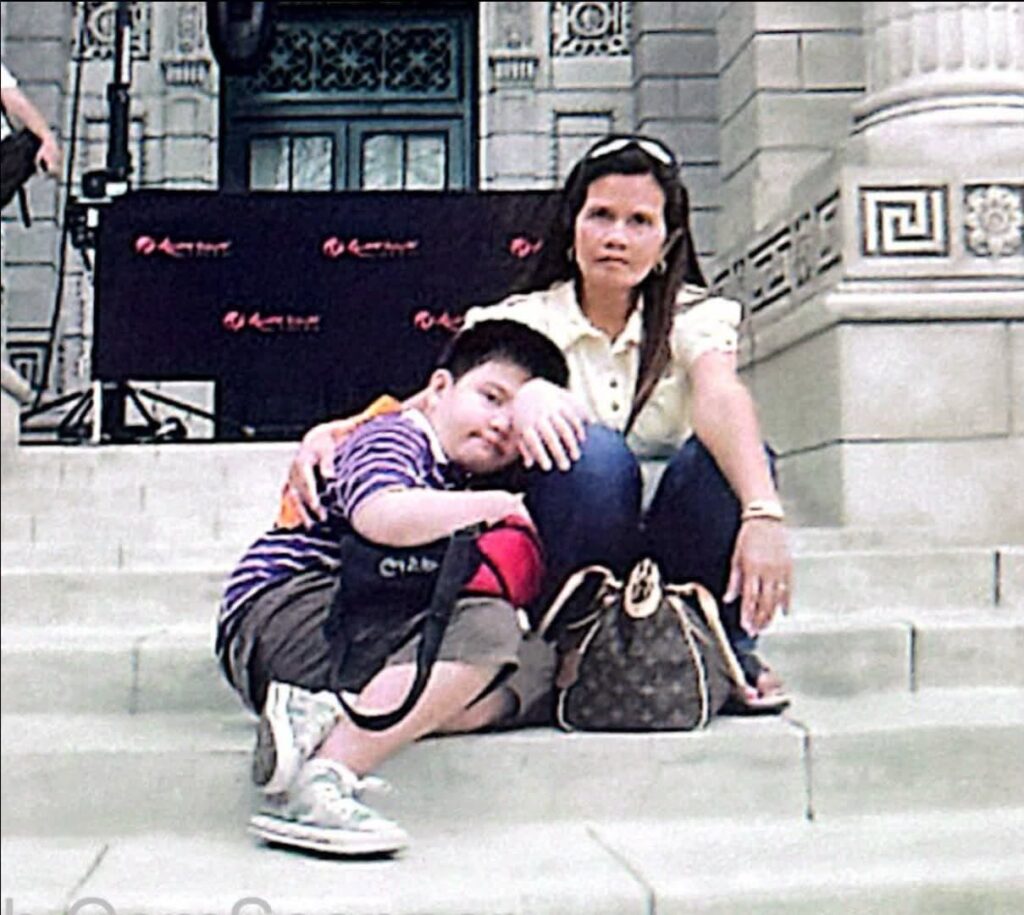
I believed that, at some point, the pain would stop and I would carry on, move forward, with my life—one person less. In some ways, I had lost a limb—or perhaps more than limb. I was forced to move forward, and in my every step, I was limping. And for eternity, I would be doomed to experience grief’s very own version of the ‘phantom pain.’
I did try to move forward, but every step I take, I get pulled back to the past. The center did not hold. The phantom pain relentlessly haunts me; follows me wherever I go. It is not an episode of pain, rather they come to me in waves. They come and go and set to return, relentlessly.
The first wave of phantom pain took place more than a month after my mother’s death. There is a myth, an old wives’ tale, here in our province Ilocos: the bereaved will start to experience pain in their bodies once the dead starts to decompose under the earth. Someone who was very close to that person who passed away is to experience it and will have to endure the pain for a few days.
I was experiencing body pains at that time. I was complaining of pain on my neck and on my back, which have become sore for no apparent reason. I knew it was irrational to connect the pain found in my body to my mother’s decomposing body, but at a time of grieving, I believed it. It was, in my own way, my version of “magical thinking.” It was no longer a coincidence, as I believed I was meant to experience it.
I was, after all, close with my mother. My mother told me she was persistently calling my name when she got a stroke. She kept pronouncing my name yet failed to say it properly. My father, who was with her at the hospital, could not comprehend it. Fortunately, the doctors were able to alleviate the stroke for her to tell me the story, for her to talk to me one last time. When she could finally speak properly again, she video-called me.
“I was calling your name,” she told me in Ilocano, slowly while catching her breath. It was the first sentence she uttered on the call. She put her oxygen mask on and inhaled for a few seconds. She took it off and said, “Your father could not understand what I was saying, anak ko.”
“But are you okay?” I asked. She put on the oxygen mask back and did not say anything. “Are you okay now?” I asked again, more persistent than the last.
She was already struggling to speak because she was always out of air. Her lungs were filled with fluid, and at that time, we did not know she was suffering from late-stage lung cancer. The doctors only confirmed it was cancer two days before she died, and at that point, it was too late.
“Ma, are you okay now?”
She shook her head. No.
She drew a long inhale from the mask and took it off. “Stop smoking. Promise me you have to take care of yourself. Please, promise me.”
That shocked me—left me speechless for a minute while she struggled for air. I have been smoking since I was 13, and 21 at that time, I thought I had a streak of keeping it from my mother. I was so arrogant all these years of being able to hide my vices to her, but I guess she really did see me. She sees me.
I knew why she warned me. Still undiagnosed at that time, I think my mother already had an idea it was lung cancer. Her father and her brother both died from it, while her mother died of a heart disease. Three deaths, one anatomical region, and one cause: smoking. While my mother never lit one cigarette in her life, her whole family were chain-smokers. My grandfather also owned a tobacco factory in Pangasinan back in the days, and my mother told me she used to stay there a lot in her childhood. Despite her efforts to live the healthiest way possible, my mother ended up becoming a collateral of her family’s vices, that since childhood, she was doomed to die of this disease one way or another.
She was 58. Her remaining photos will end at 58, and that instead of senescence transforming her body, decomposition took charge.
“Yes, ma,” I said. “I promise.”
“I love you,” she struggled to say.
“I love you.” That was the last time I talked to my mother. We could no longer talk the following days—her final days—because of complications that tethered her from speaking. She was too weak, and at that time, the doctor and nurses were already preparing us for the worst.
Knowing she called for my name at that time provided me a selfish moment of bittersweet grace. She could have called my brother or my sister’s name, but she called mine. I had assumptions, but I never got to know the real reason as to why it was my name she struggled to utter during a stroke. Maybe the body pain was a consequence of her calling my name, but more than that, it was merely love and longing.
In some ways, the body pain I had in December made me feel more connected with my mother. I believed the old wives’ tale, assuming our life, the realities within, have intertwined with the “marvelous.” This is why magic realism exists, after all: to make sense of the unexplained, and to find beauty from the elusive truth. There are some things we just cannot resonate with coincidences, and magic realism allows us to believe what is not meant to be believed.
I managed to connect my pain to a hallmark quote on grief: a manifestation of love—as if to say we grieve, we experience sorrow, we shed a little fragment of our life to agony because, all in all, we love them. I understand how cliché this is, but it is a cliché for a reason, and I shamelessly embrace its banality.
More than that, I echo here Gabriel Garcia Márquez, who said and projected in his works the intertwining spheres of love and death. “It is life, more than death, that has no limits,” he wrote in Love in the time of Cholera. With pain, I found to believe my mother’s life, her own love, transcended the dictions of death and it manifests through my body, and as such, it manifests through the ‘phantom’ we make of and feel. It might not be what Márquez meant, but as a reader, that is my own interpretation and mine only, in which I doomed him to “the death of the author.”
Nonetheless, I am in pain because I have lost my mother. That, even without the old wives’ tale, is simple logic.
But our body could only convey so much about pain because the pain grief delivers lies within. It is embedded deeper within the human anatomy, beyond the metaphors of the heart and the simple saying, “It hurts here.”
There is a greater phantom pain that haunts the bereaved, and it is purely the “phantom,” the ghost stories we believe to exist.
Since my mother’s death, the dining table in our house recognizes no absence so far. But it still conveys so much about it.
My mother’s place remains “occupied” with a plate and a set of spoon and fork. But the chair lies unseated—gathering layers of dust. No one dared to sit on it. We still set her place on the table for a hope that someday she would reclaim her place back. However, it also serves as a reminder of her absence in every meal we take.
We swallow each meal the way we swallow reality: a hard lump on our throats we struggle to keep down.
“Mangan tayon, ma.” Let’s eat, ma. We say it like a prayer. It is not in our tradition to say grace every meal, but since her death, calling her to dine with us has become a routine. We pretend she is in the room, and we call her name as if she could answer.
We often pretend, or to some extent—believe—that she is there in the house, living among us.
On the first night I got back home since the semester ended, her bedroom door opened. I was alone in the house and no windows were cracked open that time. No air would have been strong enough to open the door. “I’m home, ma,” I said. Normally, a door opening on its own would scare me. However, I stood there for longing allowed to take over fear, and I allowed myself to believe her ghost was within the house.
And we all believed of her ghost. I think, at that time, it was better to believe, to delude ourselves she was there to fill her relentless absence in the house and in our lives.
But how could we present skepticism when there were phantom-like instances that happened in the house? Doors would open on its own. Our caretaker once told me the lights in my mother’s room kept flickering. My cousin, who was a mechanic and took care of our cars, said he once smelled my mother’s perfume in her old Pajero.
There is a shelf in front of my bedroom door, storing my mother’s handbag collection. Once, in the middle of the night, as I opened the door, a bag fell on me. The sound of it dropping on the floor reverberated, and my brother got out of his room to find me frozen in place and our mother’s Louis Vuitton handbag by my foot.
“Open the bag,” my brother said. “Mama probably wanted us to see what’s inside.”
I picked the bag up, opened it and fished a bundle of papers inside. It was revealed eventually, when we showed to our dad what was in the bag, a handful of important receipts. We all believed that my mother wanted us to find what was inside the bag.
“I think she’s here in the house,” manang Anna, our house caretaker, said. Manang Anna and my mother were very close, to the extent that she was like a daughter to her. She has been working for our family since 2009, and along the way, she has also become a part of the family.
And maybe we were all right. She is still in the house. Every remnant of her life remains within the spaces of our home. Her clothes are still hanging and folded in the closet. Her teaching materials were neatly placed on her working desk. The shampoo, soap, and conditioner are left untouched in her bathroom. Everything she owns are placed right where it should be.
We omitted, however, any pieces of evidence that would remind us she was sick. The oxygen tank by her bed is gone. The array of medicine and stapled prescription sheets were discarded. The nebulizer was donated. Everything was arranged as if she never got sick. Every bit of pieces of her life is still there, arranged properly, as if she would just come home one day and resume what was paused as if time had not passed.
I did imagine her coming home, more often than I would admit. I could see myself sitting on the bench in front of our house, reading a book. Our dogs, sitting by my foot, would sense someone coming. Her old Pajero would arrive, would be parked in our driveway, and emerging from the vehicle is my mother. She would have been wearing her teaching uniform, assuming she got back from work. Her hair would be long again and voluminous.
Her skin is glowing under the glint of ember skies.
She would open the gates and the dogs would greet her. She would then walk forward and look at me. And she would smile. That smile with a missing tooth she candidly brings out in pictures, never feeling insecure and refusing to wear dentures. I would smile back.
“I’m home,” she would say. Yes, mama, please be home. You are my home.
How could I be so nostalgic to a future I know will never happen?
Manang Anna told me a dream she had on the day of my mother’s one month death anniversary, which was similar to how I envisioned my mother would come home.
The scene would be the same: my mother came home and greeted manang Anna who was waiting in front of our house. But in Manang Anna’s dream, my mother had a backpack, as if she came from a trip. She was wearing her usual jogging attire: her worn out purple pair of Nike sneakers, her jogging pants, and her yellow dri fit shirt.
“I am okay now, Anna,” my mother told her in the dream.
“I’m not sick anymore. I’m home.”
Let her be home then. For a week, we kept our front door open—day and night. It was a local tradition we followed. Another old wives’ tale. We were told to keep our front door open and never, not one instance, to close it in case our mother would visit home.
Coming home was my mother’s final request on her deathbed. She scribbled on a paper for my dad: “Let’s go home.” She wrote it several times, gradually increasing an exclamation mark in the end. She also asked my sister, who is living in Australia, and I to come home. Neither of the three of us got to come home at the same time, as my sister and I came home to find a coffin in the living room. That is the reunion, the one that really happened in this world.
Let her be home then. Let her occupy the void she left in this house—the absence we all profoundly endure in our daily lives.
None of us knew how to live in a world where she no longer exists.
The phantom in our house is created not out of imagination nor superstitions. It exists out of love, and the pain persists purely because our love for her is eternal. We make up ghost stories because we want to believe that the dead are within our world, paving on the same ground we walk on in our everyday lives. We make up ghost stories, experience phantom pains, to compensate and remind us of the absence of the one who was once there—the beloved.
My mother shall come home, once and for all—someday. A phantom. A memory. A dust. An ash. A dream. An entity. Let her come home, in all forms the world would grant her. It is better than nothing.
And stay.
Be at peace. Turn our grief to grace. Replace all sorrow with solace.
“I’m home,” she would say, for this time, she would be granted a second chance on earth.
Note: This piece won first place in the 38th Gawad Ustetika Awards Essay category.
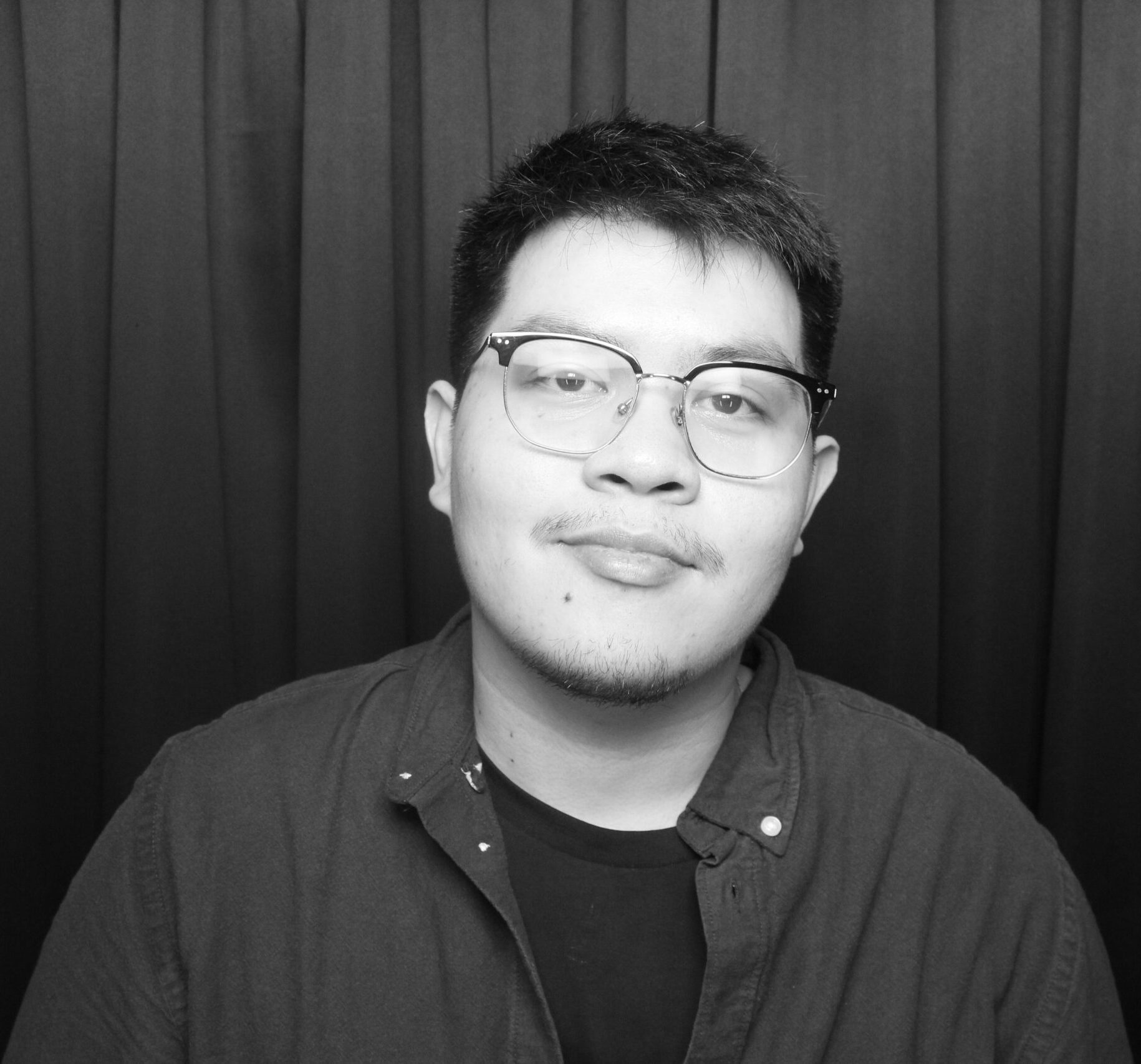
Patrick Miguel
PATRICK V. MIGUEL is a writer originally from Laoag City, Ilocos Norte. He holds a Bachelor of Arts in Literature from the University of Santo Tomas and previously worked as a journalist for BusinessMirror and The Philippine Star. Currently, he is pursuing his Juris Doctor degree at the Arellano University School of Law, living life folded between the pages of codals and jurisprudence.