

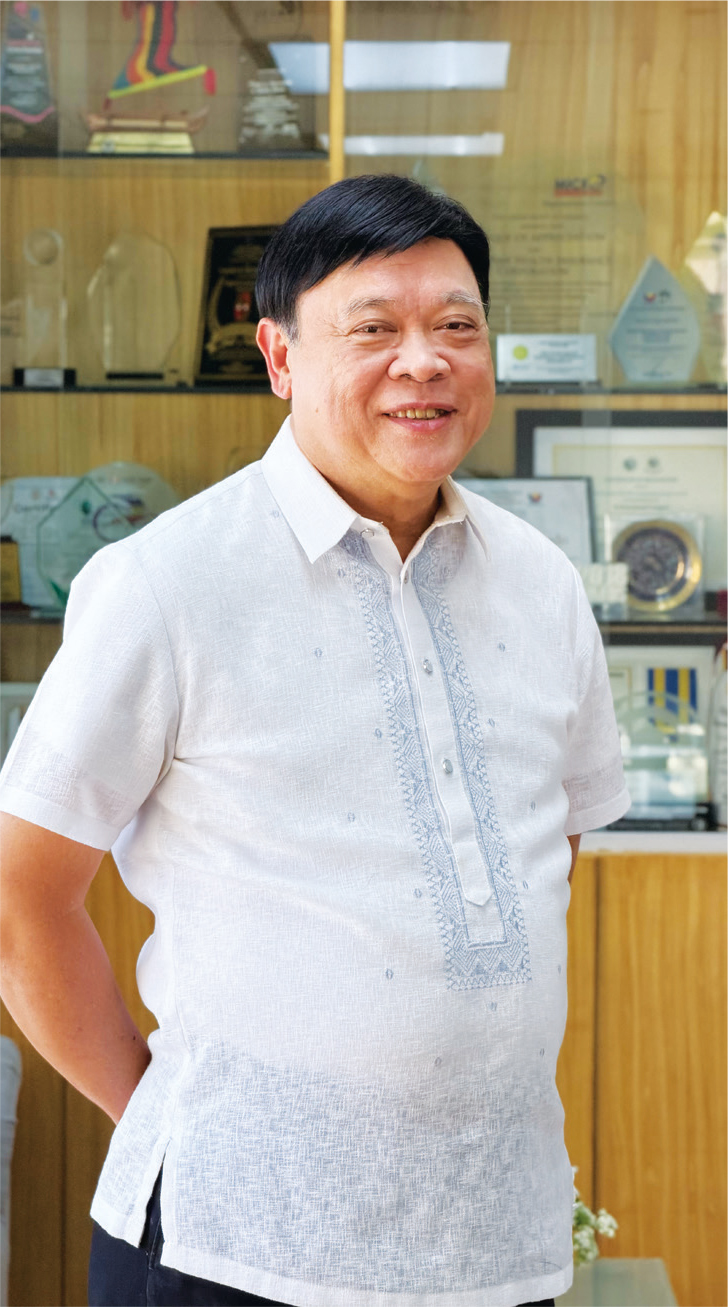
Healthcare systems work only when people trust them— trust earned through consistent service, fairness, and reliability.
For PhilHealth, this understanding has shaped not only its reforms, but its purpose.
Dr. Mercado has framed PhilHealth’s role as extending beyond episodes of illness. As the country’s national health insurer, the institution touches lives at their most vulnerable points.
But its responsibility, he said, does not begin or end there.
“PhilHealth’s role is to be a partner to Filipino families not just in moments of crisis but throughout every stage of life,” he said. “We are here to help people stay healthy, to support them when they fall ill, and to protect them from the financial risks that come with healthcare needs.”
He cautioned, however, that “this partnership also requires shared responsibility.”
That emphasis on partnership reflects a broader shift in how health care is being approached. Universal Health Care (UHC), in this view, is not a one-way guarantee. It is a shared undertaking—between institutions and citizens, between providers and patients—where outcomes depend as much on participation as on policy.

Prevention, Dr. Mercado stressed, cannot succeed if it is treated as the government’s task alone: “It requires individuals to seek care early, families to prioritize health, employers to support wellness, and providers to commit to quality and continuity of care.”
“When everyone plays their part, the system becomes stronger and more resilient,” he pointed out.
This collective effort is what gives meaning to reforms that may otherwise seem abstract. Programs like YAKAP are not only about benefits or coverage levels; they are about reshaping habits—encouraging people to engage earlier, to stay connected to care, and to trust that the system will respond when they do.
Dr. Mercado has acknowledged that such change takes time. Prevention rarely produces dramatic results overnight. Its impact is measured quietly—in fewer emergencies, steadier care, and reduced anxiety when illness strikes.
“What I hope Filipinos will remember is that PhilHealth is working toward being something they can rely on,” he said. “An institution that listens, learns, and improves. YAKAP represents that commitment—It is an embrace that begins earlier, stays consistent, and endures over time.”
That endurance is central to the institution’s vision. When systems are predictable, rules are applied fairly, and support is felt before a crisis arrives, confidence can return— slowly, but meaningfully.
“If we are to build that kind of relationship,” Dr. Mercado said, “one that is grounded in trust, prevention and shared responsibility, then we will have done our job well.”
In the end, the promise of UHC lies not only in protection during moments of illness, but in reassurance across a lifetime—with PhilHealth embracing every Filipino—for now and always. —With additional reports from Mike Policarpio

Started in 1927, the Philippines Graphic is the longest-running printed magazine of national circulation that provides relevant news and features and promotes Philippine literature.