


GRAPHIC PLUS — Naay po. Pakinabangan po.
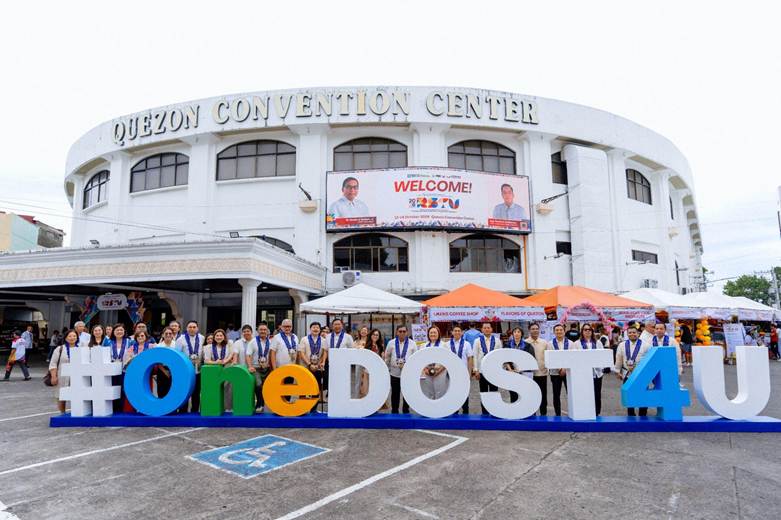
A lambanog toast witnessed how the Department of Science and Technology (DOST) positions itself to drive regional development across CALABARZON during the Regional Science, Technology, and Innovation Week (RSTW) in Lucena City, Quezon.
Kicking off the RSTW last October 12, a ceremonial toast, known as Quezon’s tagay, reaffirmed that the region is firmly leveraging the current innovations the department has to offer and discover.
Similar to how naay po (here’s my drink) is raised for the cheers of the current initiatives of the department and the region on achieving scientific and economic progress, received with hope for its beneficial realization—pakinabangan po (let’s make use of this drink).

“Let us continue building a region where innovation creates livelihoods, where knowledge creates opportunities, where technology strengthens communities, and where science helps us prepare for the challenges ahead,” DOST Secretary Renato U. Solidum Jr. said in his keynote.
Parallel to this vision, DOST-CALABARZON Regional Director Emelita P. Bagsit took pride in the region’s accomplishment in making science, technology, and innovation more accessible and responsive to the needs of CALABARZON.
In 2025, the region reported having 107 DOST-developed technologies commercialized and transferred to 193 adopters, alongside more than 15,000 testing and calibration services via the OneLab Platform.
“These efforts strengthen the bridge between research and application, allowing knowledge generated in laboratories and institutions to move closer to enterprises, industries, and communities,” Solidum said.
The department also promoted grassroots deployments of specialized and targeted projects for the community, addressing the very needs of the community and empowering its potential.
Among these are the three-dimensional printed units of Project Robust Optical Aerosol Monitor (ROAM), developed by the University of the Philippines Los Baños and Diliman, turned over to numerous LGUs, including those in the provinces of Cavite and Laguna.

Project ROAM is an air quality sensor, primarily used for volcanic activity hazards monitoring (VAHM), including particulates, gas, temperature, and relative humidity.
“ROAM VAHM is the first-ever Filipino-made air quality monitor. This makes sure na mas mura ito kaysa sa ibang commercially available na device,” Miguel A. Vasquez, project technical assistant, shared.
San Francisco, Quezon, on the other hand, received food-safety-compliant carts for street vendors; Lucena City unveiled its Digital Business Locator (DBL) platform, and the island municipality of Jomalig received a solar-powered water purification system for better access to safe and clean water.
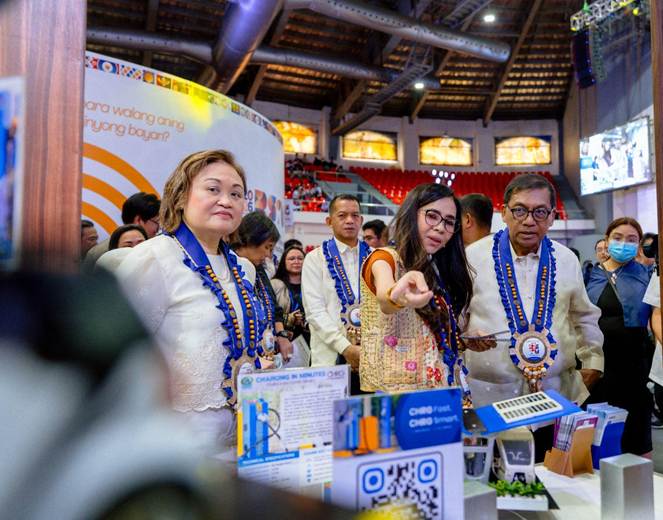
The DOST-CALABARZON, moreover, joined forces with state universities within the region, including the Regional Yarn Production and Innovation Center (RYPIC) at the University of Rizal System and the Silkworm Innovation Center at Laguna State Polytechnic University.
The LGUs of San Francisco and Tagkawayan, Quezon, on the other hand, sealed a partnership to roll out one of the DOST’s flagship projects, the Community Empowerment through Science and Technology (CEST) Program.
This understanding, made with Southern Luzon State University (SLSU), is an addition to the 4,110 marginalized communities assisted by the DOST-CALABARZON through CEST’s 576 targeted interventions amounting to PHP8.65 million as of 2025.
“These interventions respond to specific needs on the ground, whether in livelihoods, food, health, environmental concerns, or community development,” the secretary said.
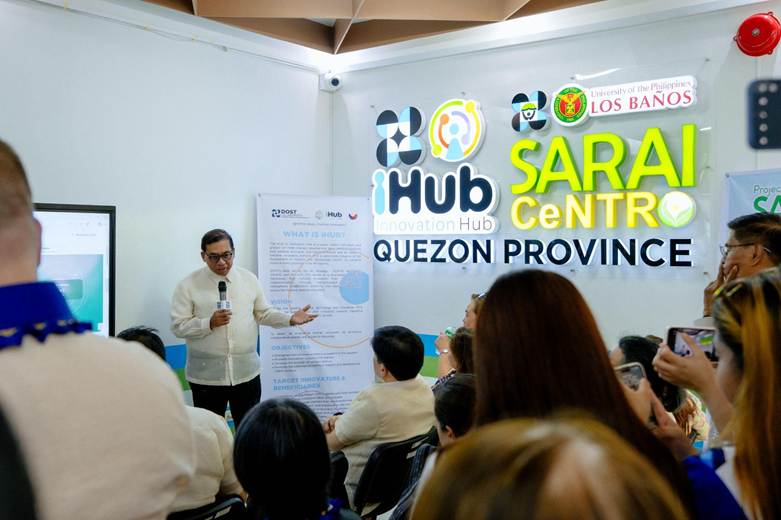
Expanding on this momentum, an innovation hub (iHub) was launched in SLSU, alongside the Smarter Approaches to Reinvigorate Agriculture as an Industry (SARAI) Centro, to accelerate the province’s innovation for possible commercialization and in agriculture, respectively.
“SARAI brings advanced agricultural technology, smart crop insights, and modern learning tools directly to our youth and agricultural sector,” Bagsit emphasized.
Quezon Province also received its first-ever 21st Century Learning Environment Model (CLEM) in Quezon Science High School in Tayabas City, offering access to advanced technologies for learning, collaboration, and innovation.
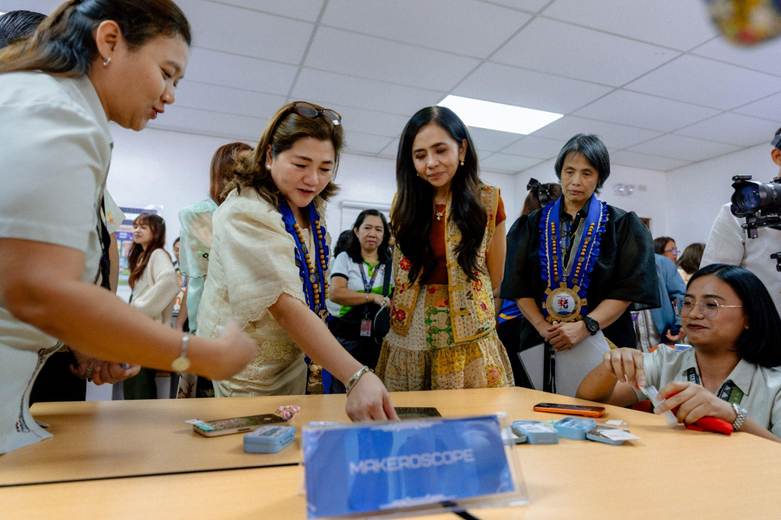
Meanwhile, Bagsit also underscored how innovation is tailored to the distinct needs and assets of each province in the region, with Cavite having its solar-powered bamboo processing and handloom weaving, and Laguna on 3D metal printing.
Batangas, on the other hand, has its tsunami early warning system and mobile solar irrigation system; Rizal is at the forefront of its creative media hubs, and Quezon spearheads its automated smart greenhouses and zero-waste food processing solutions.
“This is what innovation looks like when it breaks through. It helps industries become more productive, helping farmers produce better crops, and helping create greater economic value,” Solidum said.
Written by Karl Jerome A. del Mundo, DOST-STII
Photos by Xyrus Ivan B. De Gracia, DOST-STII
Started in 1927, the Philippines Graphic is the longest-running printed magazine of national circulation that provides relevant news and features and promotes Philippine literature.

 positions itself to drive regional development across CALABARZON during the Regional Science, Technology, and Innovation Week (RSTW) in Lucena City, Quezon.)