

Life is expensive, but joy doesn’t have to be. In this time of soaring prices, when the rest of the world says, “You can’t afford happiness.” Filipinos say, “Watch us find it anyway.”
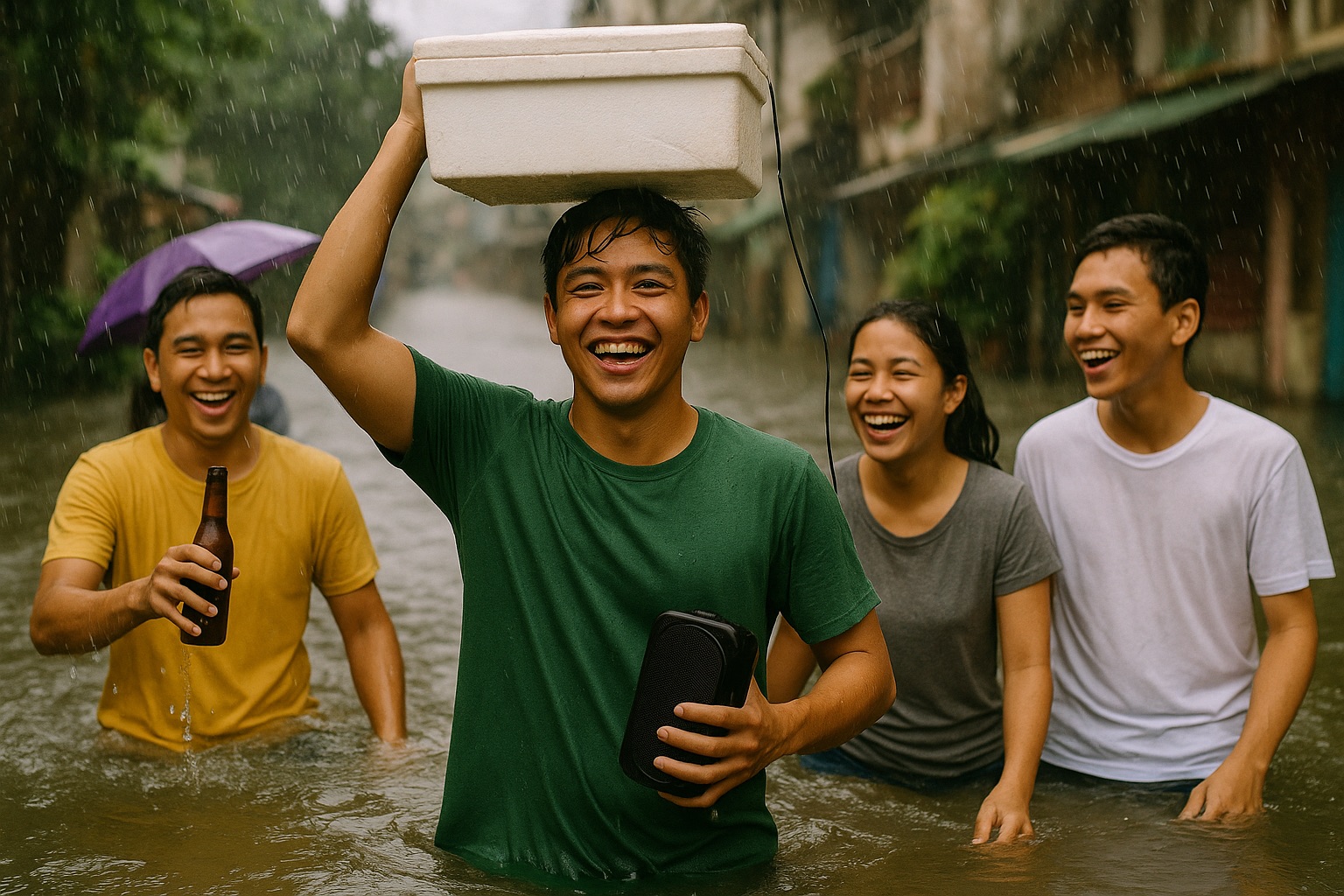
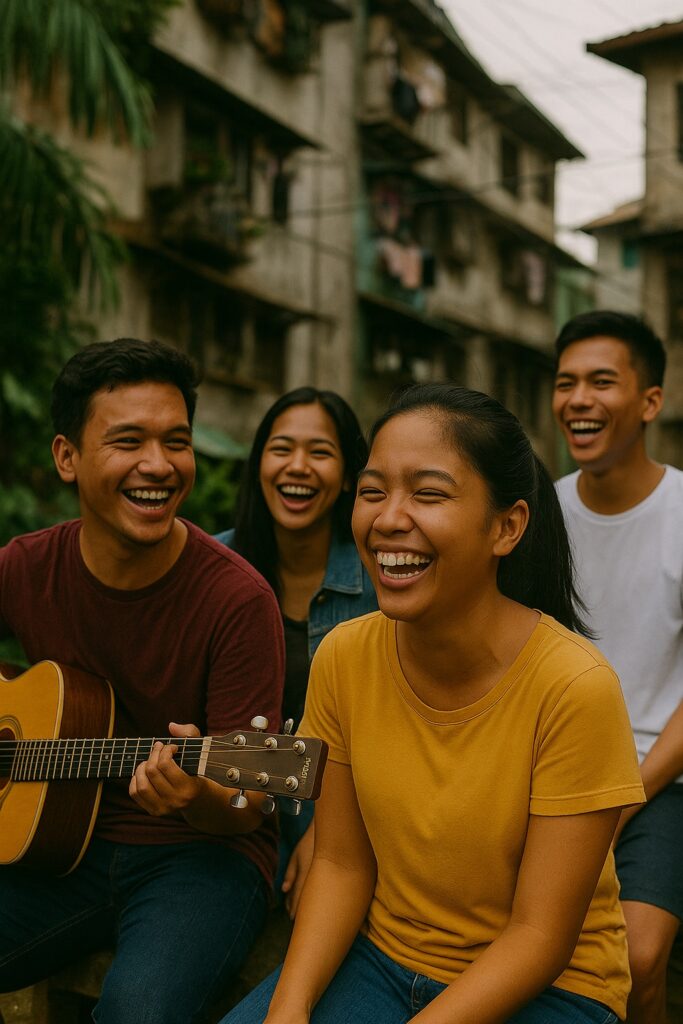
Because joy, to us, isn’t something we buy, it’s something we make. When there’s no electricity, we bring out the guitar. When onions hit ₱700 a kilo, we make memes and turn it into a national inside joke. When floods rise knee-deep, we float on a styro box, Bluetooth speaker in one hand, beer on the other.
Across the country, Filipinos are turning to accessible joys, simple things that cost little but mean a lot. A rewatch of “Four Sisters and a Wedding” because “bakit parang kasalanan ko?” never gets old. A teleserye cliffhanger, a budol finds haul, a piso load to send “ingat ka” to your crush. A ₱20 spend on an online game that gives just enough of a thrill to carry you through the day.
This is joy in recession. Simple, affordable happiness that fits in our day, in our budget, and in our hearts.
Filipinos spend over nine hours a day online, more than any other country in the world. But it’s not mindless scrolling. It’s connecting and coping. It’s “G na G,” “Sana all,” “Kapit lang,” our digital mantras, typed with humor… but rooted in grit.
“What you’re seeing isn’t escapism, it’s resilience,” says a behavioral psychologist. “Filipinos use low-cost entertainment, whether it’s a livestream, a TikTok, or a casual game, to anchor themselves. It’s both catharsis and connection.”
This phenomenon isn’t new. All over the world, pop culture has thrived not in times of prosperity, but in crisis. Hollywood was born in the Great Depression. Anime rose from post-war Japan. K-pop surged during Asia’s downturn.
And in the Philippines? When tragedy strikes, culture erupts, loud, proud, hilarious, and heartfelt. Hardship doesn’t cancel joy. It sharpens it. It teaches us to cherish what little we have.
And that’s why simple pleasures, from a livestream karaoke to a quick game played in between shifts, are never just distractions. They’re declarations. They say, “I may be struggling, but I haven’t stopped living.” “Deserve ko ‘to.”
So, when people look at the rise of low-cost entertainment, especially forms that offer a thrill, or a bit of fun for just a peso or two, maybe the question isn’t “Why?” Maybe the real question is, “How could we not?”
In a world that keeps telling us to harden up, Filipinos choose to stay soft. And rightfully so. In the middle of a crisis, we still look for a reason to laugh and to play. That’s the uniquely Pinoy super power. Raw. Real. Ridiculously resilient. Because for people who’ve sung through brownouts, danced through floods, and cracked jokes in the middle of a heartbreak, chasing temporary, affordable joys is not a luxury. It’s a lifeline. And when the world says, “You can’t afford happiness,” we say, “Kaya pa naman.” “Meron pa rin.” “Meron at meron.” “Padayon.

Started in 1927, the Philippines Graphic is the longest-running printed magazine of national circulation that provides relevant news and features and promotes Philippine literature.