


What a lakeside island community reveals about learning, resilience, and reform in the Philippines
Seen from the shores of Laguna de Bay, Talim Island rises from the country’s largest lake, cut off from the mainland with no bridges linking the two—only fishing boats from the local fish port ferrying residents across the water each day.
Here, life is anchored on traditions passed down through generations: fishermen casting their nets at dawn, artisans shaping bamboo into furniture, and families building their lives around the resources the body of water provides.
Yet beyond the livelihoods that define island life, there are children determined to pursue an education, not only for themselves but also for the future of their community.
Spanning roughly 23.6 square kilometers (about 2,360 hectares), Talim’s area is shared by two municipalities of Rizal Province, and home to 24 barangays: 17 under Binangonan, and seven under Cardona.
While basic education is available in many communities, access to higher levels of schooling remains more limited.
Students often have to travel across the island or to barangays on the opposite side to attend high school, while those pursuing college education must leave the island and study on the mainland.
In Barangay Janosa, considered the island’s center with nearly 800 families, education extends up to senior high school. Students make their way to school each day through different routes. Some walk along narrow but familiar paths across the island, while others brave the waters in small to medium-sized fishing boats, with school bags slung over their shoulders, and sitting quietly as they make their way across the water before continuing on foot to school.
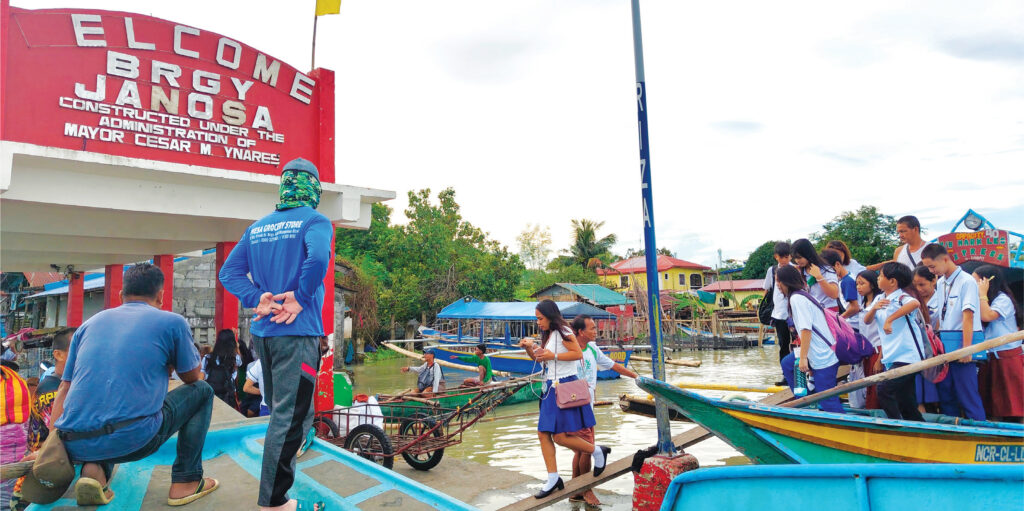
In an exclusive interview with Philippines Graphic, Chairman Geronimo G. Mendoza of Barangay Janosa said the practice has long been woven into the daily lives of residents and students in the area, continuing for nearly two decades.
“Masyadong mahal ang ‘trike;’ mas nakakamenos sila sa bangka [Tricycle fares are quite expensive, so they save more by taking the boat],” Mendoza said. He shared that some areas are also not passable even by motorcycles, which is why students prefer to ride boats instead.
The chairman said that, while the arrangement is generally convenient, it is seldom a major barrier to education. The journey, however, is still dictated by the lake’s conditions. During the rainy season and habagat (southwest monsoon), stronger waves can interrupt crossings, with the Philippine Coast Guard keeping watch to ensure trips proceed only when conditions are safe.
Even so, some students still choose to continue on foot when necessary, walking long distances through rain and rough weather just to reach their schools, driven by determination not to miss their classes.
Mendoza clarified though that this long-standing practice of ferrying students by fishing boat remains largely safe and has continued without major incidents over the years. Students from nearby barangays such as Ginoong Sanay, Pinagdilawan, Malakaban, and Sapang regularly travel 3 to 5 kilometers to attend classes in Janosa, with each boat carrying around 30 to 40 learners per trip.
In fact, he said that transportation-related mishaps on the island are more commonly associated with motorcycle travel along Talim’s narrow and often steep roads. While much of the island is already connected by routes accessible to tricycles and motorcycles, some interior areas remain difficult to reach.
Mendoza expressed optimism that future road-widening projects could further improve mobility and make travel safer for residents, particularly those living in harder-to-reach areas.
STEPPING BEYOND
Janosa National High School Head Teacher I Josephine R. Belison acknowledged the risks that come with traveling by fishing boat, but said she is continually encouraged by the determination students show in making the journey to school.
“Kahit na medyo ang mga buhay dito sa isla ay hindi ganoong karangya, ang mga bata dito ay nagsisikap makapagtapos ng pag-aaral [Even if life on the island is not particularly comfortable, the children here strive to finish their education],” Belison told the Graphic.
One of the students is Ron Earl Joseff Añain—a native of Talim who had spent his formative years studying and persevering to complete both his primary and secondary education there before continuing his collegiate studies in Manila. He is currently taking up Bachelor of Science in Aviation, majoring in Flying, at Airlink International Aviation College, and is now in his graduating year.
For him, stepping beyond the island was a decision shaped by the realities of life back home.
“Ang pangunahing hanapbuhay lang po kasi dito [sa Talim Island] ay pangingisda at paggawa ng papag. Kung wala kang trabaho na ganun, so paano ka? Ano ang iba pang pwedeng gawin? [The main sources of livelihood here are fishing and making wooden beds. If you don’t have a job like that, then how will you manage? What other options do you really have?],” Añain shared.
Data from the Municipality of Binangonan show that around 6,000 residents are engaged in the fishing industry, including fishermen, helmsmen, fish traders, and fish vendors. In several barangays, bamboo craftsmanship also remains a source of income, with an estimated 5% of residents in Buhangin, Janosa, Kaytome, Gulod, and Sapang involved in the trade. Meanwhile, around 2% of the island’s population work as seamstresses, many of whom are engaged in subcontracting arrangements with businesses based in Laguna and mainland Binangonan.
Añain shared that despite the hardships, people on the island continue to live with dignity and perseverance.
Even when the catch from the lake is small, fishermen still bring it to market to provide for their families.
That quiet resilience, he said, became one of his biggest motivations to pursue a different path.
“Hindi komo’t taga-isla ka ay wala ka nang ibubuga. Gusto ko lang po na ipakita sa kanila na dapat ipagmalaki kung saan sila galing, lalo na kaming mga taga-isla ay sobrang competitive [Just because you come from an island doesn’t mean you have nothing to offer. I just want to show them that we should be proud of where we came from, especially because we, islanders, are highly competitive],” the student said.
He also noted that many of Talim’s professionals today once came from the same humble beginnings, with some returning as teachers, police officers, and other professionals—proof, he said, that the island continues to produce individuals who succeed beyond its shores.
According to Mendoza, the island’s parents continue to endure daily hardships, search for scholarships, and at times resort to borrowing money just to send their kids to school and see them graduate, with faith that education remains the key to improving their youngsters’ lives and securing a better future for their families.
“Sa panahon ngayon talaga, mulat na ang tao na ang edukasyon ang susi sa magandang kinabukasan [In today’s time, people are more aware that education is the key to a better future],” said the barangay chief.
‘THE SPIRIT THAT SUSTAINS LEARNING’
Yet beyond these individual journeys, the story of education on the island begins at its foundation.
According to Principal Pepito V. Cequena of Janosa Elementary School (JES), who was born and raised on the island and has served in the education sector for over three decades, the island has, in many ways, been fortunate in terms of educational support and provision.
He explained to Philippines Graphic that cases of children being left out of the education system are relatively rare. With the island’s communities closely connected, teachers are able to reach most learners through child mapping initiatives, helping maintain an enrollment rate that is nearly 100%.
“Ang community engagement dito sa isla ay napakalakas. Buhay na buhay pa rin dito ang bayanihan spirit para sa mga bata [The community engagement on the island is very strong. The spirit of communal unity for the childrenis still very much alive],” Cequena said.
The principal added that this collective mindset is deeply rooted in lived experiences; many parents who once struggled to complete their own schooling now carry a stronger resolve to ensure their children do not face the same path.
“Kaya yung tingin ng mga magulang dito sa edukasyon ngayon, napakataas [So parents’ regard for education today is very high],” he noted.
The school’s role, meanwhile, extends beyond serving the broader student population. It is also the only institution on the island offering Special Needs Education (SNED), currently catering to 10 learners who require additional assistance.
According to Cequena, these efforts are supported by a strong partnership between the Education Department and local institutions, with schools across Rizal benefiting from continued investments by provincial and municipal governments to create learning spaces that are well-equipped to meet students’ needs.
“Kung mapapansin ninyo mga paaralan dito sa Rizal, talagang magaganda kumpara sa ibang mga lalawigan [If you will notice, schools here in Rizal are really well-built, compared to those in other provinces],” Cequena remarked.
THE FIGHT TO STAY ON TRACK
Even with strong community and institutional support, some students still face challenges that occasionally pull them away from the classroom. Whenever a learner accumulates several absences, teachers make it a point to visit their homes and check on their situation.
More often than not, those visits reveal a familiar story: families struggling to make ends meet. While only a small percentage of learners are affected, some children choose to help their parents earn a living—temporarily affecting or, at times, setting aside their studies. A few work around the port, carrying cargo for passengers in exchange for a small fee, while others take on odd jobs that earn them anywhere from P50 to P100 a day.
Data from the Philippine Statistics Authority (PSA) revealed that in 2022, one in every five Filipinos aged 5 to 24 was out of school or not attending classes.
PSA also recorded 861,000 working children in 2024.
Boys numbered 532,000, or 61.8%; while girls made up 329,000, or 38.2%. Similar trends were observed in previous years: boys comprised 59.1% of working children in 2023, and 58.7% in 2022.
Work and lack of interest in schooling were primary reasons cited for children being out of school. Among regions, CALABARZON registered the highest proportion of out-of-school children at 28.3%, largely driven by employment-related factors.
To address gaps among learners at risk of falling behind, Cequena said national education programs aimed at strengthening learning recovery and access such as “Balik-Aral,” the “ARAL” or “Academic Recovery and Accessible Learning” program, “Brigada Pagbasa,” and Project “AKAP” or “Anak, Kumusta ang Pag-aaral?” have been instrumental in reaching students who struggle with regular school attendance.
Yet, academic concerns on the island do not stem from economic realities alone.
Cequena observed that community life remains relatively simple, with children having limited exposure to temptations or distractions outside their immediate surroundings, as their daily routines are largely centered on home, school, and the barangay.
But he pointed out that new kinds of distractions have taken hold of students: social media and online games, which increasingly compete for the youngsters’ attention beyond the classroom.
He noted that these have, in some cases, affected academic performance, particularly among learners struggling with reading proficiency.
More concerning, he said, is the apparent decline in students’ ability to sustain attention—a trend now becoming increasingly noticeable even among younger pupils who have regular access to mobile phones and online content, making it harder for some to remain engaged in lessons and learning activities.
Research has found that extensive use of social media and smartphones can negatively affect academic performance, often leading to distractions, multitasking, and reduced concentration. Studies also suggest that students with lower levels of self-control are particularly vulnerable to these effects, especially when using devices while completing schoolwork.
The World Bank noted in June 2022 that about 91% of Filipino children at late primary age are not proficient in reading, when adjusted for out-of-school children.
“Reading is a gateway for learning as the child progresses through school; conversely, an inability to read constrains opportunities for further learning,” the international development organization said.
Moreover, based on an analysis by the Second Congressional Commission on Education (EDCOM II), which drew on Department of Education (DepEd) data from nationwide literacy assessments, about 40% of learners from Grades 1 to 10 were classified as struggling readers at the beginning of the school year (BOSY).
By the end of the school year (EOSY), the share of learners considered grade-level ready or independent readers rose from 19% in June 2025 to 48% in March 2026, reflecting a 29-percentage-point improvement.
Despite this progress, however, the report showed that one in two learners still remained below grade-level reading proficiency by the end of the academic year.
“Nakalulungkot, pero ginagampanan po namin ang kailangan namin gawin. At kung sakaling may mga bata na naiiwan, may intervention naman po kami [It is sad, but we continue to do what we are supposed to do.
And if there are learners who are left behind, we have interventions in place],” said Carla Jane S. Gondraneos—a teacher at JES handling Grades 4 to 6, with each class consisting of around 20 to 30 students.
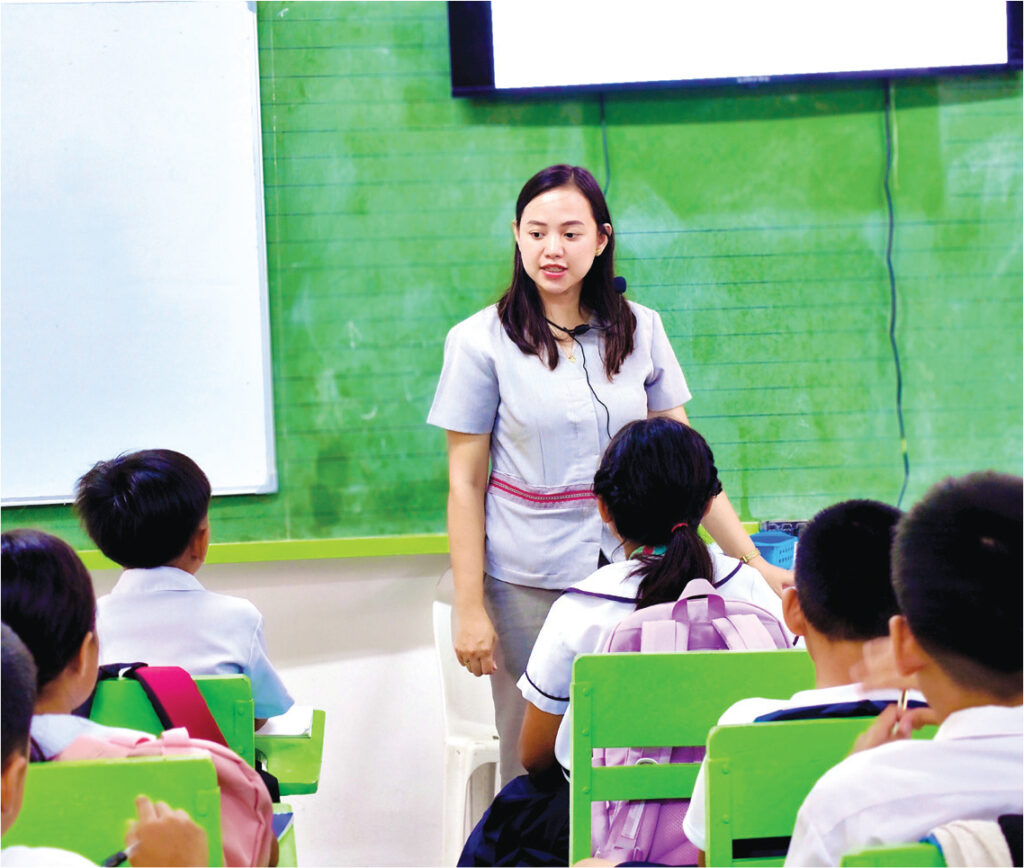
At times, though, the burden of poor academic performance falls squarely on teachers. United States- based Filipino teacher and content creator Dennis Barles, of the Facebook page Food and Beyond–Dennis Barles, argued that educators are often the first to be blamed when students fail to meet expectations, even when learners themselves do not follow instructions or complete required tasks.
He compared the situation to a patient who refuses to follow a doctor’s advice, where treatment outcomes cannot be fairly attributed solely to the physician if recommendations are ignored. In the same way, he stressed that while teachers provide guidance and support, learning outcomes are ultimately shaped by students’ own choices, effort, and participation.
“Teachers cannot make choices for them. Learning requires effort, responsibility and participation from the learner,” Barles said. “Holding teachers solely responsible for outcomes that depend on students’ actions is unfair.”
Meanwhile, it was reported that DepEd remediation efforts, including the “Bawat Bata Makababasa” program and the Literacy Remediation Program implemented in May 2025, have demonstrated measurable gains in learning recovery. The BBMP’s 20-day remediation was equivalent to 1.3 years of schooling, while 96% of LRP participants advanced by at least one proficiency level.
STRENGTHENING THE NLP
In December 2025, DepEd also launched the “Bayang Bumabasa” (Nation who Reads) initiative, allocating P131 million in needs-based program support funds for 131 schools identified as needing additional support to accelerate literacy gains.
Each recipient school may receive up to P1 million to implement reading programs tailored to their local context. The initiative covers 131 schools, including 25 in geographically isolated and disadvantaged areas or GIDAs, based on the SY 2024–2025 Comprehensive Rapid Literacy Assessment (CRLA).
“The Bayang Bumabasa Initiative is about equity. We are directing resources specifically to the schools that require the most support: from municipal centers to the most far-flung communities, to ensure that no school is left behind,” Education Secretary Juan Edgardo “Sonny” Angara said. “We trust our school leaders to know what their students need. Whether it is more books, better reading nooks, or specific teaching tools, this grant empowers them to build the right environment for their learners with the support of their community.”
The funding is focused on Grade 1 to 3 learners, and must be anchored on each school’s School Improvement Plan and Annual Implementation Plan for SY 2025–2026.
It may be used for localized reading materials such as storybooks based on local legends and mother tongue resources, the improvement of learning spaces including the conversion of unused or damaged classrooms into reading nooks with child-friendly features, and the purchase of remedial tools such as flashcards, magnetic letters, and reading kits for after-school literacy sessions.
As part of its broader push to address learning gaps, the government also reinforced the National Literacy Program (NLP) by widening efforts to improve foundational reading skills among early-grade learners.
In June 2026, the program was further improved with the nationwide distribution of school bags and age-appropriate storybooks for Kindergarten to Grade 3 students.
Under the NLP, all Kindergarten to Grade 3 learners across the country will receive school bags funded by the Office of the President, along with storybooks provided by the DepEd. It targets an estimated 6.8 million learners, focusing on a critical stage where children transition from “learning to read” to “reading to learn.”
‘THE SILENCE OF CORRECTION’
“Pero may pagkakataon po na meron talagang ilang bata na hirap matuto. Siguro isang factor dito ay ang kanilang behavior [There are also instances when some children really find it difficult to learn. Perhaps one factor is their behavior],” Gondraneos noted.
She emphasized, however, that such habits are not shaped within the school alone, but also rooted in the child’s own disposition and the environment at home.
This, Gondraneos said, may help explain why some students today appear to face challenges not only in academics, but also in behavior and social interactions, despite having relatively greater access to information and learning resources compared to previous generations.
For Cequena, that part of the shift can be traced to changes in the way discipline is exercised in schools.
He recalled that before, teachers had wider latitude to enforce classroom discipline, which often played a role in shaping students’ behavior and sense of responsibility.
Today, however, the rollout of the DepEd’s “Child Protection Policy” has significantly narrowed the ways teachers can correct or discipline learners, effectively changing classroom management dynamics.
According to Cequena, some educators have become more cautious in correcting students for fear of complaints or possible sanctions, leading many to simply continue teaching regardless of whether learners pay attention or not. He added that this situation can affect learning outcomes, as even the best teaching efforts may have limited impact when students are disengaged.
Meanwhile, in 2023, the House of Representatives Committee on Basic Education and Culture approved House Bills 364, 549, and 6940, which seek to protect teachers from wrongful accusations of child abuse. The measures propose the creation of clearer guidelines defining what constitutes child abuse in school settings, aiming to safeguard educators from potential lawsuits arising from disciplinary actions that parents may perceive as abusive.
However, two years on, the bills have yet to be enacted into law.
MISSING LINK AT HOME
Beyond what happens inside the classroom, Cequena also pointed to another challenge that is less visible but equally significant: the difficulty of sustaining learning once students return home.
Many parents, he said, spend much of their time working to support their families, leaving little opportunity to closely monitor their children’s studies.
As a result, lessons introduced in school are not always reinforced at home.
He observed that while parents are sometimes pleased to see their children perform well during classroom activities or assessments, much of that learning is not consistently retained in the days that follow.
A UNICEF study on parental engagement in children’s learning underscores this challenge, noting that when children are not able to study in classrooms, the responsibility of supporting learning shifts more heavily to parents. This becomes especially difficult for households where caregivers are also working, or have limited educational backgrounds.
The study showed that children who are read to at home are more likely to develop foundational reading skills, compared to those without such support, particularly in poorer households.
It also discovered that caregivers’ level of education is strongly linked to the amount of academic assistance children receive at home, with those of more educated parents generally doing better in reading and numeracy.
“All policy decisions on continuing education remotely should also be cognizant of parents’ capability to help their child learn…to prevent further exacerbating the global learning crisis and amplifying the learning gaps across socio-demographic groups,” it said.
‘TEACHING WITH WHAT’S AVAILABLE’
Another factor observed on the island, however, is that while class sizes remain manageable and teachers are consistently present, gaps persist—similar to many schools elsewhere in the country—particularly in the availability of essential learning materials such as books, modules, and other instructional tools, which continue to affect the overall learning experience despite the stability of classroom instruction.
“Kaya ang mga guro ay talagang nahihirapan. Kaya ang mga guro, nauuwi sila sa mga social media [Teachers are really struggling. In some cases, they even turn to social media],” Cequena said.
According to the principal, teachers frequently take it upon themselves to search for lesson materials, teaching aids, and educational content wherever they can find them, often beyond the resources formally available to them.
The challenge becomes even more pronounced when classes are forced outside the traditional classroom.
Although online learning has been implemented nationwide as an alternative mode of instruction, the island continues to face significant limitations in its implementation.
Cequena observed that many families still lack access to gadgets and reliable Internet connectivity, and at times even electricity to power devices, while some teachers and students also contend with their own technological constraints.
“For us, in times of emergencies, we use modular distance learning through printed modules,” he said.
Under the current administration, the DepEd has reportedly strengthened textbook procurement, which rose by 289% in the past year, compared to the 2012–2023 average, according to the EDCOM Year One Report, in a bid to ensure that learners have better access to essential learning materials.
‘CHANGE AFTER CHANGE’
Asked why ongoing government interventions have yet to fully bridge learning gaps, Cequena attributed this to the continuous adjustments and changes in the curriculum over time.
According to the school official, teachers often spend years learning, adjusting to, and refining their approach to a particular curriculum, only to be required to adapt again when a new framework is introduced.
“Ang guro, bago pa lamang nama-master ang curriculum, pagkalipas ng anim na taon ay magkakaroon na naman ng pagbabago. Kapag may bagong presidente, mag-a-appoint iyon ng bagong secretary. Madalas, marami sa mga naunang programa at polisiya ang tinatanggal o binabago nila. [Teachers, before mastering a curriculum, after six years, will face changes. When there is a new president, a new secretary will be appointed. Often, many of the previous programs and policies are either scrapped or changed],” he lamented.
Cequena acknowledged that curriculum reforms are generally introduced to address emerging educational needs and improve learning outcomes. However, frequent changes can also create unintended difficulties, requiring teachers to once again familiarize themselves with new content standards, learning competencies, and instructional methods.
He cited recent efforts by the education department to simplify and decongest the curriculum after recognizing that the previous curriculum had become overly packed with subjects and competencies. The move, he said, reflects a growing awareness that students and teachers alike benefit from a more focused and manageable learning load.
However, he noted that curriculum changes are only one part of a broader challenge. Alongside shifting educational frameworks, teachers have also seen their responsibilities expand beyond classroom instruction, often taking on tasks that would otherwise fall to non-teaching personnel due to staffing shortages.
“Ang guro sa dami ng mga school reports, talagang yun ang isa sa burden nila. Yung napakaraming paperwork at mga non-DepEd activities ang mga nagpapabigat sa mga guro [Teachers find school reports burdensome; more so, the endless paperwork and non-DepEd activities],” Cequena remarked, adding that the pay teachers receive falls short of the demands placed upon them beyond their role as educators.
“Bagama’t nadarama nang konti ang malasakit ng government, still, sa laki at mahal ng bilihin, at sa mataas na cost of living sa Pilipinas, parang ang sweldo ay hindi pa rin sapat [They may already feel the government’s concern, but still, with the high cost of goods and cost of living in the Philippines, their salaries do not suffice],” he emphasized.
“So kapag hindi ito matutugunan ang mga problema sa sektor, ang number one fear talaga natin ay lalong magkakaroon ng domino effect, at lalong lalawak ang problema sa ating edukasyon [If the sector’s problems won’t be addressed, our number one fear is that it will have a domino effect, and problems of the state of our education will even be more widespread],” Cequena noted.
Still, he hopes the latest reforms will be allowed sufficient time to take root and demonstrate their effectiveness, before another round of changes is introduced.
SYSTEM RESET
On June 7, DepEd set in motion one of i ts most comprehensive reform packages in recent years by introducing a broad set of measures for SY 2026–2027. It is expected to reach more than 26 million learners, over 45,000 schools, and nearly 900,000 teachers nationwide.
The announcement signals a renewed attempt to recalibrate the country’s education system—one that has long been weighed down by persistent learning gaps, overburdened teachers, and uneven access to resources.
This time, the department is betting on structural changes to shift outcomes.
At the heart of the reforms, according to Angara, is a clear directive: simplify the system, strengthen teaching, and bring the focus back to learners.
“Ginawa natin ang mga repormang ito upang gawing mas malinaw ang sistema, mas epektibo ang pagtuturo, at mas nakatuon sa pangangailangan ng mga mag-aaral [We introduced these reforms to make the system clearer, teaching more effective, and more focused on the needs of learners],” the Education chief said in a statement published on the DepEd website.
Among the most significant shifts is the adoption of a three-term school calendar, designed to reorganize the academic year into a more deliberate and structured cycle. The department said the new calendar allows for better pacing of lessons, while carving out intentional periods for consolidation, remediation, and enrichment—stages often squeezed out in the traditional school flow.
Running parallel to this is a strengthened policy on learning continuity during emergencies. In a country where typhoons, floods, extreme heat, and other disruptions routinely force class suspensions, the policy lays down clearer protocols to ensure that learning does not come to a halt when schools physically do.
For teachers, one of the most immediate changes is in the way lessons are planned and documented.
Through the “ILAW” Framework—Intentions, Learning Experience, Assessing Learning, and Ways Forward—DepEd is streamlining lesson preparation by reducing paperwork and standardizing templates. The policy also explicitly discourages additional documentation requirements beyond what is prescribed, while allowing the responsible use of AI as a tool, without replacing teachers’ professional judgment in the classroom.
Assessment is also undergoing a shift in direction.
The revised grading and evaluation system places greater weight on learning progression and meaningful feedback, rather than purely numerical outcomes.
Formative assessment is being reinforced, particularly in the early grades, where phased descriptive grading will be introduced to better reflect how learners develop over time. Assessment results are also expected to directly inform remediation and enrichment strategies.
But the reforms extend beyond pedagogy and classroom structure: They also touch on a long-standing concern in the sector: teacher welfare.
Under the Kabalikat sa Pagtuturo Act or Republic Act No. 11997, public school teachers are set to receive a P10,000 teaching allowance, intended to help shoulder the cost of instructional materials and classroom needs. Angara, who authored the measure during his tenure as senator, framed the benefit as part of a broader commitment to supporting those at the frontlines of education.
“These reforms go hand-in-hand with our commitment to improve the welfare of our teachers,” Angara said. “Habang pinapahusay natin ang sistema ng pag-aaral, sinisiguro rin natin na mas may suporta ang ating mga guro na siyang nasa frontline ng edukasyon [While we are enhancing the system of learning, we are ensuring that our teachers in the frontlines of our education ecosystem have more support].”
To prepare the system for rollout, DepEd has already conducted and completed nationwide orientations for regional offices, school leaders, and teachers.
The department said implementation will be supported by continuous technical assistance, learning resources, monitoring mechanisms, and feedback loops throughout this school year.
Yet the true measure of these reforms may be found far from the halls where they were conceived…
__________
Hundreds of kilometers from the department offices where reforms are designed and announced, students on Talim Island will continue to wake before sunrise, shoulder their bags, and make their way toward school. Some will walk narrow footpaths across the island. Others will once again board small fishing boats that cut across the waters of Laguna de Bay, just as generations before them have done.

Whether the latest reforms succeed will ultimately be measured not in policy documents or administrative reports, but in communities such as Talim—where parents continue to place their hopes in education, teachers persist despite the burdens they carry, and children keep showing up despite the obstacles before them.
As long as they continue making that journey, the challenge for the country remains the same: to ensure that opportunities waiting on the other side are worth the crossing.
Story and photos by John Eiron R. Francisco. Published in the June 2026 issue of the Philippines Graphic.

John Eiron R. Francisco
John Eiron Raymundo Francisco is a Multi-Media Content Producer at BusinessMirror