
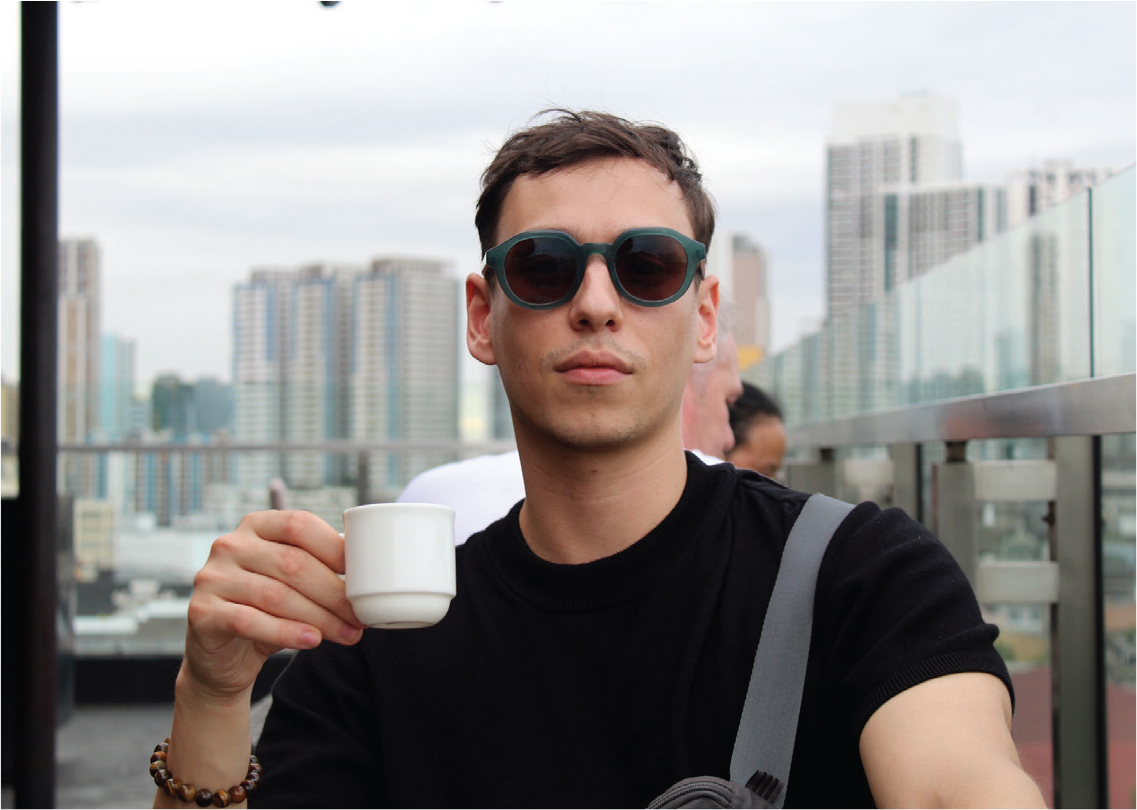
I was once asked to write an “objective” account of Manila and the Philippines.
This struck me as a curious request, because objectivity—poor thing—didn’t survive postmodernism. Everything nowadays is selection: facts, impressions, perspectives. And since we live in the age of entertainment, algorithms, and political agendas, what survives the selection process is usually whatever shouts the loudest.
So no, these impressions cannot possibly be objective.
Things that have become invisible to local eyes—the ordinary, the everyday, the entirely unremarkable—have a habit of jumping out at foreigners like brightly colored tropical birds.
What Filipinos regard as perfectly normal often struck me, during my two and a half years here, as wonderfully strange, miraculous, sometimes irritating—but never, never boring.
ROOFS
You notice roofs—tin roofs, red roofs, blue roofs, sometimes And then roofs made of palm leaves in the provinces—beautiful and airy beneath the sun, yet torn and full of holes during a typhoon, letting rain and bits of themselves fall into the house after being crumbled by the elements.
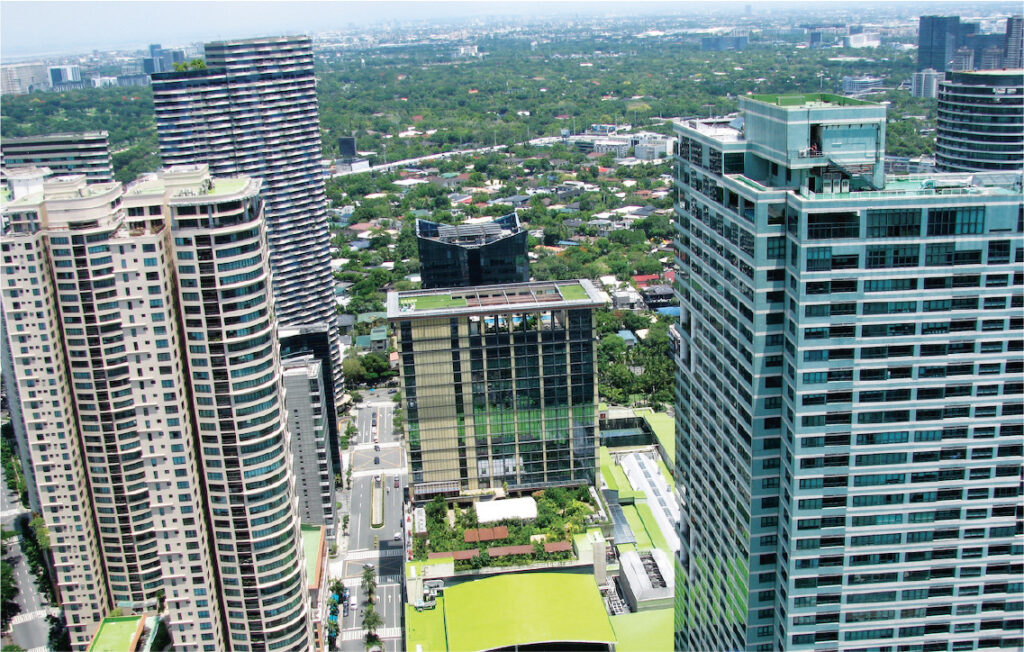
And where there are roofs, there is architecture. First, the grand architecture: the skyscrapers of Makati and BGC, shooting sixty stories into the sky with the same ease with which bamboo stalks climb upwards.
At first, there is the illusion of equality—that all these exist for us, for ordinary people; that one can go up to the rooftop, the swimming pool or the gym, and that this is not luxury but simply “normal housing,” something that perhaps only a handful of the richest people could afford in Europe.
Then comes the realization that in Manila, this luxury also belongs to only a few. The average Filipino cannot afford a condominium, much less rent one. The architecture of the elite— towers rising upwards—mark their dominance over the city.
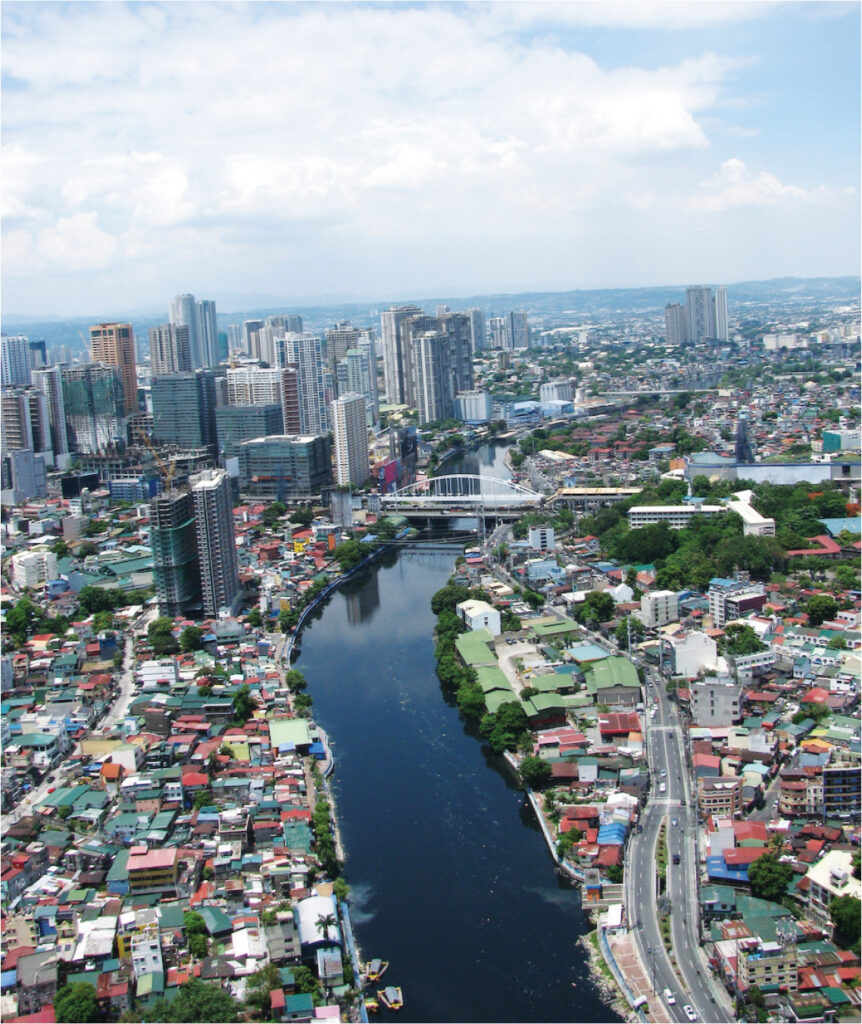
And so, we descend—to houses without windows, to homes built from bricks, sheets of metal and whatever materials happen to be available. To houses painted in bright shades of green, in front of which men drink Red Horse beer and women play bingo, while countless packs of children run around, so cheerful and smiling that one might think they had floated down directly from heaven aboard the homemadekites. Houses in which entire families and three generations live within a few square meters, where a single street may resemble a family tree populated by innumerable cousins, aunts, brothers and uncles.
And finally, there are the houses behind walls—the private subdivisions. It is a more exclusive world, into which one may secure temporary entry by leaving an ID card with the guards. Long-term access to a two- or three-story house requires a substantial loan, connections and money. These private communities, occupying more than 40% of Metro Manila, are both the city’s oasis and its curse, worsening traffic through their impenetrability and inaccessibility.
New Toyotas and BMWs emerge from them only to throw themselves into the crowd and stand together with everyone else in traffic jams that last an hour, amid streets where crowing roosters are tied to strings and hungry cats with short tails roam about.
JOY OF BUILDING QUICKLY
whatever materials happen to be available
From a practical perspective, I was astonished by how quickly buildings are erected in the Philippines, particularly smaller structures.
Bars and restaurants can appear within two weeks with the help of steel poles planted into hastily poured concrete, often without foundations.
Bamboo is sufficient for walls and the familiar corrugated sheet metal serves as a roof. And that is enough.
Compared to European construction—heavy, brick-built and deeply anchored in the ground—Filipino structures seem almost like toys, but toys that perform their function of providing shelter and facilitating business.
In Europe, buildings require insulation, not to mention compliance with thousands of regulations and standards.
Windows are essential, otherwise we would freeze from autumn until spring. In the Philippines, all one really needs is the desire to do so, and one can build a shelter quickly and simply.
SAFETY, EUROPEAN STYLE
Contrary to what one might hear, the Philippines is not burdened by excessive bureaucracy and regulation, something evident in the sight of passengers riding on top of jeepneys or tricycles travelling without lights.
I still remember my astonishment when my friend asked the operators of a crane truck whether he might climb to the top. They smiled and agreed, and a moment later, Miguel was waving at us from the basket suspended high above the ground.
In Europe, fear of consequences and procedure is so deeply ingrained that any worker would have refused such a request without a second thought, afraid of accidents, violations of regulations and possible lawsuits.
Europe treats us like children, insisting that we wear helmets, fasten our seat belts and, heaven forbid, never stick an arm out of the window. In the Philippines, riding a noisy motorcycle in flip-flops with three people aboard is nothing unusual, particularly in the provinces.
A KAMOTE MEDAL
And since we are already speaking of the provinces, I had the opportunity to spend more than three months in Lubayat, a village in Quezon Province by the sea.
As fate would have it, on the way there—with all my belongings carried by my friends in a van while I rode my scooter—I had an accident. It was entirely my fault. Overtaking downhill, on a bend, in pouring rain qualifies one for the deserved “Order of the Kamote,” and thus I arrived in the province with a broken collarbone and a fractured rib.
I was taken to the local hospital in an ambulance so rickety and so fast that I owe my survival to the portrait of the Virgin Mary hanging from the ceiling. Once there, there was no X-ray machine, let alone surgeons. We had no choice but to wait until the following day and then travel to Manila. Fortunately, I was with Filipino friends, and our hostess, Bern, proved extraordinarily kind and understanding.
When we returned to Taguig the following day with my broken bones, the local hospital once again proved insufficient.
We therefore headed to St. Luke’s Hospital. After an hour’s wait, I had an X-ray and was informed that a sling would suffice for the broken collarbone and that nothing much could be done about the rib.
I returned to the province by bus with my former girlfriend, whom I had brought from Manila. In moments like these, the devotion of Filipino women proves invaluable. I arrived back in the province defeated and broken—quite literally—with remote work for a Manila office waiting for me.
It was then that the first blackout came: no electricity and no internet throughout the area. I was devastated. Fortunately, my medical leave still covered the following days. It was during that time, between walks to the river and the ocean, that it became clear that my injury was much more serious and required surgery.
REMARKABLY DEMOCRATIC, SHAMELESS
I returned to Manila once again, this time to Makati Medical Center. There, I found an excellent surgeon. It also turned out that my insurance would cover the operation. Until, that is, the evening when the telephone rang.
The insurance company demanded a police report from the scene of the accident. I had no such report, since no one besides myself had been injured and the police had never been called. It was then that another well-known Filipino motif stepped onto the stage: corruption.
With the help of friends and the police, I managed to obtain a report reaching back a week, and once that was secured, I could finally prepare for the operation.
Corruption deserves a brief pause. In the Philippines, it is remarkably democratic. Anyone can afford to bribe a policeman over some minor offense. P500 can rescue one from a surprising number of difficulties, and it saved me more than once.
For the machinery of the state, however, this must be terrifying. The scale of bribery is enormous and stretches from the head of the system to its feet. There are even police “set-ups” in which several officers are fully aware of the arrangement.
This shamelessness, this systemic exchange of money under the table, is something Europe has largely managed to overcome.
On the personal level, corruption may seem advantageous to both sides; on the level of the state, it is a genuine disaster.
At the hospital, moments before the operation, while lying on the table, I was shown the bill. In Poland, healthcare is funded with public money and nobody counts cotton swabs or scalpels.
Here, every dressing and every item used during the procedure was carefully listed with its price. The cost of the operation amounted to approximately P300,000.
RECOVERY
Back in the province I began to recover—or almost. For the first few nights, the noise from the street was unbearable: scooters, trucks, karaoke, dogs and roosters. Noise is so common and so overwhelming that, to Polish ears accustomed to the silence of fields and birdsong, it is positively lethal. Earplugs saved me.
In time I learned more Tagalog. The local shopkeeper, Felix, became my tireless teacher. I bought tilapia and rambutans from passing trucks and bread from the local bakery.
The dogs gradually stopped barking at me, having grown accustomed to my scent, and blackouts became less frequent.
I could work and recover my strength at a long wooden table hidden in the shade of bamboo walls.
When, after six weeks, I climbed onto my scooter for the first time again, I entered another world, a world of freedom. At last, I could leave the house and visit neighboring towns. Never before had the sight of a 7-Eleven brought me so much joy. I drank gin with the local boys and tried to become a surfer, though with an injured arm I had to restrain my ambitions considerably.
Finally, in December, the time came to return to Manila. I left the province with a certain sense of relief and moved to Mandaluyong.
GREATEST, FINEST RESOURCE
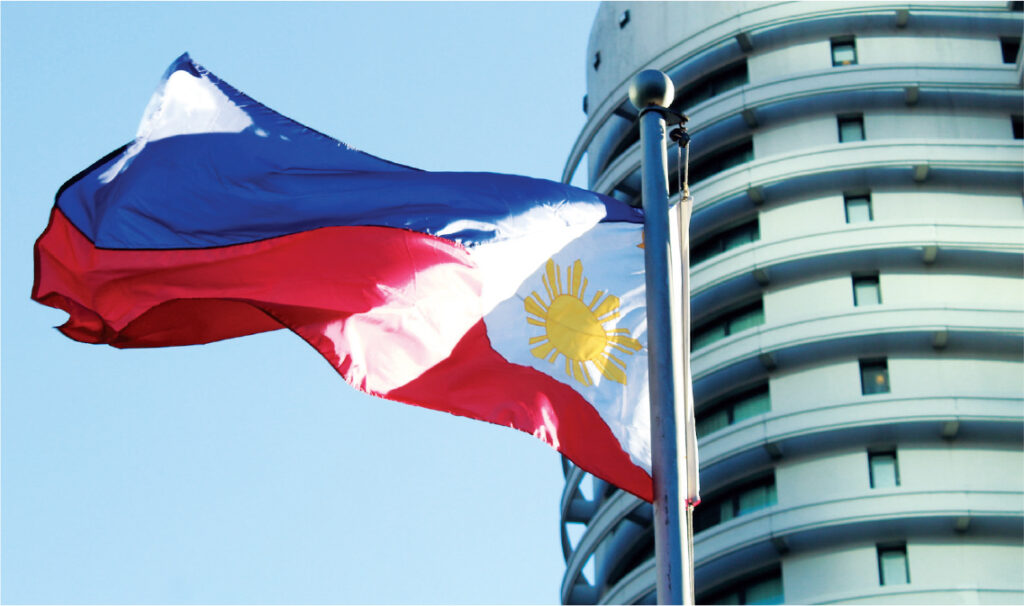
Writing about the Philippines, it is impossible to ignore their greatest and finest resource: the people. Of all the countries I have visited, Filipinos strike me as the kindest, warmest and most cheerful. Their sense of familiarity is reflected in the language itself: ate, kuya—addressing even strangers in this way shortens the distance between people and creates the impression that the entire nation is connected by ties of blood and family.
How often have I seen people who had met barely a minute earlier already laughing and chatting together. As an expatriate, I was particularly struck by the universal respect shown to me, the endless “sir,” beneath which there was always genuine warmth.
There is something about Filipinos that makes you open up almost immediately and shed your stiff shell. They are curious about you, your story and your perspective. They ask questions and try to involve you however they can—in singing, basketball or parties. One feels truly welcomed, and no gifts are required, because one’s presence is itself the gift.
Of course, Filipinos have their flaws, like every nation.
What stands out most to a European is the low efficiency often encountered among staff in bars, hotels and restaurants.
Despite the large numbers of employees, the standard of service is frequently rather poor, and it is not unusual for three people to be needed to operate a cash register or process an order.
Everything takes time. Transactions in shops become miniature social scenes stretching from one to three minutes, even when one is merely buying two bottles of water.
Sometimes the card terminal does not work, sometimes GCash fails, sometimes there is no change. Every process becomes unnecessarily prolonged.
COLLECTIVE MIND
In the Philippines I discovered something resembling a collective mind. Individual workers seem to possess only fragments of information, and arriving at the complete picture requires consultation, collective reflection and the assembling of all the pieces.
When I wanted to obtain a cheque book, one branch of the bank informed me with complete confidence that such a thing was impossible. In another branch of the same bank, I received one after two hours.
This points to another national characteristic: truth and authority seem to be created verbally and according to circumstances and the individual making the request.
The same policeman may decide that the solid line either existed or did not exist, regardless of what was actually painted on the road. One clerk may accept a payment that another refuses to recognize. The first answer is rarely the final one, and by asking further questions one may receive a completely different—and ultimately satisfactory—response.
At first this can be frustrating. Poland is a low-context country: “yes” means yes, “no,” means no, and there is usually little room for appeal. In the Philippines, words appear more temporary and capable of changing their meaning according to the atmosphere of the conversation and the path one chooses through it.
TWO WHEELS
As a motorcyclist, I found Manila’s traffic immensely frustrating. I became almost convinced that there was no pleasure to be found in riding in the Philippines. That changed only when I headed towards Bicol.
Beyond Teresa in Rizal province, beautiful stretches of the Pan-Philippine Highway unfold before you and, at last, one can open the throttle properly. Only after leaving Manila do you truly begin to recognize the beauty of the Philippines and remember why you came here in the first place. Those seven thousand islands have countless treasures to offer—jungles and roads waiting to be explored, provided one has enough fuel and enough courage.
I set off for Camarines Norte on a private charitable mission in search of a boy who had been working in gold mining. I found him some time later and encouraged him to return to schoolFrom there I continued south towards Pilar to catch a ferry to Masbate—the island of rodeo. As luck would have it, the annual cowboy festival was taking place. Yes, there are cowboys in the Philippines, complete with hats and lassos, and men catching cattle with ropes or with their bare hands. Encountering such a version of Asia only deepened my curiosity and revealed the vastness of a country that is not easily traversed.
The Philippines is another world for a European—a world of contrasts and energy, a world worth experiencing and discovering.
The same bottle of water costs a completely different amount in a wholesaler’s warehouse, in a neighborhood shop, and on an airplane.
Sometimes one has to find oneself somewhere entirely different in order to discover one’s own value.
Because, in the whole wide world—only you can be you. And in the Philippines, strangely enough, one often feels free to become exactly that.
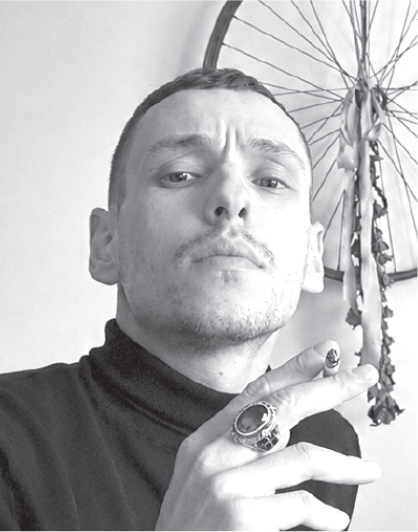
Piotr Sarmini
Piotr Sarmini (born 1993 in Warsaw, Poland) made his literary debut as editor-in-chief of the student magazine UW/AŻAJ at the University of Warsaw. He studied Polish Philology and a Journalism at the University of Warsaw as well as at Adam Mickiewicz University. He completed his degree with a thesis devoted to the editorial study of a memoir manuscript written by a Siberian exile and soldier of Anders’ Army. In 2018, he published his debut hip-hop novel, Bez przekazu (“No Statement”). During this period, he regularly published poetry, short stories, and journalistic as well as industry-related articles. In 2023, he released his second novel, Uchodząc (“Borderless”), portraying the journey of Syrian refugees through Europe. Since February 2024, he has been living in the Philippines, where he works in IT industry, while remaining a keen observer of everyday life and contemporary reality.