

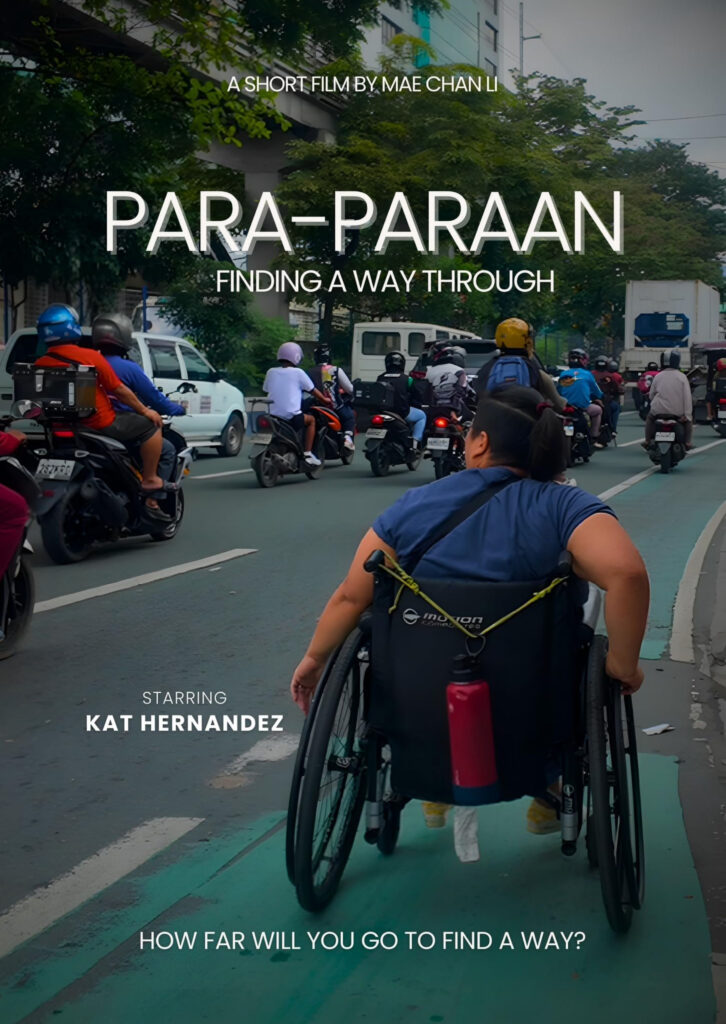
For wheelchair users in the Philippines, living independently often means relying on personal resourcefulness rather than structural accessibility. In a place where accessibility is often an afterthought, the burden of navigating urban life falls heavily on persons with disabilities.
This stark reality takes centerstage in “Para-paraan” (Finding a Way Through), an official short film finalist at the 22nd Cinemalaya Philippine Independent Film Festival.
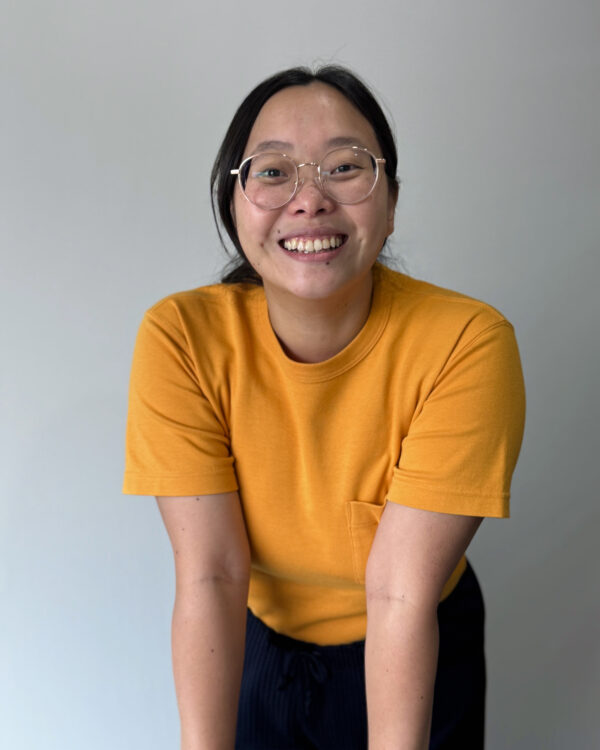
Directed, written, and produced by filmmaker and disability advocate Mae Chan Li, the ten-minute documentary offers an observational lens into the lived experience of Katrina “Kat” Hernandez, a para powerlifter, wheelchair user, and executive producer of the film.
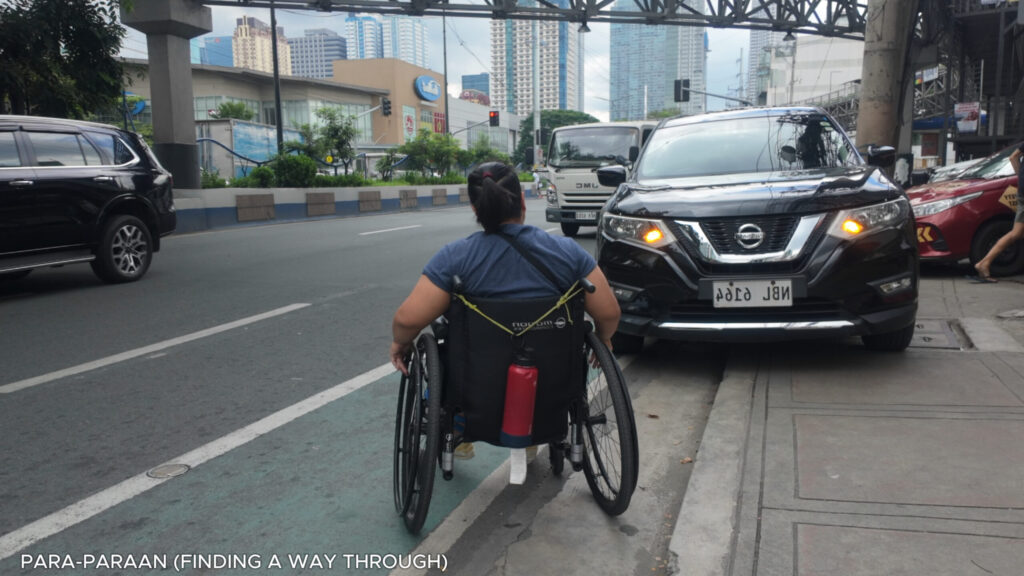
Through quiet observation and unvarnished realism, “Para-paraan” challenges festival audiences to confront how urban spaces routinely marginalize PWDs and why society must stop mistaking forced adaptability for genuine inclusion.
Unlike traditional documentaries that rely heavily on dramatic narration or scripted exposition, “Para-paraan” relies on minimal dialogue and raw observations.
The story follows Kat as she goes about withdrawing money from a bank ATM, picking up medicine from a local drugstore, and buying groceries. Although these are ordinary tasks on paper, they become a complex sequence of constant adjustments on camera.
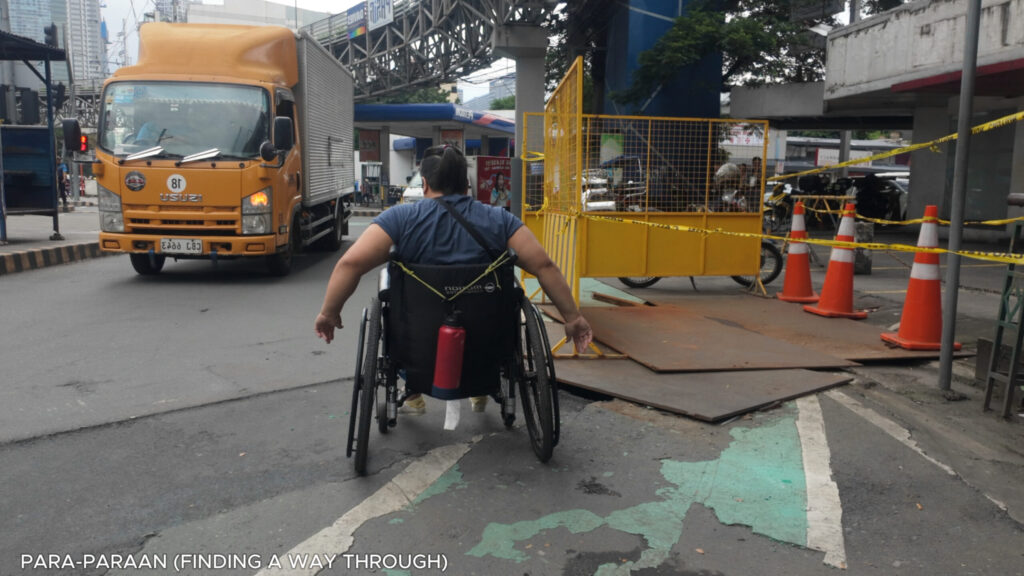
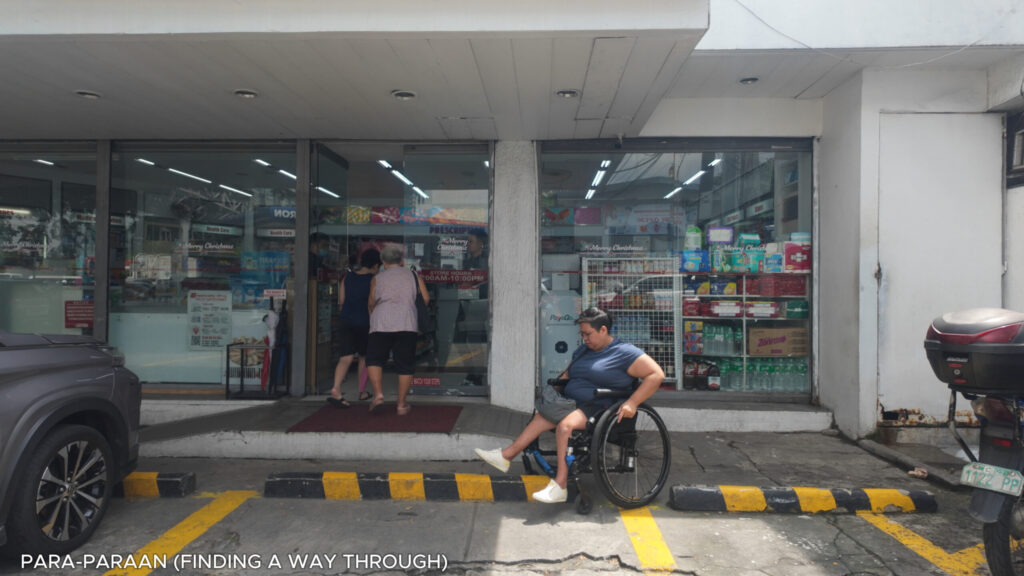
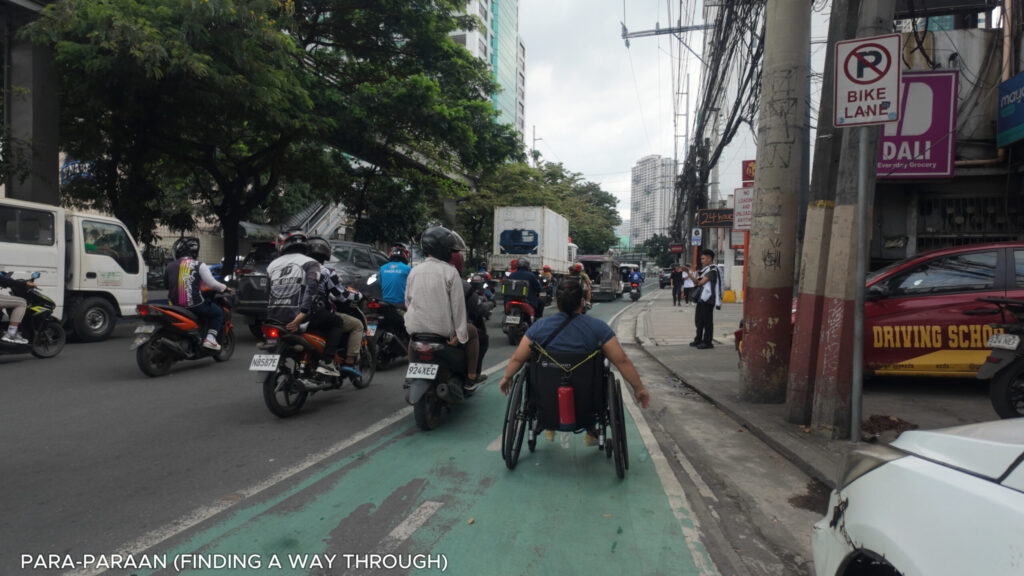
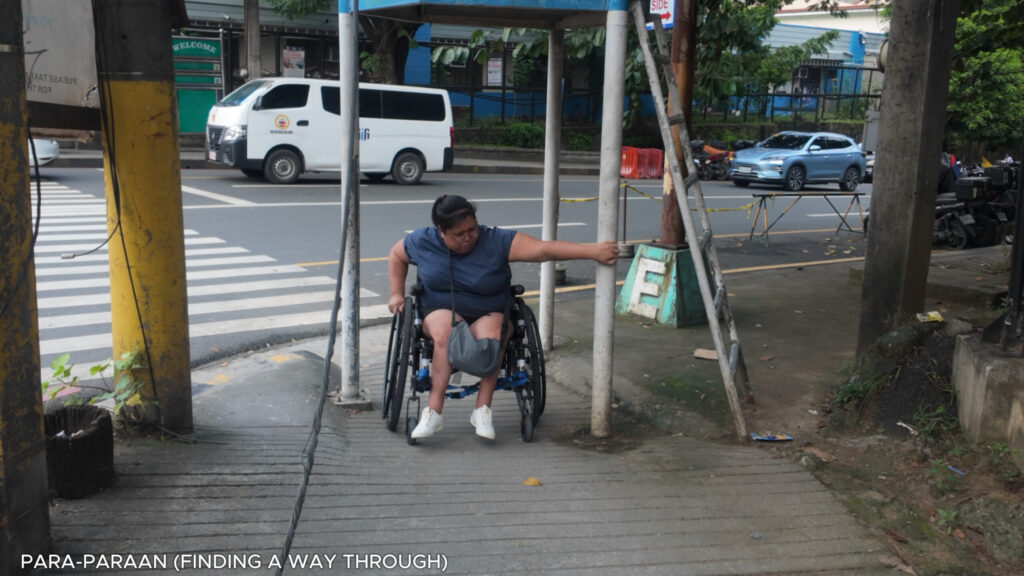
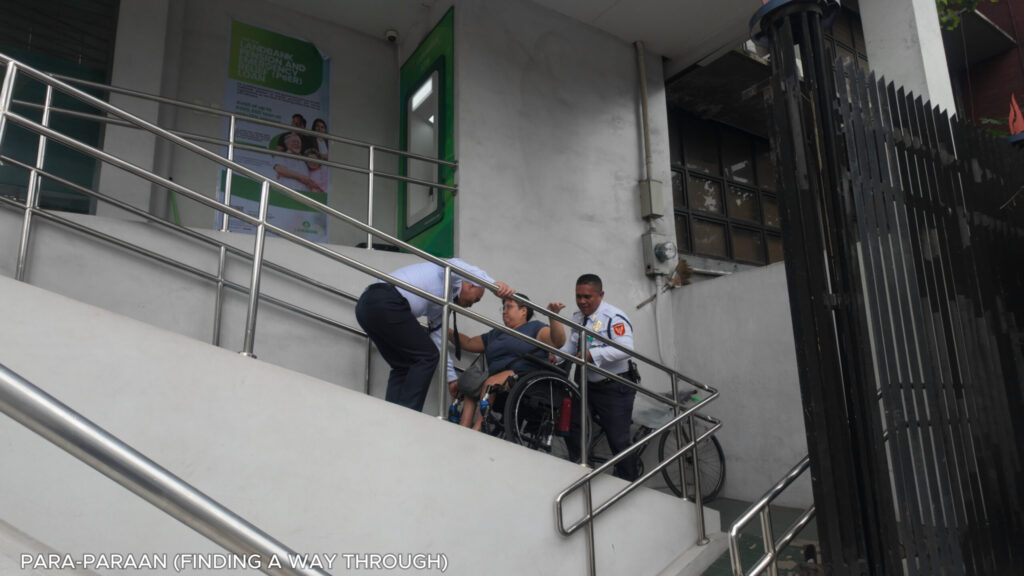
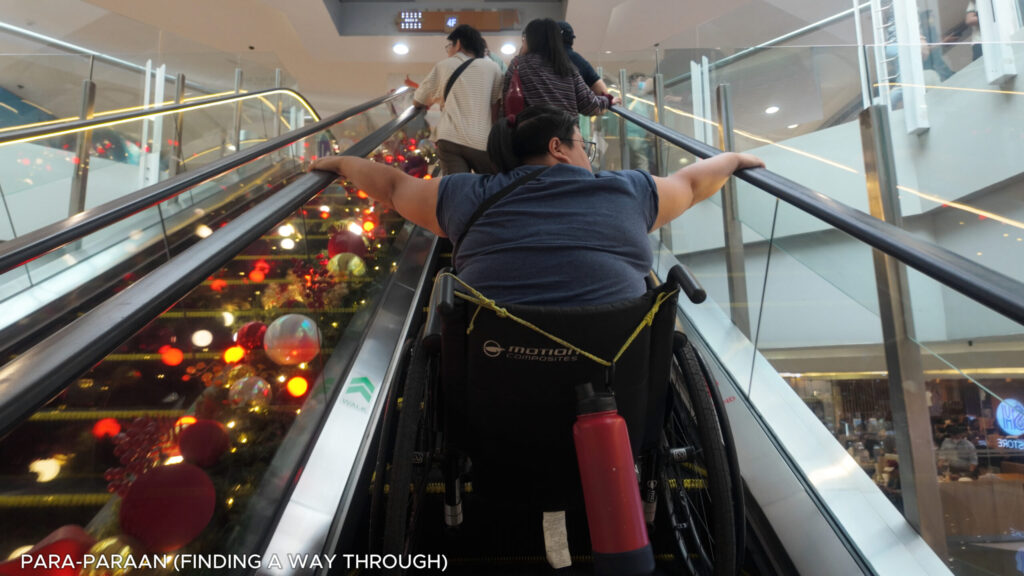
“Para-paraan did not begin with an elaborate script. It wasn’t hard to find a plot to work with because the obstacles were everywhere,” the director shared.
Urban infrastructure, from steep ramps and broken sidewalks to ill-designed elevators and roads, transforms routine errands into formidable obstacles.
Through these quiet observations, “Para-paraan” highlights a troubling paradox that PWDs are routinely expected to display “resilience” and adapt to spaces that fail to support them, where true accessibility and inclusion should already exist.
“What shaped the film was not invention, but selection: choosing which realities to frame, which moments to hold, and which negotiations to share,” she added.
Li, who co-founded the advocacy platform Kat Out of the Box with Hernandez, has long advocated for using digital media, community engagement, and public education to dismantle disability stigma. With “Para-paraan,” she extends that advocacy to the cinematic screen.
By bringing these subtle, daily negotiations into focus at Cinemalaya 2026, “Para-paraan” challenges audiences to look past the illusion of normalcy. It makes a compelling case for safer, more inclusive public spaces, where PWDs are not merely expected to “find a way through,” but are fully empowered to live independently.
Seymour B. Sanchez
Seymour Barros Sanchez is an advocacy filmmaker, communication and film lecturer, freelance writer, creative producer, technical consultant, and a former producer for news and current affairs programs. He served as Bacolod Film Festival director in 2024 and Technical Consultant for Academic Linkages of the Film Development Council of the Philippines from 2022 to 2025. He is a member of the Academic Film Society Advisory Committee of the FDCP, a representative of the Education Sector to the National Committee on Cinema Executive Council, and Secretary of the NCC.