

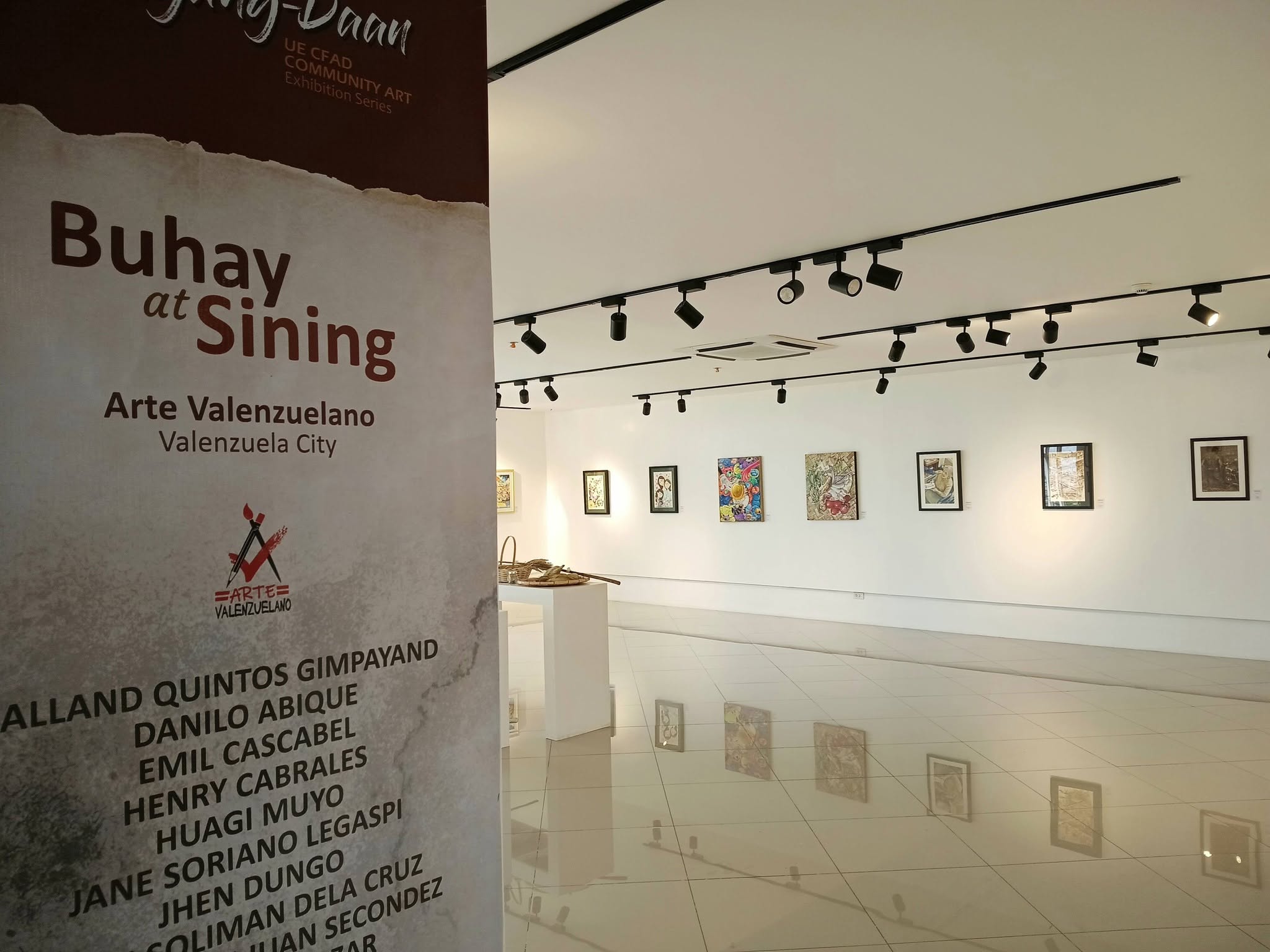
“Buhay at Sining,” presented by the artist-led group Arte Valenzuelano offers a refreshing pivot toward the local, the tangible, and the communal.
The exhibition at the Chua King Ha Galleries of the University of the East College of Fine Arts, Architecture and Design serves as a compelling study in how grassroots-led collectives carve out space for identity amid rapid urbanization.
At the heart of the exhibit is a deliberate promotion of daily life in Valenzuela City and its surrounding cultural landscapes. Instead of seeking inspiration in distant myths or globalized aesthetics, the artists of Arte Valenzuelano turn their gaze inward.
Through vivid depictions of local markets and food traditions, the artworks map the economic and social rhythms of the city. The market stalls are presented as vital social hubs where community bonds are forged through daily trade and casual interaction.
Themes of womanhood emerge strongly across several works, framing women as key anchors of familial resilience and cultural continuity in suburban Manila.
Portrayals of local flora and nature act as quiet counterweights to the industrial landscape of the CAMANAVA region, capturing a nostalgic yearning for environmental harmony amid steady city expansion.
A key anchor of the exhibition’s cultural framework is its visual dialogue with Dr. Pio Valenzuela, the revolutionary doctor and Katipunan leader after whom the city is named.
The exhibition weaves his memory directly into contemporary narratives rather than isolating his legacy within textbook history. By placing tributes to Dr. Valenzuela with modern depictions of street vendors and domestic scenes, Arte Valenzuelano suggests that the revolutionary spirit endures in the quiet, daily resilience of ordinary citizens navigating modern life.
The context of the venue adds an essential layer of meaning. Hosted as part of the ongoing “Sangang-Daan” (Crossroads) series, the exhibition embodies the metaphor of a liminal space where institutional academic training, represented by UE CFAD, intersects with grassroots community practices.
“Buhay at Sining” ultimately succeeds because it resists the urge to simplify or romanticize suburban life. By assembling a diverse mix of painting, sculpture, and digital media, Arte Valenzuelano constructs a rich, multifaceted portrait of a living community.
The exhibition runs until September 1, 2026 at the Chua King Ha Galleries. For inquiries and gallery visits,email cfad.cal@ue.edu.ph.
Seymour B. Sanchez
Seymour Barros Sanchez is an advocacy filmmaker, communication and film lecturer, freelance writer, creative producer, technical consultant, and a former producer for news and current affairs programs. He served as Bacolod Film Festival director in 2024 and Technical Consultant for Academic Linkages of the Film Development Council of the Philippines from 2022 to 2025. He is a member of the Academic Film Society Advisory Committee of the FDCP, a representative of the Education Sector to the National Committee on Cinema Executive Council, and Secretary of the NCC.