

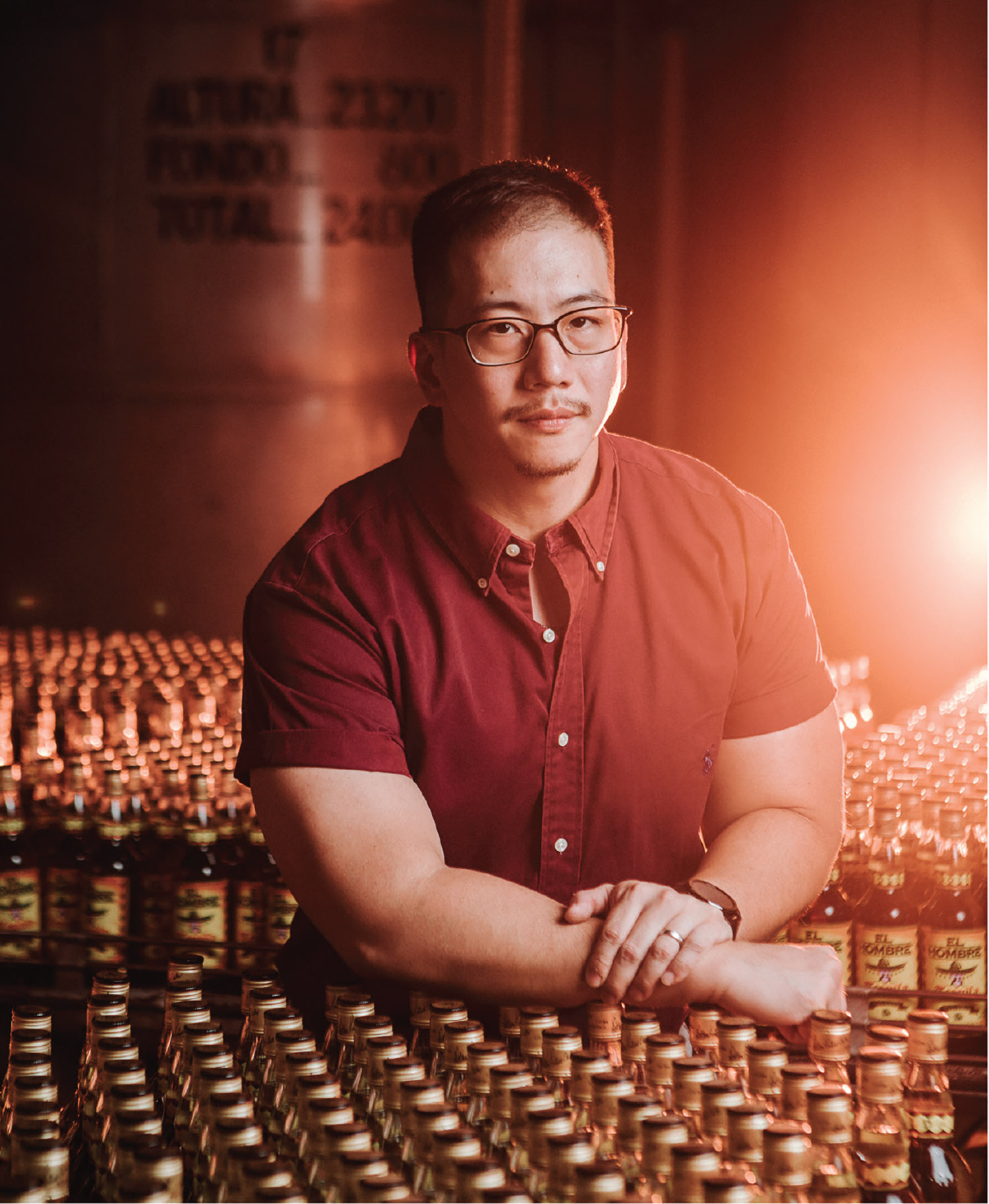
IN THE PHILIPPINES, a bottle opened among friends can turn an ordinary gathering into a long night of stories. There is pulutan on the table, someone calling for another round, and a designated tanggero passing around the glass. In the familiar ritual of tagay, the drink is only part of the experience. What matters just as much is the company.
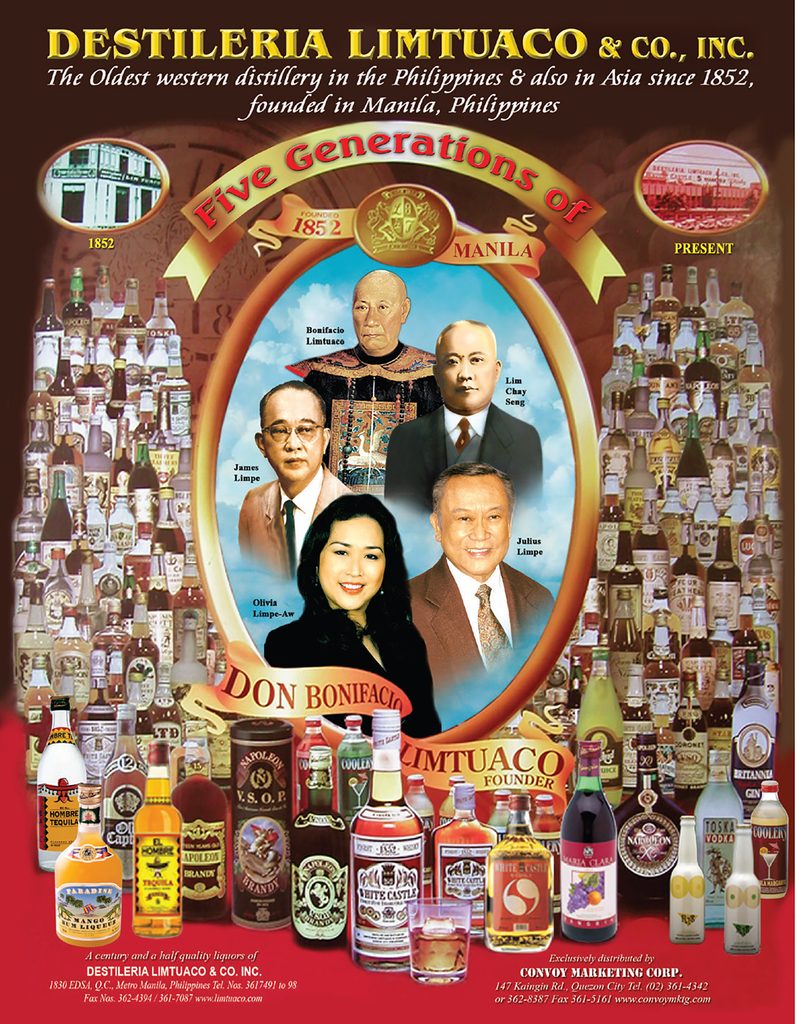
For Aaron James Limpe-Aw, executive vice president of Destileria Limtuaco & Co., Inc., this sense of community is inseparable from the business he helps lead. Founded in 1852, Destileria Limtuaco is recognized as the oldest distillery in the Philippines.
What began with Siok Hoc Tong, a Chinese medicinal wine introduced by Don Bonifacio Limtuaco, has grown across five generations into a liquor enterprise producing rum, whisky, brandy, and Philippine craft spirits. Today, Limpe-Aw helps balance that history with the demands of a changing market.
“Growing up, the company was always like an extra member of the family,” he says.
His parents, Olivia Limpe-Aw, the company’s president and chief executive officer, and Benny Y. Aw, its vice president for manufacturing and international sales, introduced him and his brothers to the business early.
For Aaron James Limpe-Aw, executive vice president of Destileria Limtuaco & Co., Inc., One of his first experiences was in his family’s business was on the factory floor, checking packaging materials along the production line. His Economics degree from the University of the Philippines later gave him a framework for understanding markets, supply chains, and consumer behavior.
Now, his responsibilities span executive management, product development, and the Destileria Limtuaco Museum in Intramuros, Manila. His work brings together two demands: preserving a family legacy and ensuring it remains relevant to the next generation.
For Limpe-Aw, the two are not mutually exclusive. “Carrying a legacy doesn’t mean standing still or just guarding the past; it means keeping it alive through continuous innovation,” he says.
MORE THAN A ROUND OF DRINKS
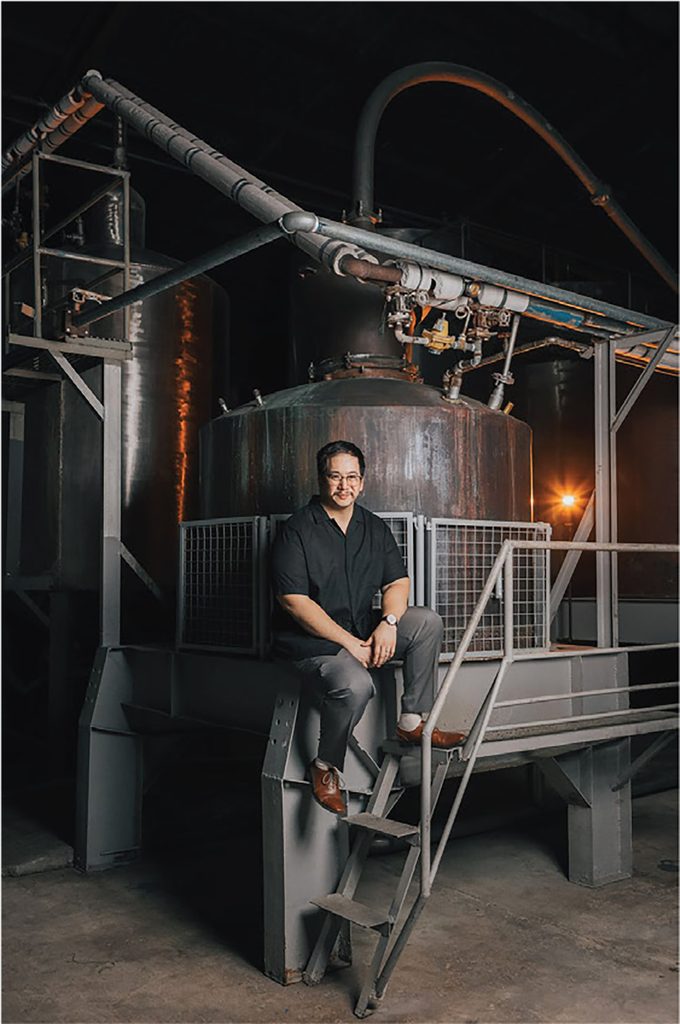
The Filipino inuman offers a useful way to understand this philosophy.
In a traditional tagay, a designated tanggero pours a shared drink that passes from one person to another. The ritual emphasizes participation in a common experience rather than the individual act of drinking.
“It breaks down social barriers; everyone is equal at the table, sharing the exact same drink,” Limpe-Aw says. “It shows that for Filipinos, drinking isn’t just about the alcohol—it’s about community, hospitality, equality, and building connections.”
The ideal of equality at the drinking table does not mean social hierarchies disappear in every gathering. Still, the ritual reflects a familiar Filipino impulse: making room for others, sharing what is available, and using food and drink to strengthen relationships.
For Limpe-Aw, this communal spirit has endured even as drinking habits have changed.
“The spirit of camaraderie and togetherness” has remained constant, he says. “Formats change—from classic sioktong to high-end cocktails, craft spirits, or RTD cans—but the core reason Filipinos gather over a drink remains the same.”
That continuity is particularly meaningful for a business that has witnessed more than 170 years of changing tastes, technologies, and social conditions. Destileria Limtuaco’s evolution, from medicinal wine to a wider range of spirits, reflects how enterprises must respond to new markets while retaining the knowledge and practices that distinguish them.
“We evolved because we listened to the market while keeping master blending at our core.”
PUTTING FILIPINO IDENTITY IN A BOTTLE
For Limpe-Aw, one way to keep the company’s heritage alive is to draw on the Philippines itself.
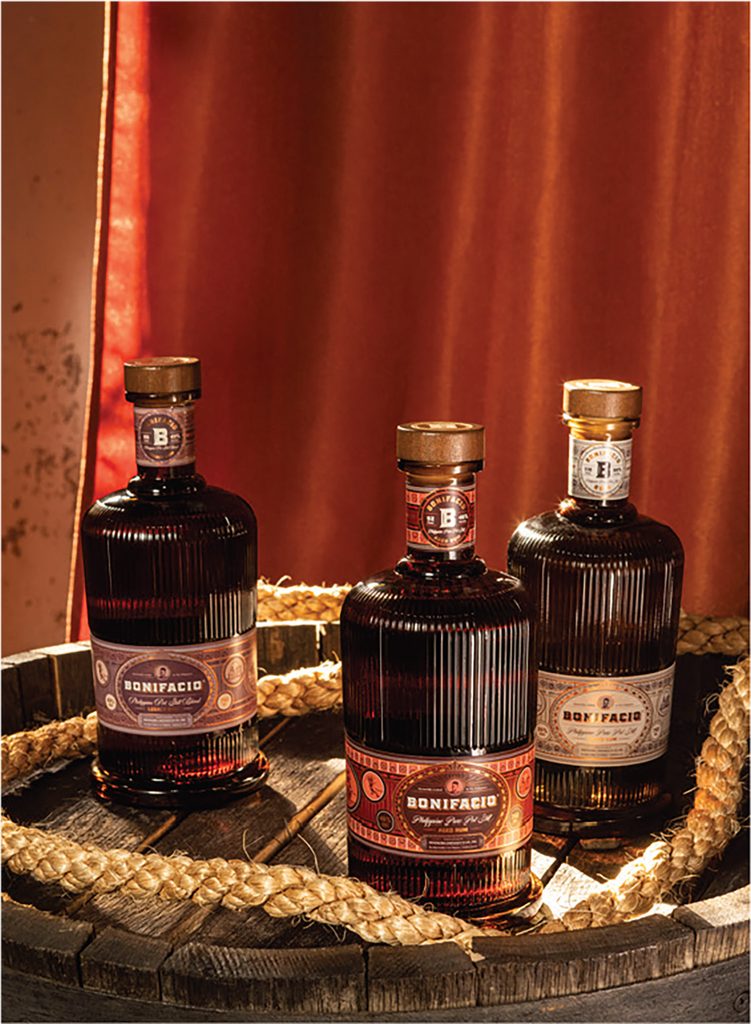
Through products such as Manille Liqueur de Calamansi and Amadeo Coffee Liqueur, Destileria Limtuaco incorporates local agricultural produce into spirits that reflect the country’s distinctive ingredients and flavors. Its Bonifacio Rum, meanwhile, forms part of a developing Legacy Spirits line that pays tribute to the company’s history and the master blenders who came before the current generation.
“When you use real calamansi rinds from Mindoro or four distinct native coffee varieties for Amadeo, you’re tasting the terroir of the Philippines,” he says.
These ingredients offer Aaron Limpe-Aw poses at the factory of Destileria Limtuaco & Co., Inc., where generations of craftsmanship have shaped the company’s long history in Philippine distilling.
These ingredients offer more than a selling point. They connect a product to the land, the people who cultivate its raw materials, and the traditions that shape local tastes.
However, cultural identity cannot rest on packaging alone.
Limpe-Aw emphasizes authentic sourcing, craftsmanship, research, and development as essential to creating spirits with a genuine connection to Filipino heritage. For local products to stand alongside international brands, their stories must be supported by quality.
This approach also reflects a broader challenge for Filipino entrepreneurs: turning cultural resources into viable products without reducing heritage to a marketing slogan. A bottle can introduce consumers to local ingredients and history, but the product must deliver on the promise its story makes.
A NEW GENERATION
Limpe-Aw’s involvement in the Philippine bar industry extends beyond the family distillery. Through Drinks Be With You Inc., a collective supporting bar professionals, and The Philippine Bar Scene, a bar-focused trade show launched at the World Food Expo in 2023, he has helped create opportunities for industry members to connect and showcase their work.
The contemporary bar scene provides another space for Filipino ingredients and traditions to evolve. Bartenders can reinterpret familiar flavors, experiment with local spirits, and introduce audiences to ingredients that may be more familiar in Filipino kitchens than in cocktail menus.
Destileria Limtuaco has also adapted to changing consumer preferences through digital marketing, experiential campaigns, ready-to-drink beverages, sparkling sangrias, and premium non-alcoholic mixers. These developments reflect the need for established businesses to understand how younger consumers discover products and what they value in them.
For Limpe-Aw, however, innovation does not require abandoning the past. The challenge is to make Filipino spirits relevant to new audiences while retaining the craftsmanship and character that set them apart.
He hopes to challenge the perception that Filipino liquor is limited to inexpensive, high-proof products or drinking solely to get drunk. Philippine spirits, he argues, have the depth and balance to earn recognition alongside international offerings.
THE SPIRIT THAT REMAINS
The Filipino drinking table and the modern cocktail bar may look different, but Limpe-Aw sees a common thread between them. One centers on a shared glass passed around a gathering; the other may feature carefully measured cocktails served in individual glasses. Both can create opportunities for conversation, celebration, and connection.
For a fifth-generation entrepreneur, that continuity offers a way to understand what it means to inherit a business. Preserving a legacy is not simply about maintaining a company’s name or repeating its past successes. It requires finding new ways to make its history matter.
As Destileria Limtuaco develops products for changing audiences, Limpe-Aw’s task is to keep its heritage alive without allowing it to become static. The ingredients may come from different parts of the country, the bottles may reach new markets, and the ways Filipinos drink may continue to change.
But the purpose behind the gathering remains familiar: to share a moment with others. Therefore, tagay is more than a drinking ritual but a reminder that behind every bottle is not only a business, but also a story about the people who make it, share it, and carry it forward.

Hjadoeya Calica
Hjadoeya Calica is a cinephile, reader, and a content writer for Philippines Graphic whose roots trace back to La Union and Aurora. She studied AB Literature at the University of Santo Tomas where she served as the Literary Editor for The Flame. Currently based at the heart of Makati, she finds inspiration in stories of every kind, spaces, and places.