
A branch painted yellow. Ordinary flowers arranged against a red accent. Dyed leaves placed alongside orchids. Strong lines that bring to mind the work of an architect.
At first glance, these may seem like unrelated artistic choices. However, in ikebana, the Japanese art of flower arrangement, each material and its placement contribute to a composition shaped by the person who makes it.
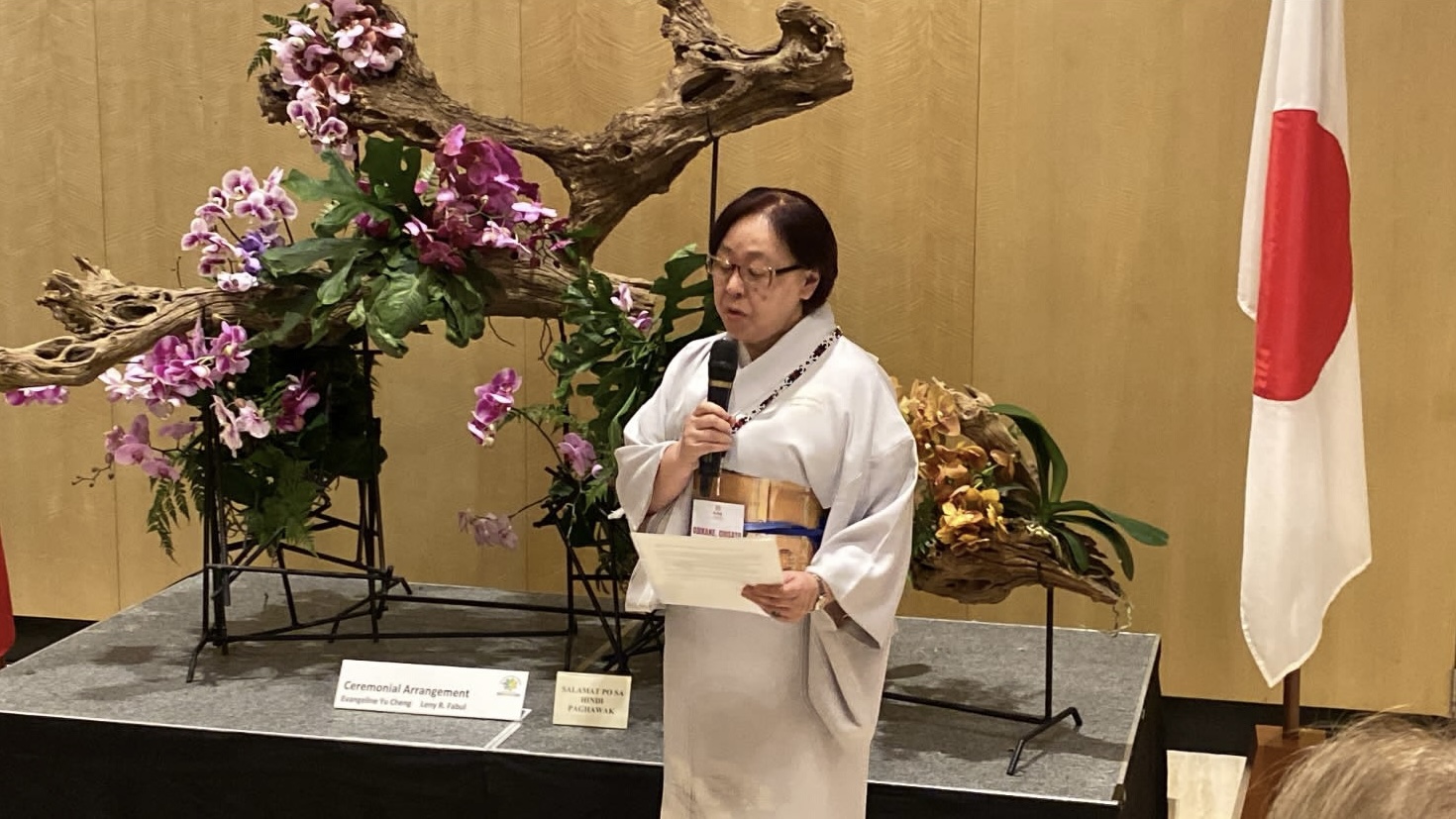
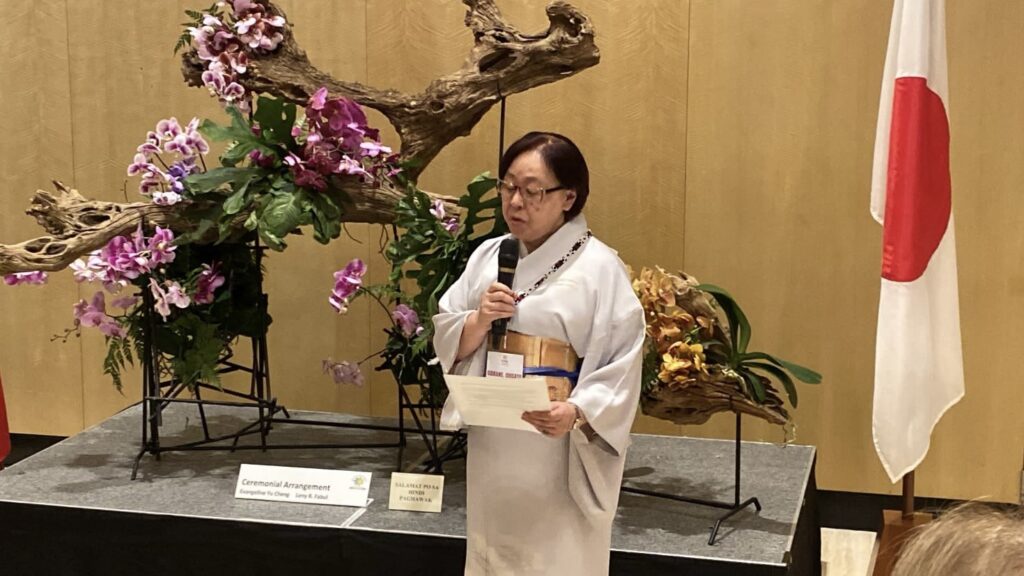
At Conrad Manila, these interpretations came together during the 16th Asian Regional Conference of Ikebana International. The gathering brought practitioners from Japan, China, India, and different parts of the Philippines together through their appreciation of the art form.
The arrangements on display offered more than an opportunity to admire flowers. They showed how an established artistic tradition can be approached through individual preferences, professional backgrounds, and different understandings of beauty.
For visitors unfamiliar with ikebana, the exhibition also raised a question: What makes an arrangement ikebana, and how does an art form rooted in Japanese culture find expression among Filipino practitioners?
MORE THAN FLOWER ARRANGING
Ikebana, often translated as “giving life to flowers,” is the Japanese art of arranging flowers and other plant materials. Also known as kadō, or “the way of flowers,” it developed from the practice of offering flowers in Buddhist temples before evolving into an established art form with its own schools, techniques, and philosophies.
Over more than five centuries, ikebana has developed beyond religious settings and become part of Japanese artistic and domestic life. Arrangements have traditionally occupied the tokonoma, an alcove in a Japanese home where objects such as art and seasonal flowers are displayed.
Unlike arrangements that emphasize an abundance of blooms, ikebana considers the relationship between flowers, branches, leaves, containers, and empty space. Line, balance, proportion, and movement matter as much as color. A single branch can determine the direction of an arrangement, while the space surrounding a flower can make its form more pronounced.
The practice does not necessarily require rare or expensive materials. What matters is how the materials are selected and arranged.
Ma. Margarita C. Perez demonstrated this through a composition built around familiar flowers, old bamboo, and driftwood she had painted yellow. Rather than relying on elaborate blooms, she worked with materials that might otherwise be overlooked.
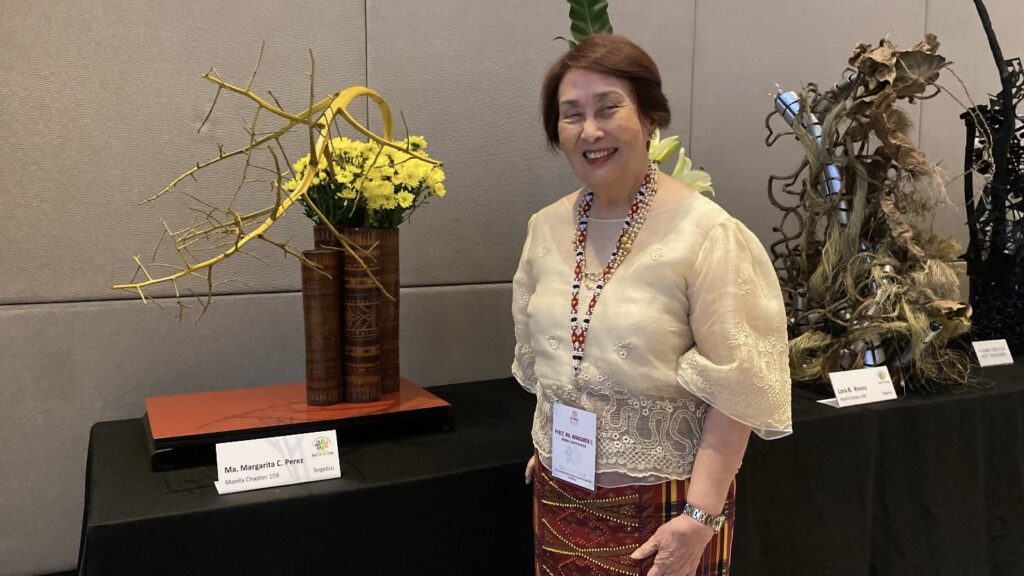
Yellow, one of her favorite colors, served as the arrangement’s dominant hue. Red provided contrast, creating the visual interruption she felt the composition needed.
The combination was not simply decorative. It reflected how Perez approached color and how she considered the relationship between individual elements.
Her use of driftwood and familiar flowers also challenges the assumption that an artwork’s value depends on the rarity of its materials. In ikebana, ordinary objects can become expressive through their placement, their relationship with one another, and the meaning the artist brings to them.
FINDING A PERSONAL LANGUAGE
There is no single visual style that defines all ikebana. Over the centuries, different schools have developed their own principles and approaches, allowing practitioners to work within traditions that range from formal compositions to more experimental arrangements.
Ikenobo, considered the oldest school of ikebana, preserves forms that reflect the art’s long history. Sogetsu, meanwhile, is known for its contemporary approach and openness to creative experimentation. The Ohara school is particularly associated with landscape-style arrangements.
These distinctions offer a glimpse into the range of possibilities within ikebana. The practice has established principles, but practitioners can interpret those principles differently depending on their training, materials, and artistic sensibilities.
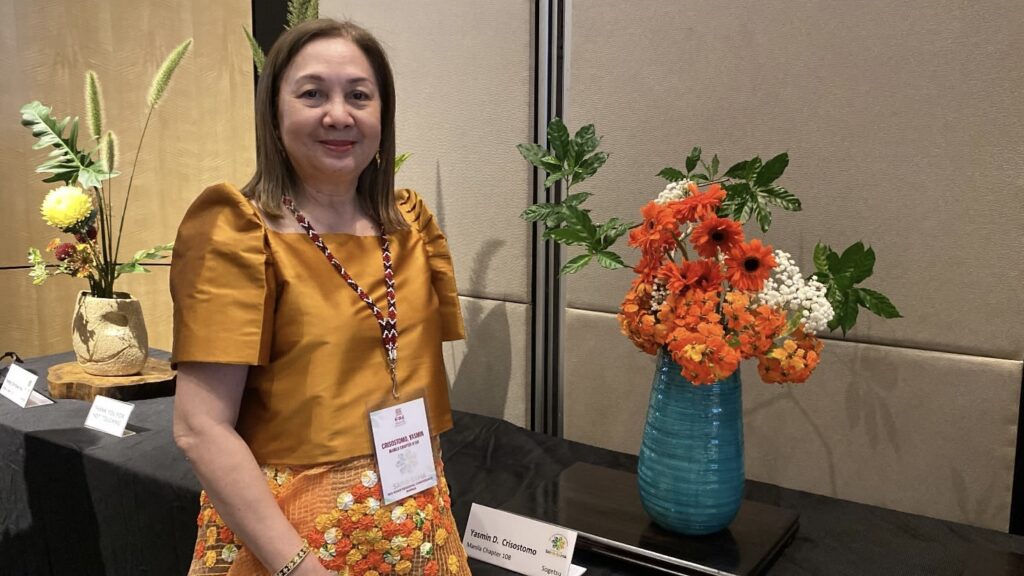
Yasmin Dayrit Crisostomo, for instance, is drawn to lines and jewel-like colors. Her interest in watercolor informs her appreciation of color, while her preference for gem tones influences the palette she uses in her arrangements. She also noted the differences between Sogetsu and the more structured approach she associates with Ikenobo.
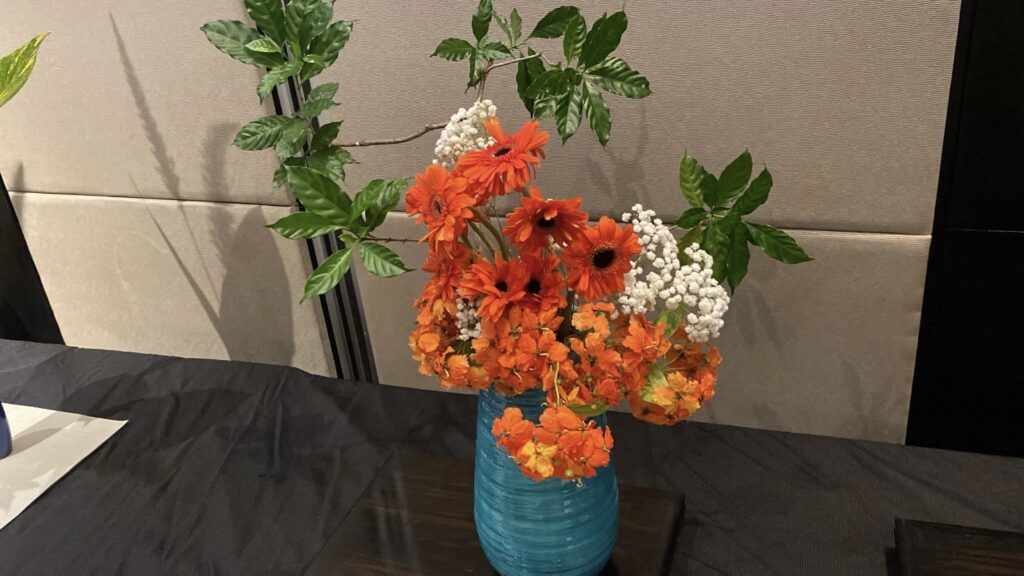
Her preferences demonstrate how a practitioner’s eye can be shaped by experiences outside ikebana itself. The way an artist sees color or form in one medium can influence how they approach another.
For Elena Ong, who has around 30 years of experience practicing ikebana, orchids are a favorite. She also works with dyed leaves, introducing altered colors and textures into her compositions.
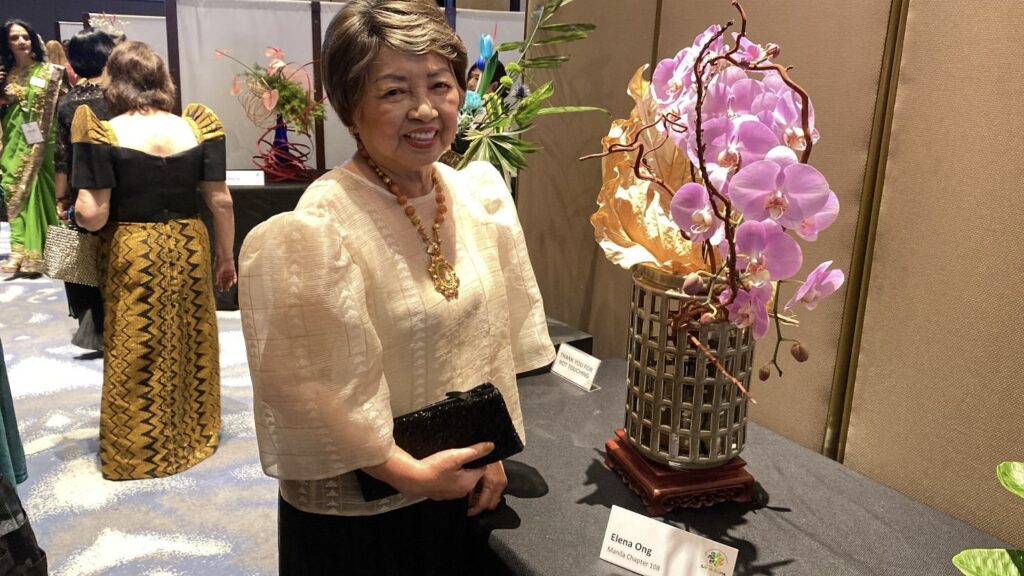
The leaves become more than a background for the flowers. Their appearance can change the balance of the arrangement, directing attention toward particular shapes or creating contrast with the blooms.
Instead of the usual process of drying a leaves under the sun, Ong’s method was leaving it at a dark corner in her house and let it sit until all the moisture have dried up.
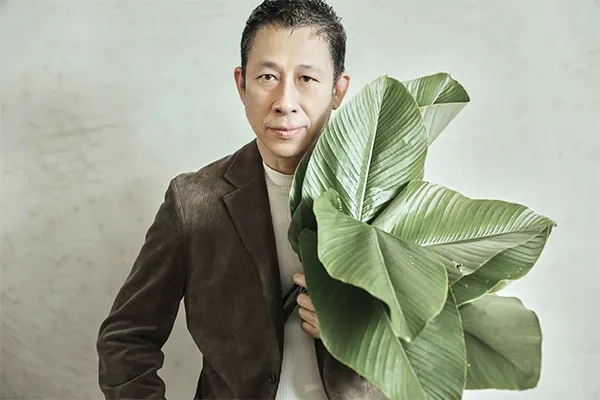
For architect Christopher Lim, the connection between ikebana and his profession is found in its lines and structure.
Lim favors strong lines and innovative designs, considering how materials occupy space and how their forms work together. His architectural background offers a way of looking at the arrangement as a composition, where the position of one element affects the balance of the whole.
Color, too, is a deliberate decision. Because he tends to work with a single dominant color, he sometimes introduces orange to bring out the other colors in his arrangement.
His use of Asian materials also reflects an interest in working with elements connected to the region’s natural and cultural environments.
Yet Lim sees the process as more than a technical exercise. A practitioner’s mood, he observed, can influence the arrangement they create. Someone in a good mood may approach the work differently from someone feeling unhappy.
The finished piece, then, carries traces of the person behind it. The flowers and branches provide the materials, but the decisions that shape them are personal.
He has excelled as a floral designer, educator, and demonstrator in both Japanese and western styles of floral design. Christopher holds prestigious qualifications such as the highest rank of Riji in the Sogetsu School of ikebana in Tokyo and the Certified Floral Designer (CFD) certification from the American Institute of Floral Designers (AIFD).
BETWEEN TRADITION AND INTERPRETATION
This relationship between established principles and individual expression offers a way to think about how ikebana is practiced outside Japan.
The art form has a particular history and cultural context. Yet when it is taught, practiced, and exhibited elsewhere, it also becomes part of the experiences of people who encounter it through their own surroundings and artistic backgrounds.
That movement raises questions about how one culture understands another. In Orientalism, literary critic Edward Said examined how Western representations often portrayed the East as exotic, unfamiliar, and fundamentally different from the West. Such representations could flatten diverse societies into a single image, overlooking their complexity and the voices of the people who live within them.
The concept does not mean that every encounter with another culture is Orientalist. Rather, it offers a way to consider what happens when an art form is presented as a symbol of an entire culture, stripped of its history or treated as an unchanging tradition.
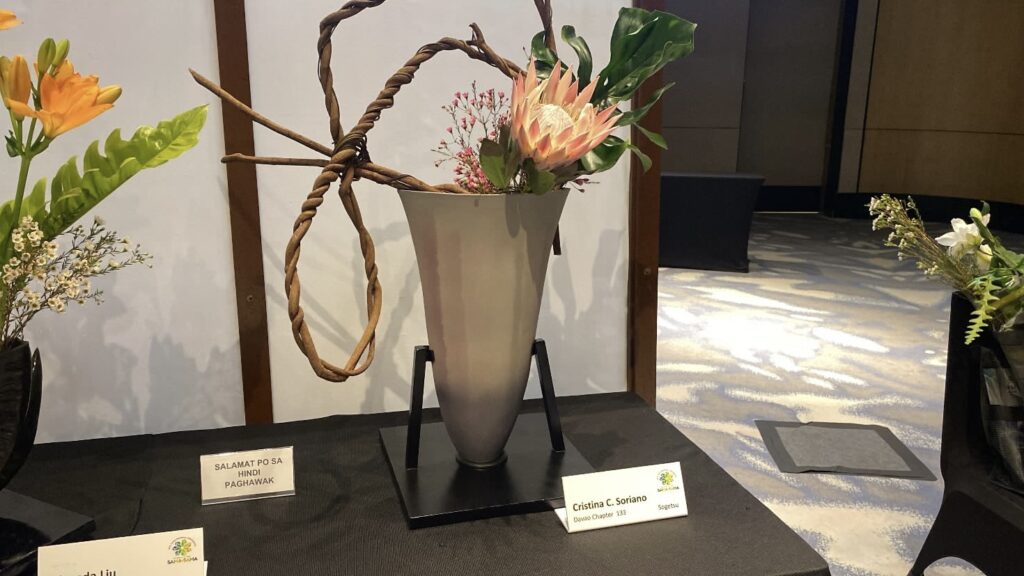
Ikebana, for example, can easily be reduced to the familiar image of minimalist Japanese aesthetics: a few carefully placed flowers, clean lines, and an almost meditative sense of order. While these qualities may be present in particular arrangements, they do not encompass the full history or variety of the practice.
The different schools of ikebana, along with the varied approaches of its practitioners, reveal a more complex art form. Its traditions have evolved, and its practitioners continue to make decisions about how those traditions are expressed.
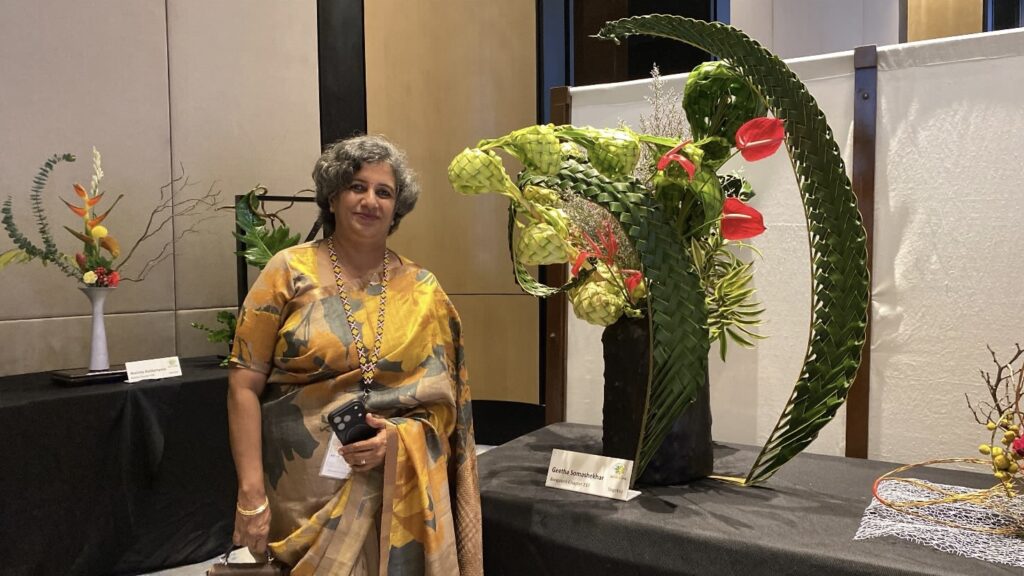
At the Conrad Manila exhibition, that complexity was visible in the arrangements themselves. Perez’s painted driftwood and contrasting colors, Ong’s dyed leaves, Kato’s landscape-inspired compositions, and Lim’s architectural approach showed that the practice could accommodate different ways of seeing without losing its connection to ikebana.
The presence of practitioners from Japan, China, India, and different Philippine chapters also made the gathering more than a display of Japanese art for an unfamiliar audience. It became a meeting place for people who had developed an appreciation for the same practice, even as they brought different experiences to it.
The distinction matters. Appreciating an art form from another culture need not mean treating it as something distant or exotic. It can also mean learning about its history, recognizing the diversity within its traditions, and listening to the people who continue to practice it.
A SHARED APPRECIATION
During the conference, Evangeline described the participants as being united by their appreciation of an extraordinary art form. The gathering, she said, was an opportunity to exchange ideas and deepen that appreciation.
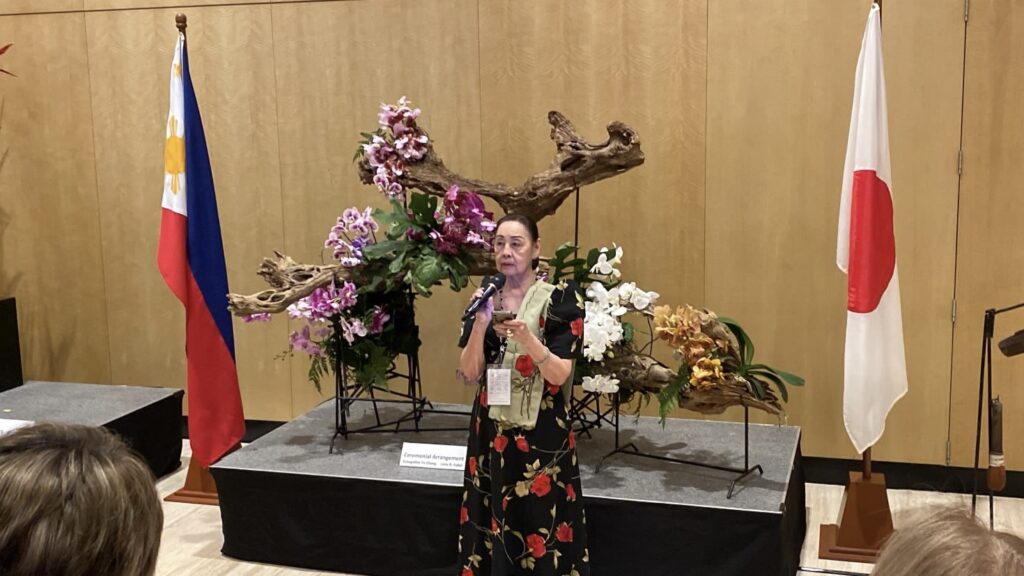
The sentiment speaks to what brings practitioners together, but their arrangements also show that a shared interest does not require everyone to create in the same way.
One artist may begin with a line, another with a color. One may be drawn to orchids, while another finds potential in an ordinary flower or an old branch. Their choices differ, but each requires attention to the materials and to the relationships formed within the composition.
Ikebana asks its practitioners to look closely at what nature offers: the direction of a branch, the shape of a leaf, the color of a flower, and the space that allows each element to stand out. It also asks them to make choices about what to include, what to leave out, and how the parts should relate to one another.
For the Filipino artists practicing ikebana, those choices offer a way to engage with a Japanese art form while bringing their own perspectives into it.
The flowers may eventually wilt, and the branches may lose their leaves. What remains is the arrangement as a record of deliberate decisions, shaped by both the principles of the art and the person who practiced it.
Hjadoeya Calica
Hjadoeya Calica is a cinephile, reader, and a content writer for Philippines Graphic whose roots trace back to La Union and Aurora. She studied AB Literature at the University of Santo Tomas where she served as the Literary Editor for The Flame. Currently based at the heart of Makati, she finds inspiration in stories of every kind, spaces, and places.