The Philippines continues to face a pressing challenge in providing sustainable employment. According to the Philippine Statistics Authority, the unemployment rate, released on November 6, 2025, was recorded at 3.8 percent in September 2025, slightly higher than the 3.7 percent rate in the same month last year. This translates to 1.96 million unemployed Filipinos, highlighting the ongoing need for initiatives that generate meaningful livelihoods while promoting social and environmental impact.
Filipino innovator Ms. Julienne Stephanie Fabie-Agapin, who earned her degree in Chemistry from the University of the Philippines Visayas, is addressing this challenge through Unas Canvas (UnVas), an eco-friendly canvas and lifestyle material made from dried banana leaves. UnVas originated not in a laboratory, but from a real-world challenge.
In 2021, Ms. Agapin, an associate professor at Western Mindanao State University (WMSU) – Pagadian was approached by Mr. Jimmy Sorabia, chairperson of a cooperative for displaced OFWs. He sought support from the Department of Science and Technology and was referred to Ms. Fabie-Agapin, who was leading a DOST-funded project on bioplastics made from agricultural waste while also collaborating with persons deprived of liberty (PDLs) on handmade paper-making for livelihood.
Mr. Sorabia challenged her to create a marketable product using dried banana leaves, an abundant agricultural waste often burned or left to rot, releasing harmful chemicals. Recognizing its potential for both environmental and social impact, Fabie-Agapin partnered with Sorabia and began experimenting with the material, eventually creating UnVas, a durable, paper-like sheet that could be transformed into home goods, accessories, and wearables.
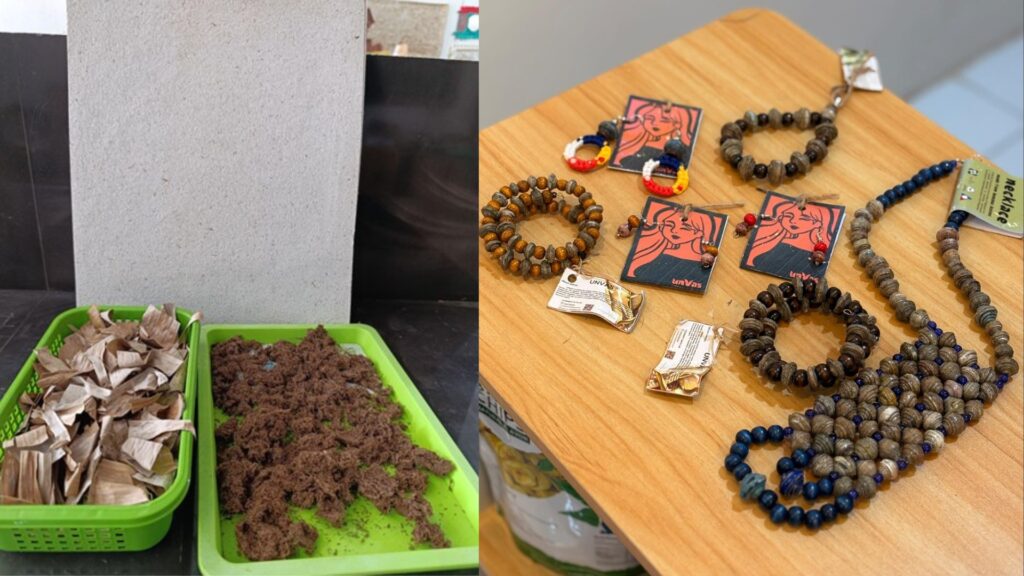
“The unas or dried banana leaves,the usual thing that they do there is to burn it or they are allowing it to degrade on their own, thereby releasing harmful chemicals in the process. So, with our initiative, instead of burning our dried banana leaves, we were able to convert it or to upcycle it into a material that becomes a source of income for our partner communities,” Fabie-Agapin shared. UnVas empowers partner communities to produce sustainable products such as accessories, home goods, and wearables.
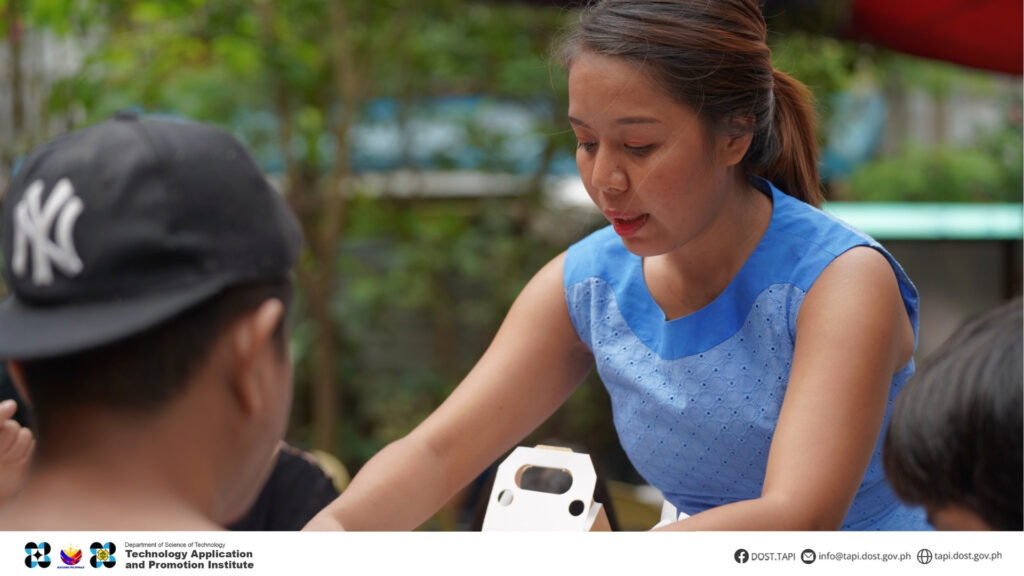
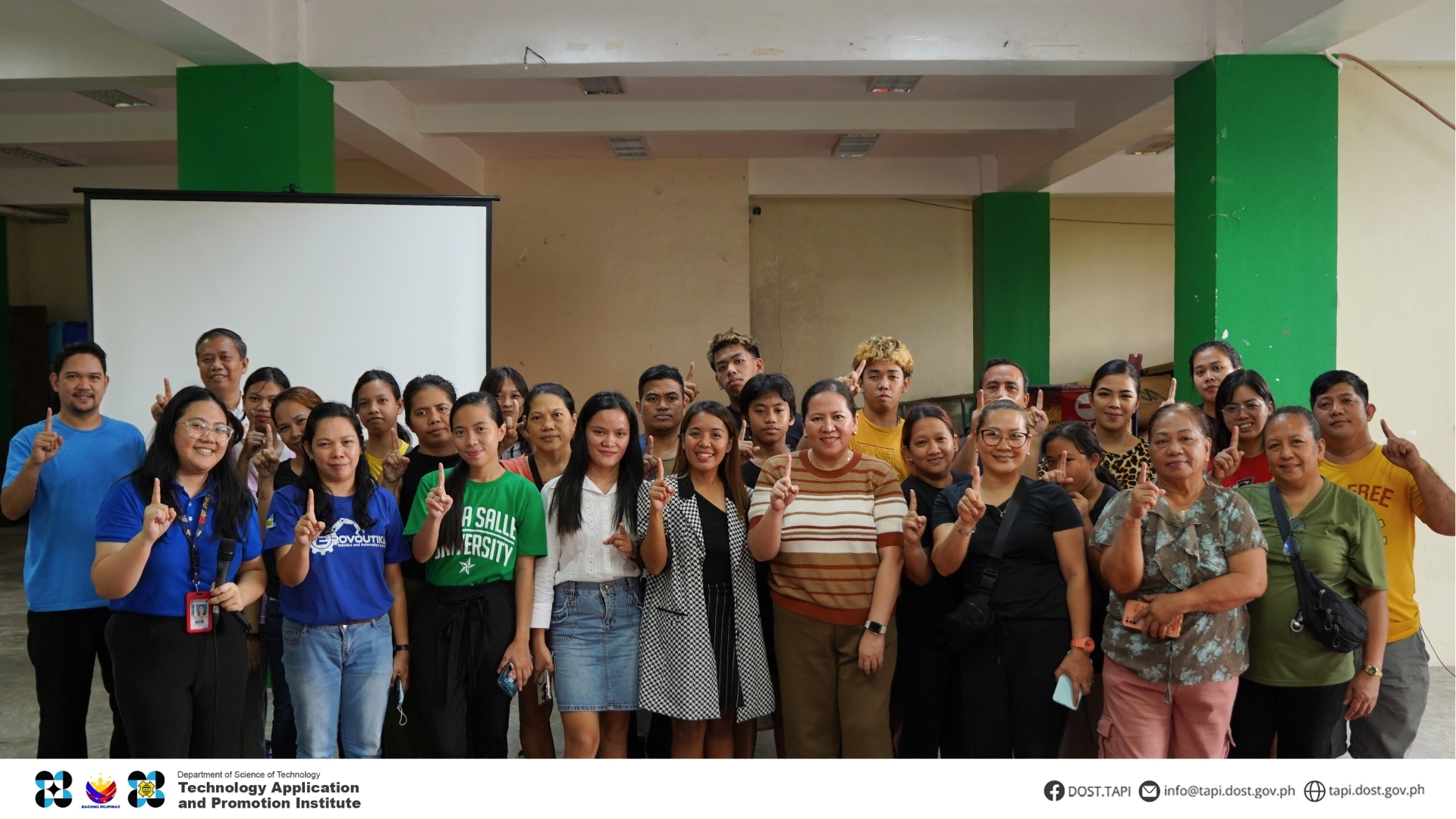
During the recent UnVas Community-Based Production Training at the Gumamela Neighborhood Association Housing Cooperative (GNAHC) last November 15-16, 2025, Ms. Julienne witnessed firsthand how her invention opens doors. Seniors like Nanay Gloria described the training as “a livelihood we can proudly call our own, maganda ang quality at gawang Pilipino.”
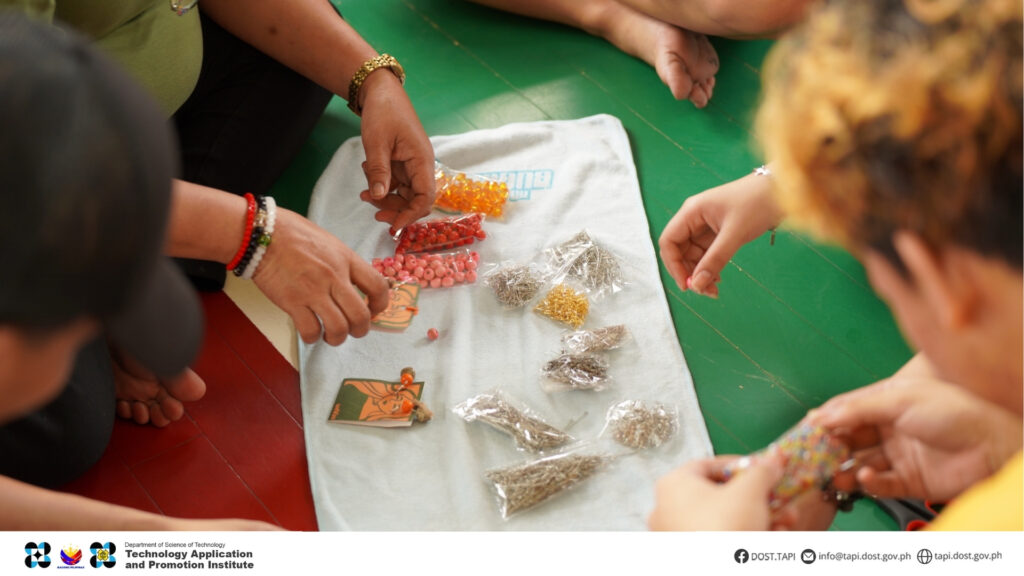
Through DOST-TAPI’s Grants and Assistance to Leverage Innovations for National Growth(GALING) Program , Ms. Agapin was able to upscale the Technology Readiness Level (TRL) of her invention and conduct initial market validation. The program provided a holistic package of assistance for pre-commercialization, ensuring that UnVas could meet technical standards and demonstrate market viability. This support laid the groundwork for potential community partners to engage in consistent production and workforce development.
Agapin’s invention competed on the global stage with the support of DOST-TAPI’s Science and Technology Promotion for International Contest and Exhibits (SPICE) Program, winning a Silver Award at the 2024 Korea International Women’s Invention Exhibition (KIWIE). She was also part of Cohort 3 of DOST-TAPI’s Honing Innovations, Research, Agreements, and Negotiations of Government-Funded Technologies (HIRANG) 2.0, a program that provides consultancy, capacity-building, and financial support to enhance the investment readiness of spin-offs and startups based on DOST-generated and funded technologies.
Know more about her innovation journey here: unVas: Painting a sustainable future with banana leaves canvases
Started in 1927, the Philippines Graphic is the longest-running printed magazine of national circulation that provides relevant news and features and promotes Philippine literature.
, an eco-friendly canvas and lifestyle material made from dried banana leaves. UnVas originated not in a laboratory, but from a real-world challenge.)