
The sculptors behind Eternal Gardens’ religious arts
The sacred story of Eternal Gardens is etched not only in its serene landscapes, but also in the very stone and bronze that give form to faith.
February, a month dedicated to the celebration of artistic excellence, holds even deeper resonance as the nation observes National Arts Month.
Eternal Gardens celebrates its golden anniversary this year. We turn our gaze from the monuments to the artists who breathed life into them; the sculptors whose hands and hearts have built a sanctuary of sacred art.
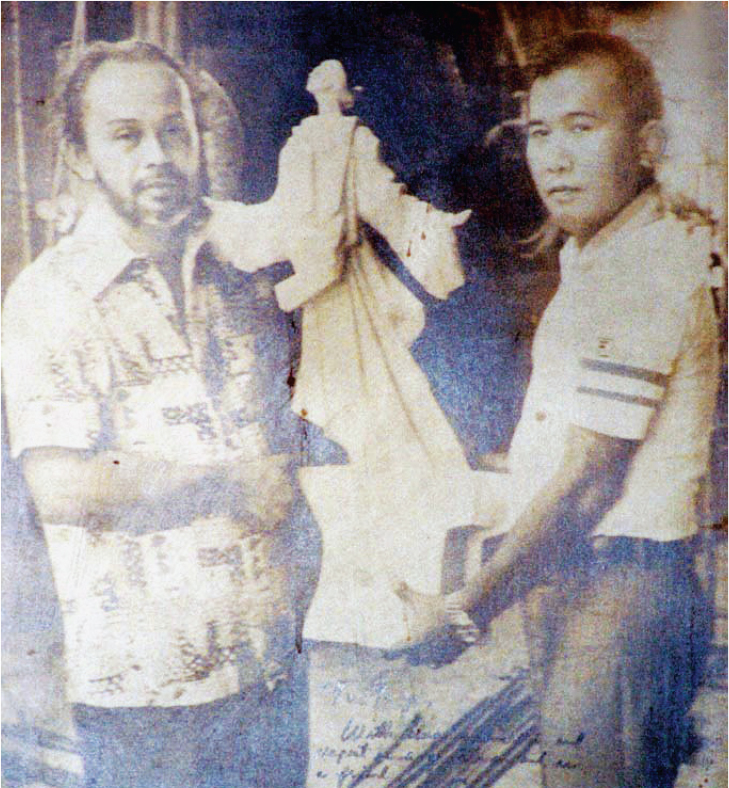
This narrative was born from a singular vision. When the late founder, Ambassador Antonio L. Cabangon Chua, first envisioned Eternal Gardens, he sought far more than a resting place.
“Amba” dreamed of a sacred memorial park rooted in faith; a haven where hearts could heal, memories could be honored, and souls could find peace in quiet reflection.
He desired to create a sanctuary where love endures, the spirit uplifted, and eternal love blooms. He believed that art was the most profound conduit for this spiritual journey.
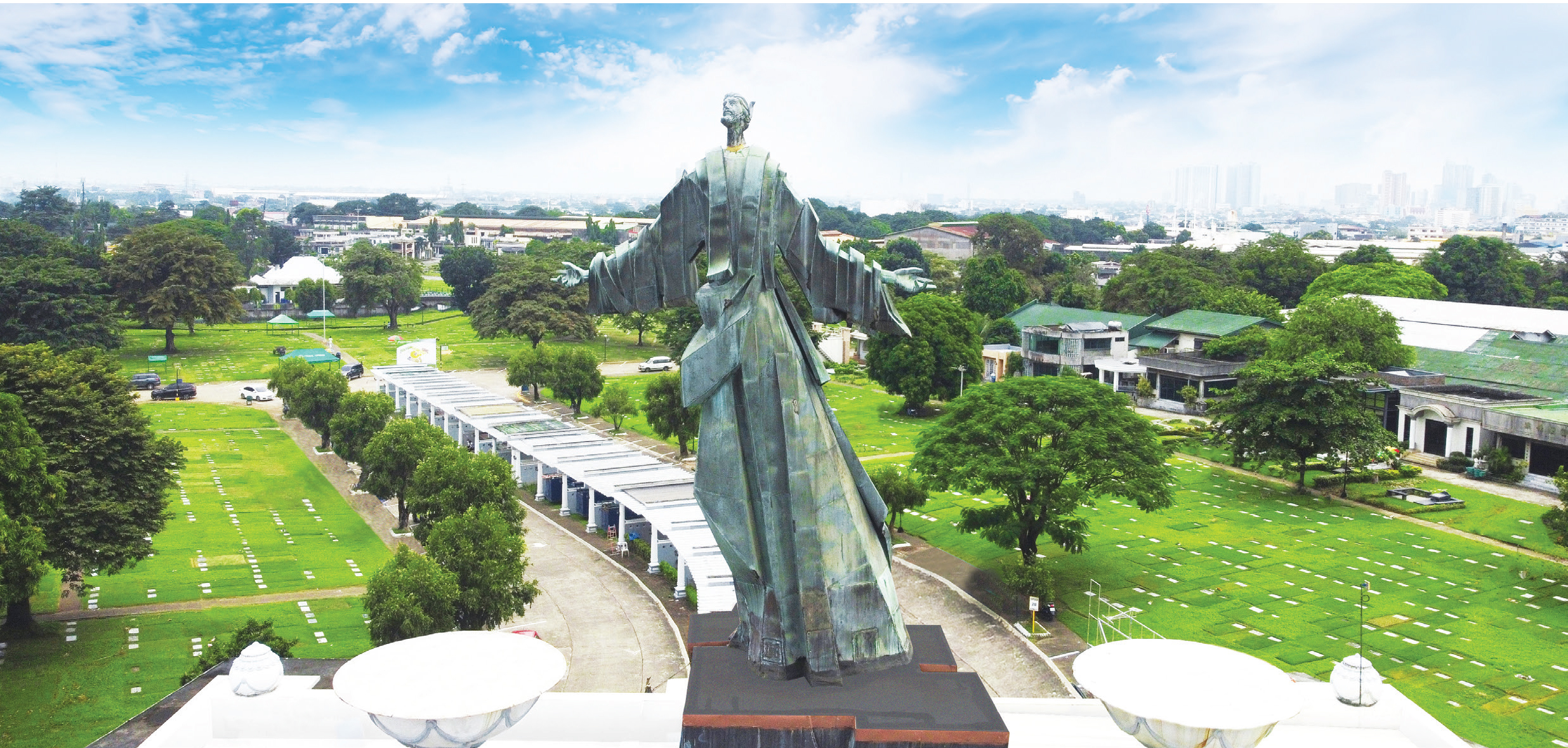
Eternal Gardens’ mission blends local devotion with deep reverence, expressed through sacred icons such as the majestic Transfiguration of Jesus Christ, reflecting its commitment to excellence and service.
This devotion extends to honoring each city’s patron saint—with dedicated plazas in every location—that creates a meaningful bond between the memorial park and the community it serves.
Eternal Gardens’ commitment to preserving and promoting the rich tradition of religious art is vividly realized in the masterpieces created by a select group of sculptors.
As we explore the grounds of Eternal Gardens, we are not simply walking through a park but moving through a gallery of faith crafted by the nation’s finest artists.
Their stories, etched in marble and memory, unfold here.
NAPOLEON ABUEVA
Father of Modern Philippine Sculpture
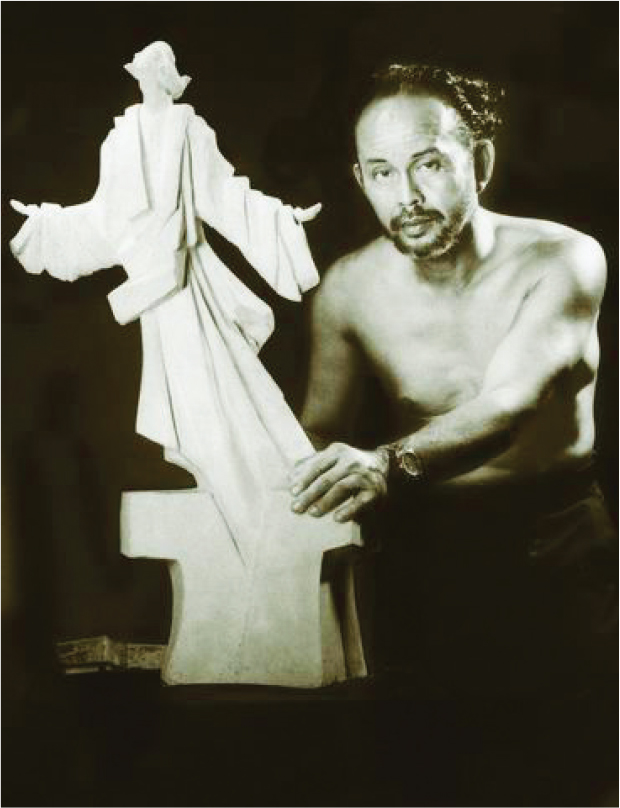
No narrative of Philippine sculpture is complete without the name Dean Napoleon “Billy” Abueva. Abueva was not only the country’s foremost modern sculptor but also its most visionary, widely acknowledged as the “Father of Modern Philippine Sculpture.”
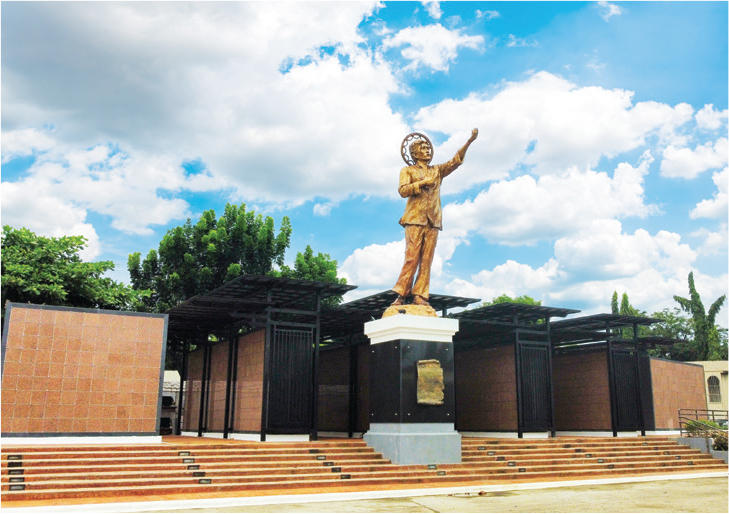
Abueva masterfully crafted the imposing figure, The Transfiguration of Jesus Christ, which depicts Christ gazing toward the heavens with arms outstretched.
The statue was born from the inspired vision of Eternal Gardens founder Ambassador Antonio L. Cabangon Chua, who, upon establishing the first Eternal Gardens in Baesa, Caloocan in 1976, wanted a monument of Christ to distinguish his park from others. He was equally wise in selecting Dean Abueva to design and execute the work.
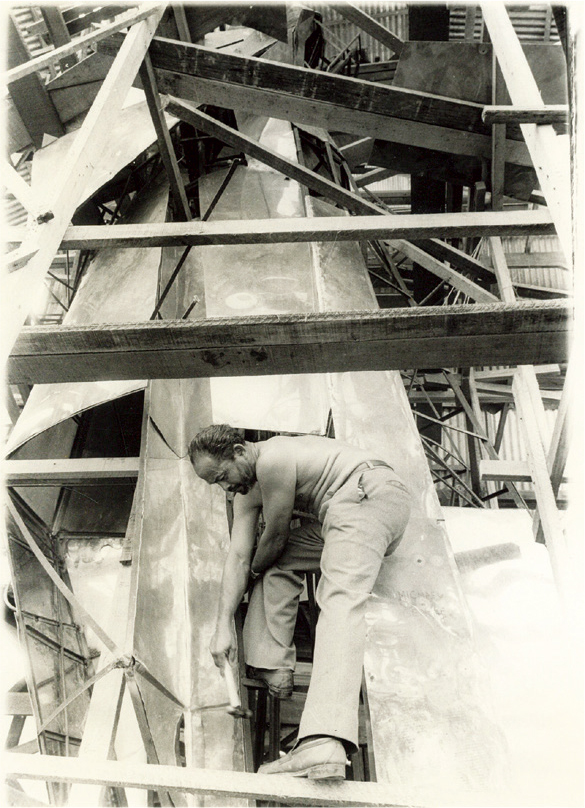
The National Artist was a man of profound faith, his soul deeply rooted in devotion. His beloved wife, Dr. Cherry, often recounted a testament to this commitment: even while engaged in prestigious commissions, if a humble parish or a fledgling Catholic group requested a new sculpture, Dean Abueva would gently set aside his worldly projects. Without hesitation, he would answer that higher call, pouring his soul intocreating a piece not for a gallery, but for a congregation; not for acclaim, but for grace.
Standing 33 feet tall to symbolize the years the Son of Man lived on earth, The Transfiguration of Jesus Christ rests on a 12-foot pedestal representing Jesus’ twelve apostles.
This is not merely a depiction of a biblical event but a masterful capture of a moment of divine revelation.
Abueva’s legacy, however, is not confined to a single masterpiece. His masterful touch can be seen across several Eternal Gardens parks. In addition to the first Transfiguration statue in Baesa, Caloocan City, there are also Transfiguration statues in Cabanatuan City, Nueva Ecija and in Santa Rosa City, Laguna.
Each piece bears his distinct artistic signature—a powerful blend of technical precision and profound emotional depth. Napoleon Abueva laid the foundation, setting the standard of excellence and spiritual resonance that continues to guide all who follow.
FLORANTE “BOY” CAEDO
Immortalizing the nation’s first saint
The artistic dialogue within Eternal Gardens is enriched by masters of Philippine sculpture, each interpreting sacred themes through a distinct creative lens, yet all united by faith.
Among them is Florante “Boy” Caedo, a sculptor whose classical sensibility gave timeless form to holy subjects.
Caedo was entrusted to immortalize the nation’s first saint. His most powerful contribution is the iconic image of San Lorenzo Ruiz in Eternal Gardens, an image born not merely of skill, but of a profound spiritual calling shared with Ambassador Antonio L. Cabangon Chua.
In 1981, the Ambassador witnessed the beatification of San Lorenzo Ruiz in Manila. In the martyr’s story, he saw the essence of the Filipino soul: steadfast in faith, resilient in suffering, and capable of ultimate sacrifice.
Moved by this encounter and by a sacred charge from the late Jaime Cardinal Sin to help spread devotion to the newly blessed, the Ambassador recognized a painful absence. There was no statue of the first Filipino saint. Determined to give form to faith, he turned to Florante “Boy” Caedo.
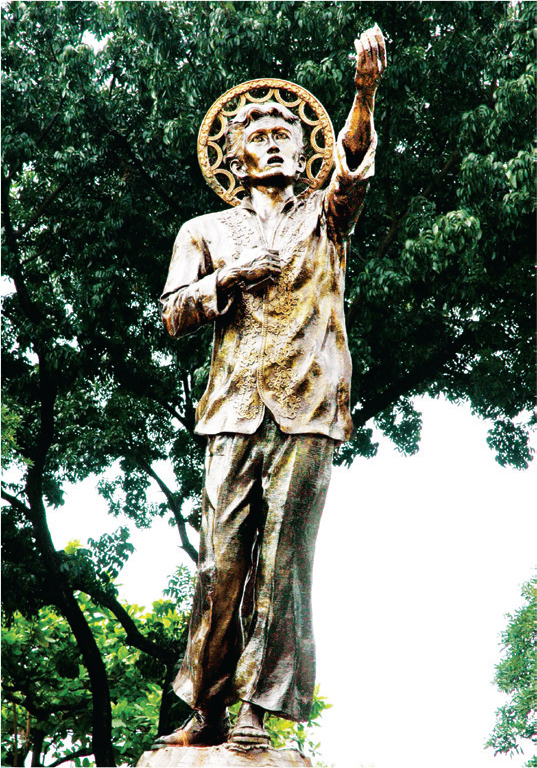
From their collaboration emerged the first Eternal Gardens statue of San Lorenzo Ruiz, unveiled on September 26, 1981, at Eternal Gardens Baesa.
More than a work of art, it was a gift of faith offered by the Ambassador to the Filipino people. Today, San Lorenzo statues are enshrined in multiple Eternal Gardens parks, each one a silent sentinel of Filipino martyrdom and courage.
Ambassador Antonio L. Cabangon Chua also commissioned smaller replicas of the statue to be gifted to churches and communities nationwide, each carrying faith and the stories meant to be shared.
In 2023, one of the three-foot bronze statues—originally presented by the Ambassador to Cardinal Sin and later entrusted to the Blessed Lorenzo Ruiz Movement in the United States—was permanently installed at St. Patrick’s Cathedral in New York, marking a proud moment for Filipino Catholics.
Caedo’s sacred artistry extends beyond San Lorenzo Ruiz. At Eternal Gardens–Baesa and Eternal Gardens–Balagtas, he created the Brown Madonna (Kayumangging Ina), a distinctly Filipino portrayal of the Virgin Mary that radiates maternal tenderness and quiet compassion.
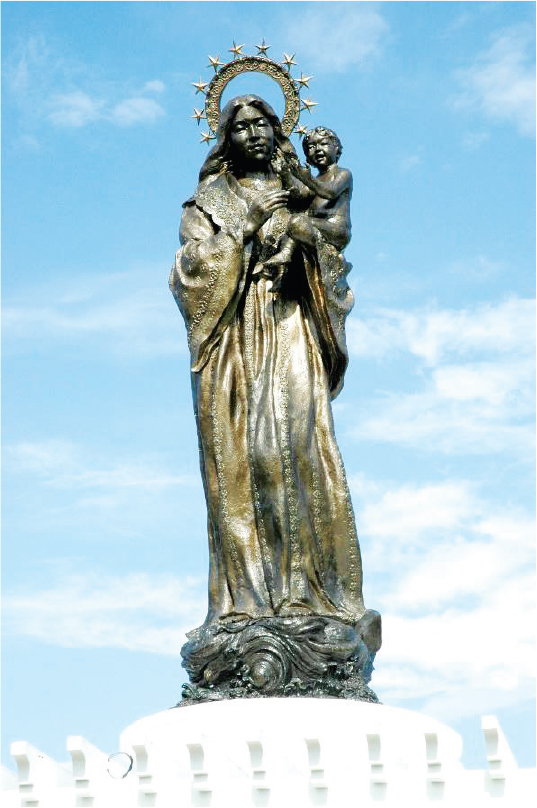
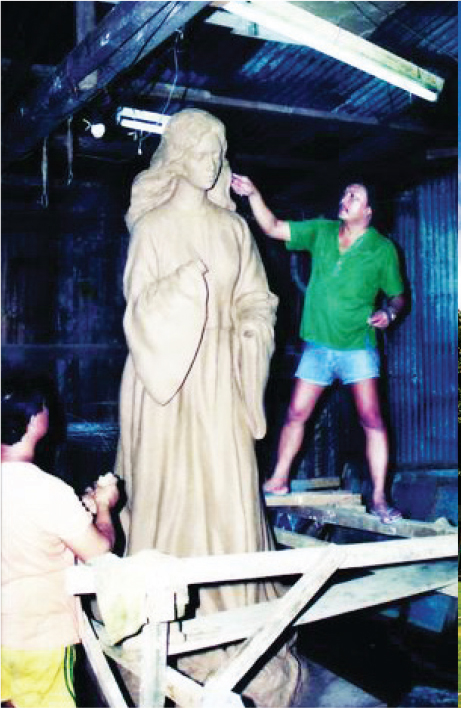
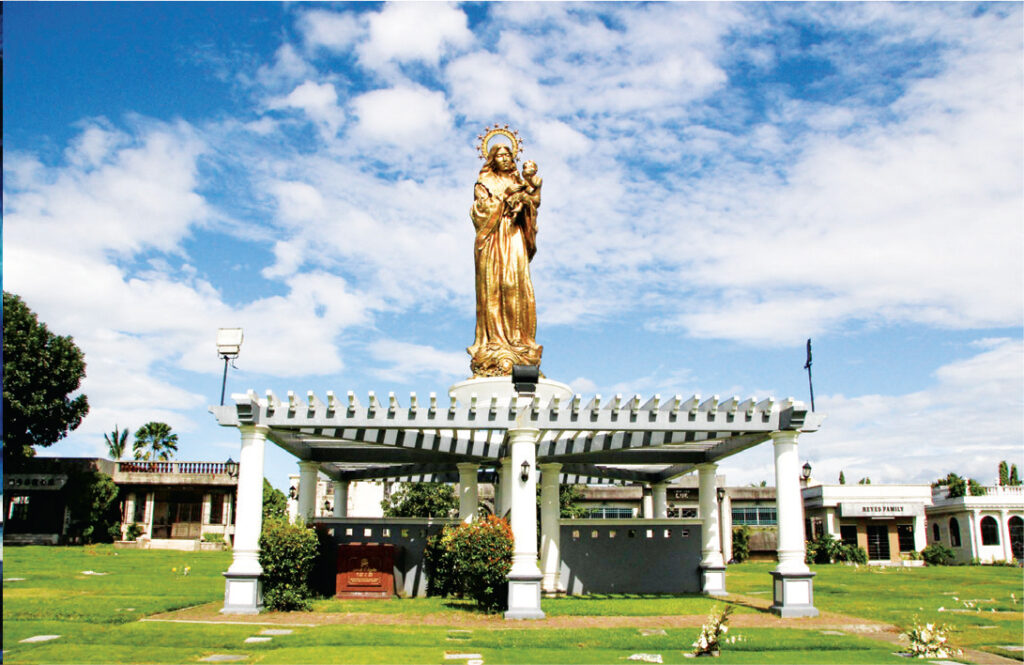
Statue of Brown Madonna Eternal Gardens-Baesa/ Florante “Boy” Caedo, The Maestro of Solitude, finishing the Brown Madonna
A small-scale model of the Brown Madonna was presented by Eternal Gardens founder Ambassador Antonio L. Cabangon Chua to Pope John Paul II during a special audience at the Vatican on June 12, 1985.
The legacy of Florante “Boy” Caedo lives on not only through these enduring works but through his son, Frederic Caedo, who continues his father’s tradition. By sculpting smaller versions of the San Lorenzo Ruiz statue for several Eternal Gardens parks, he ensures that both faith and artistry are passed on from one generation to the next.
Together, the works of Florante “Boy” Caedo stand as a testament to the power of art to shape national identity, give form to belief, and deepen the spiritual life of a people.
AMADO CASTRILLO
Teacher and patriarch
Amado Castrillo, the master artisan behind the Transfiguration statues in Biñan, Balagtas, Lipa, and Naga, expanded the scope of sacred sculpture in Eternal Gardens, filling its spaces with a breathtaking gallery of devotional figures.
Castrillo was not just a sculptor; he was a teacher and a patriarch. His greatest testament to the enduring power of art is not in stone, but in the lives of his sons: Jonnel, Sandro, and Ronald Castrillo.
Their father’s workshop was their university. His chisel their textbook. As devoted apprentices, they worked alongside him, learning the alchemy of transforming raw material into vessels of faith. His influence was the springboard for their own artistic journeys, creating a rare and beautiful regime of sculptors.
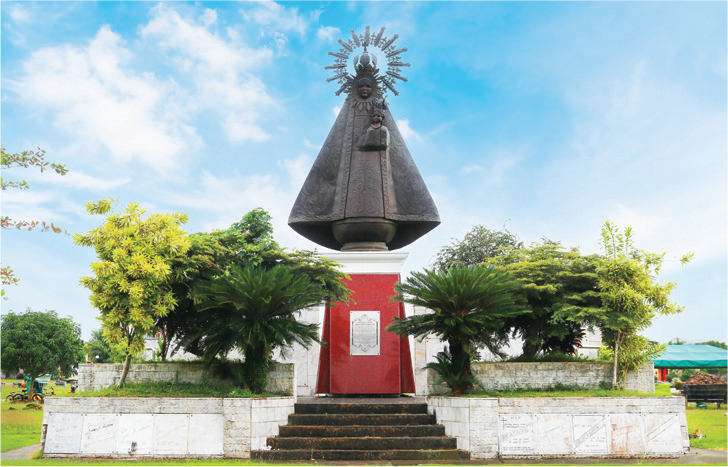
His works are as diverse as they are beautiful. In Naga City, his artistry is fully expressed in the magnificent Our Lady of Peñafrancia, forming a sacred precinct devoted to the city’s cherished devotions.
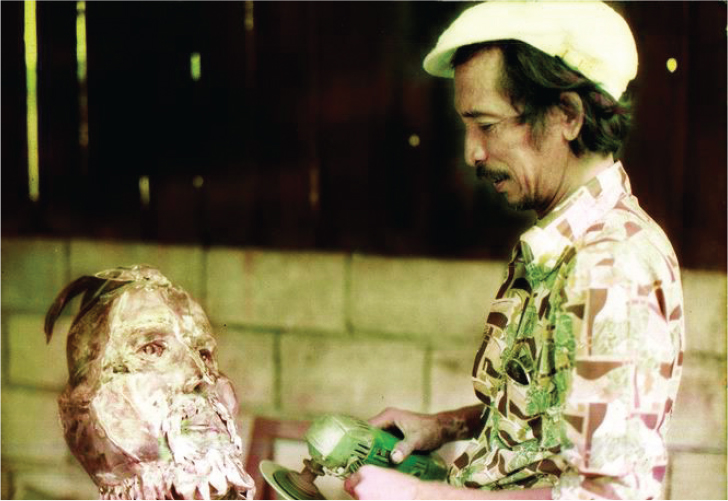
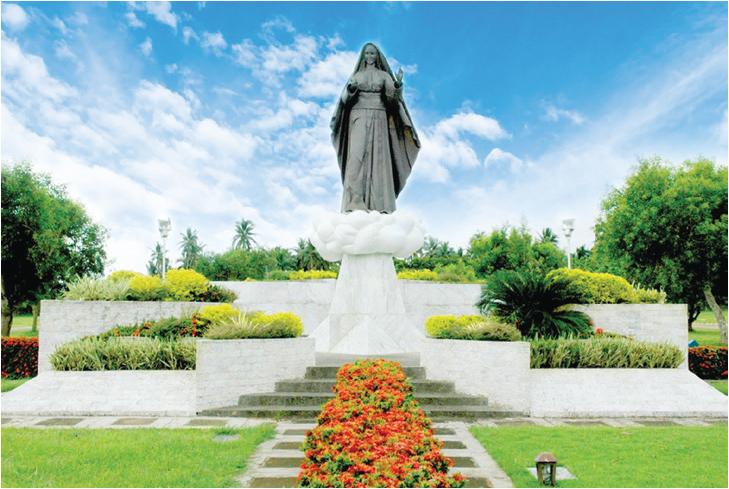
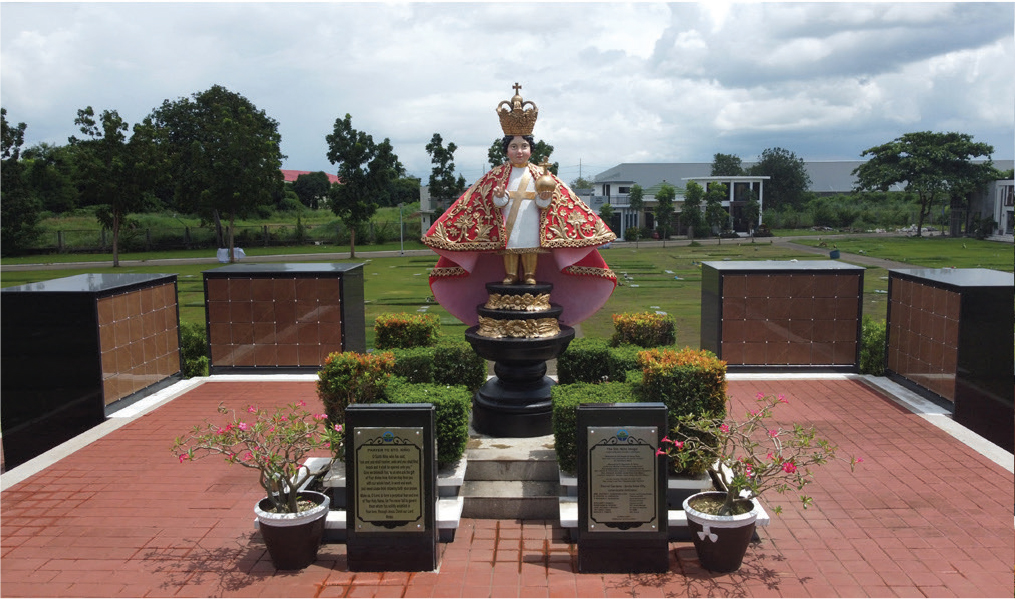
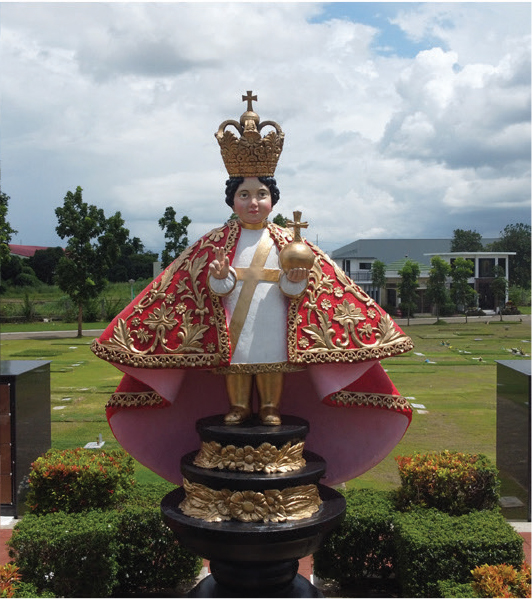
In Lipa City, his statues of Sto. Niño, San Lorenzo Ruiz, and Mary Mediatrix stand as powerful symbols of intercession, while in Balagtas, his Sto. Niño and San Lorenzo Ruiz sculptures testify to his remarkable versatility.
Other notable works of Amado Castrillo include Eternal Crematory’s icon, Pagtitiis, which poignantly captures Mary cradling the lifeless Christ—a timeless image of grief and hope—and the Eternal Chapels icon, Dalamhati, depicting Mary embracing the crucified Christ and serving as a profound symbol of solace. These masterpieces serve as the centerpiece religious icons of Eternal Crematory and Eternal Chapels, respectively.
RONALD, JONELL, AND SANDRO CASTRILLO
A Legacy of Devotion
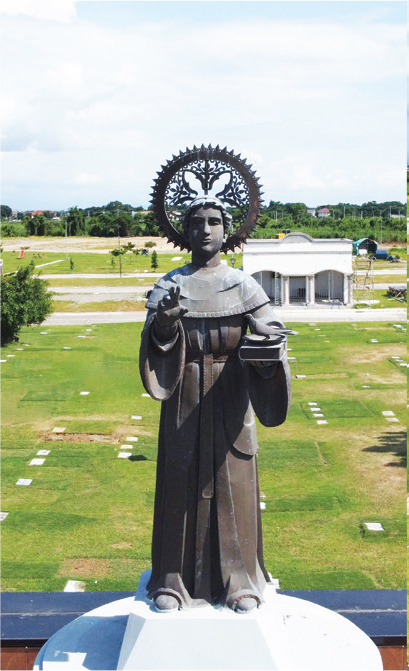
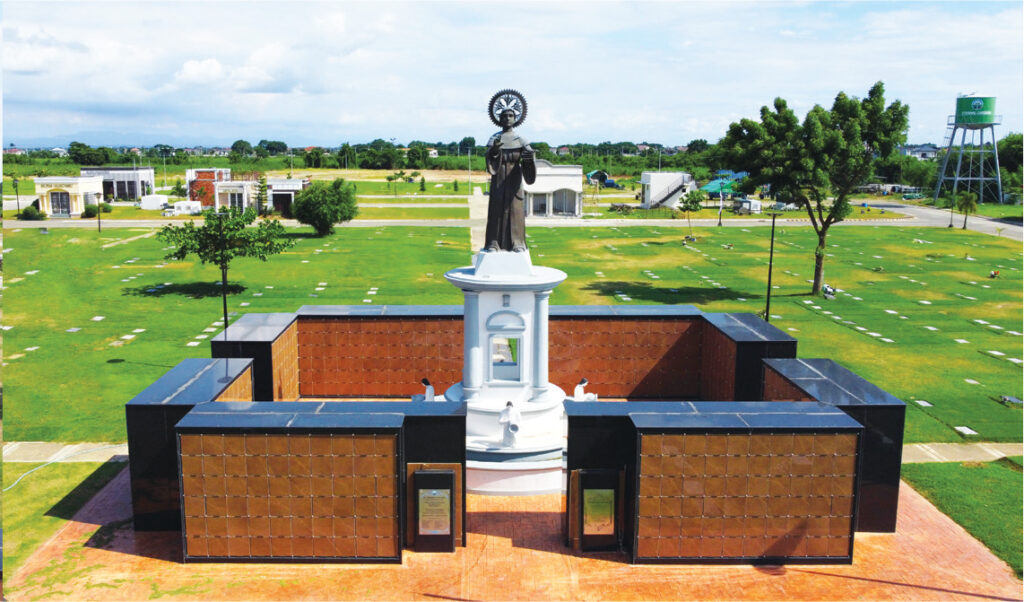
Ronald, Jonell, and Sandro Castrillo’s statue of St. Nicholas of Tolentino—Eternal Gardens- Cabanatuan
The legacy of an artist is not merely inherited; it is lived, honed, and passed on. The torch of artistry belonging to Amado Castrillo is vibrantly alive in the hands of his sons: Ronald, Jonell, and Sandro Castrillo.
When visitors stand before the majestic Sto. Niño at Eternal Gardens-Cabanatuan, or the solemn St. Nicholas of Tolentino in the same park, they are not just seeing statues. They are witnessing a legacy.
Ronald, Jonell, and Sandro grew up in the shadow of their father’s workshop, carrying forward his artistic legacy and proving that devotion and artistry can indeed be a family vocation.
Together, the Castrillo brothers sculpted the majestic Transfiguration of Jesus Christ in Eternal Gardens- Concepcion, while Jonell and Ronald collaborated again on the San Lorenzo Ruiz statue in Naga Park. Ronald also sculpted the Sto. Niño in Naga, showcasing his individual talent. They are not merely continuing a name—they are perpetuating a tradition of excellence and devotion.
CONRADO F. BALUBAYAN
A steadfast and quiet devotion
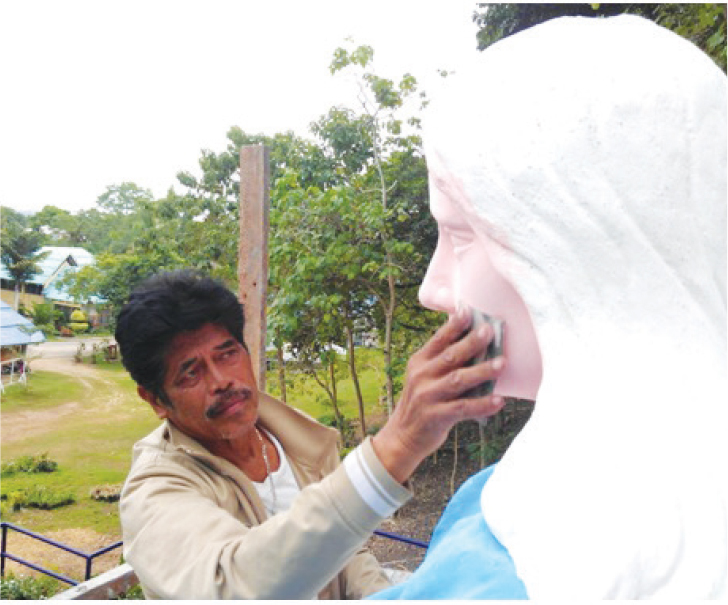
The patriarch, Conrado F. Balubayan, is synonymous with monumental religious art. His works are distinguished by their imposing scale and their ability to evoke a sense of awe and reverence.
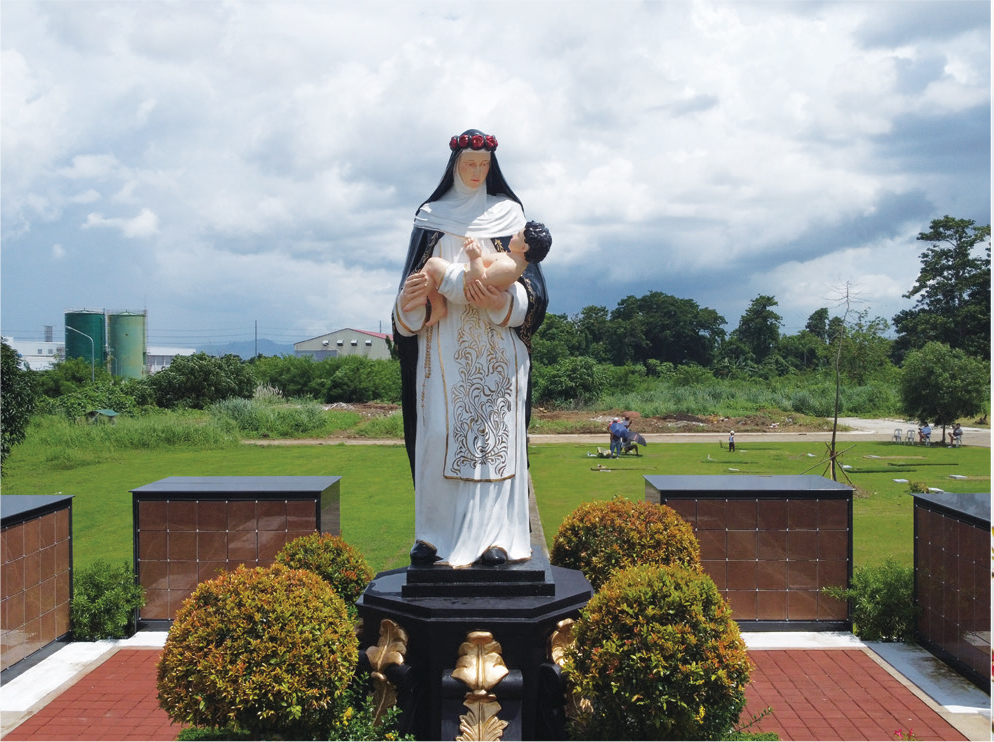
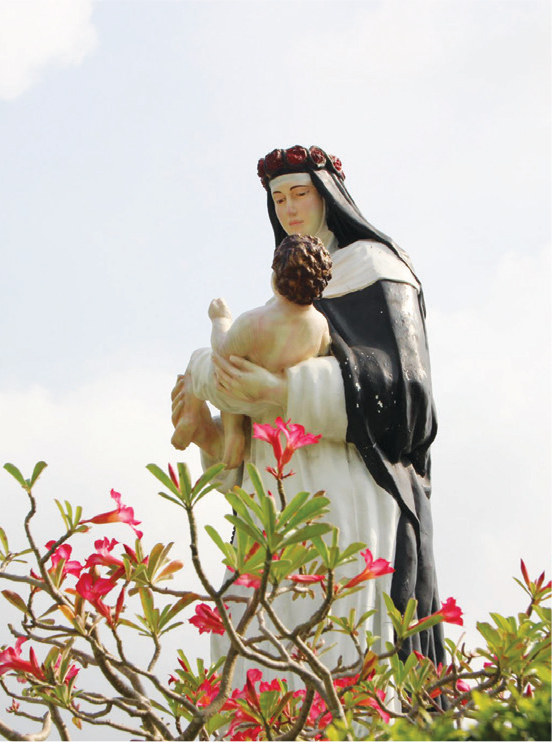
Conrado F. Balubayan’s statue of Sta. Rosa de Lima—Eternal Gardens-Sta Rosa, Laguna
Balubayan spent his life shaping saints and holy figures from cement with a master’s touch. He is a legacy of steadfastness, of a quiet devotion to his craft that has enriched Eternal Gardens from the northern reaches of Luzon to the bustling south.
His works on the Transfiguration of Jesus Christ at Eternal Gardens parks in Cagayan de Oro and in Cabuyao City, Laguna are particularly remarkable, reflecting an artistic evolution from its original bronze form to its current cement state—a testament to the enduring power of art.
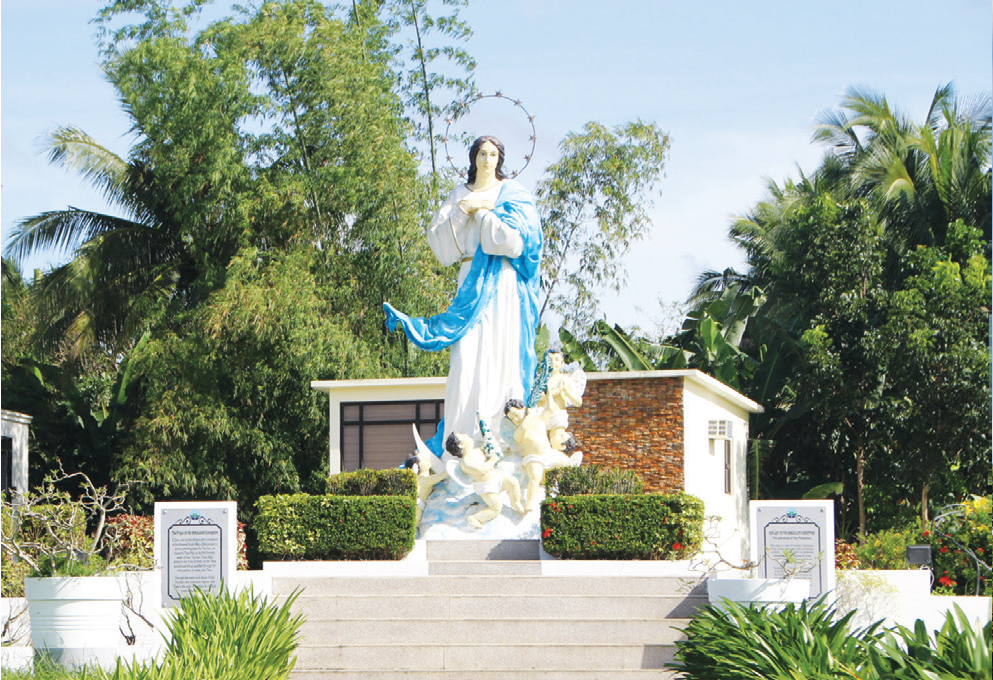
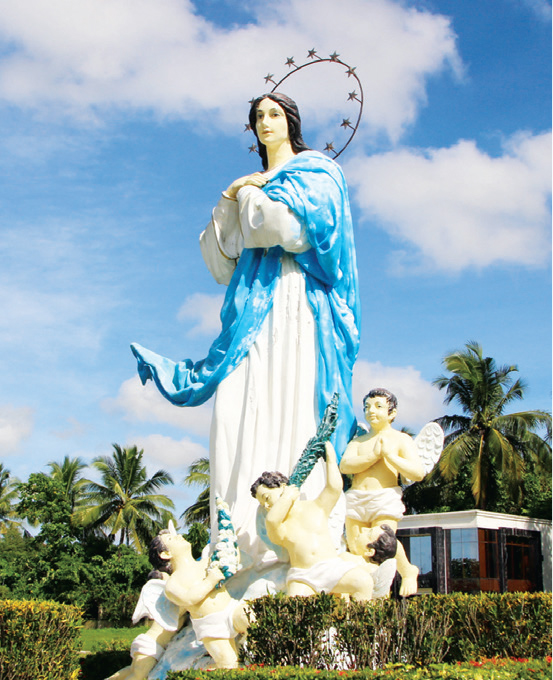
Conrado F. Balubayan’s statue of the Our Lady of the Immaculate Conception—Eternal Gardens-Concepcion, Batangas City and Eternal Gardens-Cagayan de Oro City
Beyond this centerpiece, his portfolio includes other significant works, such as a serene Immaculate Conception at Cagayan de Oro and Concepcion parks, as well as the Sto. Niño and Sta. Rosa de Lima statues in Sta. Rosa, showcasing the breadth and spiritual depth of his artistry.
Conrado F. Balubayan’s statue of the Our Lady of the Immaculate Conception—Eternal Gardens-Concepcion, Batangas City and Eternal Gardens-Cagayan de Oro City
Like the great Castrillo, Balubayan’s legacy is also familial. His son, Napoleon Balubayan, has been entrusted with the next Transfiguration statue for Eternal Gardens’ park in Opol, Misamis.
JUBAIL BAUTISTA
Power of Faith
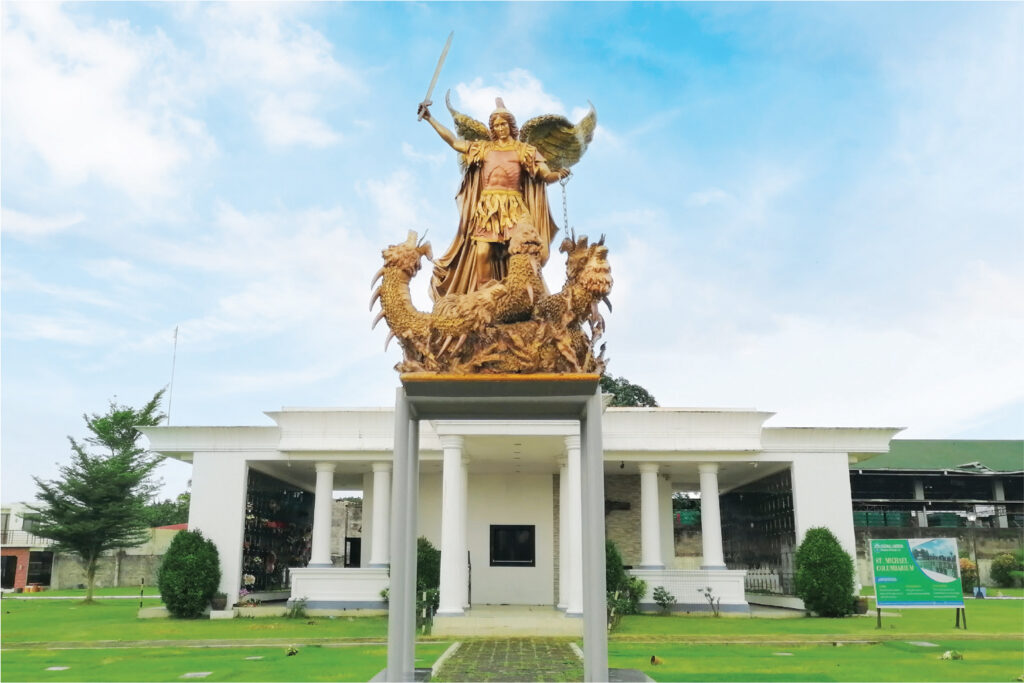
A gallery is only as alive as the artists it embraces, and Jubail Bautista stands as a sculptor of faith whose work resonates deeply across Eternal Gardens.
With a mastery of form and devotion to sacred themes, Bautista continues the tradition of religious art, bringing both skill and reverence to each creation.
In Cabuyao, his San Vicente Ferrer captures the saint in dynamic motion, reflecting the vitality of his life. In Balagtas, his St. Michael embodies celestial power with commanding grace, while in Dagupan, his St. John the Evangelist offers a quiet moment of contemplation, inviting reflection and devotion. Bautista’s work is a testament to the enduring power of faith expressed through art.
SANTUARY FOR THE ARTS
Eternal Gardens, through its visionary approach to memorial park development, has done more than create beautiful landscapes. Ihas built a sanctuary for the arts. It is a story of devotion, of sculptors who pour their faith, their skill, andtheir very souls into their work.
As it marks its 50th year, its statues stand as a testament to a unique and powerful partnership between commerce and culture, between memorial and art.
Continuing its devotion, under the leadership of Amb. ALC’s son, D. Edgard A. Cabangon, Chairman of Eternal Gardens, continues its sacred mission. With the same conviction, ensuring that the mission of creating sacred spaces where faith is immortalized in art enduresfor generations to come.
The statues that grace its parks are more than monuments to the departed. They are living, breathing galleries of Filipino faith and artistry, a sacred treasury created by the hands of masters.
Every statue, every curve of bronze, and every chiseled line tells a story of faith—not just of the saints they depict, but of the artists who,through their hands, brought heaven a little closer to earth.
Written by Jazalle Gianan. Published in the February 2026 issue of the Philippines Graphic.
Started in 1927, the Philippines Graphic is the longest-running printed magazine of national circulation that provides relevant news and features and promotes Philippine literature.