
This front office manager finds artistic inspiration in Baguio
When people think of art galleries, they often imagine spaces reserved for a select few—artists, collectors, critics, or those already familiar with the language of art. It is an assumption that can make exhibitions feel distant from everyday life.
Yet stepping into “Intimate Reflections,” the latest solo exhibition of Spencer Ozo at Conrad Manila, quickly challenges that notion.
By profession, Ozo is the Front Office Manager of Conrad Manila. Beyond the hotel lobby, however, he spends his days off painting, transforming memories, emotions, and lived experiences into vibrant canvases that make up his newest collection.
His exhibit reminds viewers that art does not emerge from extraordinary lives alone. More often, it grows from ordinary routines, personal sacrifices, and the places that continue to shape us long after we leave them.
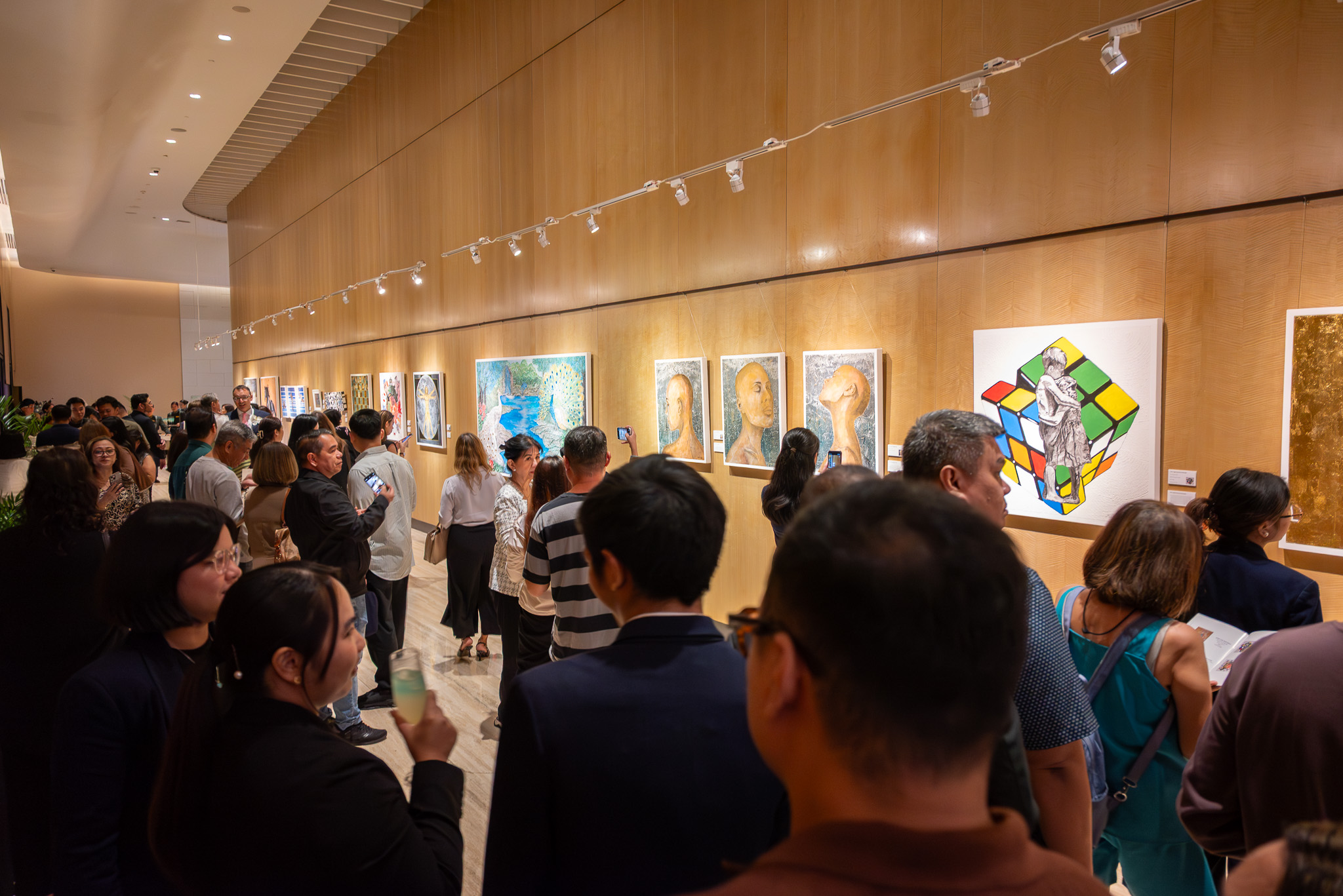
Opened on July 28 at Gallery C, Level 3 of Conrad Manila, Intimate Reflections will run until September, and is available for purchase. The exhibition serves as what Ozo describes as a visual diary, bringing together stories of joy, disappointment, longing, and contentment.
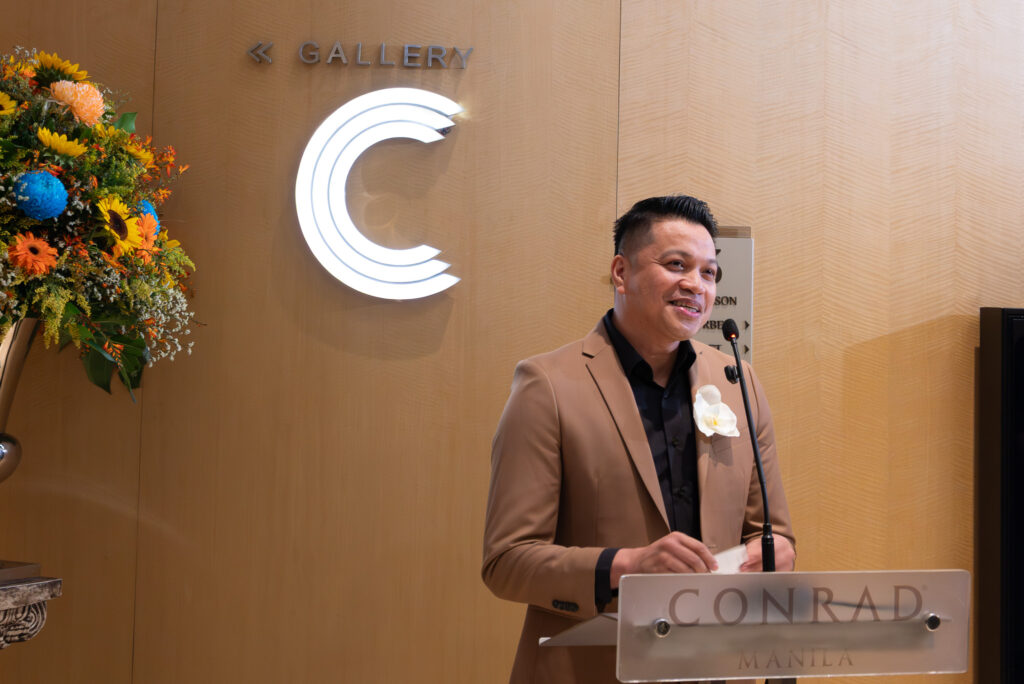
“The happy, the sad, the not so inspiring moments as well. It’s a mixture of everything.” Ozo told the Philippines Graphic.
The collection itself reflects that mixture. Abstract backgrounds meet human figures, geometric compositions intersect with delicate floral imagery, and recurring symbols of butterflies, animals, and gardens appear throughout the gallery. Rather than existing as separate themes, these elements coalesce into fragments of Ozo’s personal history.
CARRYING BAGUIO ONTO THE CANVAS
Although Ozo now works in Manila, much of his artistic language still begins in Baguio City.
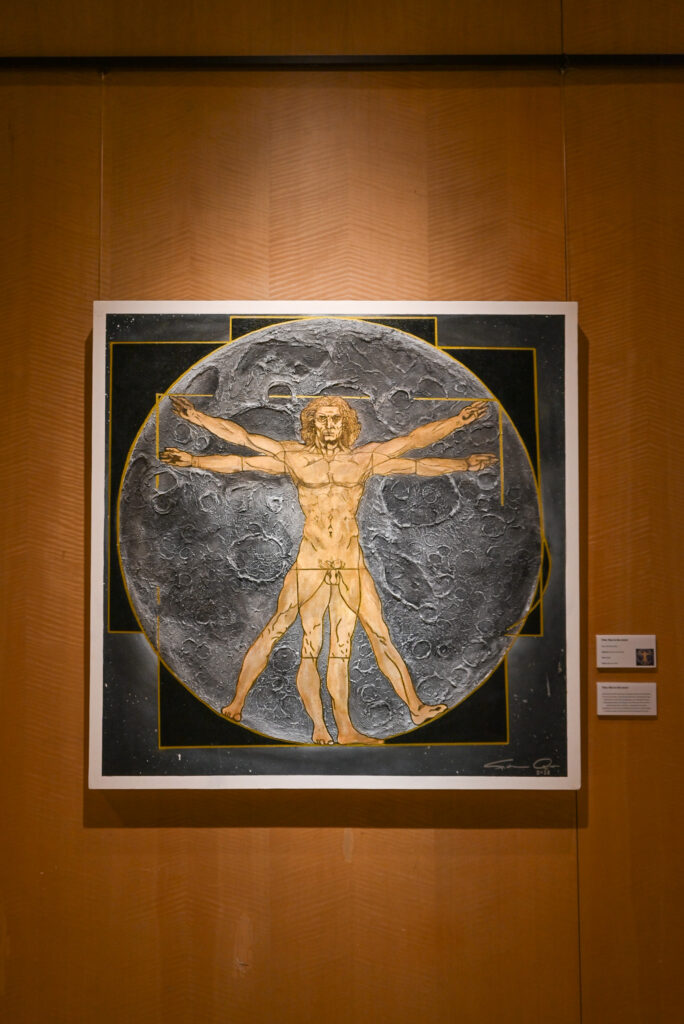
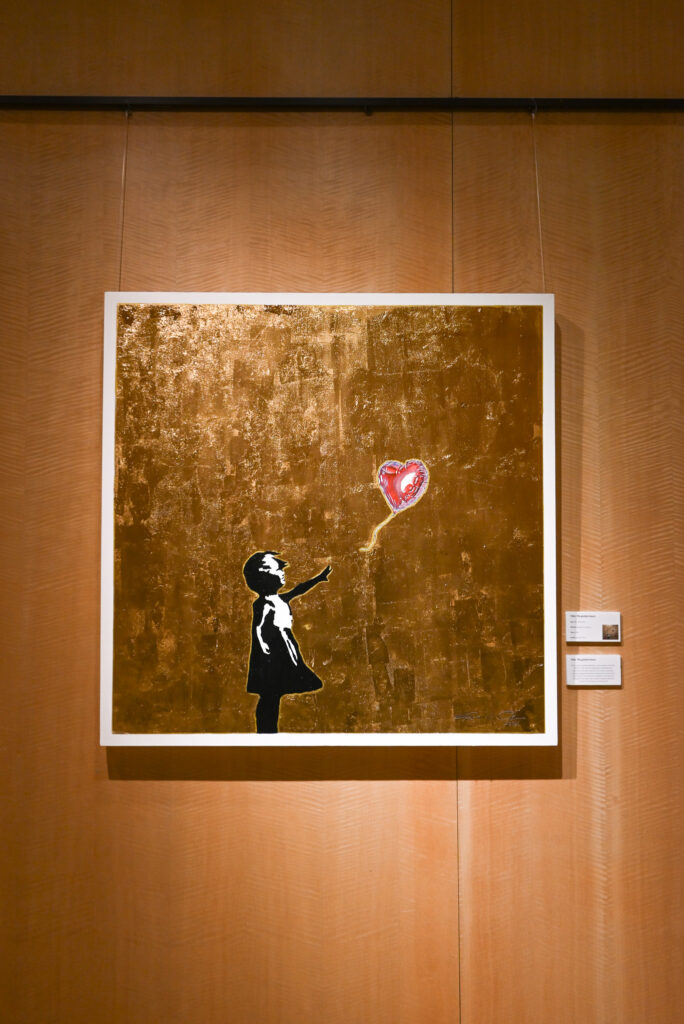
A self-taught artist born and raised in the Summer Capital, Ozo traces many of his visual influences back to his childhood. Leonardo da Vinci’s anatomical sketches fascinated him from an early age, while the urban interventions of Banksy later shaped his appreciation for contemporary street art. Both of these influences are visible in “Man in the Moon” and “The Golden Hour”.
Yet beneath these international influences lies a distinctly local foundation.
Growing up surrounded by parks, pine trees, and open green spaces left an imprint that continues to appear throughout his work.
“These finery, these animals; it’s because I grew up in Baguio. I’m used to having parks, playing around in parks. Here in Manila, you don’t have that much. I think I just miss the feeling when I was growing up in Baguio.”
That longing quietly permeates Intimate Reflections. Rather than painting literal landscapes, Ozo recreates the feeling of home through color palettes dominated by greens and reds, flourishing botanical forms, butterflies, and carefully layered natural imagery.
Among the figures who also shaped his artistic journey is National Artist Kidlat Tahimik, whom Ozo often saw growing up in Baguio.
“Baguio City is a big inspiration because, you know, our National Artist Kidlat Tahimik is from there. I grew up seeing him. I used to see all the artworks around Baguio. It’s a big influence to me, really. Even the color palette that I make, the greens, the reds, it’s always a representation of Baguio.”
Such imagery is actually visible in the largest piece in his collection, measuring 48 by 96 inches, situated at the center of the gallery exhibit, “In the Garden of Good and Evil.”
From what’s visible in his pieces, the city becomes more than a backdrop; it becomes an emotional landscape that quietly lives inside each painting.
MAKING ART BETWEEN WORKDAYS
Perhaps the most remarkable aspect of Intimate Reflections is not only the finished works themselves but how they came to exist.
Ozo spent six months completing the exhibition almost entirely during his days off from work. Balancing the demands of managing a luxury hotel’s front office with producing dozens of paintings required more than inspiration but discipline.
“You have to be purposeful with your time. If I set a schedule, I paint happy, sad, mad, hungry; I have to paint.”
The process demanded sacrifices beyond long hours.
“There’s a point that I had to disregard the doomscrolling. I had to deactivate my Instagram or TikTok just to have more time.”
His paintings, therefore, are not only records of emotion but also records of time deliberately carved out from an already demanding profession.
PAINTING PERSONAL HISTORIES
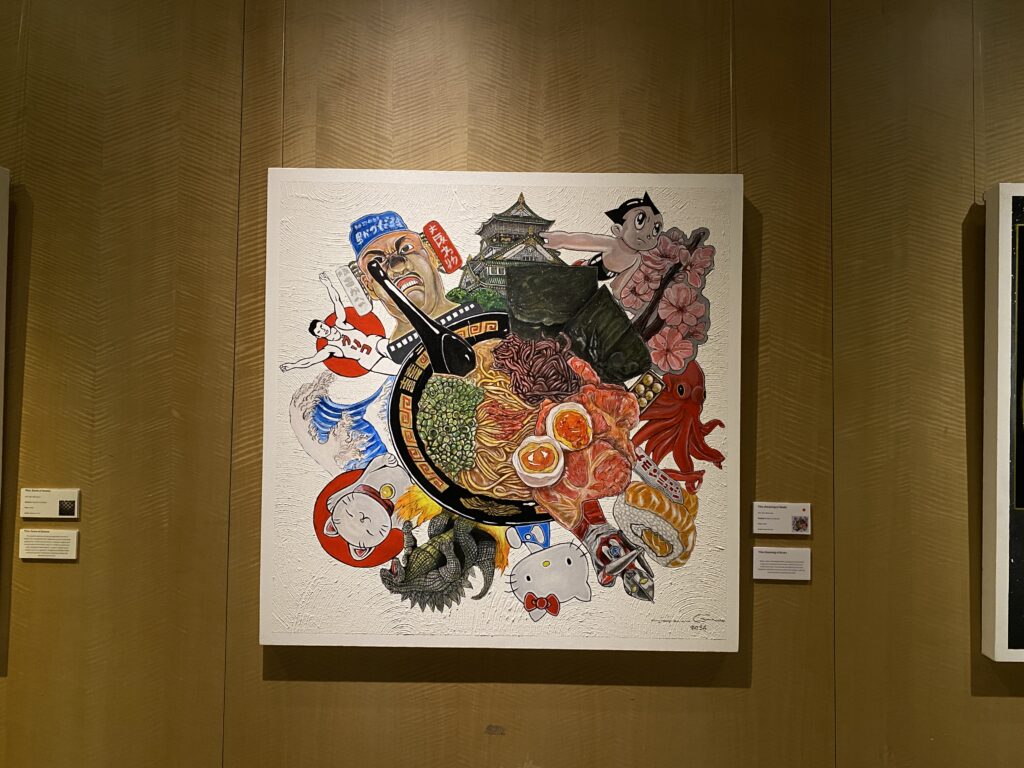
Among all the works in the exhibition, one painting holds particular significance for Ozo.
Dreaming of Osaka tells the story of a quieter kind of success—not wealth or prestige, but contentment.
He recalled that when he and his wife were younger, traveling abroad felt far beyond their means. Today, visiting Osaka has become one of the small luxuries they are able to enjoy together.
“For me, it’s a luxury. It’s something that I spend with the most important person in my life.”
The painting took nearly three months to complete, making it one of the most intricate works in the exhibition. Yet its emotional value outweighs the technical challenge. More than depicting a destination, it captures the feeling of finally reaching a chapter in life where simple experiences become meaningful rewards.
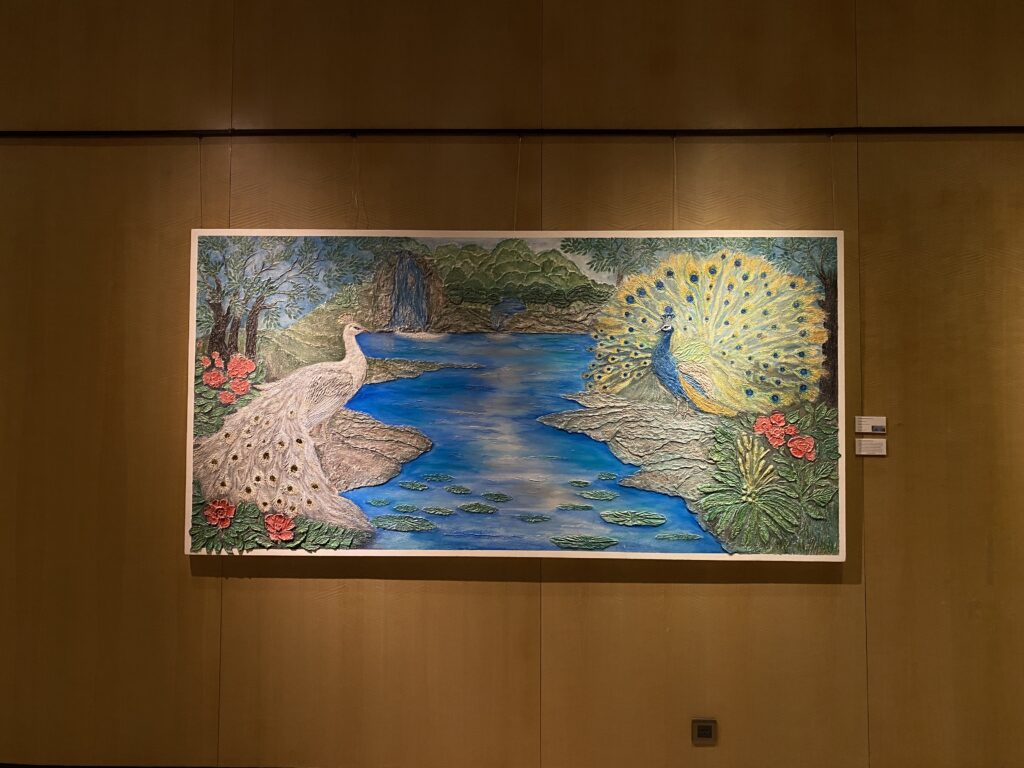
Other works similarly draw from deeply personal reflections. One triptych explores femininity beyond conventional standards of beauty, while another was inspired by a photograph of a grieving child embracing the silhouette of a deceased mother—a moment that profoundly moved the artist.
EVOKING EMOTION
For Ozo, technical mastery is never the ultimate goal. What matters most is the emotional response each painting leaves behind.
“I would want to evoke emotion.”
That philosophy ultimately explains why the exhibition bears its title. Every canvas in Intimate Reflections is less concerned with documenting events than preserving feelings, whether rooted in childhood memories of Baguio, the quiet fulfillment of sharing a trip with his wife, or the ordinary emotions experienced between work shifts.
In the end, Ozo’s exhibition is not simply about an artist presenting his latest collection. It is about a working professional who continues to create despite the demands of everyday life, proving that art does not exist apart from ordinary experience but emerges from it, painted one day off at a time.

Hjadoeya Calica
Hjadoeya Calica is a cinephile, reader, and a content writer for Philippines Graphic whose roots trace back to La Union and Aurora. She studied AB Literature at the University of Santo Tomas where she served as the Literary Editor for The Flame. Currently based at the heart of Makati, she finds inspiration in stories of every kind, spaces, and places.