

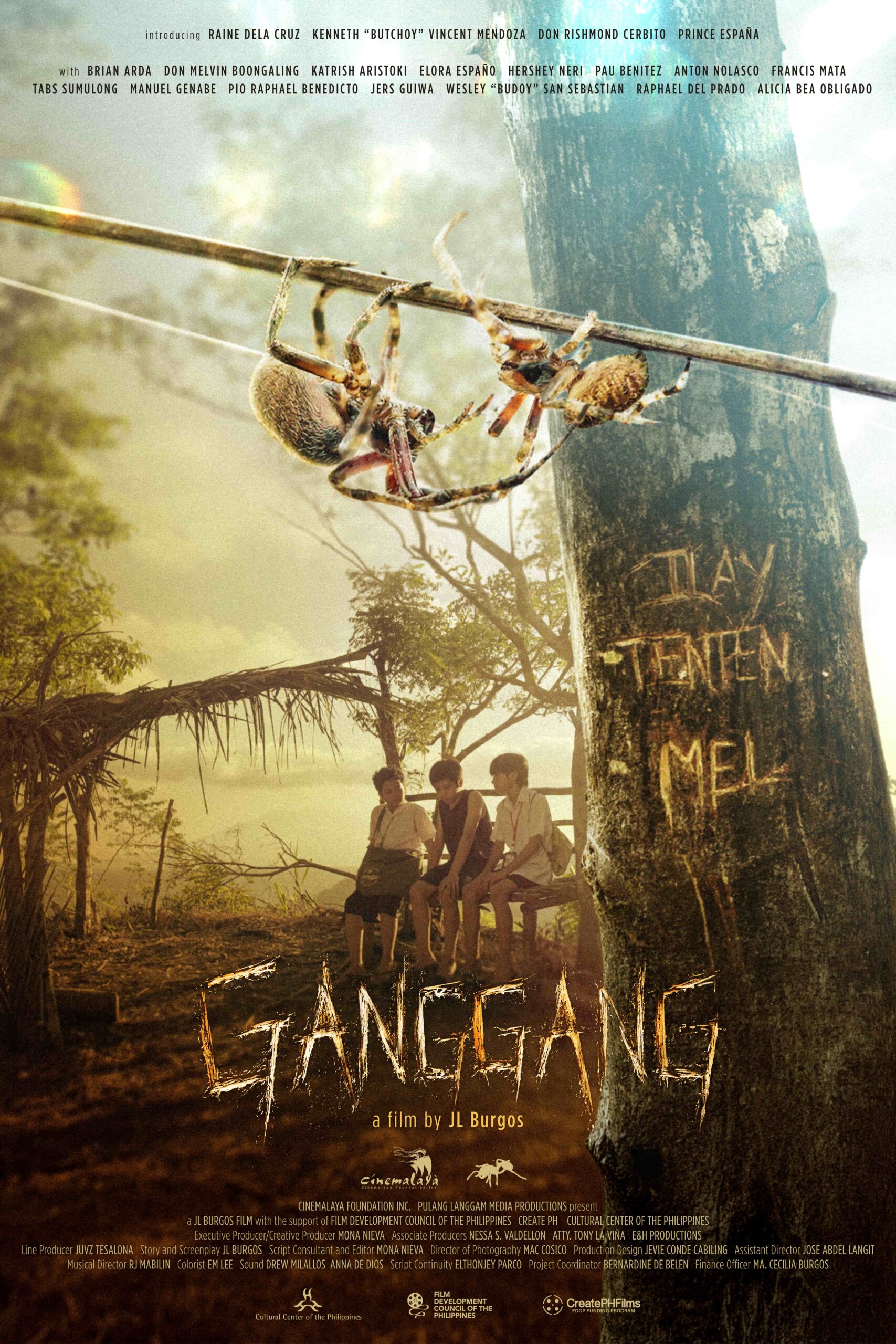
At the center of JL Burgos’ Ganggang are Ilay (Don Rishmond Cerbito) and Ten-ten (Kenneth “Butchoy” Vincent Mendoza), who form an unlikely bond with Mel (Raine Dela Cruz), a newcomer from the city, as they search for the best fighting spider to challenge their school bully, Anton (Prince España).
What begins as a childish competition eventually puts their friendship to the test.
The film uses the familiar Filipino pastime of fighting spiders as more than just a childhood game. Set in the countryside, Ganggang follows the boys as their playful search gradually brings them closer to the realities of violence, intimidation, and human rights violations experienced by communities far from the spotlight.

Burgos’ film is particularly effective in how it approaches these issues through the eyes of children. Rather than presenting human rights violations solely through statistics or news reports, Ganggang turns them into experiences that the young characters can see, feel, and struggle to understand.
The film is striking. Its stills and visuals are carefully composed, giving the story a strong visual identity. The close-up shots of the fighting spiders, in particular, capture the film’s pastoral atmosphere, grounding the story in the rural setting.
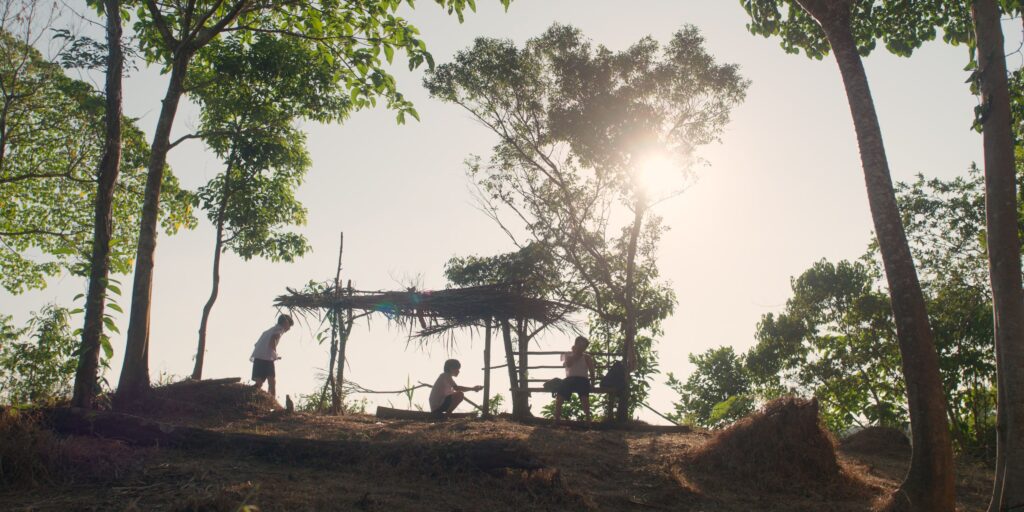
This visual calm, however, gradually takes on a more ominous quality as the film approaches the soldiers’ campsite. While the opening scenes are brighter and more pastoral, the changing visual atmosphere subtly prepares the audience for the violence that eventually enters the children’s world.
The child actors are also among its strongest elements. Cerbito, Mendoza, Dela Cruz, and España bring an organic quality to the children’s interactions, making their friendship and rivalry believable. Their performances make the children’s world feel lived-in, allowing the film’s heavier themes to emerge without completely overwhelming its youthful perspective.
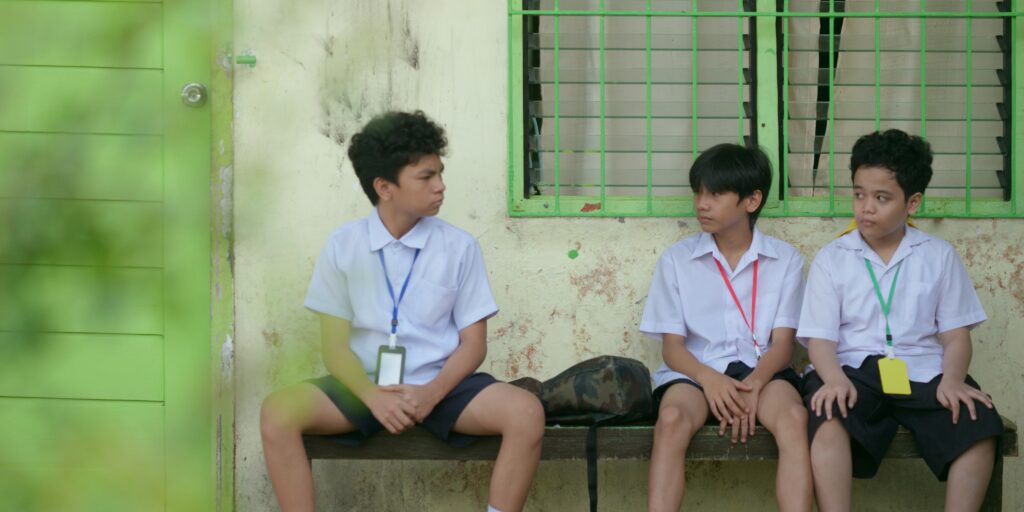
The film’s production design likewise communicates character without explicitly explaining it. Mel’s newcomer status is visible in the details: while Ilay and Ten-ten arrive at school in slippers and appear less formally groomed, Mel wears black shoes, carries a nicer backpack, and even has food packed for school.
Ten-ten’s worn drawstring bag, meanwhile, reflects his family’s circumstances as the son of a farmer. These seemingly small details establish the socioeconomic differences between the boys while making their eventual friendship more meaningful.
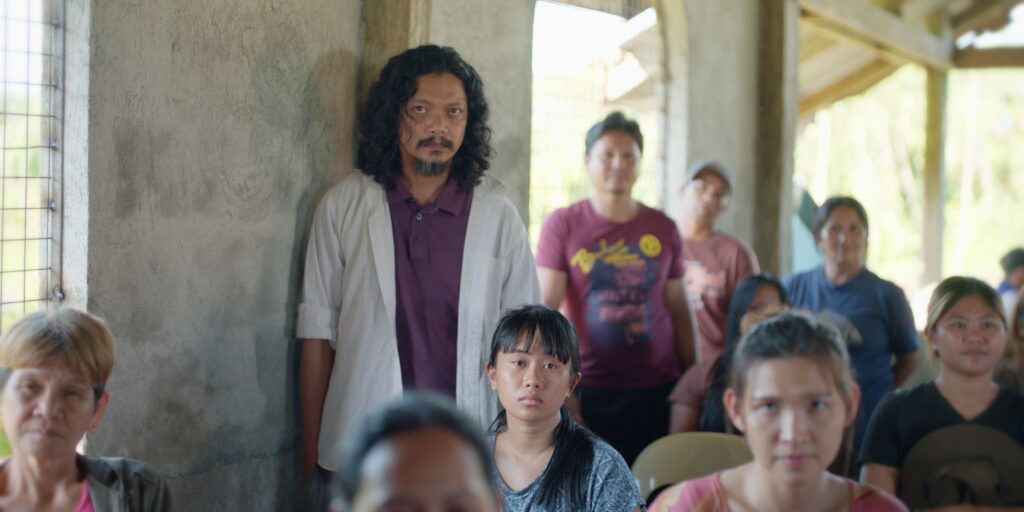
The dialogue is similarly effective. The exchanges between the characters feel natural, while the presence of Revelyn (Elora Españo) as a teacher provides another perspective on the community surrounding the children. Through her character, the film shows how the realities outside the classroom can eventually enter the spaces where children are supposed to feel safe.
CHILDREN’S GAME
At the heart of Ganggang is its allegory. The fighting-spider game becomes a way to explore themes of conflict and power without simply reproducing the language of conventional political drama.
Activism, militarization, accusations, and human rights violations are familiar subjects in Philippine cinema, but placing them within a children’s game offers another way of looking at them.
The film’s trajectory may be predictable, but that predictability is part of its strength.
Even in its opening scenes, Ganggang leaves clues about what is to come. The introduction of military occupation, for instance, comes almost immediately when Mel’s father pulls out a gun on a barangay resident following what appears to be a near collision. The moment establishes the imbalance of power early on: an ordinary encounter can quickly become threatening when one person carries the authority.
Mel’s character further complicates this perspective. As the child of a soldier, he offers a point of view that does not fit neatly into a simple division between victims and perpetrators. His position allows the film to explore the idea behind the familiar saying: “Not all soldiers, but somehow, always soldiers.”
Through him, Ganggang acknowledges that political violence can affect not only those directly targeted by it, but also the families and communities connected to those involved.
The emotional weight of the film is most apparent toward its ending, particularly in the fracture of the boys’ friendship. Ten-ten witnesses the consequences of military violence when soldiers raid his family’s home, an incident that contributes to his mother losing her pregnancy.
For the children, the conflict is no longer something they can simply observe from a distance. Ten-ten sees its repercussions firsthand, complicating the friendship among the three boys even as they remain connected.
What makes the ending painful is the recognition that what happens on screen is not purely fictional. Missing bodies, disappearances, and ordinary Filipinos being accused of being members of the New People’s Army are realities that have occurred beyond the film.
THE POLITICS BEHIND THE FILM
Burgos describes the film as an attempt to bring the Philippines’ human rights violations into a broader public discourse, particularly those that happen in rural communities and rarely receive sustained news coverage.
Instead of reducing victims to statistics, the film seeks to present the narratives behind the numbers through the eyes of children.
During the film’s talkback, Burgos was equally direct about the film’s political position.
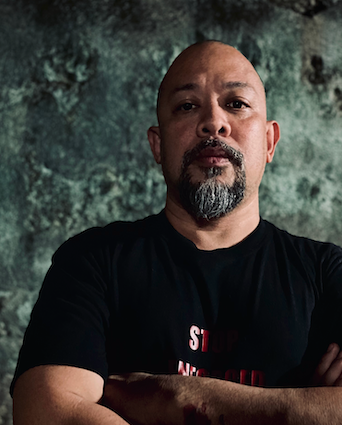
“I would like to thank all of you,” he said. “We have a clear political stand; we have a clear call to fight for human rights.”
For Burgos, Ganggang is not simply an attempt to present an issue from a supposedly neutral distance. He described filmmaking as part of building a community that stands for human rights, inviting audiences to become part of that community as well.
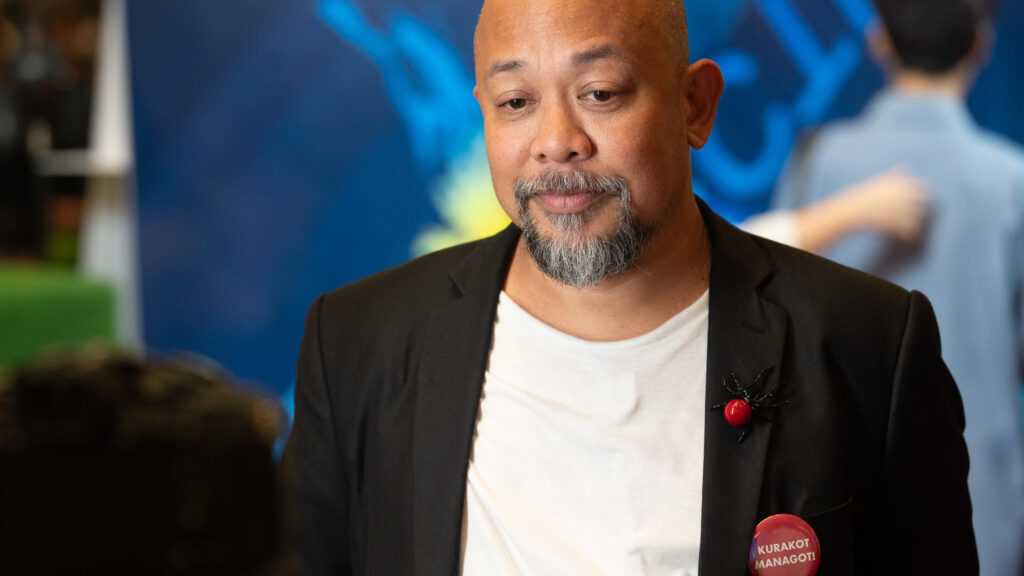
That political position is also reflected in the film’s numerous personal Easter eggs. Burgos revealed that the vehicle and its plate number used by Mel’s father are closely connected to the arrest and disappearance of his activist brother, Jonas Burgos. “Tenten,” meanwhile, refers to December 10, Human Rights Day.
Other names were similarly drawn from Burgos’ personal experiences. Mel and Sarich Mendaro were adapted from the real name of one of the suspects connected to his brother’s case. Other names came from people close to him. Even Anton, the school bully, was inspired by a bully Burgos knew as a child.
These details give Ganggang a personal dimension beneath its broader political argument. The film is not discussing human rights violations as an abstract issue. Its details are informed by memories, people, and experiences that are close to its director.
Even the title carries a local connection. Burgos explained that “ganggang” is a word or concept that originated in Bulacan, further grounding the story in a specific Filipino context.
Ultimately, Ganggang works not simply because it has something political to say, but because its politics are embedded in its storytelling. Its visual language, child performances, production design, allegory, and personal references converge into a film that asks audiences to look beyond the numbers attached to human rights violations.
Cinemalaya may have concluded, and the festival’s awards may have already marked the films that received recognition. But Ganggang remains worth a closer look beyond the awards—not only for the issues it raises, but for the way it transforms a childhood game into a story about power, violence, memory, and the continuing fight for human rights.

Hjadoeya Calica
Hjadoeya Calica is a cinephile, reader, and a content writer for Philippines Graphic whose roots trace back to La Union and Aurora. She studied AB Literature at the University of Santo Tomas where she served as the Literary Editor for The Flame. Currently based at the heart of Makati, she finds inspiration in stories of every kind, spaces, and places.

 and Ten-ten (Kenneth “Butchoy” Vincent Mendoza), who form an unlikely bond with Mel (Raine Dela Cruz), a newcomer from the city, as they search for the best fighting spider to challenge their school bully, Anton (Prince España).)