
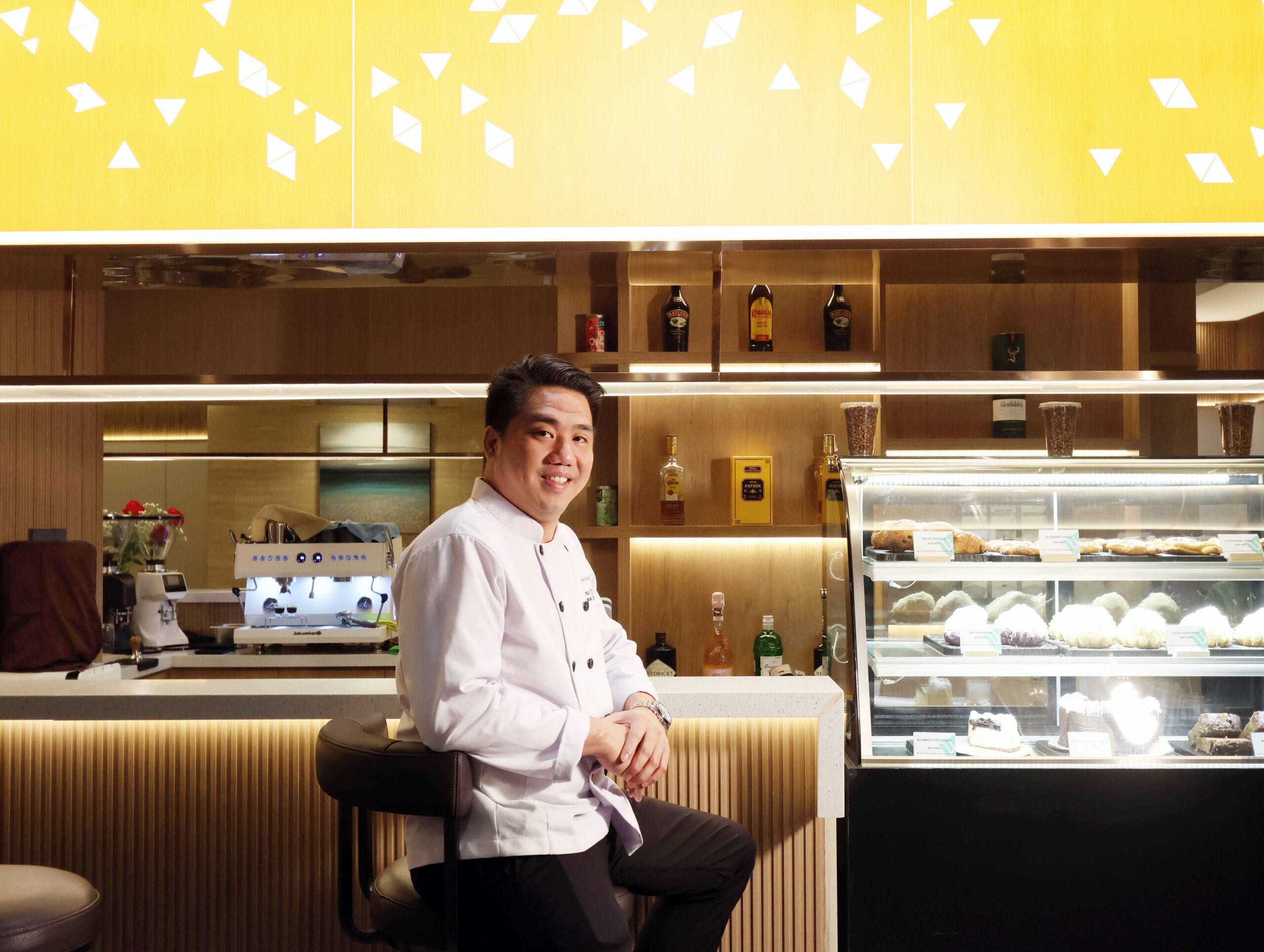
At 37, Manila-born Chef Andrew Ko has built a career out of what he considers as a lifelong process of learning. He spent more than a decade moving through kitchens, five-star properties, culinary schools, and competitions.
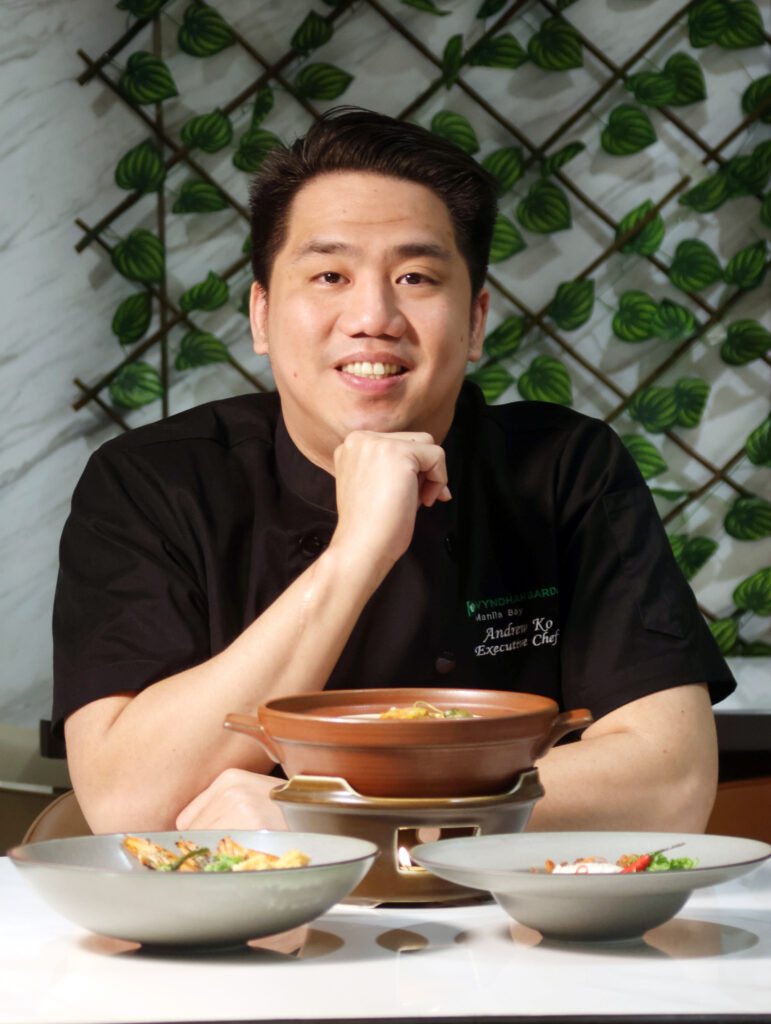
The son of former sales professionals Ram Ko and Erlinda Castañeda Ko, and one of four siblings, Ko found his way into the culinary profession at 22 while working and studying at the same time.
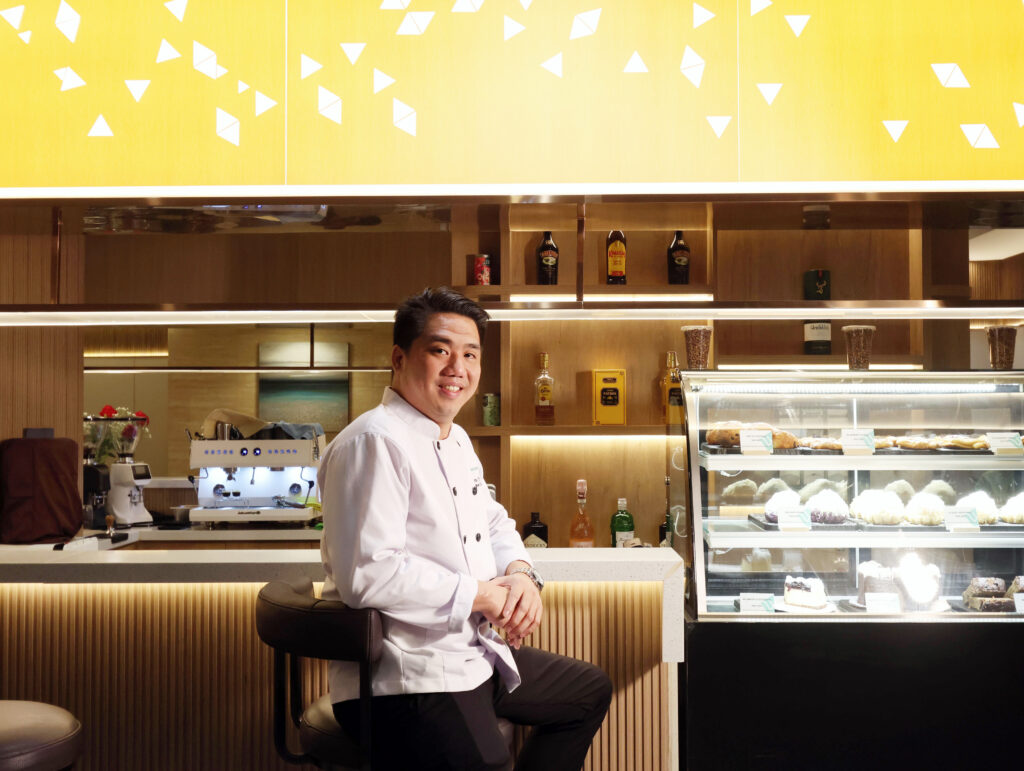
Today, he serves as Director of Food and Beverage at Wyndham Garden Manila Bay, where he oversees not only the food on the plate but also the service, beverages, and operations that surround it.
For someone whose first concern in entering the workforce was simply to earn money, it is a fitting irony that Ko eventually found himself in a profession where the learning never really ends.
“I started to fall in love with what I was doing, Ko recalled. What began as a job became a vocation. What started as a way to earn became a way of life. From there, his career would take him through different kitchens, companies, cuisines, and competitions-each one becoming another chapter in an education that, for Ko, has no final page.
KITCHEN LEARNING
Ko’s progression through the culinary and hospitalits industry was not built around staying in one place.
Early in his career, he deliberately moved between different companies, including five-star establishments whenever he saw an opportunity to learn something new.
At a time when frequent movement between employers might conventionally be read as instability, Ko understood it differently. For him, every change was an opportunity to acquire another piece of knowledge.
“I made it like a school,” he said. “Every company is like a subject.”
The metaphor is more than a figure of speech. It proviced a framework for understanding Ko’s career.
One workplace taught him about food. Another gave hit lessons in service. Elsewhere, he encountered inventory management, cost control, different systems, different bosses, and different ways of running a kitchen.
“I believe that in every company, there are learnings, experiences, and challenges,” he said.
In Ko’s telling, his career reads almost like a curriculum. Each company became a classroom; each challenge, a lesson. Each new responsibility turned into another subject to master. His professional journey was not simply a climb toward a title. It worked as an accumulation of knowledge.
The kitchen, in this sense, became more than a workplace. It functioned as a site of apprenticeship, experimentation, failure, repetition, and discovery.
Over time, those experiences gave him more than technical skills. They exposed him to the many moving parts behind hospitality and helped him understand that cooking does not exist in isolation from the rest of the operation.
His culinary education followed a similar path. Ko studied Asian cuisine at the Center for Asian Culinary Studies and later pursued training that exposed him to Western and international culinary methods. Rather than choosing one tradition over another, he saw value in learning from both.
“The whole package the experience,” he quipped.
Experience, for Ko, means having more tools with which to create. Ingredients, flavors, textures, colors, appearance, and contrast can all be approached differently when a chef has learned to look at food from more than one culinary perspective.
But formal education and employment were not the only classrooms Ko had. Some of the chefs he considered as mentors never formally became his mentors at all.
Ko mentioned that he gathered inspiration from different people throughout his career, observing their work, absorbing their practices, and taking whatever lessons he found useful. In some cases, the people who influenced him may not even have known that he considered them mentors.
There was no formal classroom, no appointment, and no explicit mentor-mentee arrangement. Sometimes, learning simply meant paying attention.
“My first mission is to help the local farmers and also our local ingredients.” — Chef Andrew Ko, director of food and beverage, Wyndham Garden Manila Bay
It is perhaps the quietest form of apprenticeship: watching before speaking, observing before attempting, and carrying someone else’s lesson into one’s own practice.
The idea suits Ko’s larger philosophy. If every company can become a classroom, then so can every chef, every kitchen, and every encounter.
Outside the kitchen, he continues the same practice. He reads culinary books, conducts research, and follows chefs whose work introduces him to new ideas. He has also studied older culinary references, including the works of Filipino culinary figure Chef Tatung Sarthou.
“There are many great chefs who are inventing things,” Ko stated. “I follow them until I can also create something new.”
For Ko, mentorship is therefore less about having one definitive teacher than remaining receptive to knowledge wherever it comes from. His education is cumulative. One lesson does not replace another; it becomes part of the next. And that openness becomes particularly interesting when looking at the kind of he creates today.
THE WHOLE PACKAGE
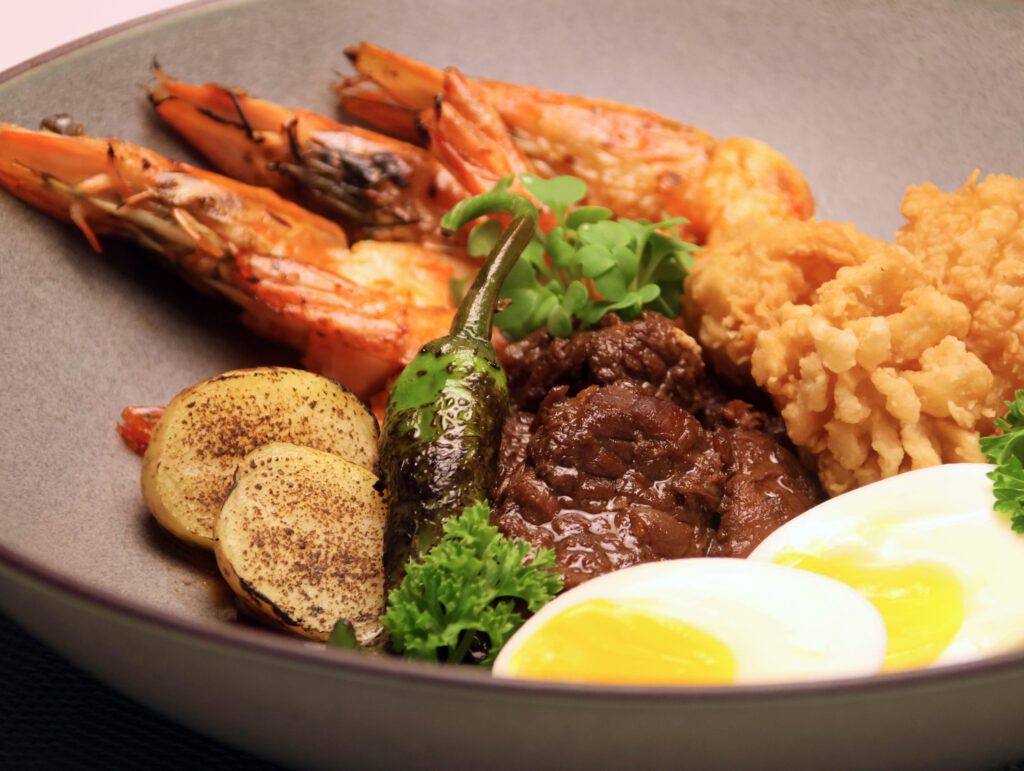
At Garden by the Bay, Filipino cuisine serves as the foundation while international influences provide room for experimentation. Take the Surf and Turf Adobo.
The familiar Filipino preparation becomes a meeting point for beef, shrimp, and fried squid, all brought together by adobo sauce. A concept associated with international dining is given a distinctly Filipino identity.
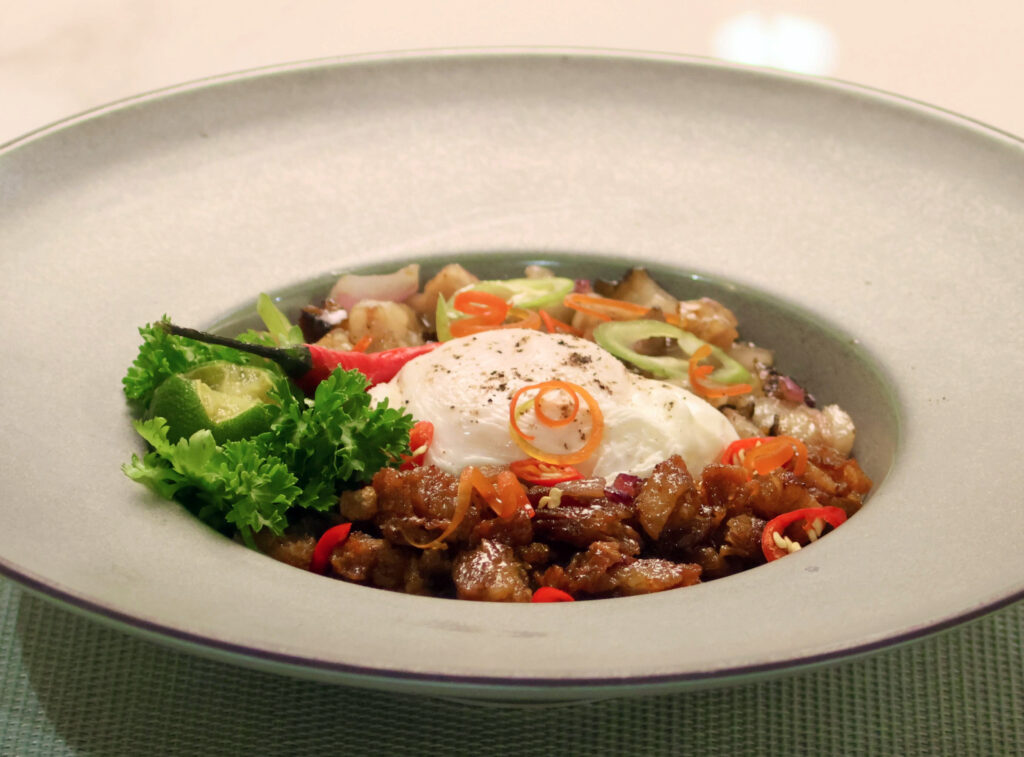
The Kapampangan Pork Sisig similarly works between tradition and contemporary interpretation, retaining the character of the regional dish while giving it a crispier, more modern treatment.
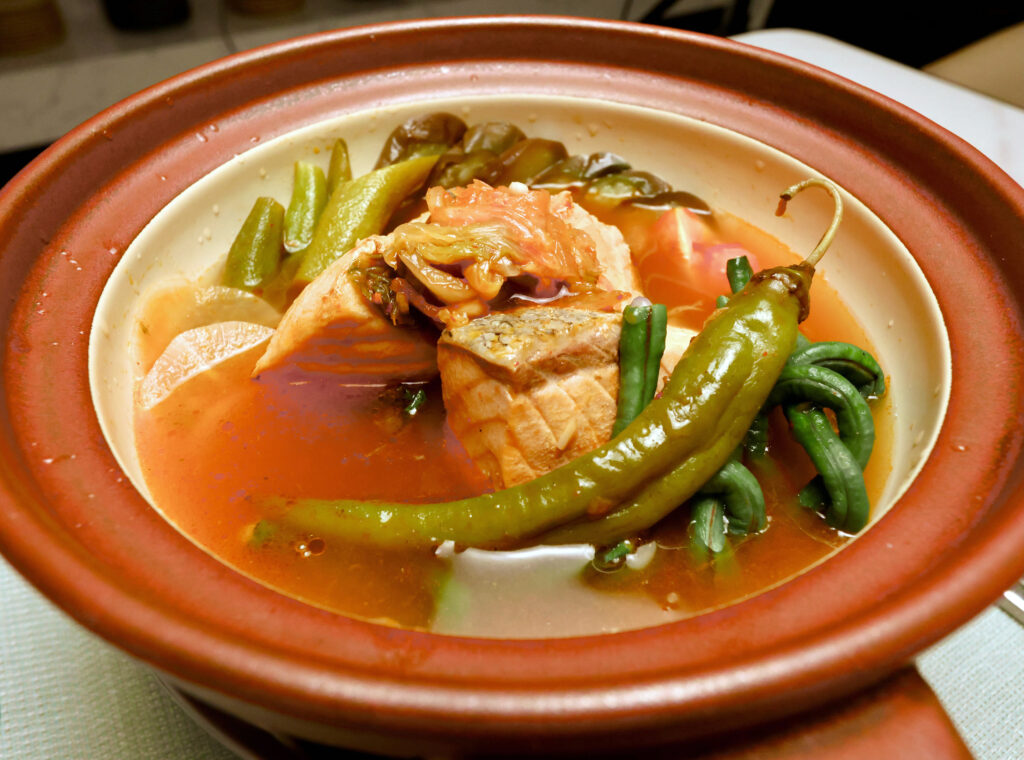
Then there is the Sinigang na Salmon sa Kimchi, where Filipino and Korean flavors meet. The familiar sourness of sinigang is paired with kimchi made from scratch at the hotel, creating a dish that is recognizably Filipino while acknowledging another culinary tradition.
There is also Kapampangan pasta and the more unconventional Balut Matapobre, a mousse made from seven-day-old balut duck egg, infused with spicy aligue sauce and spices, then finished with mango salsa.
These dishes function almost like culinary translations. Familiar Filipino ingredients and preparations are placed in conversation with techniques, flavors, and ideas from elsewhere.
In this sense, Ko’s dishes are expressions of his own journey: influences gathered from different places, brought together and reinterpreted through a Filipino lens. However, for all the global influences that enter his kitchen, Ko remains clear about what should stay at its center.
“I don’t remove Filipino cuisine here,” he said. “It’s because we are in the Philippines.”
HELPING FARMERS, LOCAL INGREDIENTS
For Ko, the idea of locality is not limited to putting Filipino dishes on a menu. It also concerns the ingredients themselves.
His approach begins with seasonality and availability. Rather than designing dishes around ingredients that may be difficult to source and then forcing the market to accommodate the menu, Ko works in the opposite direction: he looks at what is available and considers what can be created from it.
“My first mission is to help the local farmers, and also our local ingredients,” Ko said.
The hotel is exploring ways to work with local farmers and suppliers, creating a relationship that Ko sees as beneficial to both sides. Farmers gain another market for their products, while the hotel gains access to local ingredients that can influence and inspire its culinary offerings.
For Ko, supporting local is not separate from the work of a chef. It is part of it.
As an executive chef, he needs to make sure that the ingredients required for the operation are available. Consequently, the hotel’s dishes can evolve according to seasonality and market availability rather than being built entirely around ingredients that are difficult to obtain.
This approach also gives the kitchen another form of creative freedom. Instead of asking what ingredients must be brought in to execute a predetermined concept, Ko begins with what is available and asks what can be created from it.
The hotel’s purchasing team handles much of the sourcing process, providing samples and securing ingredients, while Ko remains involved in assessing what enters the kitchen. He visits the market at times, but his involvement is not necessarily limited to physically purchasing ingredients.His role is also to understand what is available and how those ingredients can work within the operation. In this way, sustainability becomes closely connected to the culinary process itself.
Supporting local producers, making use of available ingredients, and allowing seasonality to influence the menu are not treated as separate from the dining experience. They become part of the decisions behind it.
MORE THAN WHAT IS ON THE PLATE
That balance between creativity and structure now extends across Wyndham Garden Manila Bay’s wider food and beverage program.
The hotel currently has two dining outlets: Brillo, which focuses on pastries, breads, and other offerings, and Garden by the Bay, where Filipino fusion takes center stage.
For first-time guests, Ko recommends the Surf and Turf Adobo and Kapampangan pasta. The beverage program, meanwhile, includes mocktails and specialty coffees.
Yet when asked which dish he is most proud of, Ko does not choose one.
“I’m proud of everything,” he said.
The answer is less evasive than it first appears. For Ko, the pride comes from the process: the dishes are made from scratch, and each represents the work of the culinary team.
The operation is also moving beyond the conventional restaurant experience.
This coming October, Wyndham Garden Manila Bay plans to launch a barbecue night. A mobile bar is also being prepared to serve cocktails, mocktails, coffee, and wine for different events, while a new menu for Garden Manila Bay is in development.
These plans extend the hotel’s food and beverage offerings beyond a traditional restaurant setting and into events and experiences.
The property’s roof deck, restaurants, and event spaces likewise provide room for future dining activities, functions, and banquet experiences.
COOKING WITH LOVE AND PRIDE
After years of moving between kitchens, studying different cuisines, observing chefs, competing, managing operations, and developing dishes, Ko’s culinary philosophy ultimately comes down to a simple mantra: “Cook with love and also pride.”
The emphasis on pride is deliberate.
For Ko, cooking is not simply about producing something that tastes good. It is about taking ownership of the entire process-from sourcing ingredients and training a team to following standards and eventually placing a finished dish in front of a guest.
This article appeared in the August 2026 NJLA Issue of the Philippines Graphic.


Hjadoeya Calica
Hjadoeya Calica is a cinephile, reader, and a content writer for Philippines Graphic whose roots trace back to La Union and Aurora. She studied AB Literature at the University of Santo Tomas where she served as the Literary Editor for The Flame. Currently based at the heart of Makati, she finds inspiration in stories of every kind, spaces, and places.