


VIA GRAPHIC PLUS — The Bank of the Philippine Islands (BPI) continues to strengthen its cybersecurity measures and promote responsible digital banking as it marks 175 years of serving generations of Filipinos.
As digital banking becomes an increasingly important part of everyday life, protecting customers requires more than securing transactions. It also means keeping pace with emerging threats and helping customers recognize risks when banking online.
“Cybersecurity is not about responding to threats after they happen. It requires financial institutions to anticipate risks, continuously strengthen their defenses, and work together with the broader ecosystem to address fraud. As digital banking evolves, protecting customers means making security an ongoing priority, not a one-time effort,” said Jon Paz, Head of Enterprise Information Security and Fraud Risk Management at BPI.
While financial institutions continue to strengthen their defenses, customers also need to know how to protect themselves. Scammers use deceptive messages, suspicious links, and social engineering tactics to trick people into sharing sensitive information or authorizing transactions.
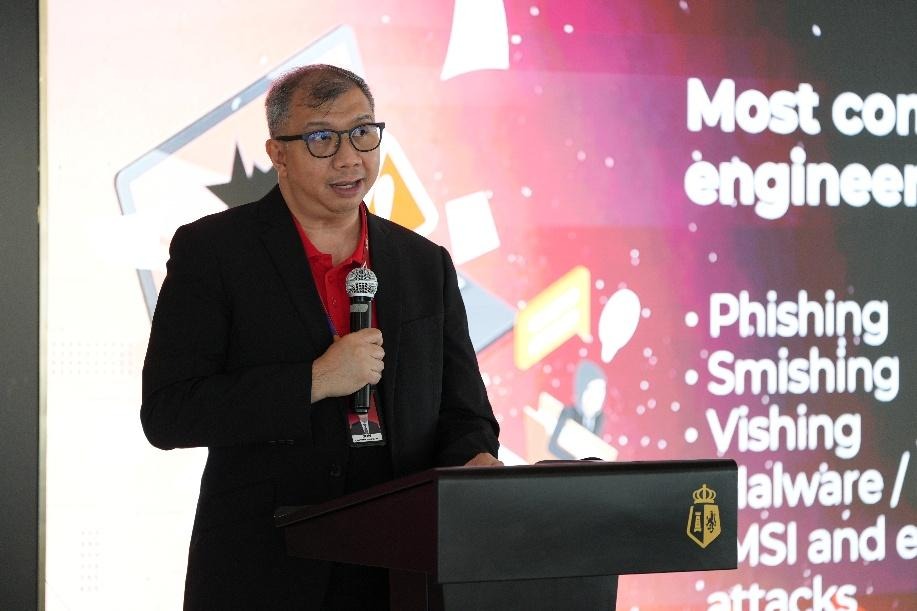
Banking industry data highlights the extent of the challenge. Social engineering schemes account for nearly 39% of fraud transactions and 36% of fraud-related losses, underscoring how fraudsters continue to exploit human behavior alongside technology.
Among these threats, vishing, or voice-based scams, remains the most prevalent, accounting for more than 21% of reported incidents. This is followed by malware and rogue applications (7.5%), smishing or SMS-based scams (3%), and phishing emails (2%). By posing as legitimate institutions and creating a sense of urgency, fraudsters are often able to convince individuals to disclose sensitive information or authorize transactions, making awareness and vigilance critical lines of defense against financial fraud.
BPI works with the Philippine National Police Anti-Cybercrime Group (PNP-ACG) and the Department of Information and Communications Technology’s ICT Literacy and Competency Development Bureau (DICT-ILCDB) to strengthen cybersecurity awareness and help address online fraud. The bank also implements measures under the Anti-Financial Account Scamming Act (AFASA), or Republic Act No. 12010, which provides safeguards against financial account scams and other related offenses.

BPI, through its mobile app, continues to strengthen its digital security capabilities through a range of customer-focused safeguards designed to help prevent fraud and unauthorized account access. These include:
- Mobile Key Authentication – Strengthens account security by replacing traditional SMS OTPs with device-based authentication using a PIN and biometrics linked to a trusted device.
- Mandatory Cool-Off Periods – Provides an additional verification window for certain high-risk account changes, helping customers detect and report unauthorized activity before transactions are completed.
- Integrity Checks – Helps protect customers by identifying potentially unsafe environments and restricting access from rooted devices or VPN-enabled environments that may present elevated security risks.
- Masked Names – Enhances customer privacy during BPI-to-BPI fund transfers by limiting the visibility of personal information while maintaining transaction transparency and security.
“Making digital banking safer is not just about the technology behind it. Customers also need to understand the risks and feel confident making decisions online. When people know how to recognize suspicious activity and take the right precautions, they are better equipped to protect themselves. Building that awareness is an important part of helping more people bank digitally with confidence,” said Fitz Chee, Head of Consumer Platforms at BPI.
By strengthening its cybersecurity measures and helping customers make informed decisions online, BPI continues to support safer digital banking.

Started in 1927, the Philippines Graphic is the longest-running printed magazine of national circulation that provides relevant news and features and promotes Philippine literature.

 continues to strengthen its cybersecurity measures and promote responsible digital banking as it marks 175 years of serving generations of Filipinos.As digital banking becomes an increasingly important part of everyday life, protecting customers requires more than securing transactions. It also means keeping pace with emerging threats and helping customers recognize risks when banking online.)