

VIA GRAPHIC PLUS | Manila, Philippines — With warmer temperatures and increased household water storage during El Niño potentially heightening dengue risk, health experts are reminding Filipino families to strengthen prevention efforts, manage symptoms such as fever safely, and recognize warning signs that require immediate medical attention.
Uncovered or poorly maintained water containers can become breeding sites for dengue-carrying mosquitoes, whose development can be accelerated due to warmer temperatures. Together, these conditions make it important for families to remain vigilant during El Niño.
According to Department of Health (DOH) figures, 205,347 dengue cases were recorded in the Philippines from January 4 to October 14, 2026. These figures underscore the continuing need for dengue prevention amid changing weather conditions.
Localized dengue increases likewise remain a concern. In October, the DOH flagged 14 provinces and highly urbanized cities for increases in dengue cases. In Iloilo City, the City Health Office reported that both alert and epidemic thresholds had been reached, with 785 cases recorded from January 4 to October 31, 2026, a 37.7 percent increase compared with the same period last year.
An alert threshold provides early warning of a possible epidemic, prompting heightened prevention measures. An epidemic threshold marks a level where an urgent public health response is required. These signals reinforce the importance of sustained mosquito control and household prevention, including keeping stored water tightly covered during El Niño-related dry spells.
What is dengue
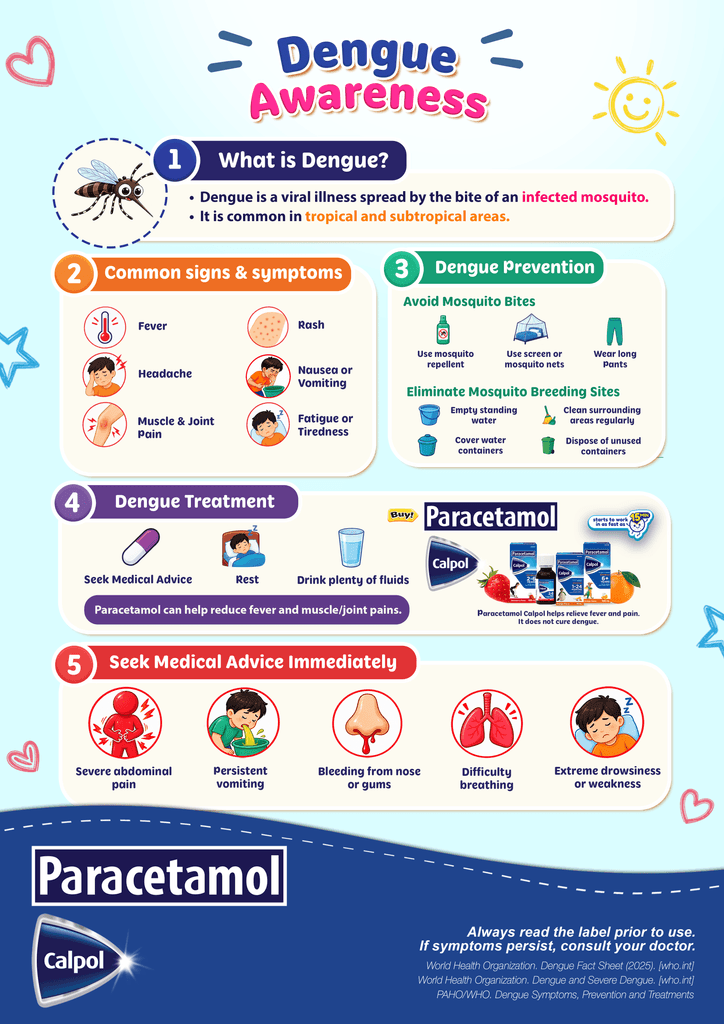
Dengue is a viral infection transmitted through the bite of infected mosquitoes, primarily Aedes aegypti. For those infected, symptoms commonly include high fever, severe headache, pain behind the eyes, muscle and joint pain, nausea, vomiting, and skin rash.
While most people recover within one to two weeks, dengue can progress to a potentially life-threatening condition, making early recognition and timely medical attention essential.
Managing dengue fever safely
For fever and pain associated with dengue, the WHO recommends paracetamol for symptom management. Medicines such as aspirin and non-steroidal anti-inflammatory drugs should be avoided because they can increase the risk of bleeding.
This is particularly relevant for parents and caregivers. Children account for a significant share of dengue cases in the Philippines. In Quezon City, for instance, children aged 10 and below accounted for nearly half of dengue cases in 2025, according to the city government.
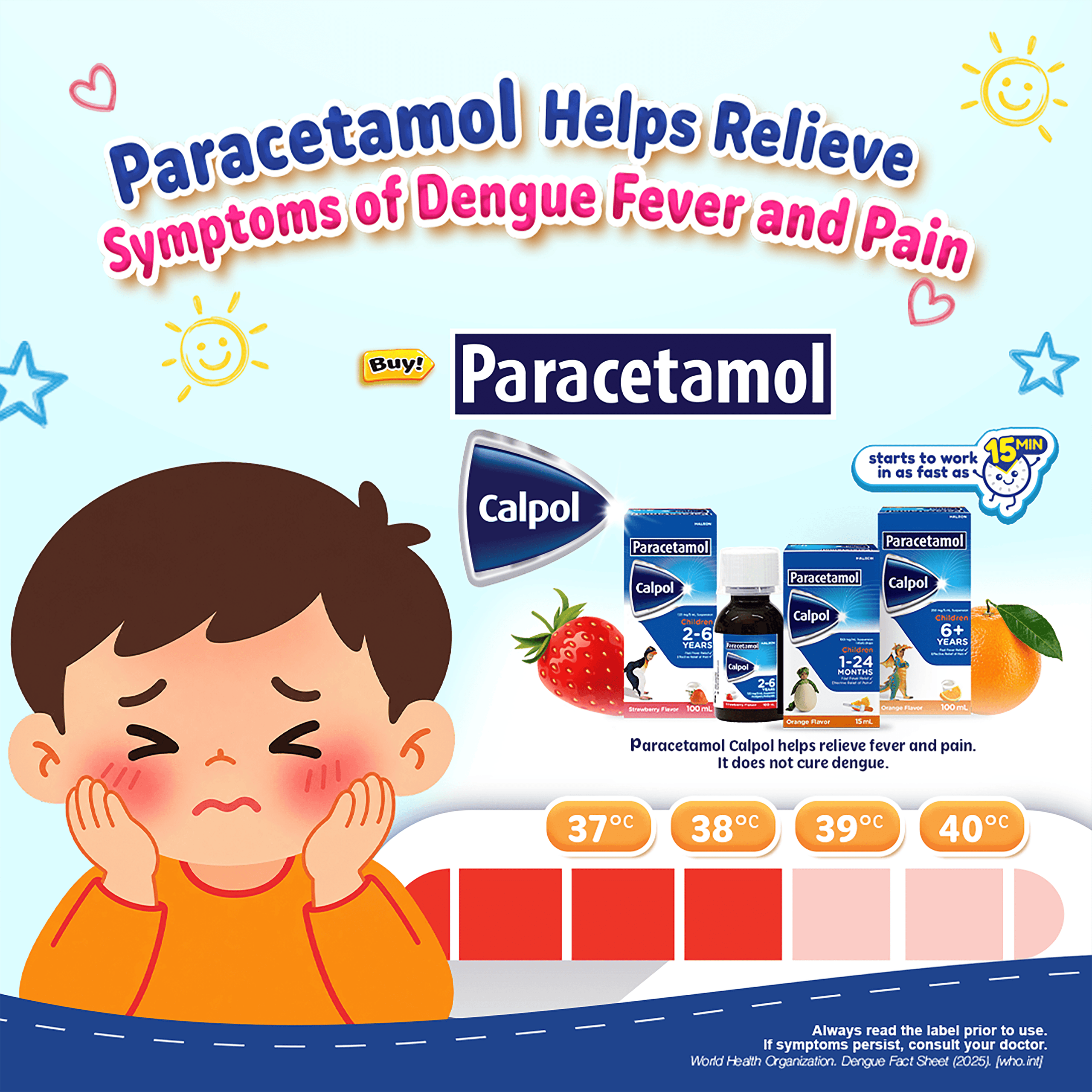
For children experiencing fever and pain, Calpol contains paracetamol, which can help reduce fever and relieve pain when used as directed. However, fever management is only one part of dengue care. Children with suspected dengue should get adequate rest and fluids and be closely monitored for warning signs.
According to general practitioner Dr. Shiro Ann Noda, parents and caregivers should follow the recommended dose of paracetamol on the product label or as advised by a healthcare professional and avoid giving more than one medicine containing paracetamol at the same time.
“Paracetamol can help manage fever and pain, but it does not cure dengue. Parents should seek medical attention promptly if dengue is suspected, especially if the child is very young, has a high fever, or develops warning signs. Early consultation with a healthcare professional and careful monitoring are important to help ensure children receive appropriate care and timely medical intervention when needed.” Dr Noda said.
The DOH continues to promote its 4S strategy against dengue: Search and destroy mosquito breeding sites, Self-protection measures, Seek early consultation, and Support fogging or spraying in hotspot areas when necessary.
As dengue cases rise, families are encouraged to stay vigilant, recognize symptoms early, and seek medical attention when needed.

Started in 1927, the Philippines Graphic is the longest-running printed magazine of national circulation that provides relevant news and features and promotes Philippine literature.