

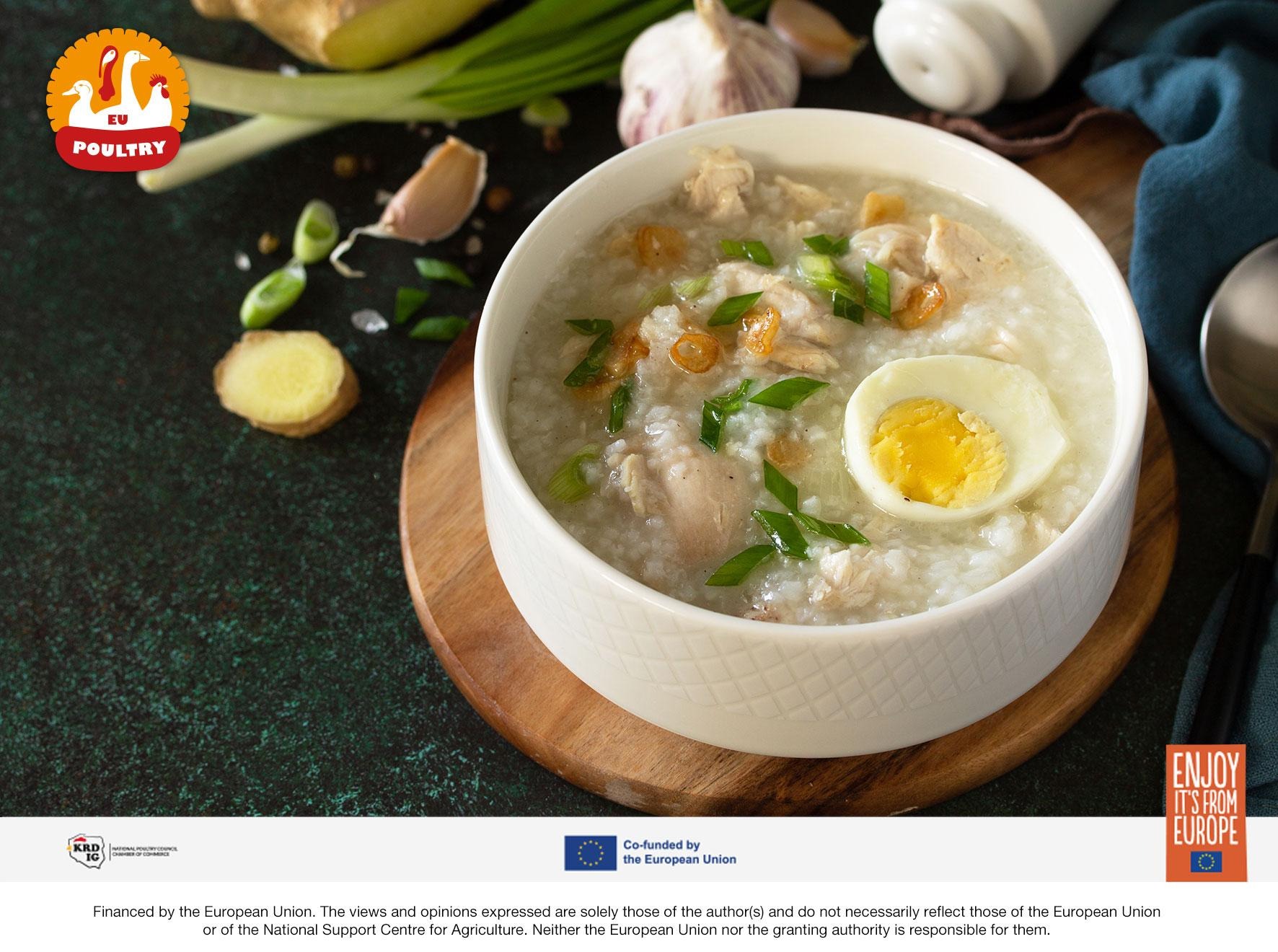
VIA GRAPHIC PLUS |Manila, Philippines (September 2026) – September is part of the rainy season in the Philippines, a time when pagkaing pang-ulan – warm, hearty dishes enjoyed on rainy days – are especially popular. Chicken features prominently in many of these dishes and has long been a familiar part of Filipino cuisine and a popular choice among consumers. But its importance extends far beyond seasonal menus.
Chicken consumption in the Philippines continues to grow and, according to USDA forecasts, is expected to reach around 2.38 million tonnes in 2026. Rising demand is being met by increasing domestic production, complemented by imports, including supplies from the European Union.
Rising demand drives the poultry market
Growing chicken consumption in the Philippines is going hand in hand with higher domestic production. According to the USDA Foreign Agricultural Service in Manila, chicken consumption in the Philippines was estimated at 2.236 million tonnes in 2025, up from 2.060 million tonnes a year earlier – an increase of around 8.5%.
Figures from the Philippine Statistics Authority also point to clear growth in domestic production. In the fourth quarter of 2025, poultry production reached 858.36 thousand tonnes, up 8.9% year on year. Chicken, which accounted for 71.5% of total poultry production, increased by 9.4% over the same period.
A growing market draws on multiple sources of supply
Alongside rising domestic production, imports provide an additional source of supply for the Philippine market. According to the Bureau of Animal Industry, the Philippines imported 540.5 thousand tonnes of chicken meat in 2025, 14.47% more than a year earlier. EU countries are also among the Philippines’ international suppliers. European Commission data show that 67.3 thousand tonnes of poultry were exported from the EU to the Philippines in 2025, up from 41.3 thousand tonnes the previous year – an increase of more than 63%.
Poland was the largest EU supplier, exporting 45.4 thousand tonnes of poultry to the Philippine market in 2025, accounting for more than two-thirds of total EU exports to the country. In the first half of 2026, Poland accounted for around 84% of EU poultry supplies to the Philippines.
“Rising poultry consumption in the Philippines creates opportunities both for the development of local production and for cooperation with international suppliers. For importers, processors and the foodservice sector, reliable supply, product quality and food safety are key considerations. The EU poultry sector has extensive experience in serving international markets and can meet these needs by offering products produced in line with the common standards that apply across the European Union,” says Dariusz Goszczyński, President of the National Poultry Council – Chamber of Commerce (KRD-IG) in Poland.
Common standards for EU poultry production
Poultry production in the European Union is subject to common regulations covering areas such as food safety, hygiene, animal health and welfare, and traceability. At the same time, well-developed production and logistics infrastructure makes it possible to supply distant markets, including the Philippines.
The principles of European poultry production are presented to Filipino consumers and industry representatives through the “European Poultry – From Our Farms to Your Tables” campaign, co-funded by the European Union. The campaign aims to raise awareness of production standards and the origin of European poultry products.

Started in 1927, the Philippines Graphic is the longest-running printed magazine of national circulation that provides relevant news and features and promotes Philippine literature.