

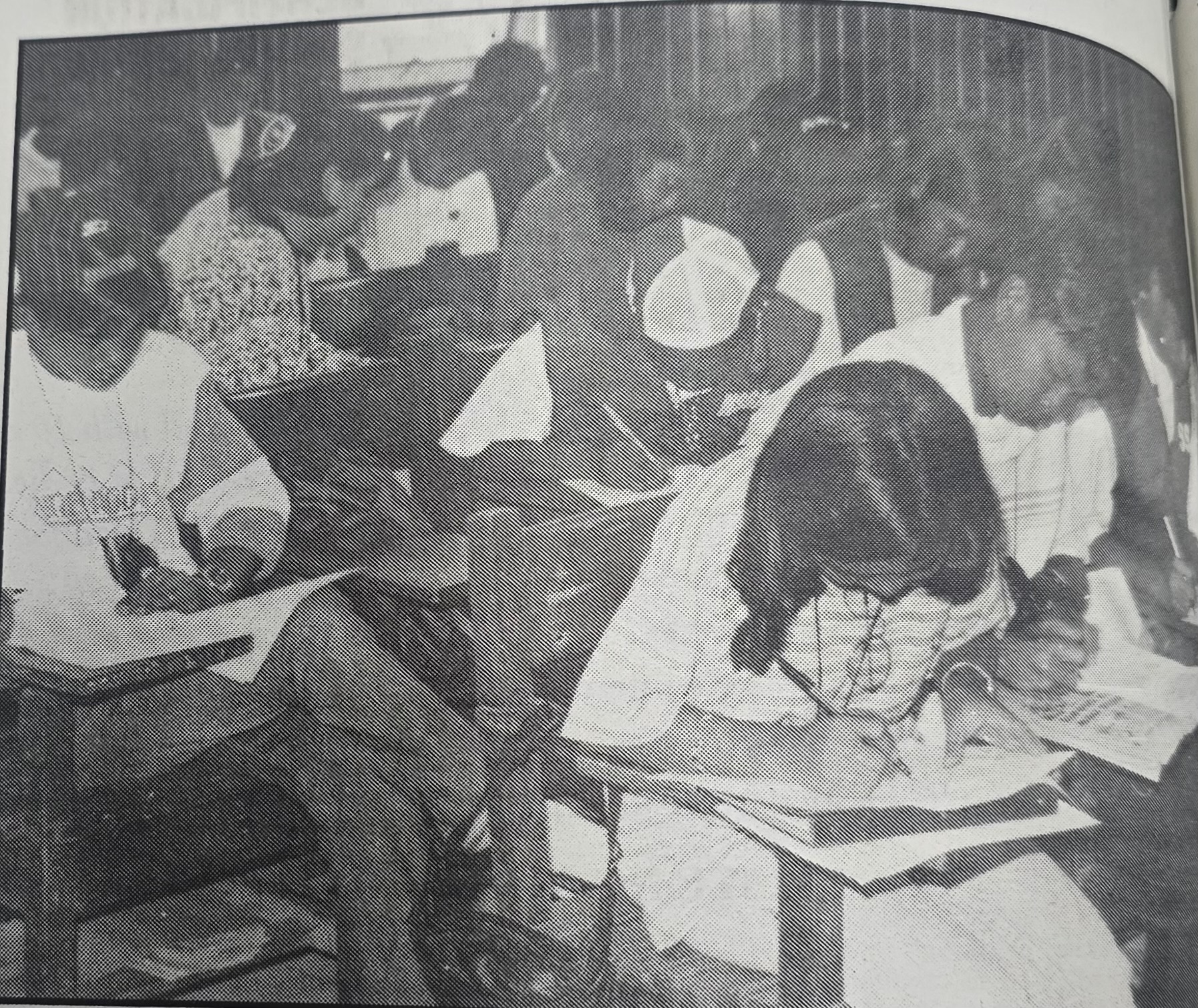
And so onward to Philippines 2000 (read: onward to deregulated tuition fees, onward to massive privatization and commercialized education) we go. What used to be a right is now transformed into a commodity.
Tuition fee increase. For the Commission on Higher Education, the Department of Culture and Sports and thousands of private schools, colleges and universities, it is an annual profit exercise. For so many Filipino youths, it is the annual elimination round, ridding the educational system of those unable to cope—not with the lessons but with the price of education.
Tuition fee increase, says CHED, DECS and our private capitalist educators, is the price we pay for quality education.
Over 75 percent of private colleges and universities have confirmed tuition fee increases, some as high as 45 percent. It is the price we pay for having only three of our universities barely making it into Asia’s top 50 in terms of quality education while topping corporations in terms of profit.
Time and again, parents who send their children to public schools find themselves paying countless miscellaneous fees and “donations” for the school comfort rooms, electric fans, extra classrooms, library books, school fences, etc. etc.
Over 75 percent of private colleges and universities have confirmed tuition fee increases for this school year.
It is the price we pay for the 10,266 public school classrooms we have when we actually need 24,881. It is the price we pay to compensate the 7,209 public school teachers when we actually need 16,969. It is the price we pay for having classrooms filled with an average of 56 students when it used to be 35.
Likewise, state colleges and universities, in their creative schemes to generate their own funds through privatization and commercialization, end up passing on the government’s responsibility to educate the youth to the youth themselves.
The fact is, due to International Monetary Fund (IMF) impositions, the government reserves a huge chunk of its budget to debt servicing at the expense of basic services, education included. And so onward to Philippines 2000 (read: onward to deregulated tuition fees, onward to massive privatization and commercialized education) we go. What used to be a right is now transformed into a commodity. It’s quite a policy for a government that includes people empowerment and competitiveness in its vision.
And so we pay a much greater price.
We now have an estimated five million streetchildren. Minors comprise one out of every five of the 500,000 women and children forced into prostitution. A mere four out of every hundred children entering grade one get a college diploma.
Six years of General Ramos has left the educational system and the Filipino youth at a sorry state. It is now up to Estrada to prove to the Filipino youth that “Erap para sa mahirap” is not a mere slogan to win our votes. Perhaps the nation’s future, accessible education for all the nation’s youth, is a good place to start.
(Juliet Fernandez is a secretary-general of Gabriela-Youth.)
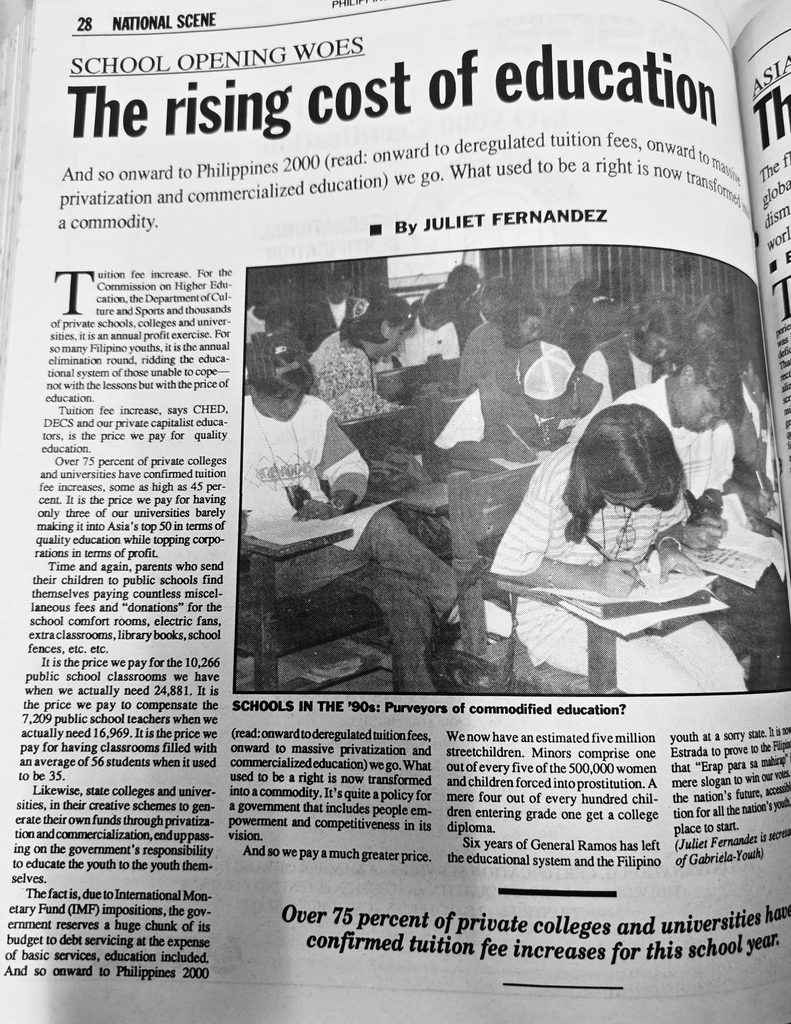
This article was published by the Philippine Graphic on June 15, 1998.

Graphic Archive
The Graphic Archive contains the articles and literature published in the Philippines Graphic since it was first established in 1927.