

War spares none, and forgives few… Japan learned this the hard way after Emperor Hirohito announced the country’s surrender in August 1945. Atomic bombs turned the cities of Hiroshima and Nagasaki into virtual wastelands, as darkness enveloped the entire archipelago.
The years following World War II were a time of turmoil for the East Asian nation, even more so for the countries that became victims of Japanese cruelty.
The economies across Asia was wrecked and it took some time before Asian countries rediscovered their footing.
Three decades ago, Takashi Inoguchi—formerly the senior vice-rector at the United Nations University— wrote an article that also came out in the Philippine Graphic on April 15, 1996.
An author who assessed Japan’s economic and geopolitical influence near the turn of the century, Inoguchi was concerned about its supposed “re-Asianization” in the late 20th century.
“This view is part of the larger argument that all of Asia, including Japan, is asserting a distinct Asian identity in economic affairs, security arrangements and social and cultural values,” he wrote.
To him, however, it was less a “re-Asianization,” but more of Japan’s “reassociation with Asia in the economic, security and socio-cultural spheres.”
He detailed that the reassociation began when the country’s “increasing economic power” fostered relations in Asia, which, “ironically” began with “Japan’s war reparations to certain Asian countries.”
The decades following the last world war saw rapid growth in the economy across Asia. The likes of South Korea, Taiwan, Hong Kong, and Singapore in particular were deemed as “Asian Tigers” that were huge players in the “East Asian Miracle” which occurred in the latter half of the last century.
The World Bank Group reported in 1993 (and disclosed in 2007) that public policies of “high-performing Asian economies” in the late 1960s through 1990 played a role in those governments’ “dramatic economic growth, improved human welfare, and more equitable income distribution.”
Others involved in this East Asian Miracle were Indonesia, Malaysia, Thailand, and Japan.
“Analysts disagree about the effectiveness of such interventions, but agree that without the foundation of macroeconomic stability and development of human and physical capital, the expansion would not have been so dramatic and sustainable,” the group concluded.
It also reported that almost a billion people benefited from this so-called miracle because of the economic growth in the region.
August 1967 saw five nations in Southeast Asia: Indonesia, Malaysia, Singapore, Thailand, and the Philippines—coming together in Bangkok to form the Association of Southeast Asian Nations (ASEAN), primarily for “strengthening the economic and social stability of the region,” while ensuring “peaceful and progressive national development.”
COMPREHENSIVE SECURITY
It was clear that, during the late 20th century, Asia was affirming its economic stability and potential over Western powers.
Distancing the region from the effects of conflicts happening elsewhere, however, proved to be more difficult.
In 1973, the Arab members of the Organization of the Petroleum Exporting Countries imposed an oil embargo against Western countries, particularly the United States, in retaliation for the Yom Kippur War where the US supported Israel.
This resulted in the 1973 oil crisis—an event that Inoguchi noted as a catalyst for “Japan to develop the concept of “comprehensive security” which recognized its crucial need to secure foreign energy resources and focused on ensuring free passage at sea.”
This “expansion of security interests,” however, could only be possible “in conjunction with the US armed forces,” he said.
Japan’s relationship with America has its effect on how the “Land of the Rising Sun” was seen by its neighbors.
“In the 1950s and 1960s, Japan’s economic ties with Asia were insignificant in comparison to its economic ties with the [US],” wrote the UN University official. “But the dramatic rise of Pacific Asia’s economies in the 1980s and 1990s placed Japan’s economic relationship with Asia on a par with its relationship with the [latter].”
“Ultimately,” the vice-rector concluded, “the answer to the question of whether Japan is a part of Asia lies in how the Japanese located World War II in their national consciousness,” which made the country’s “psychological relationship with Asia… [not fully] harmonious.”
JAPAN, HERE AND NOW
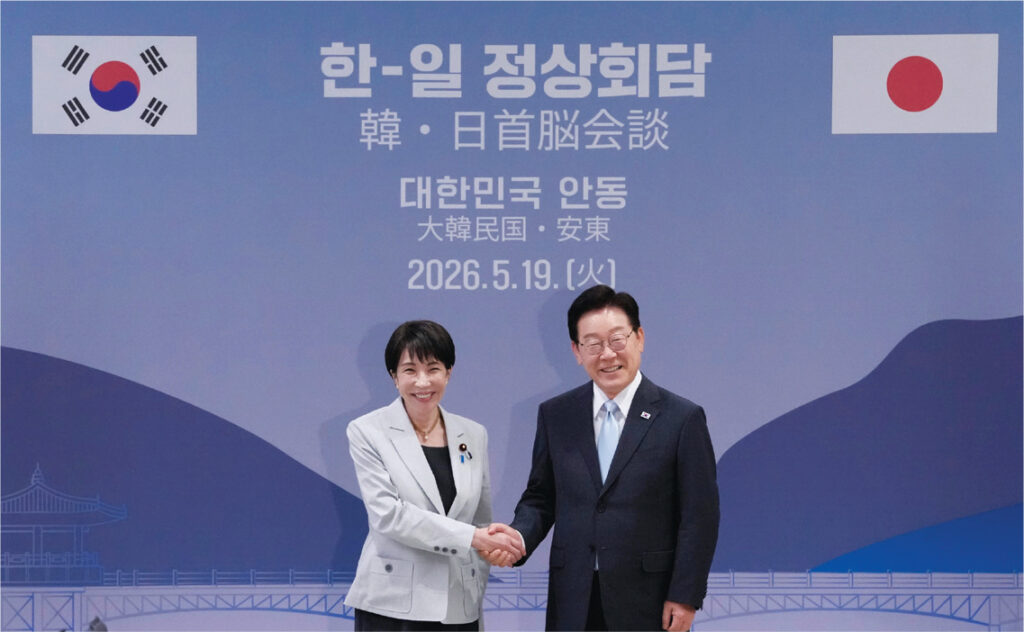
Photo/Ahn Young-joon, pool)
In the 30 years since Inoguchi wrote his article, Japan has seen dramatic changes, but some things remained the same, such as the country’s strong economic relationship with the US.
A trade deal between the two countries happened in July 2025 between President Donald Trump and then-Japanese prime minister Shigeru Ishiba. The deal set a 15% “reciprocal” tariff on Japanese exports; in return, Japan will be investing more than half a trillion dollars.
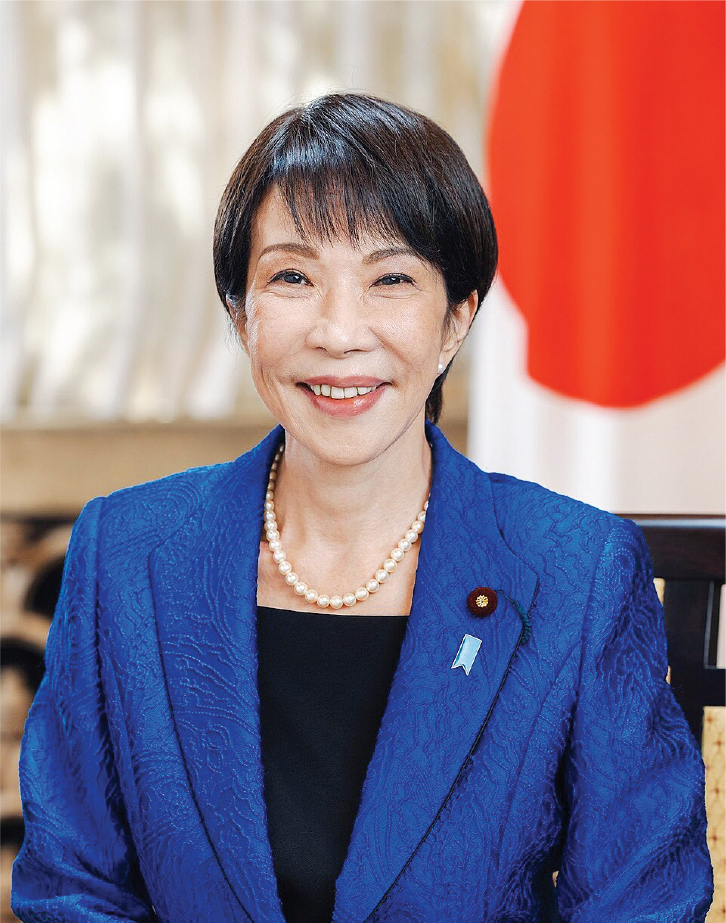
In October 2025, Sanae Takaichi became Japan’s first female prime minister in its entire history. According to reports, she has sought to build a close relationship with Trump.
Early in 2026, the world experienced another oil crisis after a tense conflict between the US and Iran. The 2024 data from Japan’s Agency for Natural Resources and Energy (which was established because of the 1973 oil crisis) showed that 34.8% of the country’s primary energy consumption depended on oil, importing more than 95% from the Middle East.
By the end of December 2025, Japan still had a little over eight months (specifically, 254 days) worth of oil reserves.
“Black gold” wasn’t the only thing that Japan had to be concerned about in the past year or so. The country also experienced a “rice crisis” that started in the first quarter of 2025, which triggered price hikes across the country.
Despite all these, however, Japan still underwent immense economic improvement, with the Bank of Japan raising benchmark rates to their highest level since 1995, while yields on Japanese government bonds reached their highest levels since 1999: 10-year JGBs pushed past the 2% mark, and 20-year JGBs almost reaching 3%.
Tourism in the country has been brisk for quite some time, with a record-high of more than 42 million foreign visitors in 2025 alone, who spent “a record ¥9.5 trillion” in the same year, according to The Japan Times.
In May 2026, Takaichi met with President Lee Jae Myung of South Korea for the fourth time within six months to discuss greater economic cooperation between the two countries, as both have had a tense history of political strife and rivalry for more than a century, exacerbated further by Japan’s 35-year-long violent occupation of the Korean Peninsula from 1910 to 1945.
Thirty years after Inoguchi posed the question of Japan’s place in Asia, the answer remains a work in progress. Its economic ties with the region have deepened, its diplomacy has broadened, while historical issues continue to influence regional perceptions. Yet history continues to shape perceptions, reminding both Japan and its neighbors that reconciliation is not a destination but an enduring process.

Von Zyron Alimorong is a writer and social media point person for the Philippines Graphic. He is based in Makati. His works often dissect human nature, infusing narratives with introspection and existentialist thought. He studied Literature at the University of Santo Tomas and served as a Literary writer for The Flame. He is also the rhythm guitarist for the band COALESCENCE.