

As complicated as it may sometimes be, there used to be a time when Philippine politics was a little bit simpler. Politicians were simpler creatures, too—simpler to predict, that is. A politician may either be part or not part of party. You are either sternly for something or against something.
A little bit more consistency in what (and who) a politician campaigns for exists. Political ideologies exist in a spectrum, and the senators and the mayors and the representatives all fall somewhere along that spectrum.
Some who are part of the same camp may hate their colleagues every now and then, but they agree that they hate more those on the opposite end of the ideological spectrum. The political tide—tumultuous at times, destructive at others—has a pattern one could pick up on intuitively.
At the very least, there was cohesion.
Of course, it wouldn’t last; nothing, except the co-existence of noble servants and corrupted ones, lasts in politics.
Elections come and suddenly some of the “public servants” will serve more the interest of whatever—or whoever—may be elected or re-elected. The people they once swore against, those who share the complete opposite of their views, they will now greet with a smile; applaud their views and speeches with great passion.
“Political butterflies,” the writer C. Stutz Fernandez once called them in 2001. Or the balimbing, as the Filipino people have come to call them, “a fruit with many sharp sides, so that it has been popularly used to describe agile politicians who are able to change sides quickly every time there is a change in the political weather.”
Some 25 years ago, this was what Stutz Fernandez witnessed in his Graphic article published in February 5, 2001, with the victory of the Second People Power Revolution (or EDSA II) making all sorts of drastic changes in the political climate.
A mass political protest which happened at the latter half of January 2001, primarily along the long road of Epifanio de los Santos Avenue, overthrew the administration of the then-President Joseph Estrada.
Stutz wrote about the prediction made by former Senate President Aquilino Q. Pimentel following the EDSA II event, claiming that there was an impending “mass exodus of politicians to the Lakas-NUCD coalition in view of the ascendancy to the presidency of former Vice President Gloria Macapagal-Arroyo.”
Stutz continued: “Pimentel said that “turncoats” are also set to denounce the disgraced former president, Joseph Ejercito Estrada, after formerly backing him up when he was in power, even while he was facing an impeachment process.”
A coup was also imminent, said the rumor that spread throughout Congress at the end of January 2001, but it was “dismissed outright by the senators as unlikely and unproductive.”
Pimentel withdrew from his position as Senate President at this point, when, on the days leading up to the EDSA II, “a majority of 11 senators voted not to allow the opening of an envelope containing the new evidence against then President Estrada by the impeachment court.”
With a new head of the government, the political butterflies began swarming.
“Scarcely had the people savored the fruits of their hard-won EDSA II victory, “balimbing” elements have stated to invade President Gloria Macapagal-Arroyo’s administration,” Stutz wrote.
“Wave after wave of political butterflies and of folder brigades have been falling over each other to catch the attention of the new dispensation so they may promote their self-interests. This scenario, they say, is part of the political culture spawned long before the People Power revolts at EDSA.”
But such culture had spawned after it, too. In fact, it was exacerbated, with the events of the recent coup and crisis at the Senate that happened more than 25 years later on June 2026.
Stutz’s son, veteran journalist Butch Fernandez, is now the witness of such an event, but with far less cohesiveness to the point of being sporadic. Present-day Philippine politics has become a game of Russian roulette or a coin flip in ascertaining what the next event will be and who will be aligning with whom.
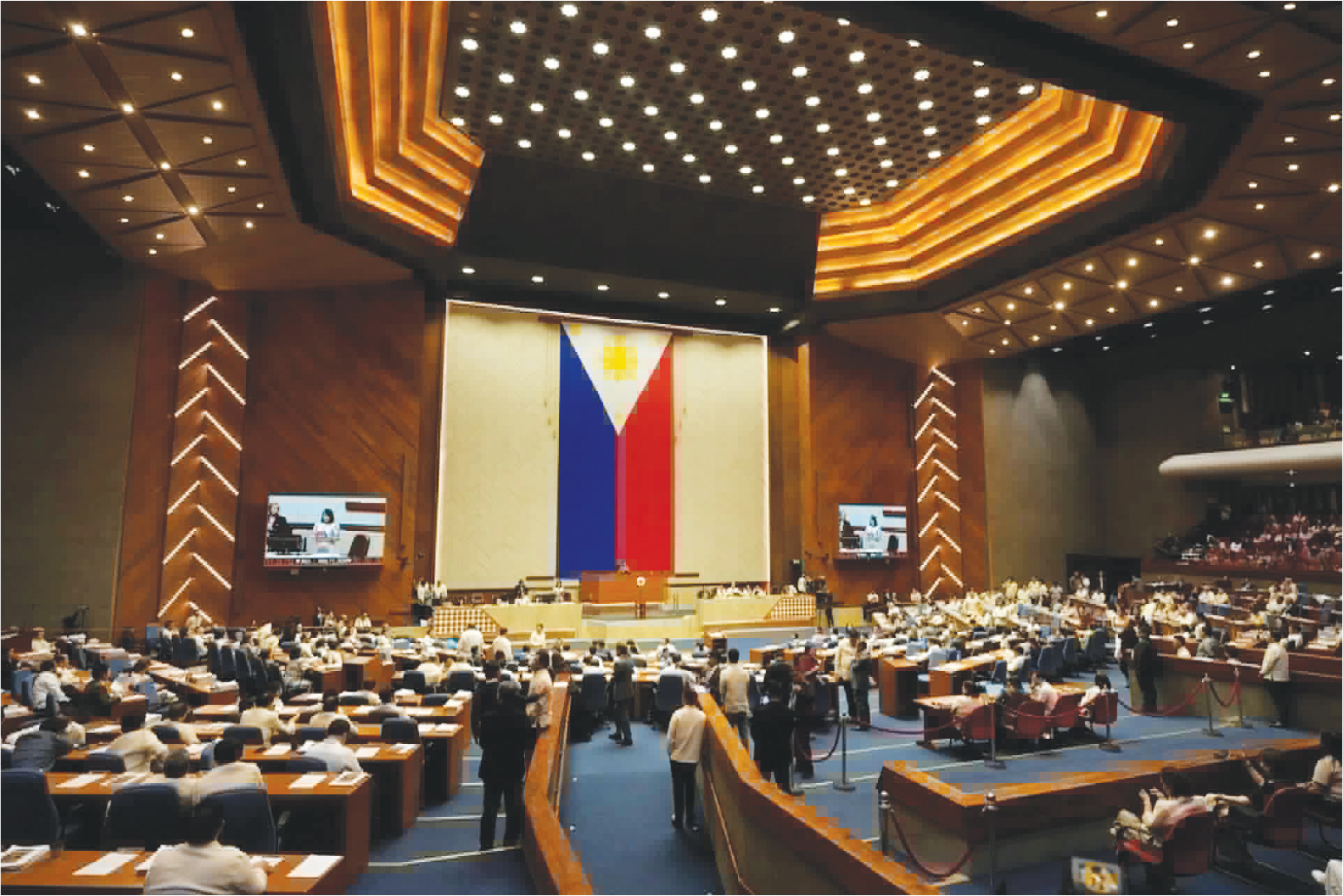
Such were the events witnessed by the Filipino people in the televised proceedings of the Senate—a coup which overthrew then Senate President Vicente “Tito” Castelo Sotto III and subsequently replaced by Senator Alan Cayetano, the disastrous handling of the case of fugitive senator Bato dela Rosa, climaxing to an exchanging of fire within the Senate building, and the struggle of the majority-turned-minority bloc in replacing Cayetano with a fitting replacement, especially with the public disappointment that happened in the fallout of all these events.
Eventually, Cayetano was replaced with Senator Win Gatchalian.
Butch said in an article he co-wrote with journalist Samuel Medenilla: “13 senators, 12 from the Gatchalian bloc plus Sen. Joel Villanueva, on Wednesday (June 17) formally elected Senate President Pro tempore Sherwin Gatchalian as the fourth president of the 20th Congress, ending a stalemate that had disrupted lawmaking in the chamber, and cast uncertainty over the timeline of the looming impeachment trial of Vice President Sara Duterte.”

The appearance of Senator Chiz Escudero to join the minority bloc eventually cracked the opposing side, and the vote of Senator Villanueva made it possible for the minority bloc to overturn the political tide.
From the events that led up to the present, some senators: flipped sides, made comments that contradicted themselves, supported their colleagues then unsupported them, only to end up supporting them again. In the span of no more than two months, what was once a political tide, which only happens at certain times, became an ebb and flow of balimbings: timing themselves to be perfectly framed in a position that will be most favorable to the invisible powers that be or to the public that will decide their fate and future positions.
One could only assume that some of these modern balimbings start their day by looking at the news and flipping a coin to decide to whom they are going to give their most thunderous applause. —Von Zyron Alimorong

Started in 1927, the Philippines Graphic is the longest-running printed magazine of national circulation that provides relevant news and features and promotes Philippine literature.