
At the recent press conference for the 22nd Cinemalaya Philippine Independent Film Festival, Film Development Council of the Philippines (FDCP) Chairman Jose Javier Reyes challenged young filmmakers to “be brave, break rules, and think Filipino.”
While the statement looks toward the future of Philippine cinema, award-winning animator and director Carl Joseph Papa’s 2023 fully-animated film Iti Mapukpukaw had already embodied those ideals three years earlier.
COURAGE THROUGH EXPERIMENTATION
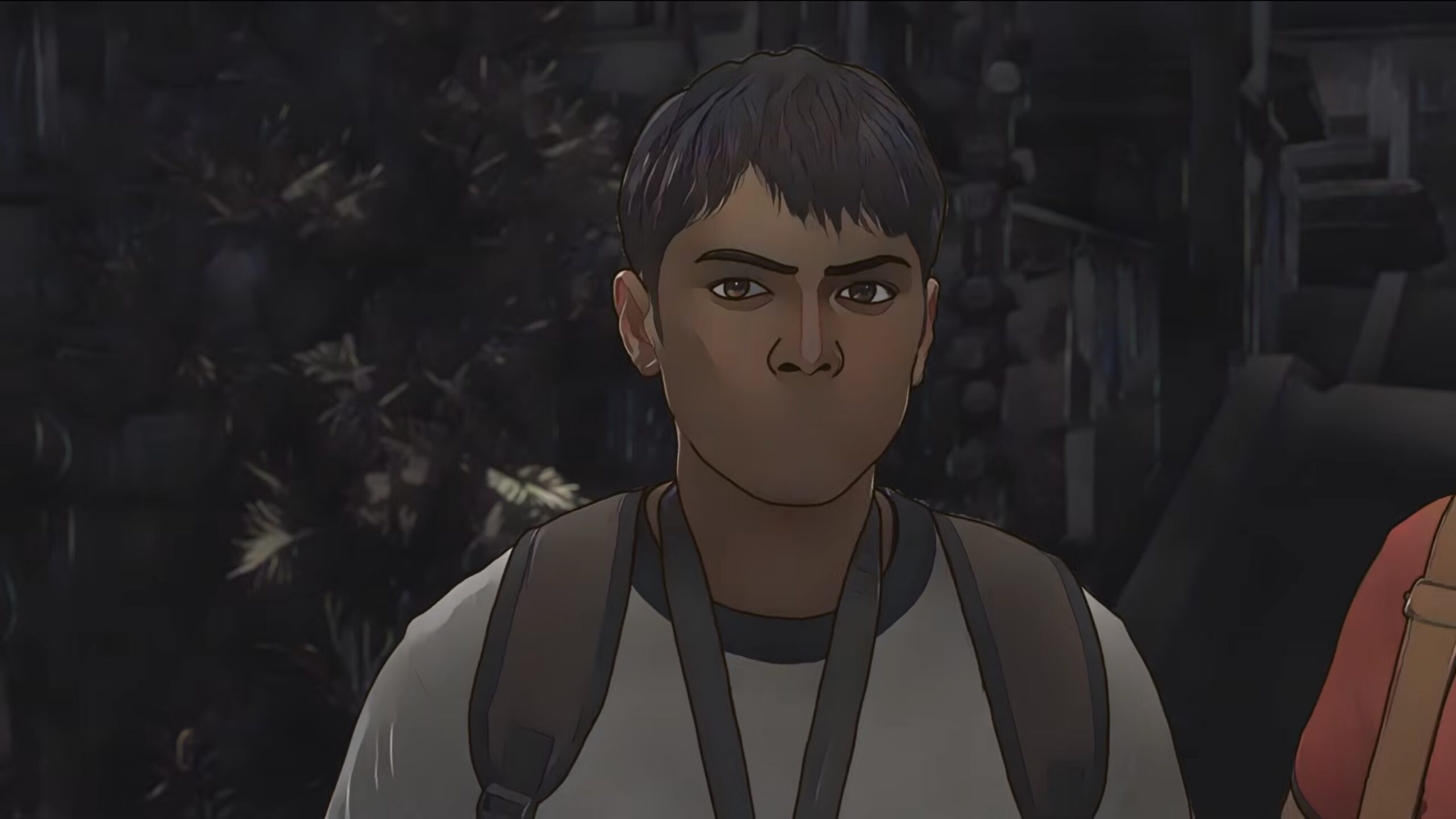
Winner of the Best Film award at the 2023 Cinemalaya Philippine Independent Film Festival, Iti Mapukpukaw is a Filipino-Ilokano animated science fiction drama that follows Eric (Carlo Aquino), a graphic artist living in Makati who has mysteriously lost his mouth. After discovering the death of his estranged uncle Rogelio, the blurry man (Joshua Cabiladas), Eric begins experiencing visions of UFOs and alien encounters that gradually uncover long-buried memories of childhood trauma.
At first glance, the film appears to be an unconventional fusion of science fiction and psychological drama. Beneath its surreal imagery, however, lies a deeply human narrative about memory, grief, silence, and healing.
The film’s greatest strength is its refusal to approach these subjects conventionally. Rather than presenting childhood sexual abuse through straightforward exposition, director Papa constructs a symbolic world where trauma manifests through science fiction.

Eric’s missing mouth becomes more than a physical condition. It represents the inability to speak after violence and the gradual loss of one’s identity. Likewise, the recurring UFOs and alien encounters are not narrative spectacles but visual metaphors for Eric’s fractured memories and psychological wounds.
By externalizing trauma through genre, the film transforms difficult subject matter into a cinematic language that remains emotionally accessible without diminishing its weight.
Iti Mapukpukaw’s restrained characterization further reinforces this approach. Eric communicates very little through dialogue, relying instead on body language, pauses, facial expressions, and even the whiteboard he carries to express himself.
Carlo Aquino’s understated performance allows the audience to gradually understand Eric’s emotional state without excessive exposition, while the film’s quiet tone avoids melodrama despite its emotionally demanding themes.
RESTRAINT BREEDS CREATIVITY

The medium enables dreamlike imagery, fragmented memories, and surreal transitions that a live film could not quite demonstrate as animation does. The film’s textured visual style mirrors Eric’s fractured psychological condition, making animation itself an extension of the narrative rather than mere visual decoration.
The same restraint is also reflected in the film’s craft. Animated feature films remain relatively uncommon in Philippine cinema, particularly those intended for adult audiences. Rather than treating animation as a stylistic novelty, Iti Mapukpukaw fully integrates it into its storytelling.
Papa also demonstrates confidence in the audience through the film’s structure, especially in the story arc of Eric successively losing his eye, ear, hand, and his genitalia after the emergence of his past traumas and during his confrontation of such experiences.
Memories emerge alongside present-day events, reality overlaps with Eric’s hallucination of the alien, and viewers reconstruct Eric’s past as he confronts it himself through the UFOs and the aliens. Even the deliberately measured pacing serves the narrative, reflecting the slow, fragmented process through which trauma resurfaces.
Iti Mapukpukaw gradually reveals its emotional core without relying on explicit explanations. Even at the end, when Eric found all the missing parts of his identity, the scene was slow, almost emotional and tender.
‘THINK FILIPINO’
Reyes’ challenge to “think Filipino” is perhaps where the film resonates most strongly.
Performed in Ilokano, Iti Mapukpukaw embraces regional storytelling without sacrificing universality. Its depiction of family, silence, emotional restraint, and migration between province and city reflects experiences that feel distinctly Filipino while remaining broadly relatable.
Dolly de Leon’s portrayal of Rosalinda as Eric’s caring mother captures the complexities of Filipino motherhood—protective, loving, and burdened by unspoken truths—adding further emotional depth to the film’s exploration of family relationships.
Rosalinda’s character and its autonomy were not much explored in the film, as it was heavily dependent on Eric’s existence. It is seen in the film that Rosalinda is always in contact with Eric through their usual video call or through messages.
Iti Mapukpukaw uses science fiction to tell a story grounded in local realities. Its regional language and symbolic storytelling demonstrate that Filipino identity in cinema is not confined to setting or dialogue.
More than two years after its Cinemalaya victory, Iti Mapukpukaw remains a compelling example of the kind of cinema the FDCP Chairman called for: brave in its themes, bold in its form, and unmistakably Filipino in its storytelling.
The challenge facing Philippine cinema is no longer whether such films can be made, but whether they will continue to be supported, revisited, and treated as models for the industry’s future.

Hjadoeya Calica
Hjadoeya Calica is a cinephile, reader, and a content writer for Philippines Graphic whose roots trace back to La Union and Aurora. She studied AB Literature at the University of Santo Tomas where she served as the Literary Editor for The Flame. Currently based at the heart of Makati, she finds inspiration in stories of every kind, spaces, and places.