
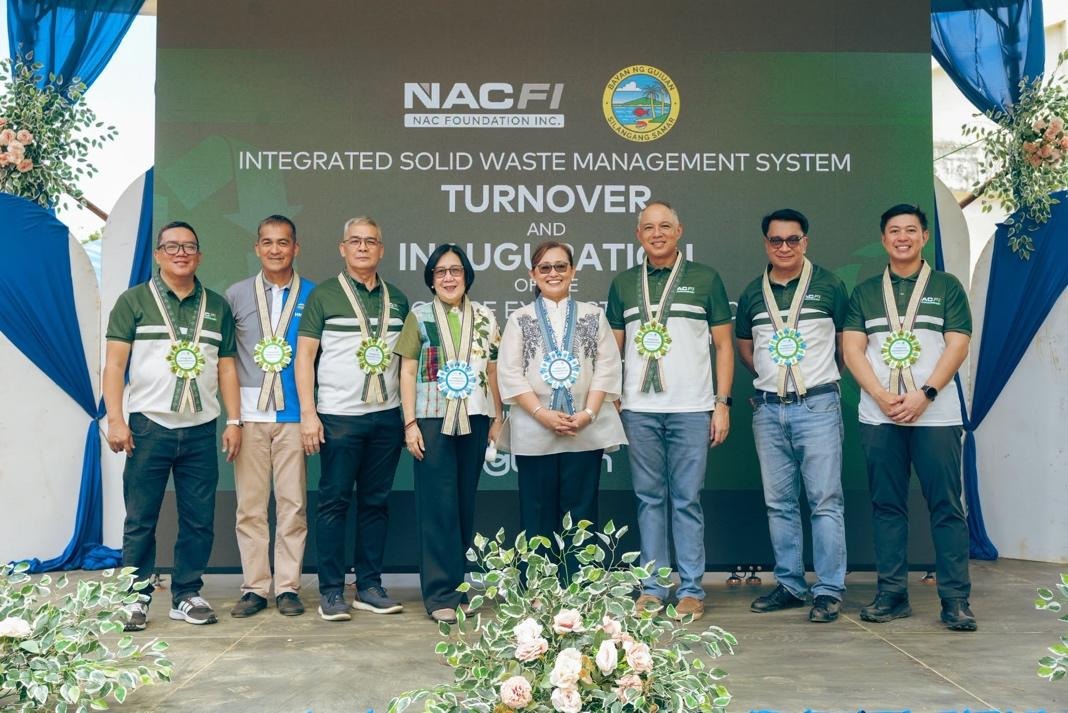
VIA GRAPHIC PLUS | Guiuan, Eastern Samar (September 22, 2026) — A P25-million solid waste management facility donated by the NAC Foundation Inc. (NACFI) to the Municipality of Guiuan is now operational, providing the town with equipment to recover recyclable materials, process organic waste, and turn discarded materials into usable products.
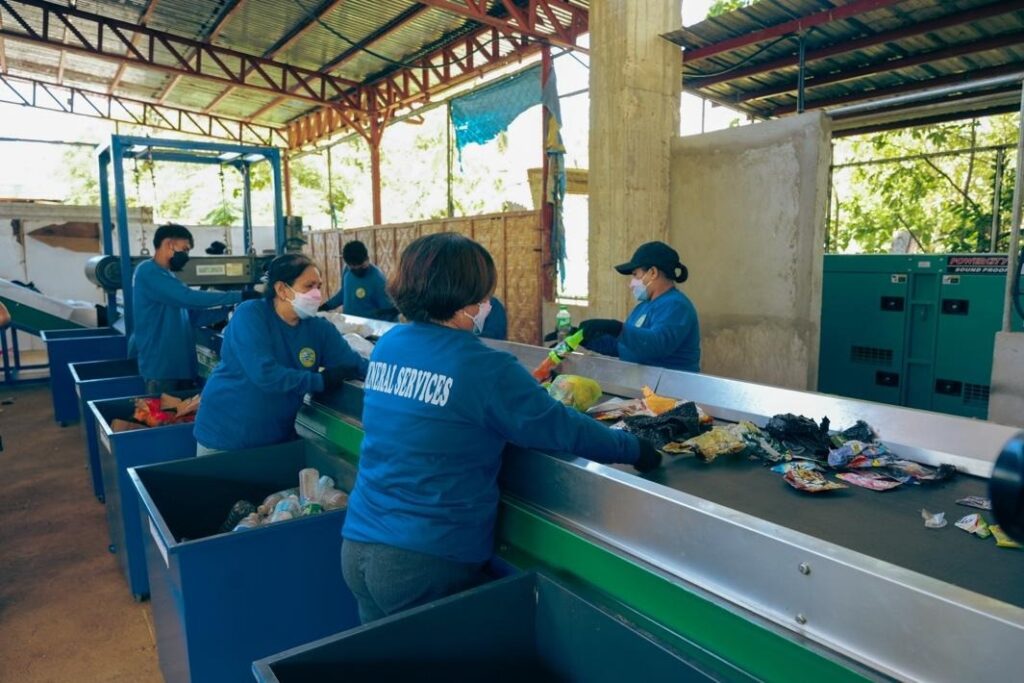
Collected garbage bags are loaded onto a conveyor feeding into a specialized mechanical bag opener, which rips open the bags and spreads out mixed materials. This is part of the newly inaugurated GREEN Facility in Guiuan, Eastern Samar.
The Guiuan Resources Ecocycling, Extraction, and Neutralization (GREEN) Facility, located within the Guiuan Eco-Waste Management Center and Park, has the capacity to recycle various types of waste. Equipped with a conveyor belt for waste segregation, it also has a multipurpose shredder, glass crusher and pulverizer, concrete mixer, and eco-brick maker.
“Through the NAC Foundation and Hinatuan Mining Corporation-Manicani, we hope that this new waste management infrastructure would help Guiuan turn waste into useful resources: rich compost for farm soils and sturdy eco-bricks and pavers that can help build local projects,” said Martin Antonio G. Zamora, president and CEO of Nickel Asia Corporation.
NACFI also provided the electrical line needed to power the machinery, as the existing capacity of the Guiuan Eco-Waste Management Center and Park was not sufficient to support the equipment.
The municipality generates an estimated 15,824 kilograms of waste daily, based on the Department of Environment and Natural Resources (DENR) waste generation rate of 0.3 kilograms per person per day. According to Guiuan Mayor Annaliza Gonzales-Kwan, the challenge is not only the volume of waste but also the limited options for its final disposal.
“Guiuan has transformed significantly. We have become one of the emerging business and economic centers of the province, and we have been recognized among the top 10 fastest-growing economies in the region. More progress, more people, more businesses, more industries, more tourists, all equal to more waste,” said Gonzales-Kwan.
“There is another reality that makes this facility particularly important for us. Much of Guiuan’s underground geology is characterized by sinkhole-prone areas, and because of this, the DENR-EMB has not recommended the establishment of a conventional sanitary landfill in the municipality. This integrated solid waste management system is designed to address solid waste management at a larger scale,” she added.
Through the donation, the municipality is also able to implement Republic Act No. 9003, or the Ecological Solid Waste Management Act of 2000, which requires local governments to establish systems for waste reduction, segregation, collection, recycling, and disposal.
The local government is urging households, business establishments, institutions, and barangay local government units to strictly observe waste segregation and comply with its “no segregation, no collection” policy to ensure that the facility can operate effectively.
The waste-management initiative comes as Guiuan also steps up community clean-up and dengue prevention efforts. Executive Order No. 07-94-2026, issued by Gonzales-Kwan, directed the municipality’s 60 barangays to strengthen clean-up activities and dengue prevention measures following reported dengue cases in July 2026.
“Real, lasting change happens at the LGU level, but to sustain it requires a village. That is all of us. Through this partnership, we hope to empower Guiuan to not only envision a resilient future, but to take decisive, actionable steps toward building a truly sustainable community,” said Zamora.
Started in 1927, the Philippines Graphic is the longest-running printed magazine of national circulation that provides relevant news and features and promotes Philippine literature.

 to the Municipality of Guiuan is now operational, providing the town with equipment to recover recyclable materials, process organic waste, and turn discarded materials into usable products.)