

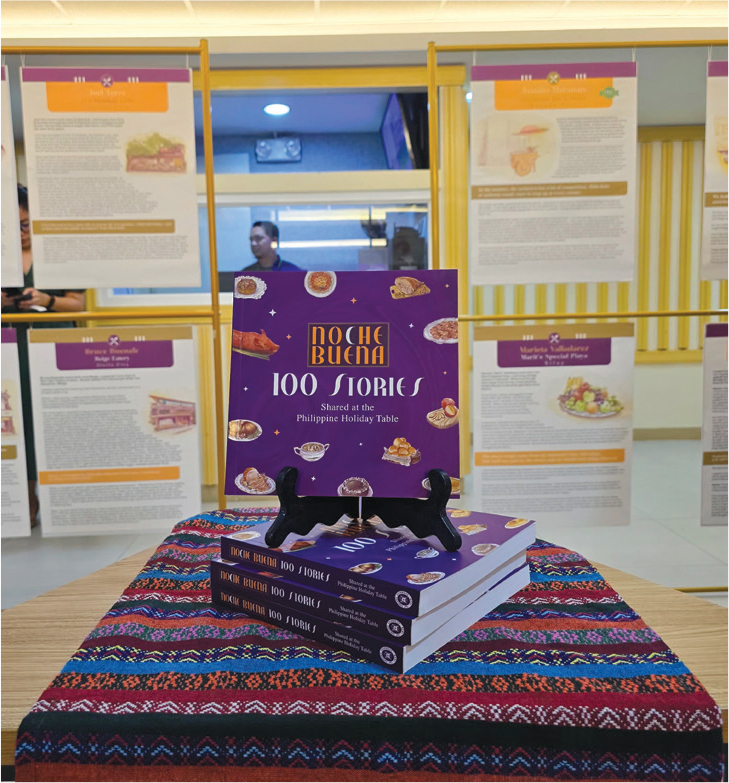
It might not be that obvious to the general public, but the Philippine publishing scene has seen significant growth in the past decade.
One could generally divide the publishing houses in the country into three categories: The commercial or traditional publishing houses, the indie/specialized press, and the university presses.
Local traditional publishing houses such as Anvil Publishing and Adarna House are just some of the players, as the indie scene is booming as well.
And then, there’s the university press, which occupies the space between huge, privately-owned corporations and the smaller-budgeted businesses.
Thus, these university presses stand as the perfect resource in tracing the future direction of the Philippines’ publishing industry.
And if their answers are any indication, things may progress slowly, but the publishing scene shows no signs of slowing down anytime soon.
PH PUBLISHING HOUSES
For the established traditional publishing houses, there are giants such as the two previously mentioned, as well as Vibal Group, Psicom, and Precious Pages. They typically supply the commercial publications.
The indie category has rising powerhouses such as Avenida Books, Milflores Books, Gantala Press, and Exploding Galaxies.
But university presses hold an especially interesting position: They are not the usual huge private companies,but they are neither niche nor emerging ones. There is still the desire for commercial success, but it is not theironly driving force.
They are most certainly not new, with a few of them (for example, the University of Santo Tomas Publishing House) being older than many of these commercial publishers.

“Because we’re so committed to knowledge production,” said Dr. Rica Bolipata-Santos, who serves as the director of the Ateneo de Manila University Press (AUP), during an exclusive interview with the Graphic, “we’re not so tied to profit.”
For eight consecutive years, the AUP has been named as the National Book Awards’ “Publisher of the Year.” The AUP director had expressed her overwhelming gratitude for the recognition.
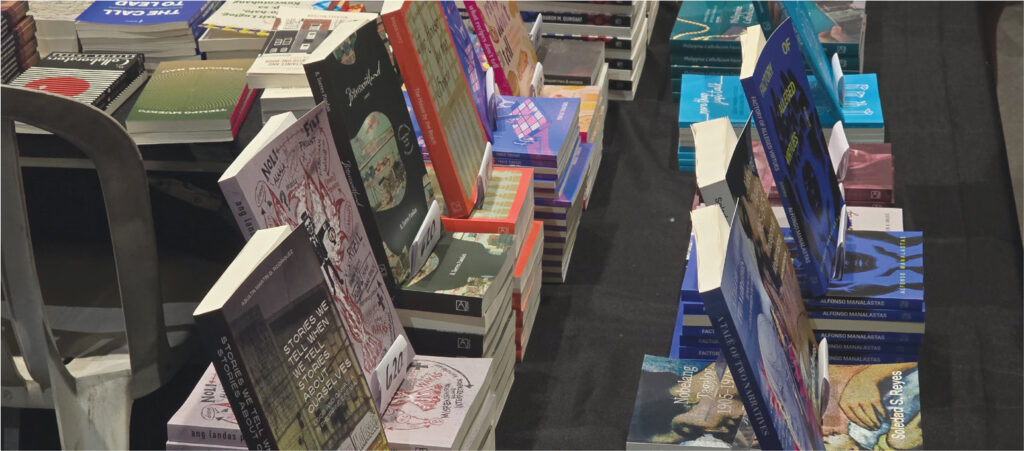
“It does say something about the press, and it’s a validation of the professional work that we do,” she said.
Recently, the country’s publishing scene has been reaching milestones. In 2025, the Philippines became the guestof honor at the 77th Frankfurt Book Fair (FBF)—a major win for the local book industry at large, as it exposed Filipino writers and publishers to wider international exposure.
Melany Caperal, who manages FEU Publications (of the Far Eastern University) expressed her excitement in an email interview with the Graphic. She said that the country, as the FBF’s guest of honor, “promises exciting times ahead for Philippine publishing.”
WORRISOME DATA
Despite such achievements in the global scene, recent reports present a different picture locally.
Earlier in the same year as the FBF milestone, the Philippine Statistics Authority released the results of the 2024 Functional Literacy, Education, and Mass Media Survey (FLEMMS), “which aims to gather data as bases in determining the state of literacy in the country.”
The results revealed that 9 out of 10 Filipinos have basic literacy, and only 7 out of 10 have functional literacy, with nearly 2 million Filipino students still having trouble with their reading comprehension.
In another report by the Second Congressional Commission on Education or EDCOM II published in the Senate of the Philippines’ website in January of this year, an alarming finding showed that “proficiency rates among Filipino learners decline sharply as they advance through the education system.”
Reading comprehension is a problem, so too does interest in reading decline. The reading and intellectual capacity of many Filipinos are stunted by a struggling education system. After all, reading and education remain deeply interconnected.
UNIQUE POSITION
These are just some of the reasons this writer thinks that the university presses occupy a uniquely important position.
Even if they do have to consider the commercial viability of any given project (as publishing a book incurs financial costs) in some aspects, they are not strictly tethered by such, in the same way privately owned publishing companies are.
They are big enough to have the resources of traditional publishing houses, but also remain independent enough like indie presses. This gives them more freedom to entertain daring, experimental, or unconventional works, or those that do not cater to the market, but rather seek to challenge the reader.
More than that, the very nature of university presses being attached to academic institutions allows them to target what Filipino audiences need: the knowledge and critical thinking skills needed to engage with important issues.
When asked about the particular role that only a university publishing house is capable of fully achieving, Caperal said that “university presses have the role and responsibility to bring niche topics and make research outputs more accessible to readers.”
She continued that “when we published A Guide to Gingers of Sorsogon by Rudolph Valentino Abrenica Docot in collaboration with the [FEU] University Research Center, we didn’t think about market potential, but we wanted to get it out, in the hopes that this will help people get to know more about the ginger and appreciate its diversity.”
As an example, Dr. Bolipata-Santos spoke of a book that possibly only five people will read. “Pero parang kailangan siya sa mundo, kailangan siya [But it seems like the world needs it, it’s needed] as a resource…as an archive. Kailangan siya [It’s needed] as the beginning of some bigger work.”
But she admitted to Graphic that “it’s so esoteric; it’s such a tiny part of the world… [but] kailangan siya ng world [the world needs it],” the AUP director said. “It might not make money, but because our business is not [for] ‘profit’—our business is information and knowledge—then we will publish.”
GOING (MORE) MODERN
In line with such a drive to provide a platform for unheard voices, niche topics and specialized research, as well as reach as many people as possible, both the FEU Publications and AUP shared their efforts to modernize.
Caperal told Graphic that they are “pushing for more titles that are non-FEU centric and non-fiction.”
As FEU Publications approaches its centennial year in 2028, she said that “we want to diversify our publishing output while maintaining our core scholarly mission. We aim to rediscover voices that shaped Filipino identity and patrimony through books that are anchored on research, provide practical advice for an intended audience, and target non-saturated fields and topics.”
Dr. Bolipata-Santos said they are “trying to modernize [their systems, while] trying to [become more adoptive and] adept… We want to eventually get to other ways of producing books [and] working with other vendors to make our books more available abroad.”
The AUP director also shared that she’s interested in “making sure that the writers who are no longer in publication remain published so that our kids still have the opportunity to read them.”
She, likewise, said that AUP will be releasing its first audiobook, and that they have been working on a lot of translations.
Both university presses are hopeful about the future of the publishing scene in the country. Caperal sees the landscape as “more active and vibrant,” while Dr. Bolipata-Santos shared that “it’s very exciting, because there are many different kinds of publishers and many different kinds of publications out there.
It’s a good time to be an author.” FEU also saw an increase in their engagements and sales during book fairs, which “proves these events still draw not just crowds, but readers who actually buy books and participate in the different reading/literary/academic activities.”
KNOWLEDGE BEACONS
But how do we reconcile the progress in publishing with the country’s educational struggles and reading comprehension? University presses are not the destined saviors—that should be made clear. They are not the “be-all” and “end-all” of educational concerns in the country. These institutions occupy a special position, in such a way that they have a considerable capability to substantiate the shortcomings of a flawed education system.
They are the closest to the students; they know their educational needs, and how to deliver to them more efficiently.
At this point in time, they are perhaps some of the most efficient routes to combat the dwindling reading comprehension levels in the country: not purely driven by profit, but knowledge dissemination. Perhaps, that is what this country needs most now.
This article was published in the May 2026 issue of the Philippines Graphic.

Von Zyron Alimorong
Von Zyron Alimorong is a writer and social media point person for the Philippines Graphic. He is based in Makati. His works often dissect human nature, infusing narratives with introspection and existentialist thought. He studied Literature at the University of Santo Tomas and served as a Literary writer for The Flame. He is also the rhythm guitarist for the band COALESCENCE.