
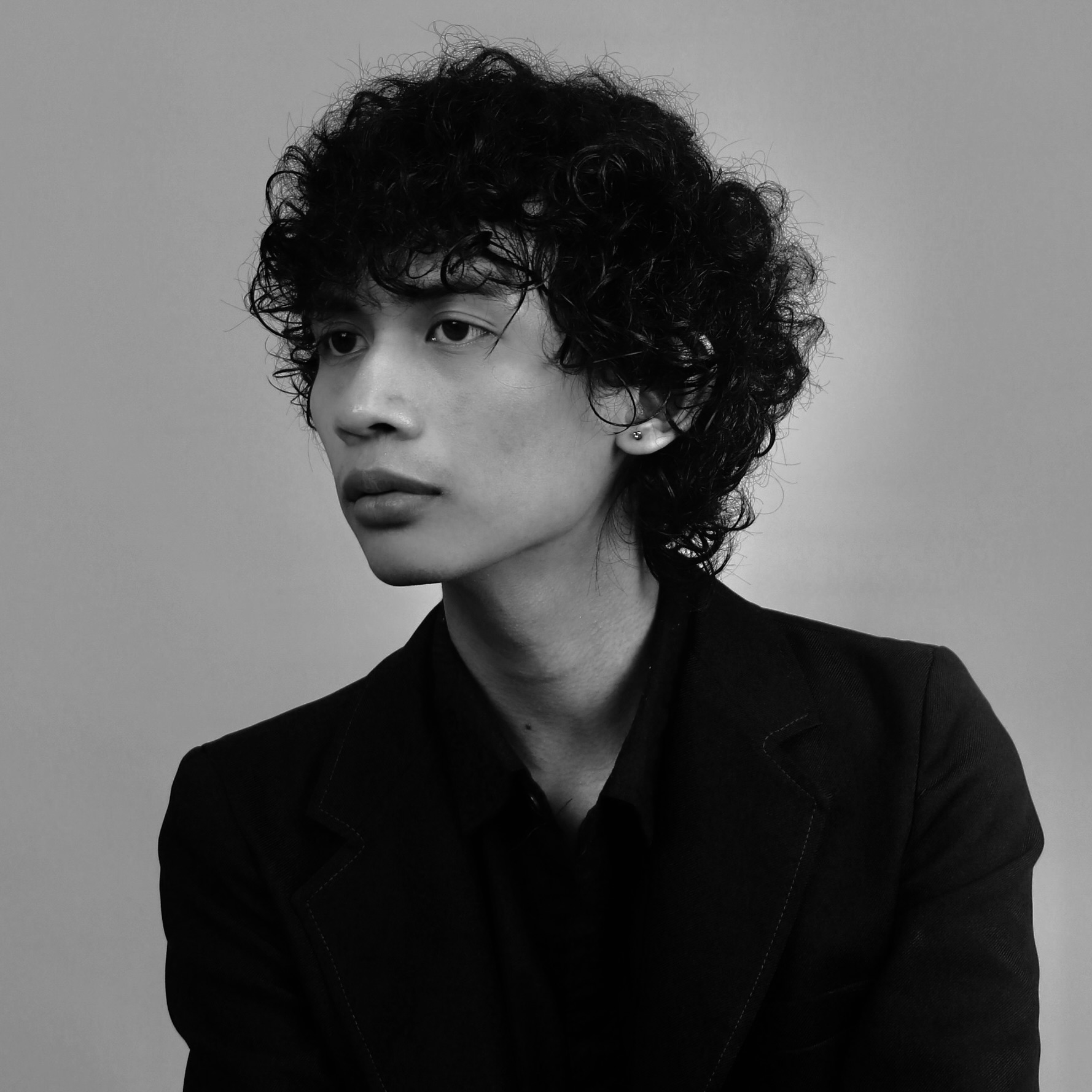
It is “the brief stretch of Mendiola that can claim to have been the starting point of the U-Belt”
Any Filipino who studied in Metro Manila has likely encountered the University Belt at one point or another. What has become known as “U-Belt” is more of a de facto subdistrict of the City of Manila than it is a formal label for the cluster of schools and higher education institutions.
The boundaries of where U-Belt begins and where it ends have changed as much as the number of schools that comprised it. Writing under the nom de plume Quijano de Manila, Nick Joaquin’s July 1990 Graphic article “The Making of U-Belt” explored the case on the subject by delineating “Manila’s collegiate zone” as the “area extending from Calle Arlegui in Quiapo to Governor Forbes in Sampaloc, bounded in the west by Quezon Boulevard and in the east by Dr. Jose P. Laurel Street.”
At present, Recto Avenue is known for being an integral part of the “Belt,” but it is not here where the hub of schools began, according to Joaquin. Rather, it is “the brief stretch of Mendiola that can claim to have been the starting point of the U-Belt.”
The author continued: “All this Mendiola area was swampland, empty and desolate. What’s now the borough of San Miguel was originally an island cut out by the Pasig and the Estero de San Miguel.” The Americans transformed the wetlands of San Miguel into land suitable for urban development.
He wrote: “You would have been thought crazy if you had predicted campuses here.”
PROGRESSIVE IN 1900s
Whatever their origins, one thing is certain: the contribution of these founders to the country’s progress can hardly be measured. Education is essential to the development of a society, especially in the Philippines, which was still reeling from the effects of the Spanish colonization during the turn of the 20th century.
These schools were progressive. Colegio de la Consolacion was the first school in the country to teach English, and the “first to be lighted up with electricity, at a time when only streets and plazas and the tranvia [or trolleycars] had electric lights.”
At the time, no school other than San Beda boasted a “football field and a pair of swimming pools.” Its abbey school is a rarity for its gothic architecture.
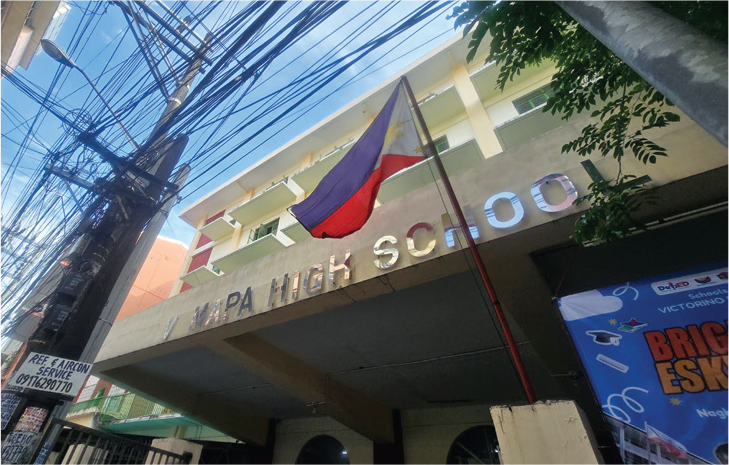
Or, how about the Mapa High School (originally called East High) and how there was a time when, as Joaquin puts it, “Mapa High would make all its academic neighbors on Mendiola look like chickenfeed,” as they had “seven annex buildings, an enrollment of over 11,000, a faculty 500 strong, and a yearly budget of over a million pesos when the peso was hard coin.”
TIME CHANGES THINGS
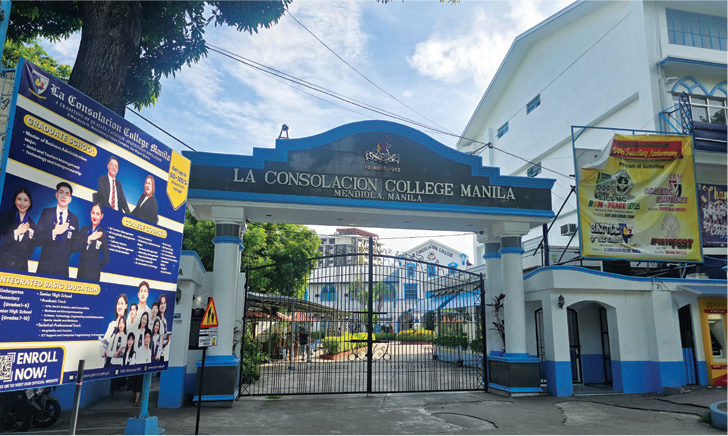
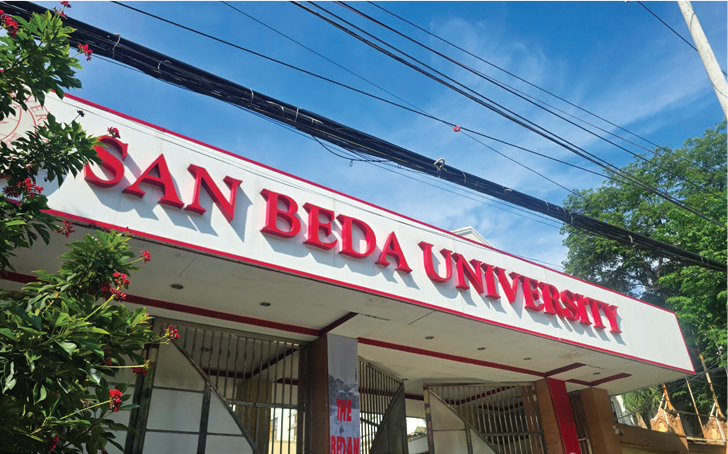
La Consolacion College Manila and San Beda University have shed their original Spanish-influenced names. Photos by Von Alimorong.
In the 126 years since the first two U-Belt schools—San Beda and La Consolacion—were founded in 1901 (and in the 35 years since the former Philippine Graphic editor-in-chief wrote about the beginnings of the de facto subdistrict), a lot of things have changed, but some things have remained, more or less, the same.
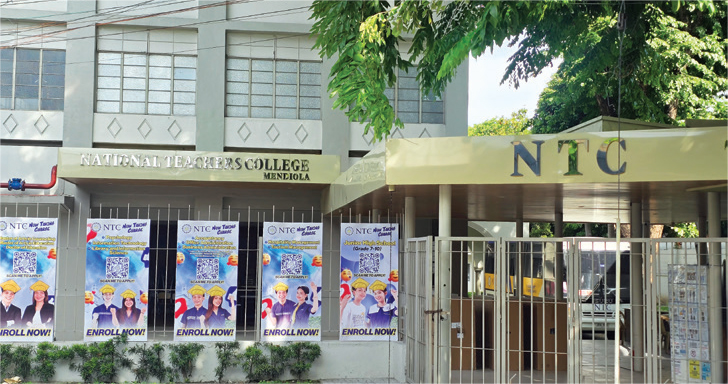
At the top of the list of the biggest changes would be the Holy Ghost College (later renamed College of the Holy Spirit Manila)—or more specifically, how it permanently ceased all its operations in April 2022 after the effects of the pandemic heavily struck the 108-year-old school. An annex campus of National Teachers College now stands on the site.
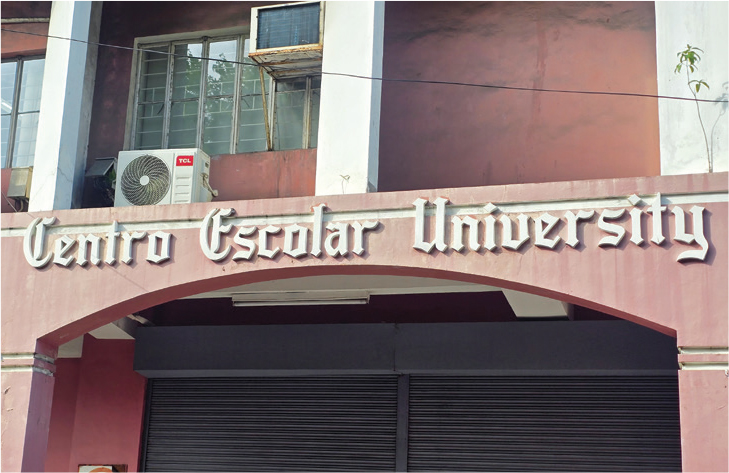
Several schools have also undergone name changes. Mapa High School is now called Victorino Mapa High School; Colegio de la Consolacion became La Consolacion College Manila; Centro Escolar de Señoritas is now known as Centro Escolar University or CEU; and Colegio de San Beda also shed its Spanish-influenced name and became San Beda University.
The dormitory situation around the U-Belt area hasn’t drastically changed all that much since Nick Joaquin wrote in his 1990 article: “In the present U-Belt you’d be lucky to get bed space wide enough to breathe in. And don’t you expect any perfume of jasmine in the air—not with all those toilets that don’t flush!”
Not that it didn’t show any improvements; dormitories, condominiums, and apartments several stories tall populate this section of the city, especially since the demand for a place to stay near U-Belt is always high. As Joaquin put it: “the old bog transformed into a new suburb that’s now part and parcel of the U-Belt, being mostly a dorm jungle.”
Dorm jungle—the U-Belt still is. Floods still inundate the U-Belt during the rainy season, and some parts of San Miguel still suffer from poor environmental conditions. Said Joaquin: “When there was yet no Mendiola Bridge, the east stretch of Azcarraga [now Recto] ended in a tiny square called La Plaza de Santa Ana, alongside the Estero de San Miguel. This was then a stream so clear you could see the pebbles at the bottom—but it’s now so black and stinking it’s one of the most repulsive sights in the city.”
But not all is distressing in Mendiola. What began as small colleges atop a wetland are now internationally recognized universities offering a wide variety of programs, and often renowned for their consistent achievements in a particular field, such as San Beda being widely regarded as one of the best law schools in the country, and CEU offering some of the best health sciences programs.
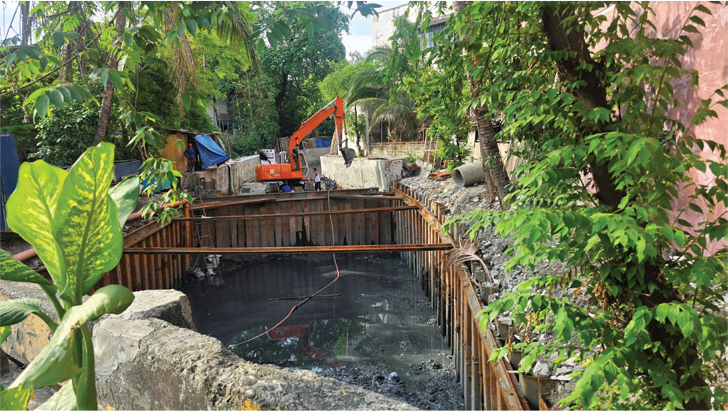
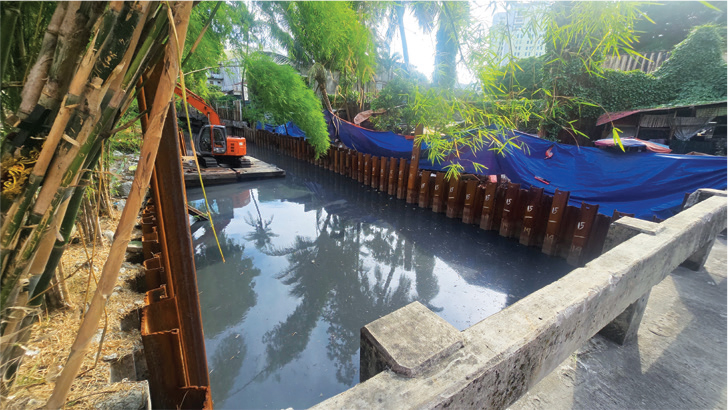
The state of the waters near the colleges. Photo by Von Alimorong.
Several schools have emerged around the area and are commonly included in the U-Belt roster. Among them are University of the East Manila (originally Philippine College of Commerce and Business Administration, which was founded in 1946 and situated along Recto Avenue), National University, and the University of Manila. Extending beyond San Miguel, one would find the Far Eastern University and the University of Santo Tomas (which established itself in the Sampaloc locale in 1927).
A crucial piece of our country’s academic excellence stems from this part of the city—the former “swampland, empty and desolate” continues to make its contribution to our society for our citizens to learn and eventually light the way for our Motherland.
This article was published in the June 2026 issue of the Philippines Graphic.
RELATED ARTICLE
The Making of U-Belt, written by Quijano de Manila
Von Zyron Alimorong
Von Zyron Alimorong is a writer and social media point person for the Philippines Graphic. He is based in Makati. His works often dissect human nature, infusing narratives with introspection and existentialist thought. He studied Literature at the University of Santo Tomas and served as a Literary writer for The Flame. He is also the rhythm guitarist for the band COALESCENCE.