
National Artist for Literature N.V.M. Gonzalez said that the provinces power Filipino writers’ imagination, and that the finest writers come from there—but how? More importantly, why?
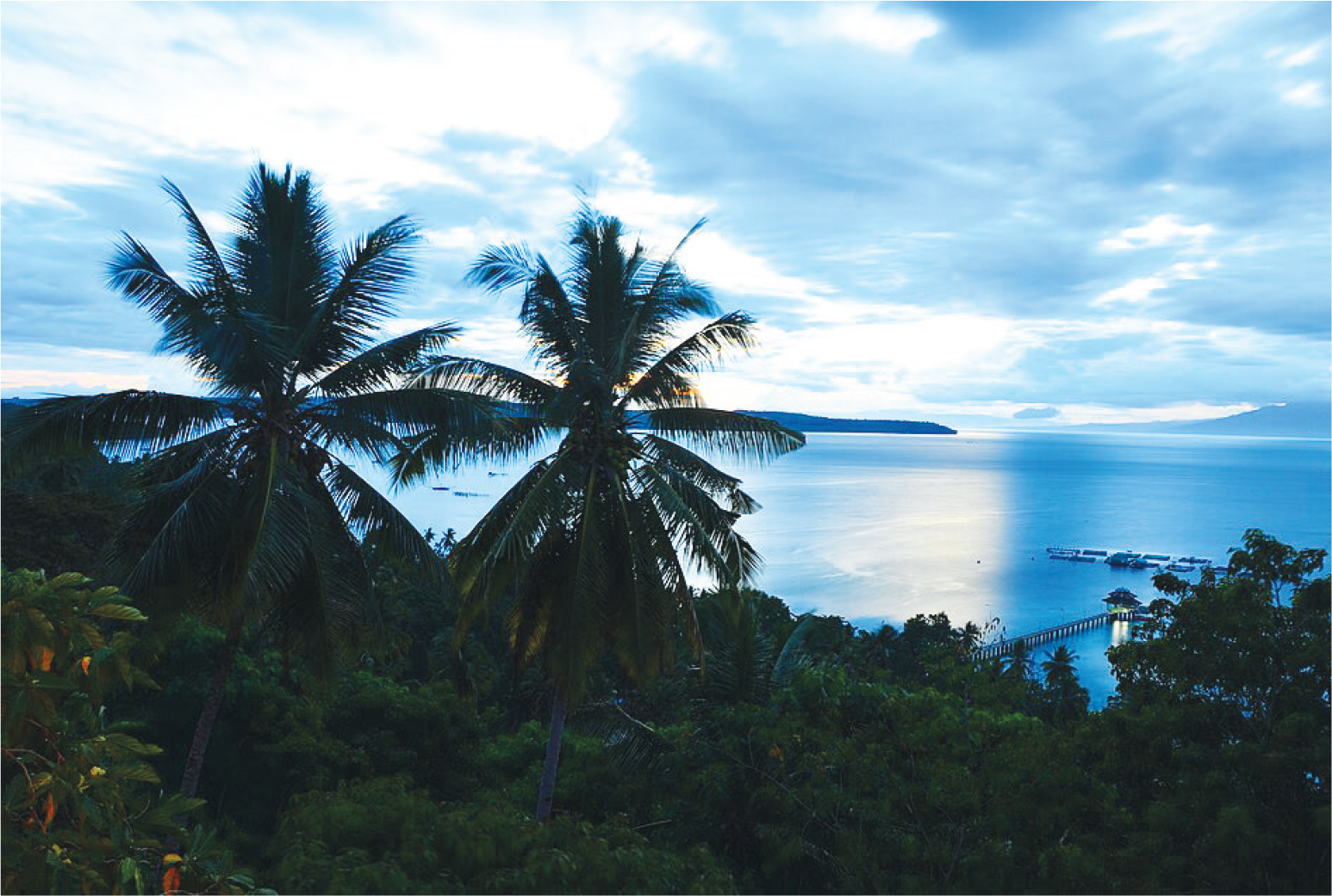
In the province, far from the bustling and sleepless Metro Manila where there exists a strange mix of “everyone-ness,” lies a certain magic that the country’s capital city, no matter how hard it tries (if it dares), won’t be able to replicate.
This writer learned this when he stayed in the City of Manila for his tertiary education, after having lived in Pangasinan (and had rarely left the province) for 17 years. Perhaps, it was the city’s hurried pace, or the ginormous population mostly composed of people who initially came from other places.
National Artist for Literature N.V.M. Gonzalez thought so too in 1996. The provinces “fired your heart and spirit, and made you the writer you’ve become,” he said during the University of the Philippines’ 25th National Creative Writers Workshop.
“In Manila, you get to be published, and you win awards and bring home prizes—only to remember that it was really the province that had filled your imagination,” Gonzalez argued.
According to Aurelio A. Peña’s 1996 Graphic article “No writer is an island,” the late national artist and the magazine’s former editor-inchief Nick Joaquin took issue with Gonzalez’s claim.
“The Manila I had been born into, and had grown up in, had yet to appear in our English fiction—although that fiction was mostly written in Manila, and about Manila,” Joaquin said.
Yet even that, Gonzalez argued, came, in one way or another, from the imagination birthed in the provinces.
PROVINCE AND IMAGINATION
What is the power of the province in a Filipino writer’s imagination? Have Gonzalez—and perhaps even this writer—romanticized the places outside the city? Was the romanticization born out of a displeasure with the too-mechanical and seemingly unfeeling metropolis?
Beyond the content of the story or the setting, the unique taste of the language plays a major role in this dynamic.
When the 25th UP National Creative Writers’ Workshop was held in Samal Island in Davao, Gonzalez said: “We probably will be multilingual here, if creativity of expression were to be hugely encouraged; we would have more poetry straight from the soil, rather than a derivative form of expression, which is the bane of too urbanized imaginations.”
It is not only that the provinces power the imagination; Gonzalez also believed that many of the finest writers come from outside Metro Manila.
A great deal of fine writing indeed exists beyond the borders of the National Capital Region (NCR). Based on Peña’s accounts: “Gonzalez cited the poetry of Davao poetess Eva Elaine Aranas as earthy, coming straight from the soil; and the Cebuana stories of Davao writer Satur Apoyon, and Basilan writer Papias Apoyon, as all reflective of the richness of our contemporary literary and provincial culture.”
The mythos, the language, or even the difference in life between the bustling capital and the localities outside it feed the literature born from it. One aspect that could further explain why Gonzalez praised the provinces the way he did was rooted partly in decolonization.
Our country had suffered under the control and influence of the colonizers. Foreign powers have reshaped or diluted what once was ours with their own brand of national identity.
Nearly 80 years have passed since We had been freed from the Americans (and about 120-plus since Spain). But in pursuit of globalization, other cultures continue to be ingrained in our society, most evidently in Metro Manila, where many people eventually pass through at some point in their lives.
But it is in the provinces where some of our heritage’s roots remain particularly strong. Remove language from the equation, and what remains are the culture, norms, and everyday realities rooted in local communities.
ALL SORTS OF PLACES
Since Peña’s article was situated in a writing workshop in 1996, it is only appropriate that we situate ours in a writing workshop that happened recently. Here, this writer draws from the recently concluded first season of the Philippines Graphic Literary Workshop (PGLW), not simply because of convenience, but because it runs parallel to Peña’s article which was a workshop that happened outside Metro Manila.
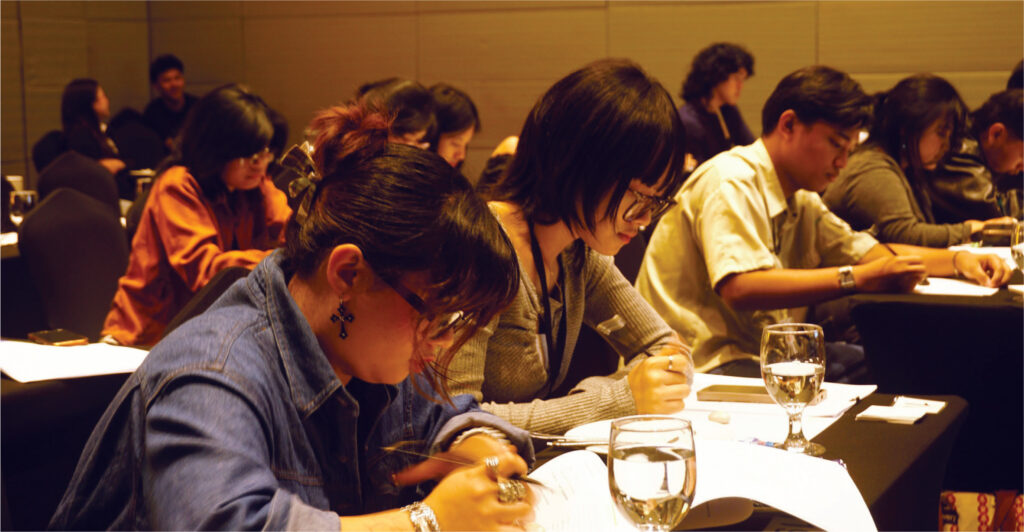
The PGLW, meanwhile, happened inside the metropolis, particularly at the Luxent Hotel along Timog Avenue in Quezon City. There were three episodes in total for the workshop’s first season, with sessions held monthly from February to April 2026.
There were a total of 87 fellows who completed the workshop. Since the Graphic opened the PGLW to all college undergraduates nationwide, many came from outside Metro Manila: Batangas, Cebu, Baguio, Benguet, Ilocos Norte, Davao, and Iloilo, just to name a few. If those who registered and submitted but failed to make it to the final list were included, the number of provincial writers represented would have significantly increased.
Even those who came from universities within Metro Manila have their roots firmly grounded in the provinces where they grew up. Their works are imbued with local sensibilities. Discounting the fact that their outputs’ language being confined in English (which Graphichas consistently used throughout its nearly 100-year history), they are brimming with the imagination powered by their hometowns, which Gonzalez spoke of.
Most recently, as part of the May 2026 regular issue’s cover story, this writer talked to three participants—among them, Zea Asis who, during the course of their conversation, spoke at length of her origins. She said that she came from Butuan City; and according to her, not many writers write about Butuan, nor is she familiar with writers coming from her neck of the woods who write about their hometown.
The list is long when it comes to writers who come from Metro Manila, and even more for stories set within this region. But, it is not the entire country, despite being the NCR. (By population alone, it is only the second-highest, next to Region IV-A or CALABARZON).
SPIRIT OF STORIES
The Philippines is vastly rich in culture, languages, and stories.Literature from the provinces should be brought to the forefront, as they best exemplify a decolonized picture of the country.
Part of the reason why this writer thinks the provinces possess such immense power in cultivating the unique imagination of writers is because, unlike the extremely urbanized capital, the nuances of provincial living are different. The mind is decentered from being a cog of a huge industrial system, and recentered on the culture that breathes more of our origins.
This is not to say that Manila possesses no culture, nor does this writer claim that those born in Manila, and writing about it, are in any way lesser than those who do otherwise. Joaquin himself spoke of this matter when he contended that his beginning in fiction was concerned with the old Manila.
But Manila has no monopoly in great writers—let alone great writing. That said, the local literature from all parts of the country: from the tribes, to small towns, to any of the thousands of islands that make up our archipelago—should be given the same amount of attention, as much as we give foreign writers a huge spotlight on the shelves of our libraries and our bookshops.
If it is indeed categorically true that, as Gonzalez claimed, the finest writers come from the provinces, perhaps it is so because that is where the stories of our forebears remain the strongest. This writer would like to think that the spirits of our storytelling ancestors are most powerful in the provinces, because they haven’t been “deconsecrated” by thousands of cultures competing in the city.
Whatever the reason is for Gonzalez’s remark, a remark on his point is this: Never sleep on writers who came from the provinces.
WRITING: A RESPONSIBILITY
On April 18, which capped the first season of Graphic’s workshop, novelist and PGLW facilitator Kaisa Aquino talked about her journey as a writer, and what went on in the process of writing her awardwinning novel Isabela.
Many have told her that she will be bearing a huge responsibility in writing the story of her hometown—a place that bears several wounds that persist to this day: political, environmental, personal.
While writing, she involved herself back to Isabela as much as she could: talking to locals; climbing up the perilous mountains; and conducting a long, invested research to respect the true history of her hometown.
As she went on and encouraged the April PGLW fellows to write their stories, she reminisced about the time a local went up to her, asking if she knew this one person. She didn’t, but the local was convinced that she did, because in Isabela, Aquino seems to speak of the same person.
With this anecdote, one element rings loud and true: A lot of untold stories lie in the minds of many, but most especially from those in the provinces. It is usual for voices to be heard in Metro Manila where attention is often concentrated, but not so much in the provinces that are often overlooked.
So maybe it’s not simply a matter of the provinces having so much culture that the imagination of writers keeps spinning. Maybe it’s the fact that they’re hearing more unheard lives.
This article appeared in the May 2026 Regular Issue of the Philippines Graphic.
RELATED ARTICLE

Von Zyron Alimorong
Von Zyron Alimorong is a writer and social media point person for the Philippines Graphic. He is based in Makati. His works often dissect human nature, infusing narratives with introspection and existentialist thought. He studied Literature at the University of Santo Tomas and served as a Literary writer for The Flame. He is also the rhythm guitarist for the band COALESCENCE.

, won’t be able to replicate.)